
Garlic Herb Roast Leg of Lamb (Tender and Juicy Every Time)

A whole roasted leg of lamb looks impressive, but it’s actually one of the easiest centerpiece dinners you can make. The meat stays juicy and tender with minimal hands-on work, and the garlic herb crust does all the heavy lifting.
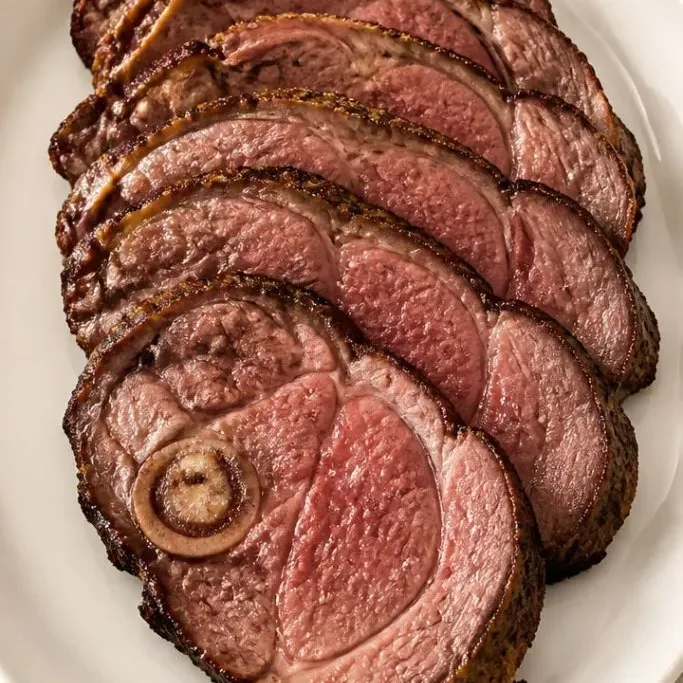
It’s the kind of main that feels like a celebration without requiring a celebration’s worth of work. The rosemary and garlic perfume the meat all the way through, and the crust gets deeply brown and crisp while the inside cooks to a rosy, buttery pink.
What Makes This Leg of Lamb So Good
The garlic and rosemary don’t just sit on the surface. I tuck thin slivers into small slits all over the meat, so every slice carries that savory punch from the inside out.
The crust gets crackly and golden in the oven while the inside stays pink and tender. And because this cut is naturally forgiving, you get the same velvety result every time as long as you pull it at the right temperature.
Ingredients
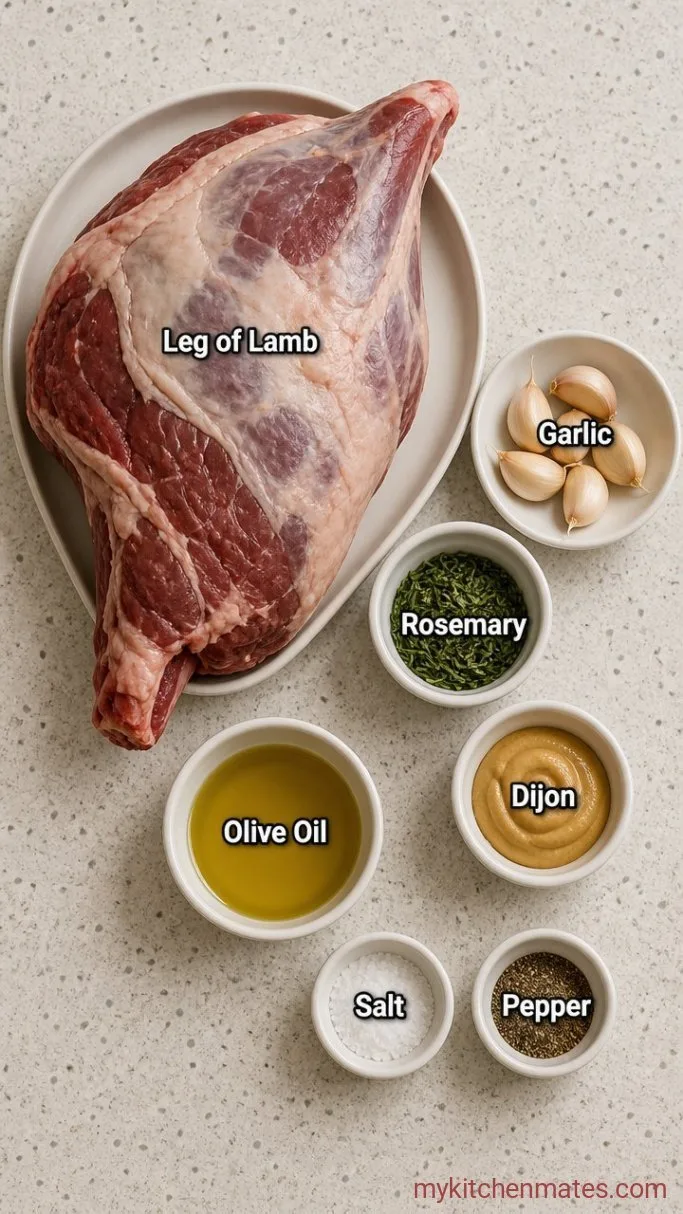
- 4 to 5 lb bone-in leg of lamb: look for a nice fat cap, it bastes the meat as it roasts.
- 6 cloves garlic, sliced lengthwise into thin slivers: half go into the meat, half into the paste.
- 3 tbsp fresh rosemary leaves, chopped: or 1 tbsp dried rosemary if that’s what you have.
- 2 tbsp Dijon mustard: helps the crust stick and adds a subtle tang.
- 3 tbsp olive oil: plus a little extra for the pan.
- 2 tsp kosher salt: use a bit less if you are working with fine table salt.
- 1 tsp black pepper: fresh ground gives the brightest bite.
Variations / Substitutions
- Rosemary swap: fresh thyme or oregano both work well; use the same 3 tbsp of leaves.
- Mustard swap: whole-grain mustard gives a more textured crust with little pops of tang.
- No bone: a boneless leg cooks faster, start checking the temperature 10 minutes earlier.
- Extra brightness: stir 1 tsp lemon zest into the paste, it lifts the whole roast.
Spring Mix Salad goes great with this lamb when you want something fresh on the side.
How to Make Garlic Herb Roast Leg of Lamb
Step 1: Mix the Herb Paste
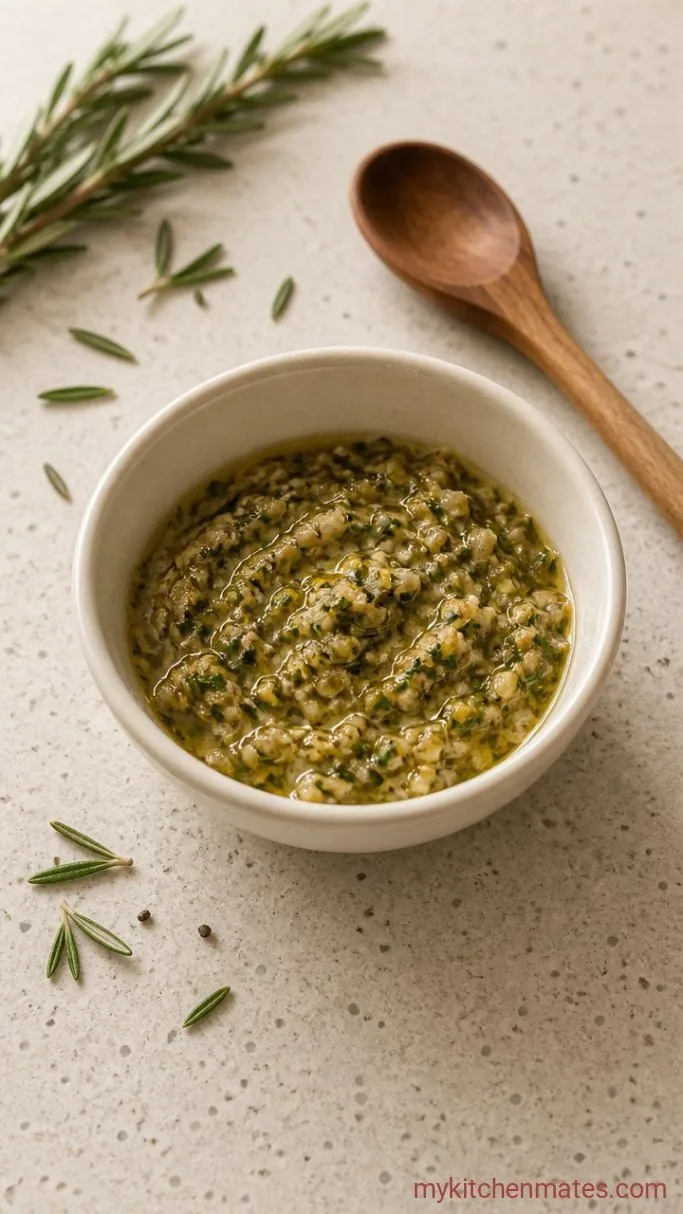
Combine the chopped rosemary, half of the garlic slivers (set the rest aside for the meat), the Dijon mustard, olive oil, salt, and pepper in a small bowl. Stir for about a minute until everything comes together into a coarse, spreadable paste.
The paste should be thick enough to cling to the meat without dripping, but not dry. If it feels crumbly, add another teaspoon of oil and stir again.
Step 2: Prep and Stud the Lamb
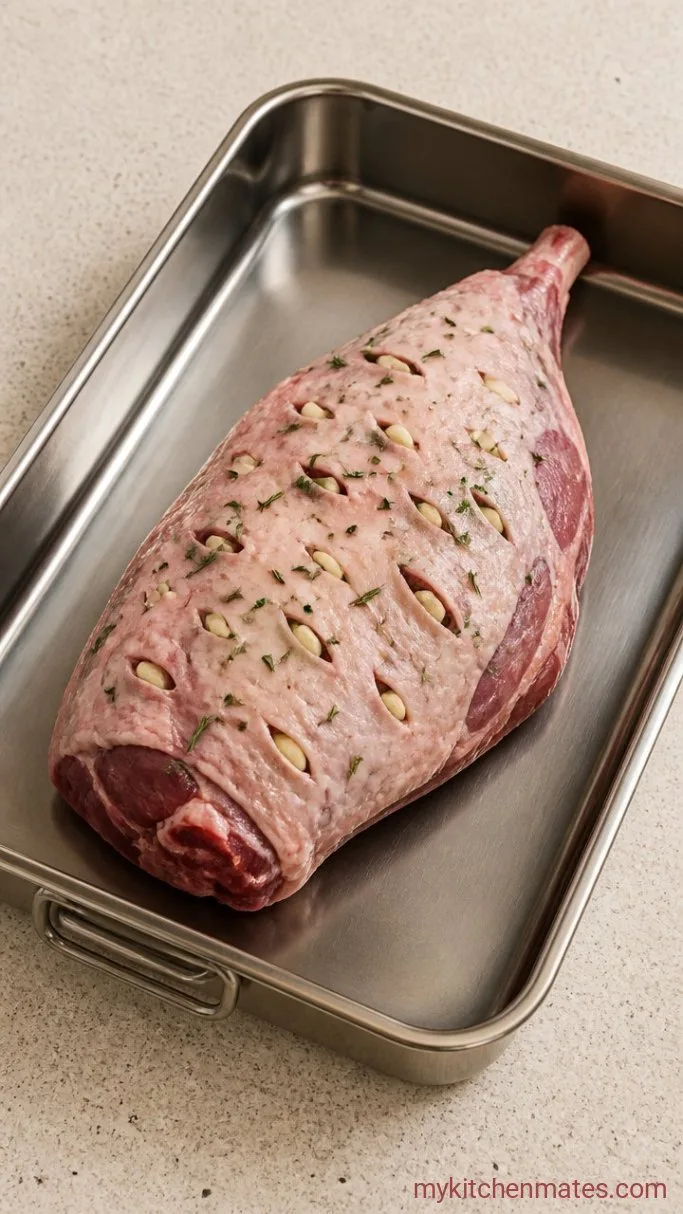
Using a sharp paring knife, cut 12 to 15 small slits, each about 1 inch deep, all over the leg of lamb. Tuck one of the reserved garlic slivers into each slit. Let the lamb sit at room temperature for 30 minutes so it roasts evenly.
As the lamb comes to room temperature, the fat softens and the meat relaxes, which helps the interior cook more gently without drying out the edges.
Step 3: Coat the Lamb
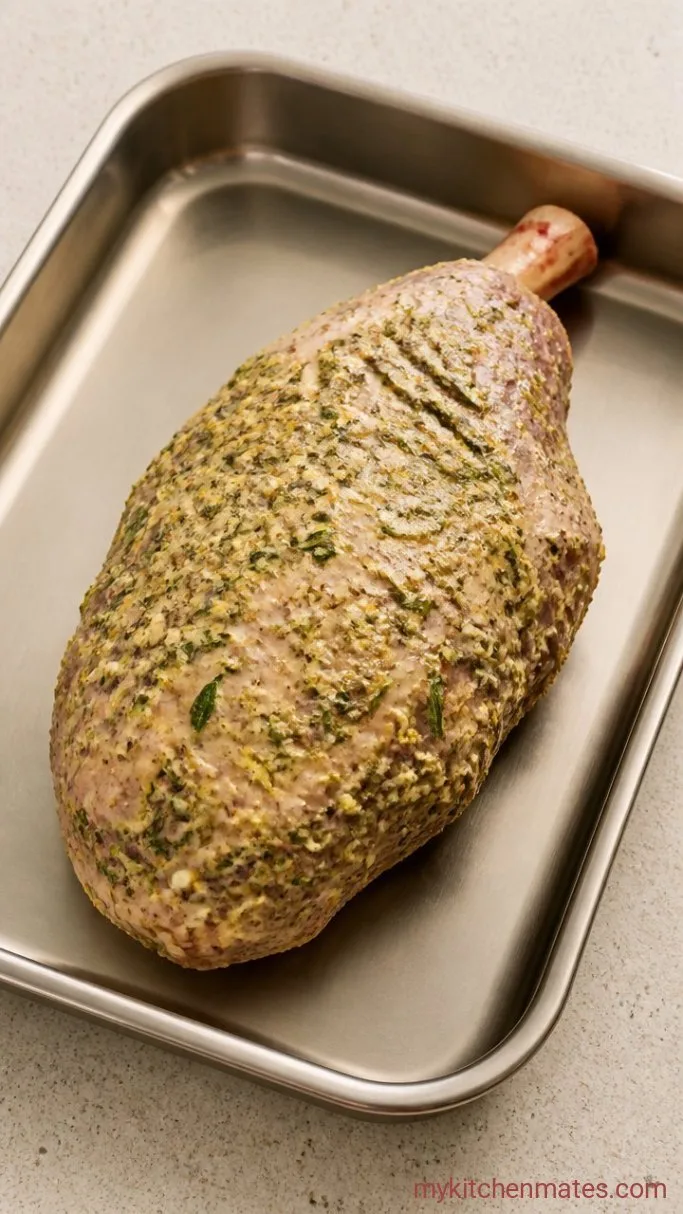
Use your hands to slather the herb paste all over the lamb, working it into every nook and cranny. This takes about 2 minutes to get an even coating. Transfer the lamb to a roasting pan, fat side up.
A roasting rack is handy, but setting the lamb right on a bed of thickly sliced onions works just as well and flavors the pan drippings for a simple jus.
Step 4: Roast to Temperature
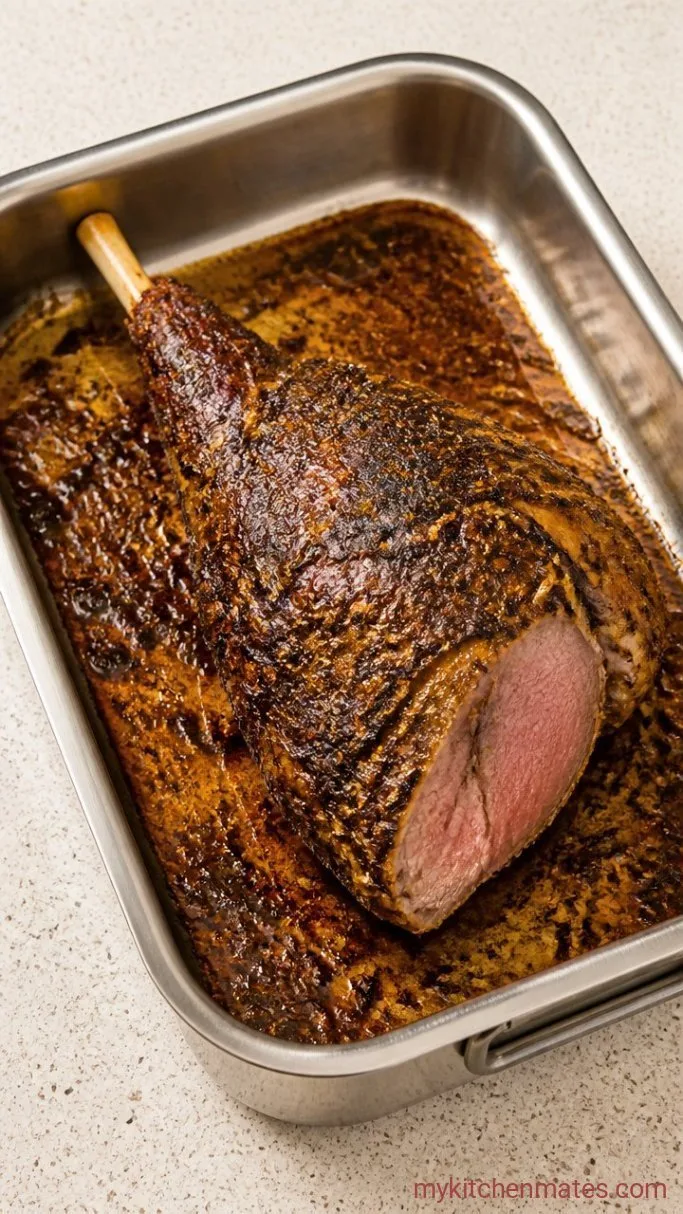
Preheat the oven to 425°F (220°C) while you finish seasoning. Roast the lamb for 20 minutes at this high heat. Then drop the temperature to 350°F (175°C) and continue roasting until an instant-read thermometer inserted into the thickest part (away from the bone) reads 130°F (54°C) for medium-rare, about 45 to 60 minutes more.
The early blast of heat creates a crisp, savory crust. Lowering the temperature finishes the interior gently so it stays pink and juicy. Check early because the temperature can climb quickly in the last few minutes.
Step 5: Rest, Slice, and Serve
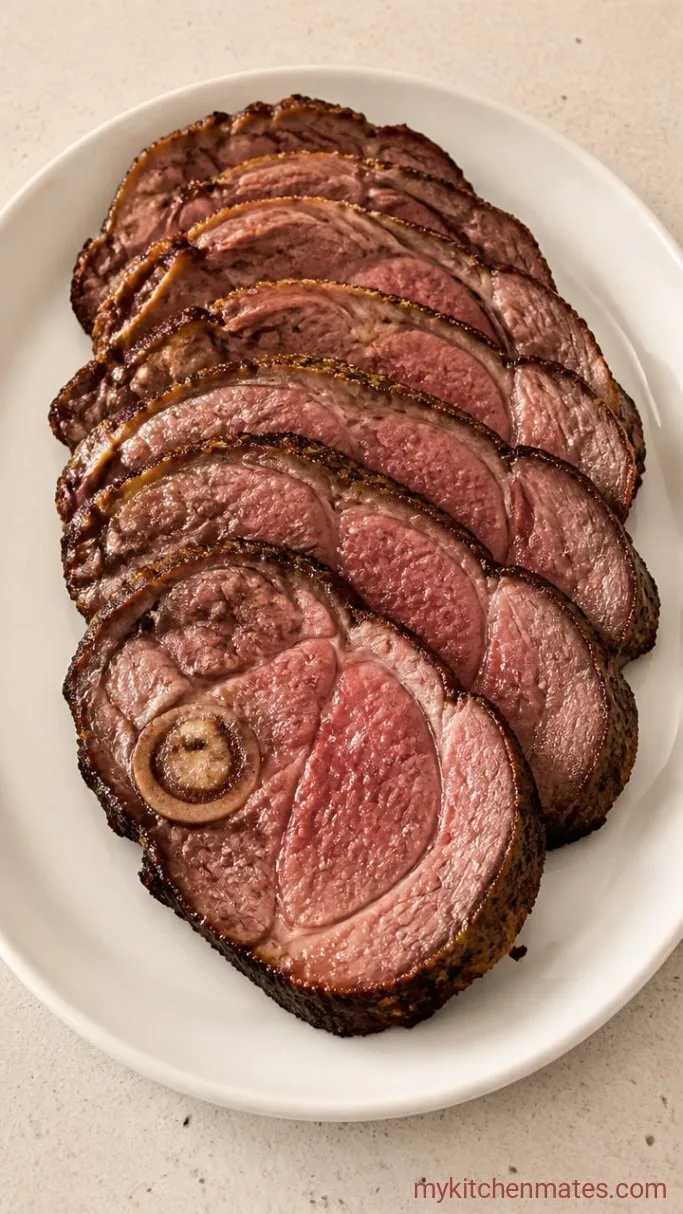
Transfer the lamb to a cutting board, tent it loosely with foil, and let it rest for 15 minutes. This rest is non-negotiable; it lets the juices settle back into the meat so they do not run all over the board. Slice against the grain into thin pieces and spoon over any pan drippings.
The crust will be deeply browned and crackly, and the inside a rosy, even pink. Serve on a warm platter with the drippings pooled around the slices.
Tips for the Best Roast Leg of Lamb
- Score the fat cap. Before applying the paste, take a sharp knife and lightly score the fat in a shallow diamond pattern. This helps the fat render into the pan and turns the top crisp.
- Make the paste ahead. The garlic herb paste can be mixed a day in advance and stored in the fridge. Just give it a stir before using, and let it come to room temperature so it spreads easily.
- Use the bone for bonus flavor. After carving, toss the bone into the roasting pan with a splash of water while the meat rests. You will end up with a quick little jus to spoon over the slices.
- Carving trick. For a bone-in leg, follow the bone with your knife to free the large muscle, then slice across the grain into thin pieces. A sharp chef’s knife makes this painless.
Roasting times by weight, assuming a 20-minute high-heat start then roasting at 350°F (175°C):
| Weight | Medium-Rare (130°F) | Medium (140°F) |
|---|---|---|
| 4 lb | 55-65 mins total | 65-75 mins total |
| 5 lb | 65-75 mins total | 75-85 mins total |
Always confirm with a thermometer.
Keeping Leftover Lamb Tender
- Refrigerate: store sliced lamb in an airtight container with a spoonful of pan juices for up to 4 days.
- Reheating: warm slices gently in a skillet over medium-low heat with a splash of broth or water. Low and slow keeps them from drying out.
- Serve cold: thin slices are fantastic cold on a sandwich with crunchy lettuce and Dijon, or over a lemony salad.
What to Serve With Roasted Leg of Lamb
Crispy roasted potatoes tossed in olive oil and lemon are a natural fit, soaking up the savory drippings from the plate. A simple arugula salad with shaved Parmesan and a squeeze of lemon cuts through the richness. For a green vegetable, steamed green beans or broccolini with garlic butter round out the plate without competing.
Frequently Asked Questions
Can I use boneless leg of lamb?
Yes. Tie it with kitchen twine to keep an even shape, and start checking the temperature about 10 minutes earlier than the times above.
What if I don’t have fresh rosemary?
Dried rosemary works, use 1 tablespoon in place of the 3 tablespoons fresh. The crust will be a little less vibrant, but the flavor is still there.
How do I know when it’s done without a thermometer?
Press the thickest part of the meat; it should feel like the fleshy pad of your hand when you make a loose fist (medium-rare). This method is less precise, so a thermometer is worth the small investment.
Can I make this in a slow cooker?
You can, but the meat will not develop a crisp crust. If you prefer a slow cooker, sear the lamb in a hot pan first, then cook on low for 6 to 8 hours.
My lamb came out tough, what went wrong?
It was either undercooked (rare can be chewy) or cooked too quickly without the lower-temperature finish. Next time, make sure the oven drops to 350°F after the initial sear and pull it at 130°F.
Garlic Herb Roast Leg of Lamb Recipe
Ingredients
Method
- Mix rosemary, half the garlic slivers, Dijon, olive oil, salt, and pepper into a coarse paste.
- Cut 12 to 15 shallow slits all over the lamb and tuck the remaining garlic slivers in. Let sit at room temperature 30 minutes.
- Coat the lamb all over with the paste and place it fat side up in a roasting pan.
- Roast at 425°F (220°C) for 20 minutes, then lower to 350°F (175°C) and roast until 130°F (54°C) for medium-rare, about 45 to 60 minutes more.
- Rest 15 minutes, slice against the grain, and serve with pan drippings.
Notes
