
Buttery Lavender Shortbread Cookies

These lavender shortbread cookies are buttery, crisp, and carry just enough floral perfume to feel special without any trace of soapiness. They come together with a handful of pantry staples and a light touch with dried lavender.

They’re the kind of cookie that looks far more effortful than it is. If you can stir butter and flour together, you can make these, and the whole batch disappears fast at a tea party or a quiet afternoon coffee.
Why These Cookies Are a Keeper
The lavender is subtle, not bossy. It shows up as a gentle floral note that works behind the butter, not in front of it, so nobody winces at a mouthful of perfume.
The texture is exactly what you want from shortbread: sandy and tender, with clean edges that snap under your teeth. Powdered sugar keeps the crumb delicate, and a short chill holds the shapes neat in the oven.
Best of all, they keep so well that you can bake them three days ahead, and they’ll taste just as buttery. I keep a log of dough in the freezer and slice off a few whenever a cookie craving hits.
Ingredients
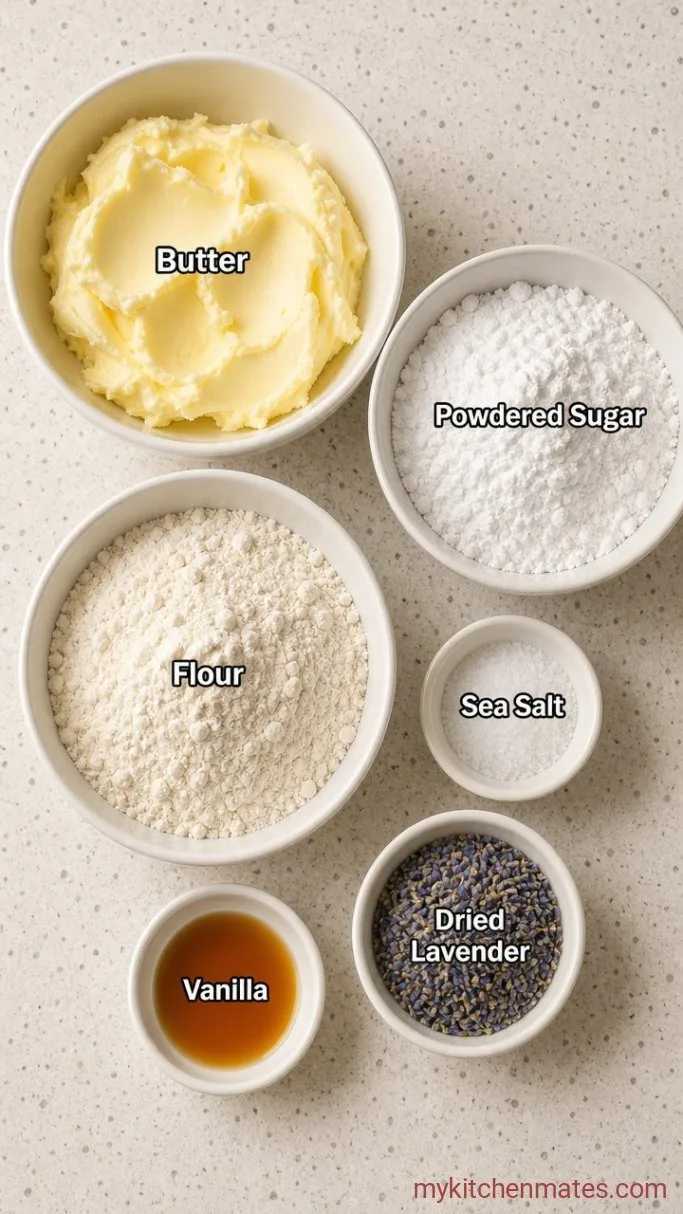
- 1 cup (2 sticks) unsalted butter, softened: let it sit out for an hour; it should feel cool but pliable, not greasy.
- 1/2 cup powdered sugar: its fine texture gives the shortbread that melt-in-your-mouth softness.
- 2 cups all-purpose flour: spooned and leveled, not scooped.
- 1/4 tsp fine sea salt: rounds out the butter without shouting.
- 1 tbsp dried culinary lavender: use only food-grade lavender; ornamental buds can taste harsh.
- 1 tsp vanilla extract: a tiny warm backdrop for the floral note.
Variations / Substitutions
- Rosemary: swap the lavender for 2 tsp finely chopped fresh rosemary. It gives the cookies an earthy, savoury lift that pairs beautifully with cheese.
- Lemon: add 1 tsp finely grated lemon zest along with the vanilla. The citrus brightens the lavender and makes the whole cookie feel sunnier.
- Vanilla bean: replace the extract with the seeds from half a vanilla bean. It adds little specks and a creamier vanilla flavour.
- Gluten-free: a good 1:1 gluten-free flour blend works without any other tweaks. The texture will be a shade crumblier but still very good.
- Less sweet: reduce the powdered sugar to 1/3 cup if you prefer a more restrained sweetness. The cookies will be a touch sturdier.
Iced Lavender Matcha Latte goes great with these cookies when you want something to sip.
How to Make Lavender Shortbread Cookies
Step 1: Cream the Butter and Sugar
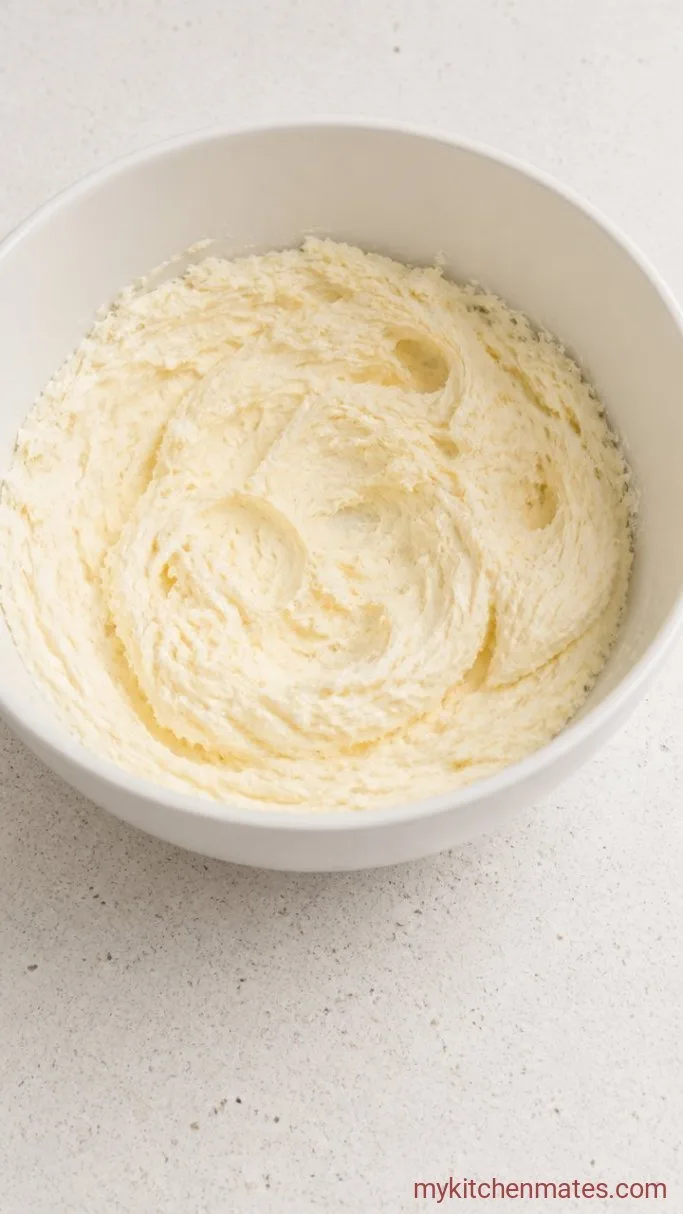
Place the 1 cup softened butter and 1/2 cup powdered sugar in a large bowl. Using a hand mixer or a wooden spoon, beat them together until the mixture looks pale, fluffy, and almost whipped, about 2 minutes with a mixer.
Beat in the 1 tsp vanilla extract and scrape down the bowl. The butter should feel like thick frosting right now, light and aerated enough to hold all the flour without turning tough.
Step 2: Mix in the Dry Ingredients
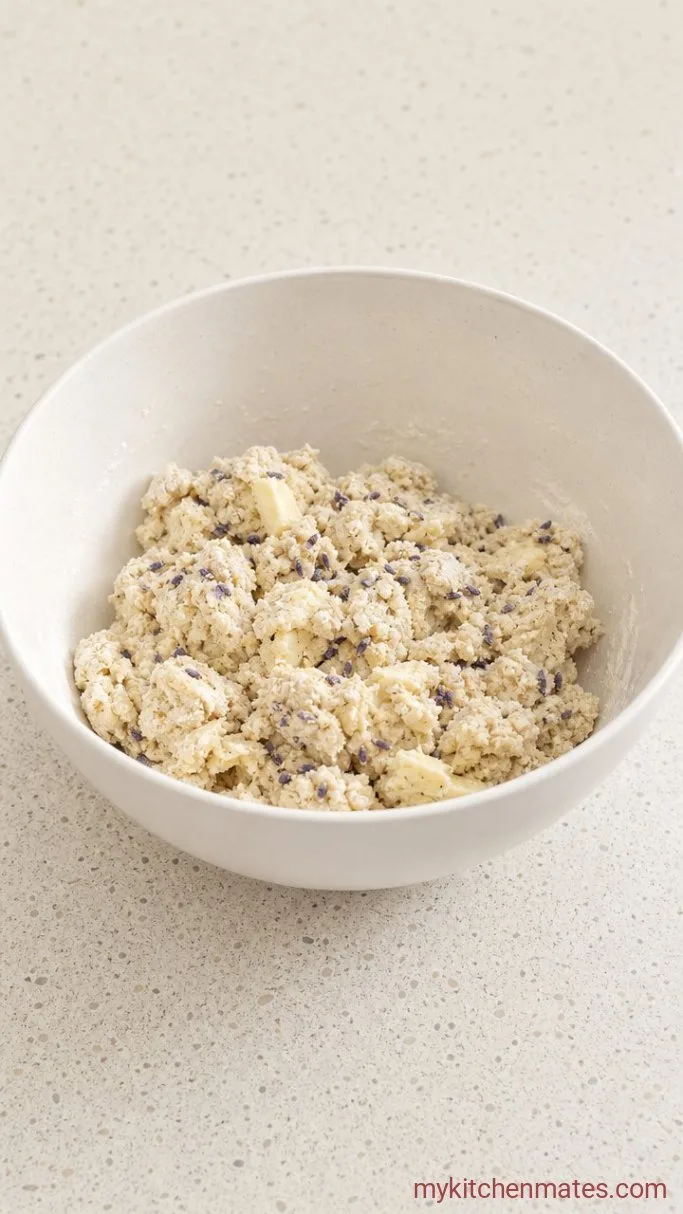
Whisk the 2 cups flour, 1/4 tsp salt, and 1 tbsp dried lavender together in a separate bowl so the lavender disperses evenly. Tip the dry mixture into the butter mixture all at once.
Stir gently with a wooden spoon just until no streaks of flour remain. The dough will look crumbly and sandy at first, but keep folding and pressing it against the side of the bowl. After a minute or so it will come together into a soft, pliable mass that holds its shape when squeezed.
Step 3: Shape and Cut the Dough

Transfer the dough to a sheet of parchment paper and press it into a flat disk. Place a second sheet of parchment on top and roll the dough out to about 1/4 inch (6 mm) thick. Slide the whole thing onto a tray and chill in the refrigerator for 15 minutes, which firms the butter so the cookies keep their edges when baked.
Preheat your oven to 325°F (160°C). Peel off the top parchment and use a 2-inch round cutter to stamp out cookies. Gather the scraps, re-roll once, and cut again. Arrange the cookies on a parchment-lined baking sheet, leaving an inch between each one, and pop the sheet into the fridge for another 5 minutes if the kitchen is warm.
Step 4: Dust and Serve the Cookies
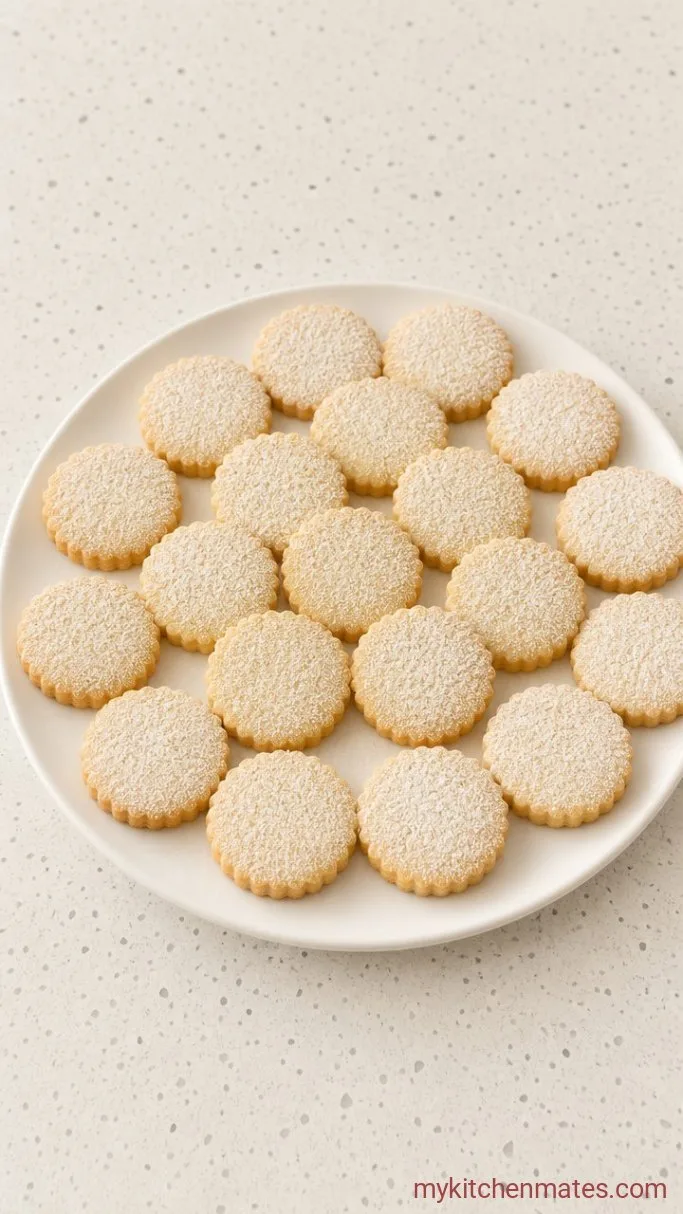
Bake the chilled cookies for 12 to 15 minutes, until the edges are just beginning to turn the palest gold. The tops will still look pale, and the whole kitchen will smell of butter and a whisper of lavender.
Let the cookies cool on the baking sheet for 5 minutes so they firm up, then transfer them to a wire rack. While they are still slightly warm, dust them generously with powdered sugar using a small sieve. The sugar will catch in any tiny crevices and make them look like they belong in a bakery window. Serve once fully cool, or sneak one warm with a cup of tea.
A Few Notes Before You Start
- Don’t overwork the dough: the moment the flour disappears, stop mixing. Overworked shortbread bakes up tough instead of tender.
- Use culinary lavender: lavender sold for sachets or aromatherapy may have been treated with oils or other additives. Look for dried lavender labelled for cooking, often near the spices.
- Go easy on the lavender: 1 tablespoon is the sweet spot for a gentle floral note. If your dried lavender is especially aromatic or freshly ground, start with 2 teaspoons and taste a tiny pinch of the raw dough.
- Chill in stages: that short rest before cutting and the quick chill after shaping prevent the butter from melting before the structure sets in the oven. Skipping it leads to spread-out, flat cookies.
Bake times can shift a minute or two depending on how thin you roll the dough:
| Dough thickness | Bake time at 325°F (160°C) |
|---|---|
| 1/8 inch (3 mm) | 10 to 12 minutes |
| 1/4 inch (6 mm) | 12 to 15 minutes |
| 1/2 inch (12 mm) | 16 to 18 minutes |
Keeping the Cookies Fresh
- Refrigerate: Store cookies in an airtight container at cool room temperature for up to 1 week. If your kitchen is warm, keep them in the fridge for up to 2 weeks; they’ll soften a bit after 30 minutes out of the cold.
- Freeze: Freeze baked cookies in a single layer, then transfer to a freezer bag for up to 3 months. You can also freeze the unbaked dough as a log, tightly wrapped, and slice and bake straight from the freezer, adding a minute or two to the bake time.
Frequently Asked Questions
Can I use fresh lavender instead of dried?
Fresh lavender holds too much moisture and can taste grassy and bitter when baked. Dried culinary lavender gives a cleaner, more predictable floral note.
My dough feels too crumbly to roll. What should I do?
It will look sandy at first, but press it together with your hands and keep working it against the bowl. If it still won’t hold together, add 1 teaspoon of cold water or milk and knead briefly until it becomes pliable.
Do these cookies work with gluten-free flour?
Yes. Use a measure-for-measure gluten-free flour blend that contains xanthan gum. The shortbread will be slightly more fragile but still buttery and crisp.
How do I stop the lavender from tasting like soap?
Soapiness comes from too much lavender or from buds that aren’t meant for eating. Measure exactly 1 tablespoon of culinary lavender, and if the buds are large, crush them lightly with your fingers or a mortar before adding them to the flour.
Lavender Shortbread Cookies Recipe
Ingredients
Method
- Beat the butter and powdered sugar until pale and fluffy, about 2 minutes, then mix in the vanilla.
- Whisk the flour, salt, and lavender together, then stir into the butter mixture just until a soft dough forms.
- Roll the dough between parchment sheets to 1/4 inch thick, chill 15 minutes, then cut into cookies and place on a parchment-lined sheet.
- Bake at 325°F (160°C) for 12 to 15 minutes, cool on a rack, and dust with powdered sugar while still slightly warm.
Notes
