
40-Minute Kerala Chicken Curry with Coconut Milk

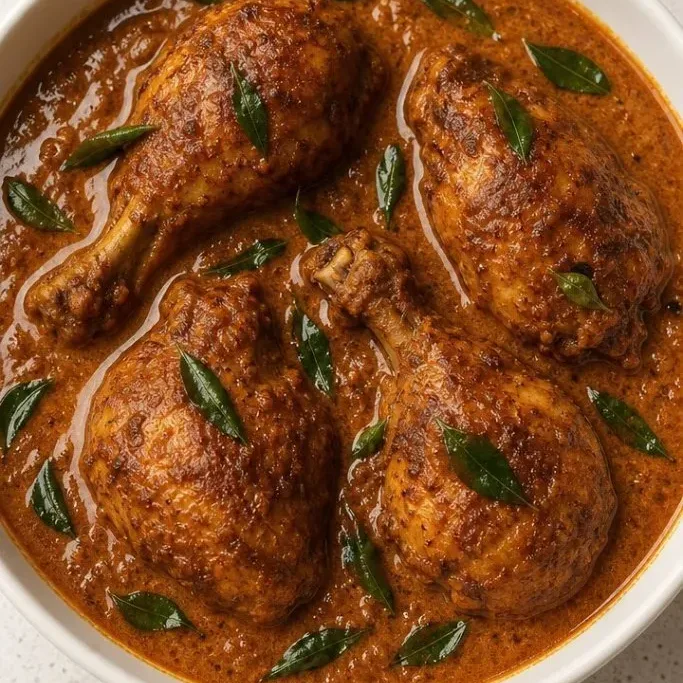
This Kerala chicken curry is the one I make when I want deep, layered spice without spending the afternoon in the kitchen. Coconut milk mellows the heat and pulls everything together into a creamy sauce that just begs for rice or parotta.
What Makes This Curry So Good
I keep coming back to this version because it hits the same notes as the long-simmered curries my aunts make, but it comes together fast enough for a Tuesday night. The coconut milk finishes the sauce right at the end, so it stays fresh and fragrant instead of cooking down into nothing.
There is no marinating, no grinding whole spices. You bloom the aromatics in hot oil, sear the chicken right in the pan, then let the curry bubble until the meat is tender and the oil starts to split at the edges. That small pool of orange oil on top is how you know you got it right.
Ingredients

- 1.5 lbs bone-in chicken thighs and drumsticks, skin removed: use bone-in for the deepest flavor, but boneless works in a pinch
- 1 tbsp ginger garlic paste: fresh or store-bought, whichever you have
- 2 medium onions, thinly sliced: yellow or red onions both work
- 2 green chiles, slit lengthwise: adjust to your heat tolerance
- 2 sprigs fresh curry leaves: the backbone of any Kerala curry; dried are not the same
- 1 tsp mustard seeds: black mustard seeds give a nutty pop
- 1.5 tbsp Kashmiri chili powder: brings the color and a gentle heat; use half regular chili powder if needed
- 1 tsp turmeric powder
- 1 tbsp coriander powder
- 1 tsp garam masala: added twice, once in the sauce and once at the end
- 1 cup thick coconut milk: from a can, not the beverage kind
- 1 tbsp coconut oil or neutral oil: coconut oil adds a subtle richness
- Salt to taste
Variations / Substitutions
- Boneless thighs: Cut them into large chunks and drop the simmer time to about 15 minutes, just until cooked through.
- Protein swap: Cubed lamb shoulder or goat works beautifully; expect the simmer to take 45 to 60 minutes longer.
- Extra tang: Stir in 2 tbsp of plain yogurt off the heat once the curry has cooled slightly.
- Leaf swap: If you cannot find fresh curry leaves, the curry still tastes good without them, but you lose that unmistakable Kerala note.
- Coconut cream: Use the solid part of a chilled can for a thicker, richer sauce.
Instant Pot Coconut Rice is an easy side dish to serve with this curry.
How to Make Kerala Chicken Curry
Step 1: Sear the Chicken
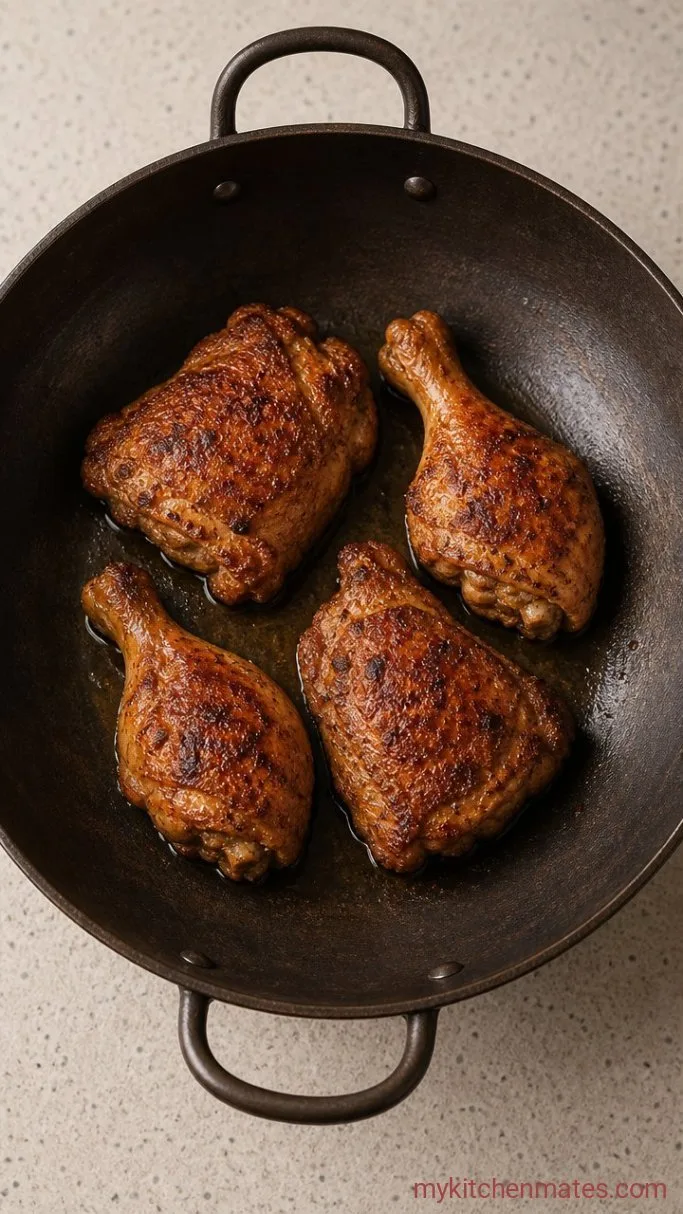
Heat the coconut oil in a wide heavy pan or kadai over medium-high heat. Once the oil is hot, add the chicken pieces and sear for about 8 minutes total, turning once, until both sides are a deep golden brown. You are not cooking the chicken through here, just locking in color and flavor.
Remove the chicken to a plate and set aside. The pan will have some browned bits stuck to the bottom, and that is exactly what you want for the next step.
Step 2: Pop the Mustard Seeds and Sauté the Onions

Lower the heat to medium and drop the mustard seeds into the same oil. Let them pop for 15 seconds, then add the sliced onions and green chiles. Sprinkle in a pinch of salt to help the onions soften, and stir often for 7 to 8 minutes, until the onions turn soft and take on a deep, rusty brown color.
Once the onions are right there, stir in the ginger garlic paste and cook for 1 minute until the raw smell disappears. Add the curry leaves next and let them crackle for a few seconds.
Step 3: Bloom the Spices and Simmer
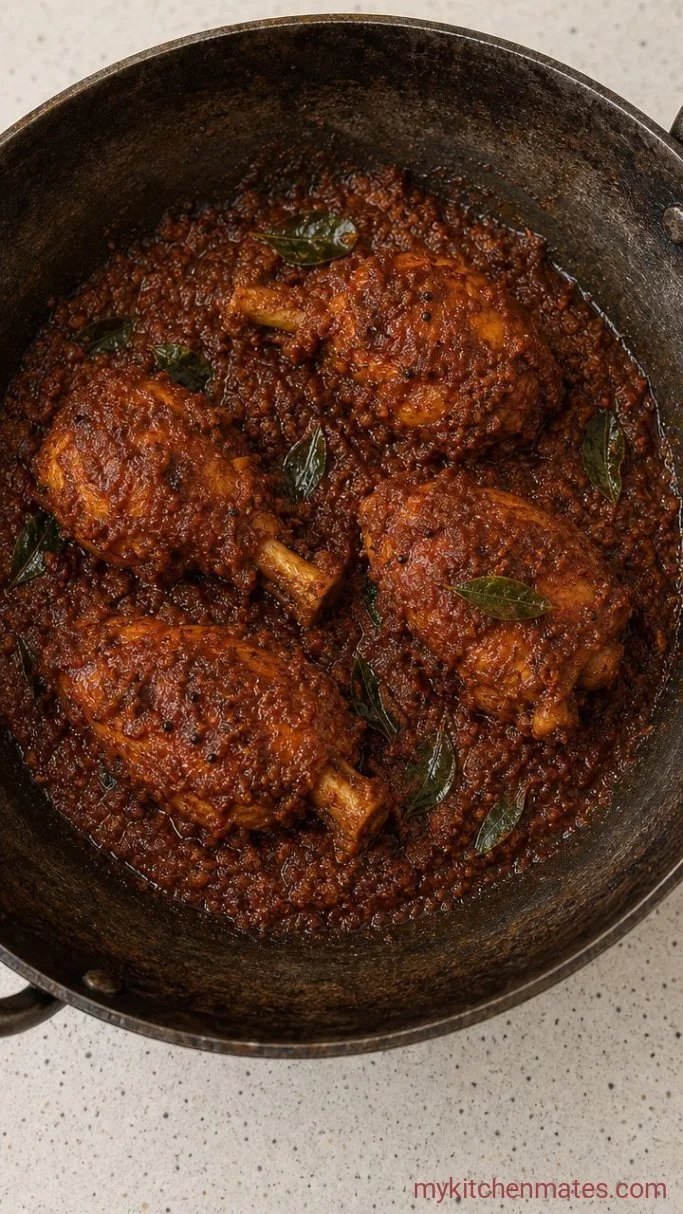
Turn the heat to low and add the Kashmiri chili powder, turmeric, coriander powder, and half of the garam masala. Stir everything constantly for 30 seconds so the spices toast without burning. The kitchen will smell deeply smoky and sweet at this point.
Slide the chicken back into the pan along with any juices that collected on the plate. Pour in 1 cup of water and a generous pinch of salt. Bring the liquid to a gentle boil, then reduce the heat, cover the pan, and let the curry simmer for 20 to 25 minutes. Give it a stir once halfway through. The chicken should be cooked through and tender enough to pull apart with a spoon.
Step 4: Finish with Coconut Milk and Serve

Remove the lid and pour in the coconut milk. Stir well and let the curry simmer uncovered for 5 minutes so the sauce thickens slightly and the coconut milk melds into the gravy. Sprinkle in the remaining garam masala and taste for salt.
Turn off the heat and set the curry on the table right in the pan, with a spoonful of that glossy orange oil pooled on top. Serve it hot with steamed rice, appam, or flaky parotta.
A Few Notes Before You Start
- The curry thickens as it sits. If making ahead, loosen it with a splash of warm water when reheating.
- Curry leaves burn in a blink once they hit hot oil. Have the next ingredient measured and ready before you add them.
- The oil splitting at the surface near the end is a good sign. It means the onions and spices have cooked down properly and the sauce will cling to the meat.
- Leftover curry often tastes even better the next day because the spices settle and deepen.
Cook times by cut:
| Cut | Approximate Simmer Time |
|---|---|
| Bone-in thighs and drumsticks | 20 to 25 mins |
| Bone-in breast cubes | 15 to 18 mins |
| Boneless thigh chunks | 12 to 15 mins |
Storing Leftovers
- Refrigerate: Cool the curry completely, then store in an airtight container for up to 4 days.
- Reheating: Warm gently on the stove over low heat, stirring often, and add a splash of water if the sauce has tightened up.
- Freezing: This curry freezes well for up to 2 months. Thaw in the fridge overnight before reheating.
What To Serve With Kerala Chicken Curry
Steamed basmati rice is the simplest pairing, but I like to keep a stack of Kerala parotta on hand to tear and dunk. A quick cucumber salad with lemon juice cuts through the richness, and a dollop of plain yogurt on the side tames the heat.
Frequently Asked Questions
Can I use boneless chicken for this recipe?
Yes. Boneless thighs or breast pieces will cook faster, so start checking for doneness at the 12-minute mark and pull the pan off the heat as soon as the meat is no longer pink.
How do I make the curry less spicy?
Remove the seeds and veins from the green chiles before slitting them, and use a mild paprika in place of half the Kashmiri chili powder. The coconut milk already dials the heat back, so start there.
Can I use coconut cream instead of coconut milk?
Yes, but the sauce will be thicker and richer. Use half coconut cream and half water, or cut the cream with a few tablespoons of water at the end if the curry feels too heavy.
Is this curry gluten-free?
The curry itself is naturally gluten-free. Just be sure the garam masala blend you use does not contain wheat fillers, because some commercial brands do.
What if my sauce does not thicken?
Simmer the curry uncovered for an extra 5 minutes and let the liquid reduce. You can also mash a few pieces of cooked onion against the side of the pan and stir them back in to add body.
Kerala Chicken Curry Recipe
Ingredients
Method
- Heat oil in a wide pan over medium-high heat. Sear chicken pieces for about 8 minutes until golden on both sides, then set aside.
- Lower heat to medium, add mustard seeds and let them pop. Add onions, green chiles, and a pinch of salt. Cook 7 to 8 minutes until deep brown. Stir in ginger garlic paste for 1 minute, then add curry leaves.
- Reduce heat to low, add chili powder, turmeric, coriander powder, and half the garam masala. Stir for 30 seconds. Return chicken and any juices to the pan. Add 1 cup water and salt. Bring to a boil, then cover and simmer 20 to 25 minutes.
- Uncover, pour in coconut milk, and simmer 5 minutes. Stir in remaining garam masala, taste for salt, and serve hot.
Notes
