
Easy Japanese Egg Roll (Tamagoyaki) in 10 Minutes

Japanese egg roll, or tamagoyaki, is the sweet and savory rolled omelette you see tucked into bento boxes and perched on sushi rice. It comes together in one pan with a few pantry ingredients and is ready in under 10 minutes.
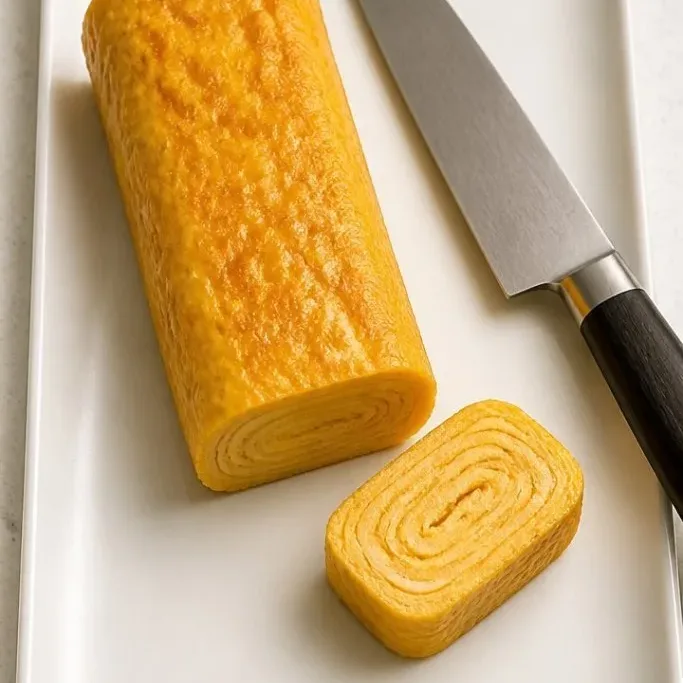
The layers stay tender and lightly sweet, with a hint of umami from a splash of dashi and soy sauce. Whether you pack it for lunch or serve it alongside miso soup, this quick version gives you the classic curl without any fuss.
Why This One Stays in My Rotation
This is the tamagoyaki I make on busy mornings because it skips straining the eggs and still turns out tender and layered. The balance of mirin and soy gives that signature sweet-salty note without being cloying.
Once you get the roll-and-tilt rhythm down, the whole thing moves fast. You will have a neat golden log in the pan before the rice is even done.
Ingredients
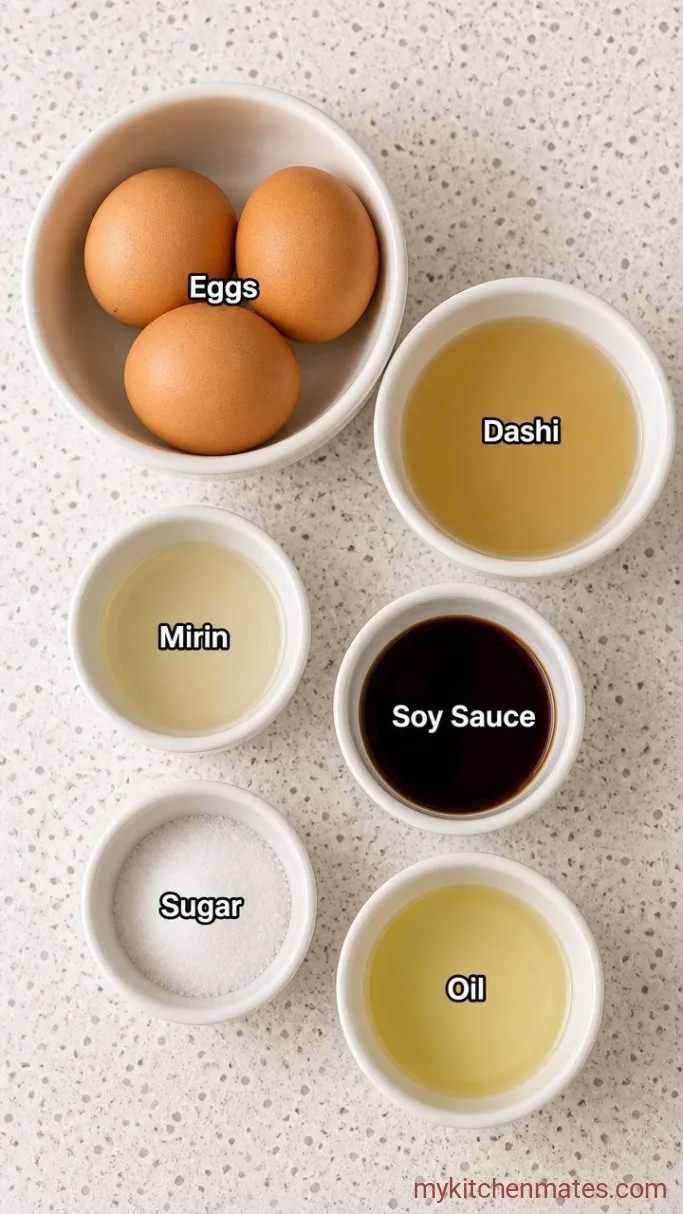
- 3 large eggs: room temperature if you have time, but cold works too
- 1 tbsp dashi stock: or 1/4 tsp dashi powder dissolved in 1 tbsp water, the classic savory base
- 1 tsp mirin: adds sweetness and a light sheen
- 1/2 tsp soy sauce: for salt and depth
- 1/2 tsp sugar: optional, use it if you like a sweeter tamagoyaki
- Vegetable oil or neutral oil: for greasing the pan
Variations / Substitutions
- No dashi?: Use 1 tbsp water with a tiny pinch of salt, or mild chicken broth. The flavor will be less rich in umami but still good.
- Add fillings: Once you know the plain roll, tuck in a strip of nori, a sprinkle of shredded cheese, or a thin layer of chopped scallions before each roll.
- Make it simpler: For a quick sushi-style egg, leave out the dashi and use just eggs, sugar, and soy sauce. It is closer to the slightly sweeter version used in nigiri.
Japanese Mushroom Soup makes a comforting soup to pair with this roll.
How to Make Japanese Egg Roll
Step 1: Whisk the Egg Mixture
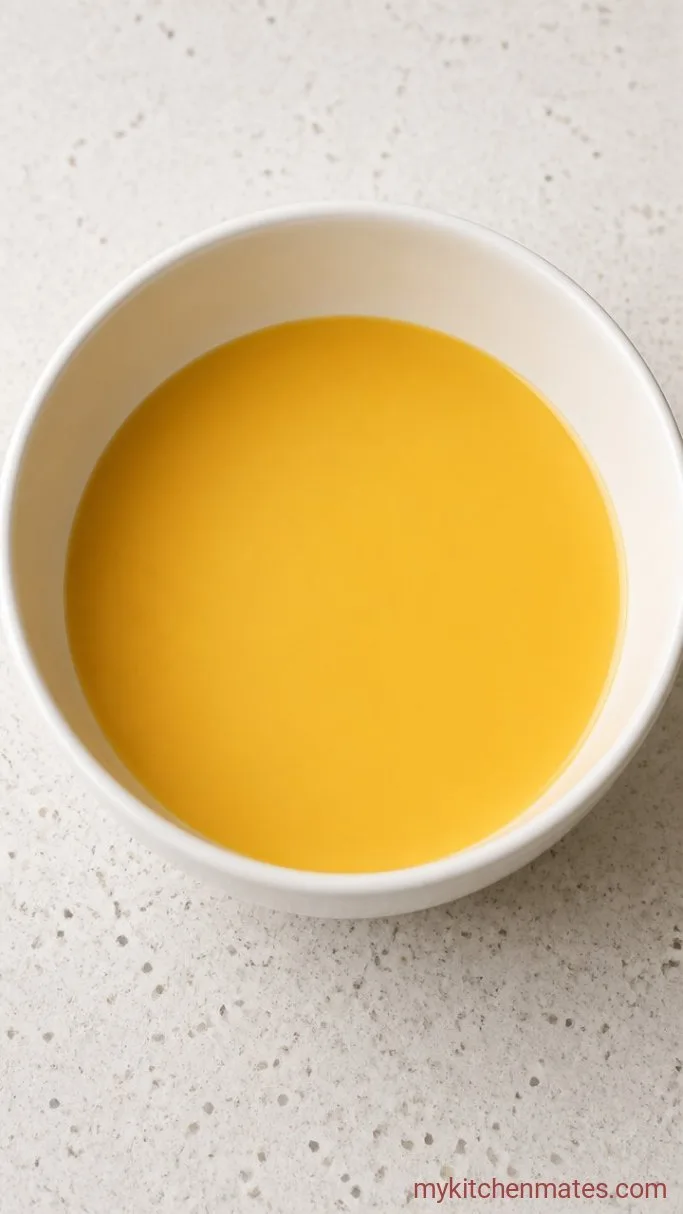
Crack the 3 eggs into a small bowl or a measuring cup with a spout. Add the 1 tbsp dashi, 1 tsp mirin, 1/2 tsp soy sauce, and the 1/2 tsp sugar if you are using it. Whisk until the yolks and whites are fully combined and no white streaks remain, about 30 seconds. You are not trying to whip air in, just a smooth, even mixture.
The liquid should look pale and slightly glossy from the mirin and soy. Avoid over-beating, or you will end up with a spongy texture instead of the soft, custardy layers you are after.
Step 2: Oil the Pan
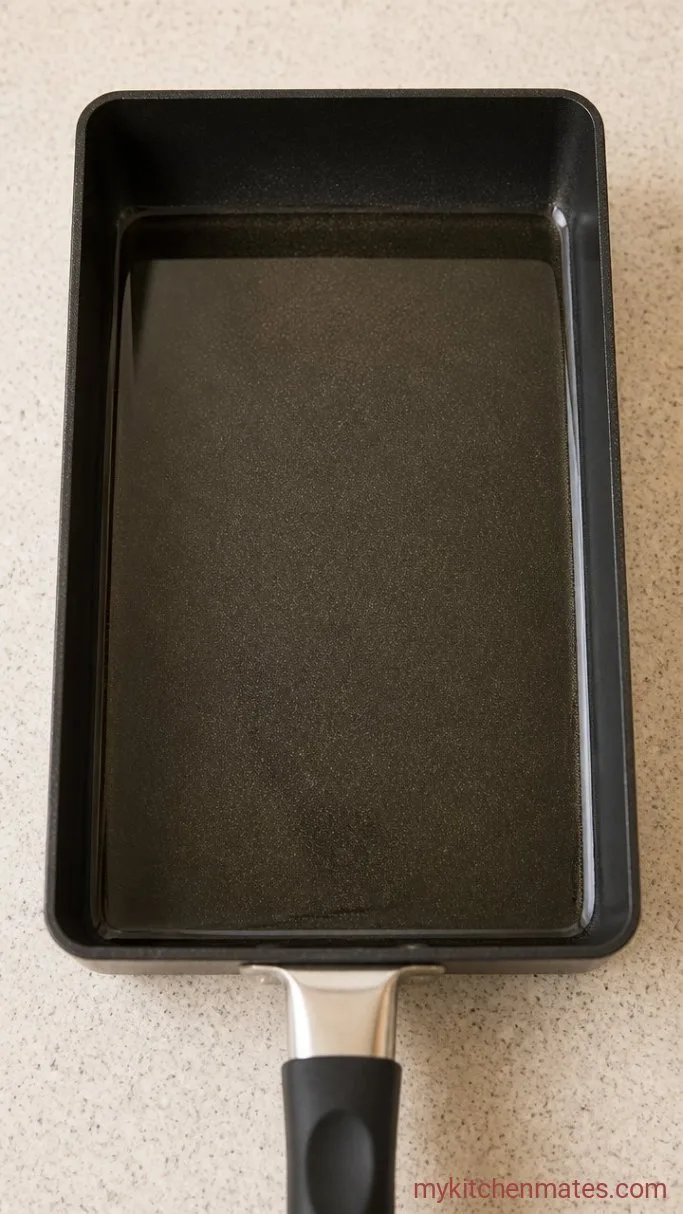
Set a rectangular tamagoyaki pan or a small nonstick round skillet over medium heat and let it warm up for a minute. Fold a paper towel, dip it in a little vegetable oil, and wipe the pan to create a thin, even film. Keep the oily towel nearby, you will need it between layers.
Drop a tiny bit of egg mixture into the pan to test the temperature. It should sizzle gently and set within a few seconds. If it spatters wildly, lower the heat slightly.
Step 3: Pour and Roll the Layers
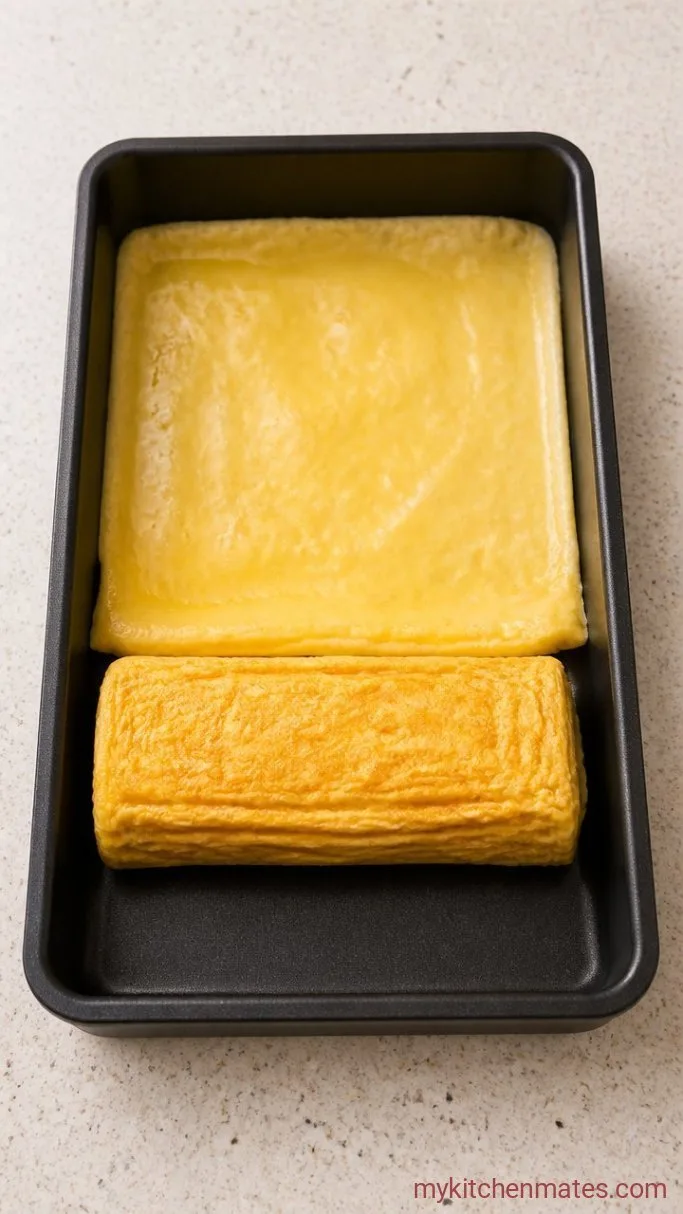
Pour a thin layer of the egg mixture into the pan, just enough to coat the bottom. Tilt the pan quickly so the egg spreads evenly. Let it cook undisturbed for about 1 minute, until the bottom is set and the top is still slightly wet but not runny.
Starting from the far end, use chopsticks or a spatula to gently roll the egg toward you, forming a small log. Push the log to the far side of the pan, then re-oil the empty side with your paper towel. Pour another thin layer of egg, lifting the log so a little of the new mixture flows underneath. Cook until nearly set, then roll again, wrapping the new layer around the log.
Repeat with the remaining mixture, you will get about 3 to 4 layers total. By the final pour, the log will feel heavier and look evenly pale gold. The whole rolling process takes only a few minutes once you find your rhythm.
Step 4: Shape and Slice
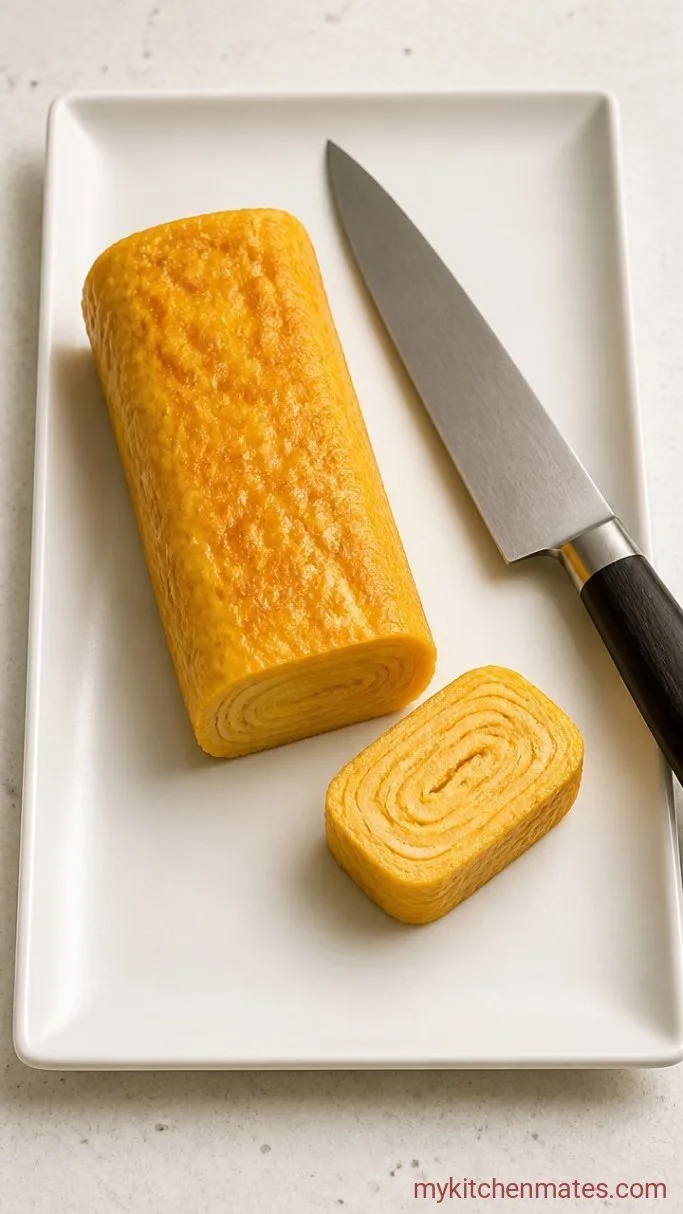
After the final layer is rolled, let the tamagoyaki sit in the pan for another 30 seconds to set the edge. Use your spatula to gently press the top and sides into a neat rectangular shape, this gives it that clean, classic look.
Slide the roll onto a cutting board or a bamboo sushi mat. Let it rest for a minute so the layers hold together, then slice it crosswise into 1/2-inch thick rounds. Serve the slices warm or at room temperature, with the spiral layers showing in each piece.
A Few Notes Before You Start
- Keep the heat at medium to medium-low. Too high and the egg will brown and toughen before it sets, making it tear when you roll.
- Use chopsticks for easier rolling. The thin tips give you a delicate grip to start the curl without tearing the egg.
- A small rectangular pan helps the shape a lot, but a round nonstick skillet works. Expect slightly curved edges on your slices if you go round.
- If your first roll tears, do not stress. The next layer covers it up, and the omelette will still taste great.
How many eggs to use for your pan size:
| Pan Size (approx.) | Eggs | Servings |
|---|---|---|
| Small, 6×6 inches | 2 | 1 to 2 |
| Standard, 7×8 inches | 3 | 2 to 3 |
| Large, 8×10 inches | 4 | 3 to 4 |
Keeping Tamagoyaki Fresh
- Refrigerate: Place leftovers in an airtight container and keep for up to 3 days. The texture stays pleasantly firm.
- Reheating: A quick zap in the microwave works, but tamagoyaki is also meant to be enjoyed cold, straight from the fridge.
- Serve cold: It is perfect for bento boxes. The flavor reads a little sweeter when chilled, and the layers hold their shape well.
What Goes Well With Tamagoyaki
Pair it with steamed short-grain rice and a bowl of miso soup for a classic Japanese breakfast set. It also works tucked into a bento box alongside teriyaki salmon or chicken karaage, where its mild sweetness balances richer, saltier main dishes.
Frequently Asked Questions
Can I make tamagoyaki without dashi?
Yes, use 1 tbsp water with a tiny pinch of salt, or use milk for a softer, slightly sweeter result. The umami depth will be lighter, but it is a decent stand-in.
Is it okay to use a round pan?
Definitely. Roll the egg from one side to the other, then shape it by pressing with a spatula. Your slices will have rounded edges, but the layered center will look the same.
Why does my egg roll keep tearing?
The pan may be too hot or not oiled enough. Lower the heat slightly and use your oily paper towel to re-grease between every layer. If a tear happens, just tuck it under the next layer, it will blend in.
Can I eat tamagoyaki cold?
Yes, it is often served at room temperature or cold in bento boxes. The texture stays firm but not rubbery, and the flavor is a little sweeter when chilled.
Japanese Egg Roll Recipe
Ingredients
Method
- In a bowl or measuring cup, whisk the eggs, dashi, mirin, soy sauce, and sugar until smooth and no streaks remain.
- Heat a tamagoyaki pan over medium heat, then oil it lightly with a paper towel.
- Pour a thin layer of egg into the pan, let it set about 1 minute, then roll it from the far side toward you. Push the log to the far side, re-oil, and repeat with more egg, rolling in layers until all the mixture is used.
- Press the finished roll into a rectangular shape with a spatula, remove from the pan, and let it rest briefly. Slice crosswise into 1/2-inch rounds.
Notes
