
Crispy Custard-Filled Japanese Cream Puffs

Japanese cream puffs, or choux à la crème, are my favorite pastry to pull out of the oven when guests come over. They look like they took all day but the dough comes together in one pot and the custard sets up while the shells cool. The contrast between the crackly shell and the cold, not-too-sweet pastry cream is what keeps me coming back.
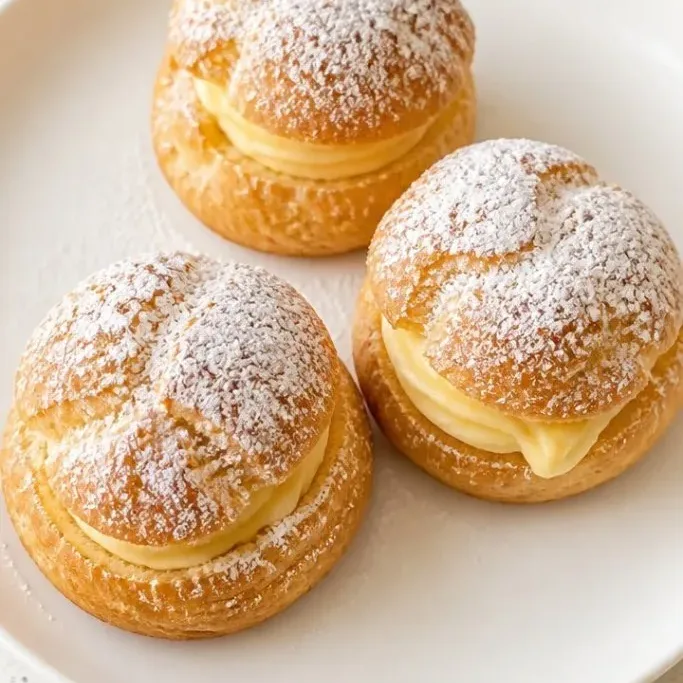
If you have ever been intimidated by choux pastry, this is the recipe that will change your mind. No piping skills needed beyond a basic round tip, and the dough forgives a lot of small mistakes.
What Makes These Cream Puffs So Good
The shell shatters when you bite into it, then gives way to a silky vanilla custard that tastes like melted ice cream. I use a cooked flour paste for the pastry cream instead of just cornstarch, which gives the filling a little more body without turning gummy. It holds its shape inside the puff instead of oozing out.
A quiet trick is letting the baked shells cool completely in a turned-off oven with the door cracked. That slow cooling sets the structure so they stay crisp instead of collapsing into chewy pucks. The filling gets made while they rest, so the whole thing moves fast once the dough is mixed.
Ingredients
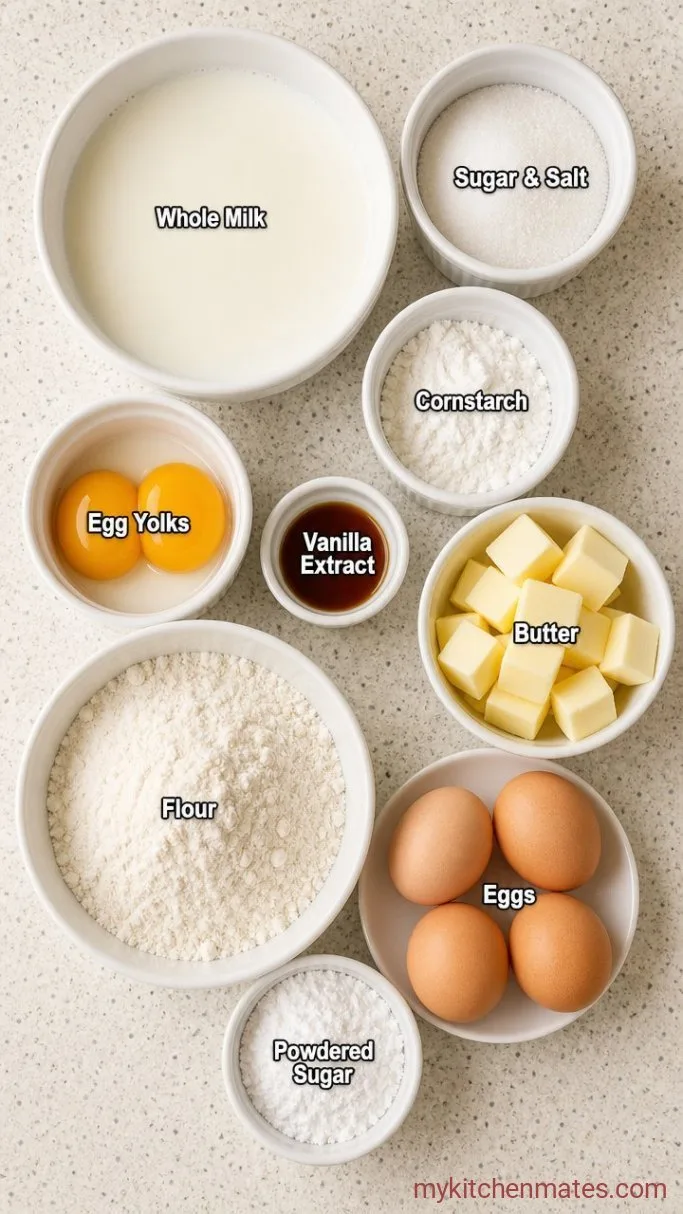
- 1 cup whole milk: for the pastry cream; lower-fat milk makes a thinner custard
- 3 tbsp granulated sugar: split between the cream and the dough
- 3 tbsp cornstarch: thickens the custard without eggs scrambling
- 2 large egg yolks: adds richness to the filling
- 1 tsp vanilla extract: use the real stuff here, it carries the whole flavor
- 1/2 cup whole milk: for the choux dough
- 1/2 cup water: half water keeps the shell light instead of heavy
- 6 tbsp unsalted butter: cold, cut into small cubes so it melts evenly
- 1 tbsp granulated sugar: helps the shells brown
- 1/4 tsp salt: balances the richness
- 1 cup all-purpose flour: spooned and leveled, not scooped
- 4 large eggs: room temperature is important here; cold eggs seize the dough
- Powdered sugar: for dusting at the end
Variations and Substitutions
- Chocolate custard: melt 3 oz bittersweet chocolate into the warm pastry cream right after it thickens; stir until smooth and chill as directed
- Matcha filling: whisk 1 tbsp matcha powder into the sugar before adding to the milk so it dissolves without lumps
- Whipped cream filling: skip the pastry cream and fill with lightly sweetened whipped cream instead, but know the puffs will soften within a few hours
- Dairy-free option: swap the milk for full-fat oat milk and use a plant-based butter stick; the shells will still puff but the custard will be slightly less rich
- Craquelin topping: press a thin disc of cookie dough on top of each piped mound before baking for an extra crackly crust that looks bakery-fancy
Sticky Oven-Baked Japanese Chicken Wings are another snack you’d probably love if you enjoy this recipe.
How to Make Japanese Cream Puffs
Step 1: Cook the Pastry Cream
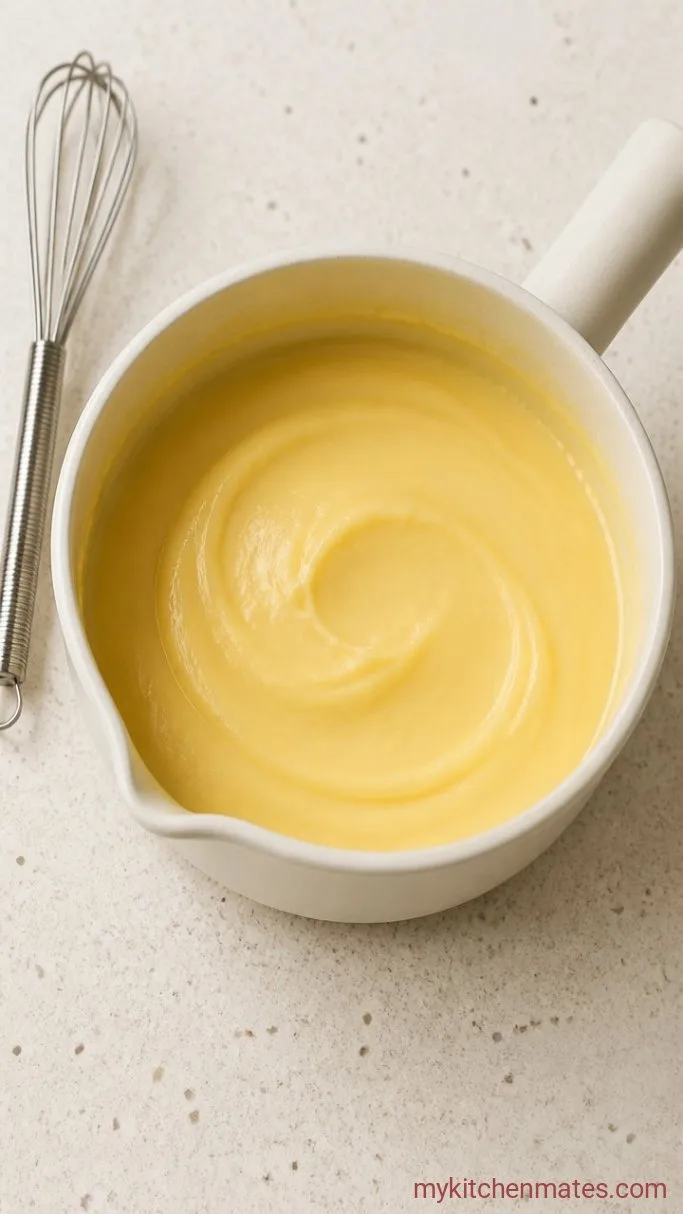
Warm 1 cup whole milk in a small saucepan over medium heat until you see tiny bubbles around the edge, about 3 minutes, but do not let it boil. While the milk heats, whisk 3 tbsp sugar, 3 tbsp cornstarch, and 2 egg yolks together in a bowl until the mixture is pale and smooth.
Pour about a third of the hot milk into the yolk mixture in a thin stream, whisking the whole time so the eggs warm up without scrambling. Pour everything back into the saucepan, set it over medium heat, and whisk without stopping. After about 2 minutes the custard will go from thin and foamy to thick and glossy. You will feel the whisk meet resistance.
Pull it off the heat the second it thickens, then stir in 1 tsp vanilla extract. Scrape the custard into a clean bowl, press plastic wrap directly onto the surface so no skin forms, and refrigerate it while you make the shells. It needs at least an hour to firm up, and this timing works out perfectly.
Step 2: Start the Choux Dough
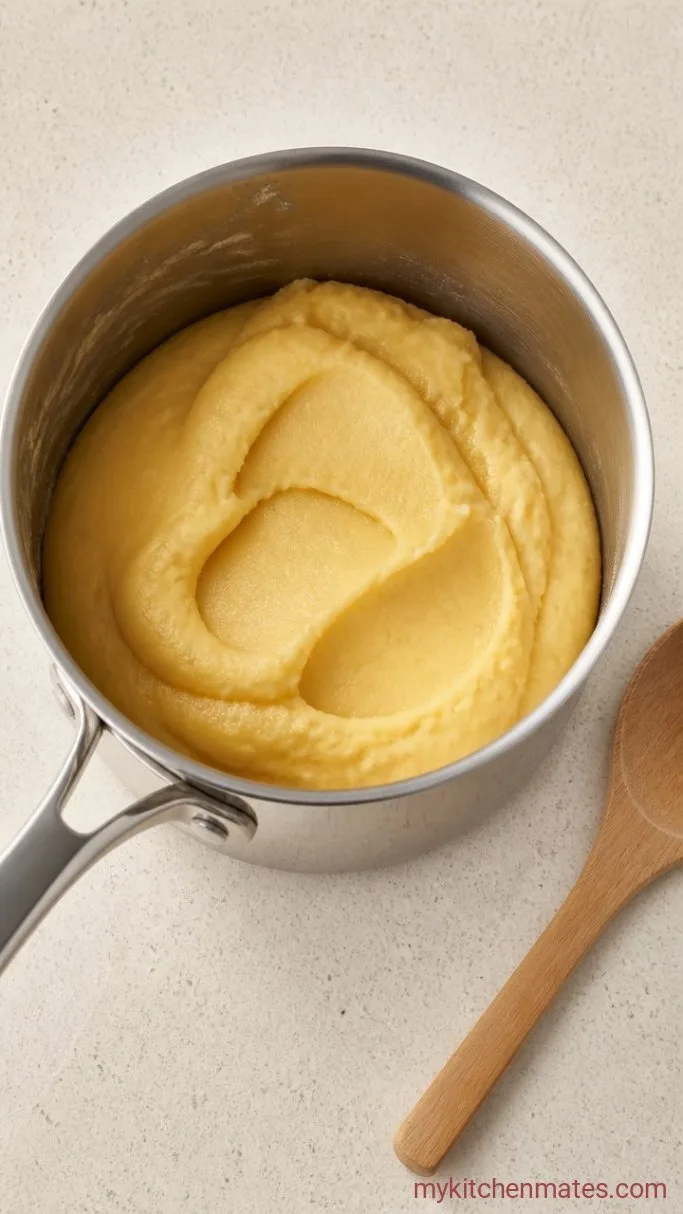
Set your oven to 400°F (200°C) and line a baking sheet with parchment paper. In a medium saucepan, combine 1/2 cup whole milk, 1/2 cup water, 6 tbsp butter, 1 tbsp sugar, and 1/4 tsp salt. Bring it to a rolling boil over medium-high heat, and keep your eye on it because milk can boil over fast.
Once the butter has fully melted and the liquid is at a full boil, dump in the 1 cup flour all at once. Grab a wooden spoon and stir vigorously. The dough will look shaggy and lumpy for about 10 seconds, then suddenly pull into a smooth ball that leaves a thin film on the bottom of the pan. Keep stirring for another 60 seconds over low heat to cook off some of the moisture.
The dough should look like smooth mashed potatoes and feel warm but not steaming when you touch it. If it is too hot, the eggs will cook on contact. Transfer it to a mixing bowl and spread it up the sides with your spoon to release steam and cool it down for about 3 minutes.
Step 3: Beat in the Eggs
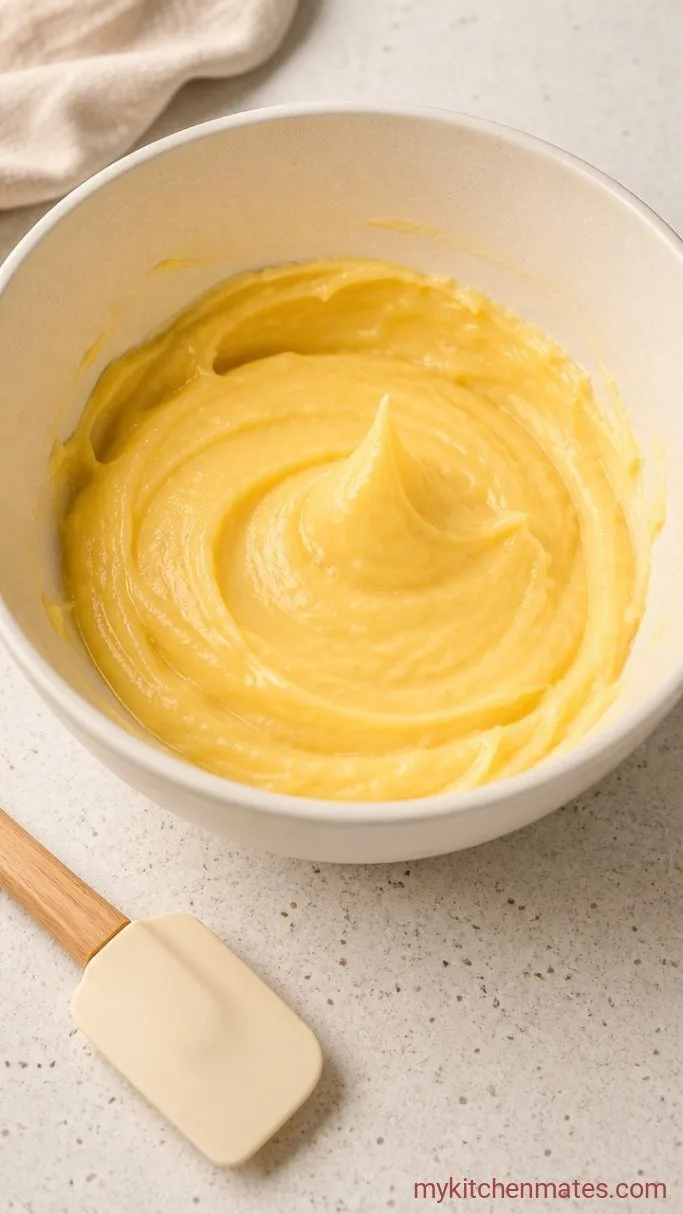
Crack 4 eggs into a small bowl and beat them lightly with a fork just to break them up. With a hand mixer or a sturdy wooden spoon, beat the dough on low speed while you add the egg in four additions. Pour in a quarter of the beaten egg, mix until it disappears fully into the dough, then scrape down the sides. Repeat with the next addition.
By the third addition the dough will look slippery and may separate a little. That is normal and fixes itself with more mixing. After the last egg goes in, the dough should be glossy and thick enough that it slowly falls off the spoon in a V shape that holds without breaking. If the V breaks immediately, keep mixing another 30 seconds to develop the structure.
Spoon the dough into a piping bag fitted with a large round tip, or skip the tip and just snip the end of the bag. Pipe 12 equal mounds onto your parchment-lined sheet, each about 2 inches wide and 1 inch tall. Wet your fingertip and tap down any pointy peaks so they do not burn in the oven.
Step 4: Bake the Shells
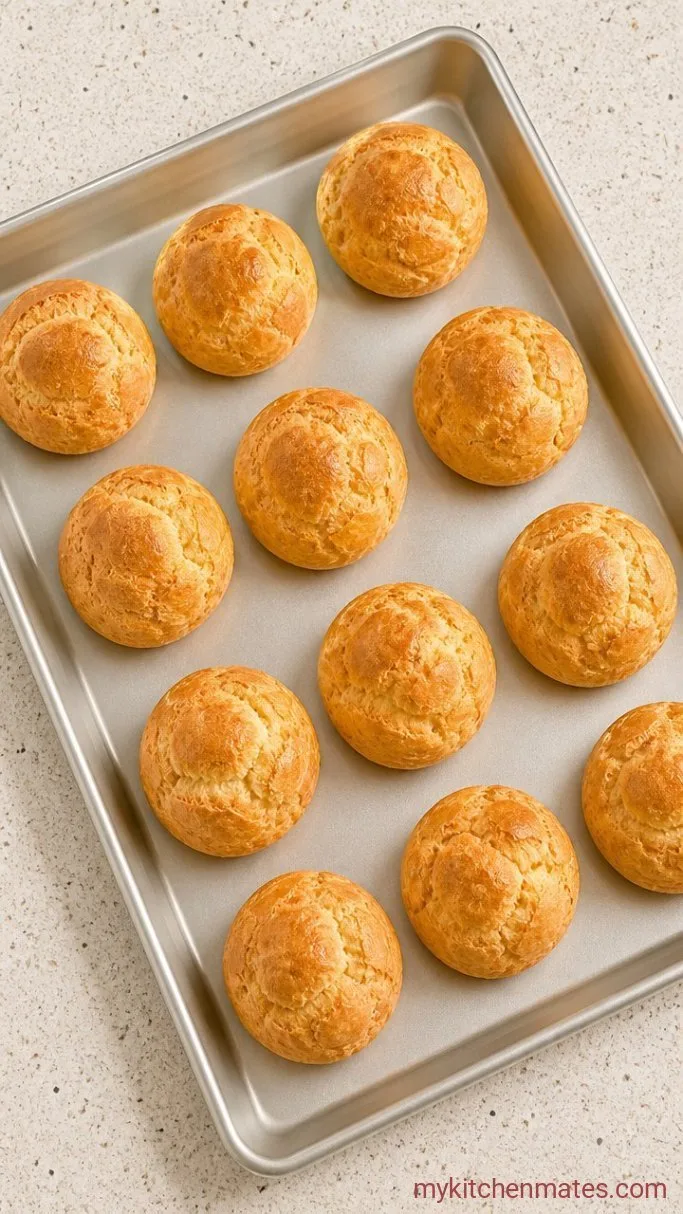
Slide the baking sheet onto the middle rack and bake at 400°F (200°C) for 15 minutes. Do not open the oven door during this window. The puffs need that blast of steam to rise high and hollow out the center.
After 15 minutes, the shells will be tall and golden. Without opening the door, lower the temperature to 350°F (175°C) and bake another 15 minutes to dry out the centers. The color should deepen to a warm amber and the shells will feel light when you tap them with a spoon. If they still feel doughy, give them 3 more minutes.
Turn the oven off, crack the door open an inch with a wooden spoon handle, and leave the puffs inside for 20 minutes. This slow cooldown is what locks in the crisp shell. Pull them out and poke a small hole in the side of each puff with a skewer to let any trapped steam escape.
Step 5: Fill the Puffs with Custard
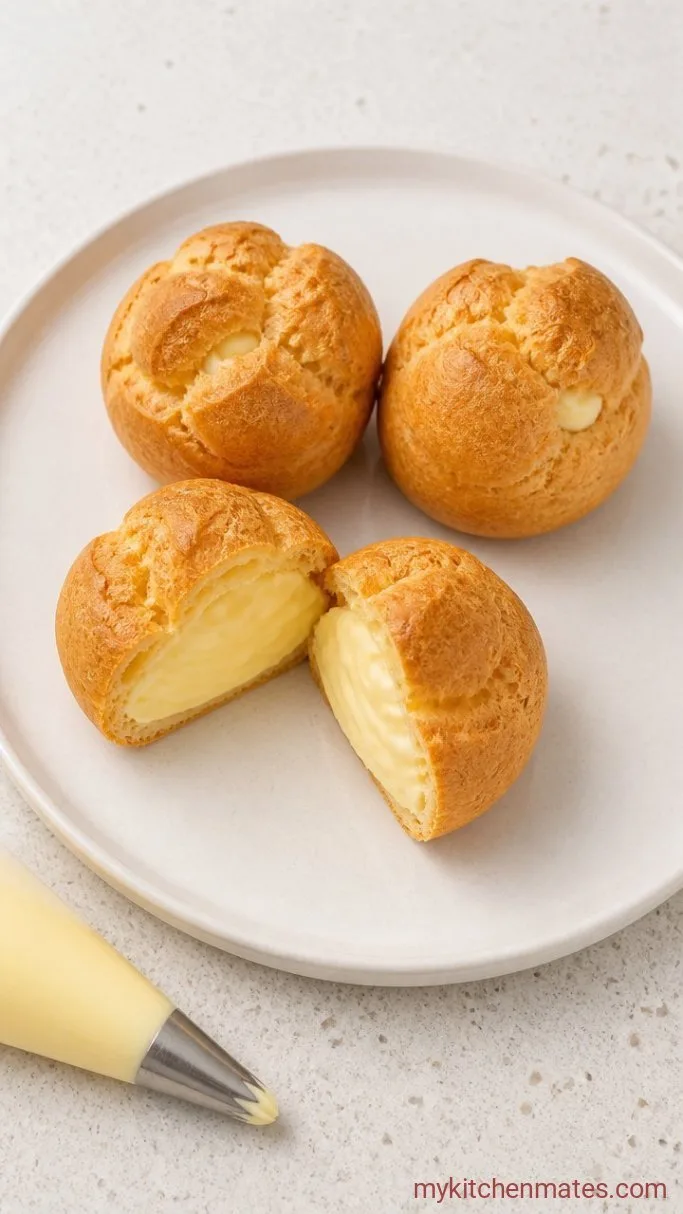
Pull the pastry cream from the fridge and whisk it until smooth and spreadable. Spoon it into a clean piping bag fitted with a small round tip. Insert the tip into the steam hole you made in each puff and squeeze gently until you feel the puff get slightly heavy in your hand.
The shell will feel firm with a subtle give, and a little custard might peek out of the hole. Wipe that away with your finger. Fill all 12 puffs and set them on a plate.
Step 6: Dust and Serve
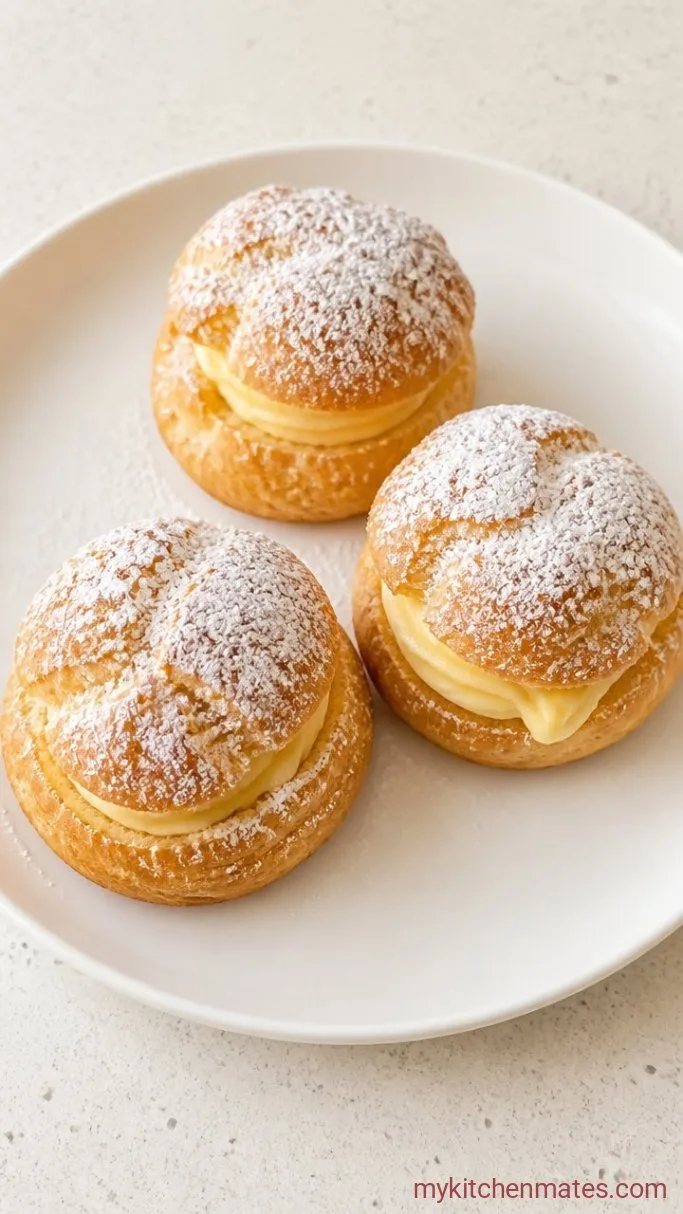
Pile the filled cream puffs onto a serving plate and dust generously with powdered sugar right before serving. The sugar should land in a thin white layer that catches the light.
Eat them within a few hours while the shells are still crisp. The sound of the first crackly bite and the cold custard inside is the whole point. Serve with strong black coffee or a cup of hojicha tea.
Tips for Airy Cream Puffs
- Weigh your flour if you can: 1 cup scooped can pack too tightly and throw off the dough. Spoon it into the cup and level it with a knife, or use 125 grams if you have a scale.
- Room-temperature eggs are not optional: set them in a bowl of warm water for 5 minutes if you forgot to pull them out early, and you will avoid a cold dough that refuses to puff
- Use the visual test for the dough: after adding the eggs, lift the spoon and watch how the dough falls. A clean V shape that holds for a second means it is ready. If it drops in a clump, the dough is too stiff and needs a little more beaten egg
- Leave space between the puffs: they nearly double in the oven, so 3 inches apart on the sheet keeps them from steaming each other and going soft
- Fill as close to serving as you can: the custard softens the shell over time, so if you are making these for a party, bake the shells in the morning and fill them an hour before guests arrive
Bake times by ovens:
| Oven Type | Temperature | Bake Time |
|---|---|---|
| Conventional | 400°F then 350°F | 15 min then 15 min |
| Convection | 375°F then 325°F | 13 min then 13 min |
| Toaster Oven | 400°F then 350°F | check at 12 min then 12 min |
Storing Leftovers
Unfilled shells keep well. Store them in an airtight container at room temperature for up to a day, then re-crisp them in a 350°F oven for 4 minutes. Let them cool fully before filling.
Once filled, the puffs soften within about 4 hours. Refrigerate any leftovers in a sealed container and eat them cold the next day. The shell will be soft instead of crisp, but the custard stays good and it tastes like a different dessert entirely. Do not freeze filled puffs.
Frequently Asked Questions
Why did my cream puffs collapse?
The shells needed more time in the oven to dry out the inside, or steam got trapped. Lower the temperature for the second half of baking and always poke a steam hole as soon as they come out.
Can I make the pastry cream ahead?
Yes. Refrigerate it up to 2 days with plastic wrap pressed directly on the surface. Whisk it smooth again before piping.
My dough was too runny after the eggs. Can I fix it?
Runny dough usually means too much egg, and unfortunately you cannot take it out. Pipe a test mound and bake one puff to see if it rises. Next time, reserve a few tablespoons of egg and add it only if the dough needs it.
Can I use this dough for savory puffs?
Absolutely. Cut the sugar in the dough down to 1 tsp and fill the baked shells with chicken salad, herbed cream cheese, or smoked salmon mousse.
Why did my custard turn lumpy?
The heat was too high or you stopped whisking for too long. Strain the hot custard through a fine-mesh sieve to rescue it, and next time keep the heat at medium and the whisk moving.
Japanese Cream Puffs Recipe
Ingredients
Method
- Warm 1 cup milk in a saucepan. Whisk 3 tbsp sugar, cornstarch, and egg yolks in a bowl. Temper with hot milk, return to pan, and whisk over medium heat 2 minutes until thick. Stir in vanilla, cover with plastic wrap, and chill.
- Heat oven to 400°F. Boil 1/2 cup milk, water, butter, 1 tbsp sugar, and salt. Add flour all at once and stir over low heat for 60 seconds until a smooth ball forms. Cool 3 minutes.
- Beat in eggs a quarter at a time until the dough falls from the spoon in a V shape. Pipe 12 mounds onto a parchment-lined sheet and tap down peaks.
- Bake at 400°F for 15 minutes, lower to 350°F and bake 15 minutes more until deep golden. Turn off oven, crack door, and leave puffs inside 20 minutes. Poke a steam hole in each.
- Whisk chilled custard smooth and pipe into the steam hole of each puff until slightly heavy.
- Pile onto a plate, dust with powdered sugar, and serve within a few hours.
Notes
