
Crusty Italian Herb and Cheese Sourdough Bread

This Italian herb and cheese sourdough bread bakes up with a shatteringly crisp crust and a soft, chewy crumb studded with melted mozzarella, salty Parmesan, and fresh rosemary. It’s the kind of loaf that makes your kitchen smell like a small village bakery.
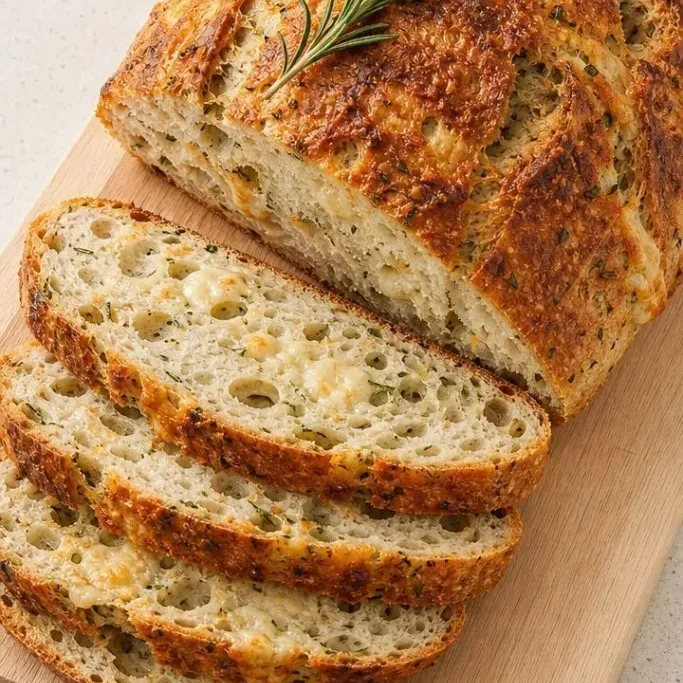
It takes a little patience, but the hands-on work is minimal. Most of the time is just the dough doing its thing while you get on with your day.
What Makes This Loaf So Good
The sourdough gives it a deep, tangy flavor you simply don’t get from commercial yeast. The crumb stays open and springy, with pockets of cheese that turn golden and gooey as the bread bakes.
Fresh rosemary and thyme weave through every slice without dominating. The loaf holds its shape beautifully, so you get tall, dramatic slices that are sturdy enough for sandwiches but tender enough to tear into still warm from the oven.
Ingredients
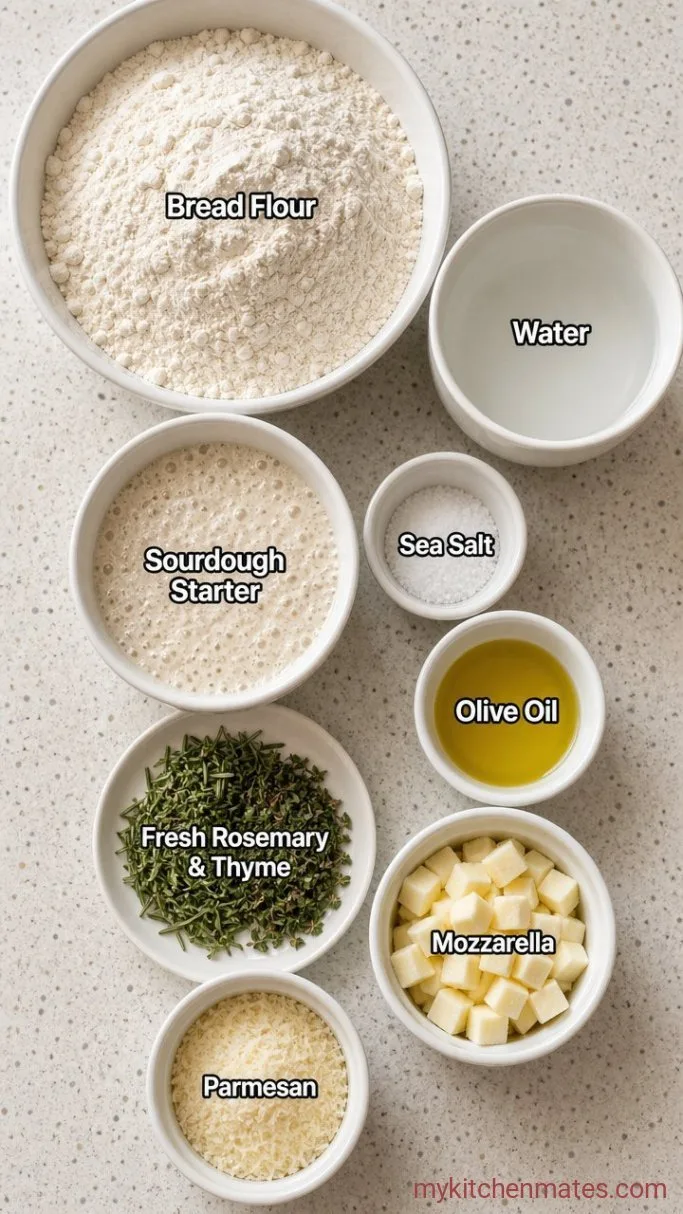
- 500g bread flour: a strong flour gives the loaf structure and chew
- 350g water, lukewarm (about 80°F / 27°C): enough to hydrate the flour fully without turning the dough into a puddle
- 100g active sourdough starter (100% hydration): use it at its peak, when it’s bubbly and doubled
- 10g fine sea salt: don’t skimp, it balances the tang and brings out the cheese
- 1 tbsp olive oil: a little fat keeps the crumb tender
- 2 tbsp fresh rosemary, finely chopped: measure after chopping
- 1 tbsp fresh thyme leaves: strip them off the stems
- 75g mozzarella, cut into small ½-inch cubes: low-moisture mozzarella melts without making the dough wet
- 50g Parmesan, finely grated: adds sharp, salty bursts throughout
Variations / Substitutions
- Cheese: Swap mozzarella for fontina, provolone, or even a little sharp cheddar. Asiago works in place of Parmesan if you want something nuttier.
- Herbs: Rosemary and thyme are classic, but fresh oregano or sage also work well. If you only have dried, use 2 teaspoons of rosemary and 1 teaspoon of thyme.
- Dairy-free: Leave out the cheese entirely. The herb loaf is still fragrant and excellent. A good melting vegan cheese block can stand in for the mozzarella if you dice it small.
- Plain herb bread: Omit both cheeses for a simpler loaf that goes with everything. For a similar all-purpose bread, try my Rosemary Focaccia.
Italian Sausage Gnocchi Soup makes a comforting soup to pair with this bread.
How To Make Italian Herb and Cheese Sourdough Bread
Step 1: Mix the Dough
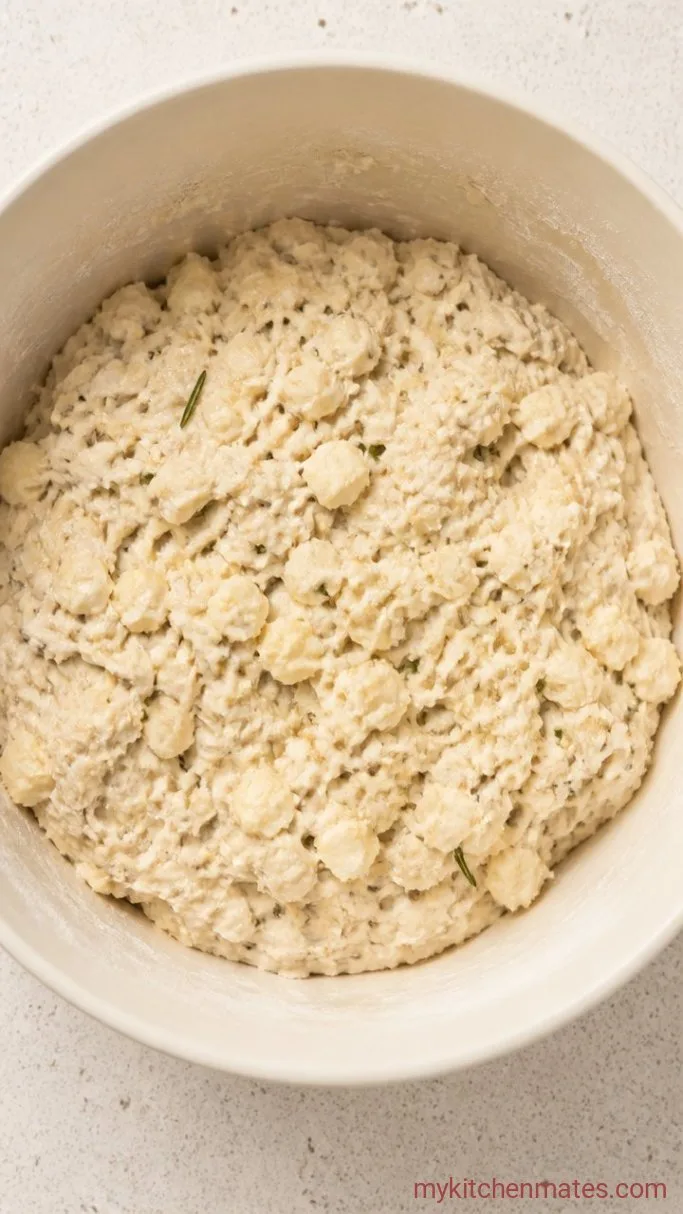
In a large bowl, combine the 500g bread flour and 350g lukewarm water. Stir with a dough whisk or your hand until no dry bits remain. Cover and let it rest for 30 minutes. This short autolyse lets the flour fully absorb the water before you add anything else.
The mixture will look shaggy and rough at first. By the end of the 30 minutes it will feel softer and slightly smoother, even without kneading.
Skipping this rest makes the dough harder to work with later. Giving it that head start means the gluten develops with far less effort.
Step 2: Stretch and Fold the Dough
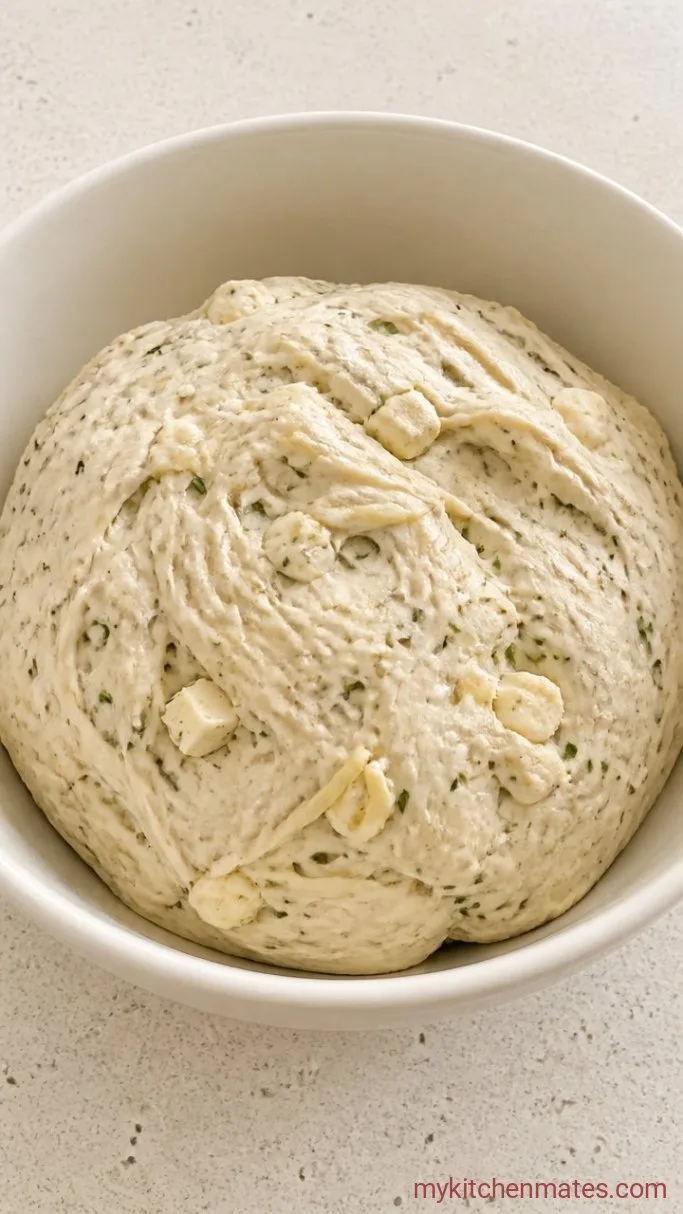
Add the 100g active starter, 10g salt, and 1 tbsp olive oil to the rested dough. Squeeze everything together with your hand until it forms a sticky, cohesive mass. Cover and let it sit for 30 minutes. Then perform the first set of stretch and folds: grab one side of the dough, stretch it up, and fold it over the center. Repeat on all four sides. As you fold in the first round, scatter the chopped rosemary, thyme, and all the cheese over the dough, folding them in as you go.
The dough will feel loose and tacky in the first fold. By the third or fourth round, about 2 hours later, it will tighten into a smooth, jiggly dome that holds its shape on the counter.
Folding traps tiny pockets of air and builds the strength the dough needs to rise high instead of spreading flat. The cheese and herbs distribute themselves evenly during these folds.
Step 3: Shape the Loaf
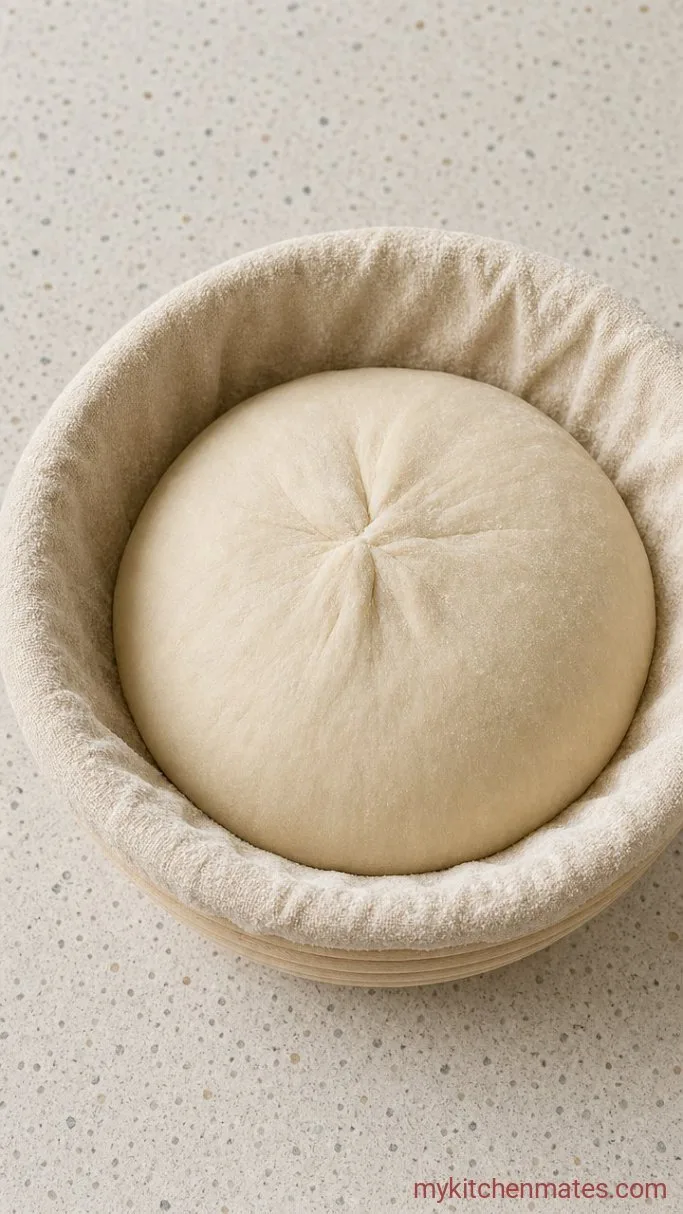
Turn the dough onto a lightly floured surface. Use a bench scraper to coax it into a round, then let it rest uncovered for 20 minutes. This bench rest relaxes the gluten so it won’t tear when you do the final shape. After resting, flip the dough over and gently stretch it into a rough rectangle, then fold the sides in and roll it into a tight batard. Place it seam-side up in a floured banneton or a bowl lined with a floured tea towel.
At this stage the dough should feel puffy and aerated, with the cheese peeking through the surface. If it’s slack or spreading, give it another 15 minutes of rest and reshape it a little tighter.
A tight shape creates the tension that gives the bread its rise. Don’t worry if a little flour dusts the outside, it will brush off easily after baking.
Step 4: Proof the Loaf
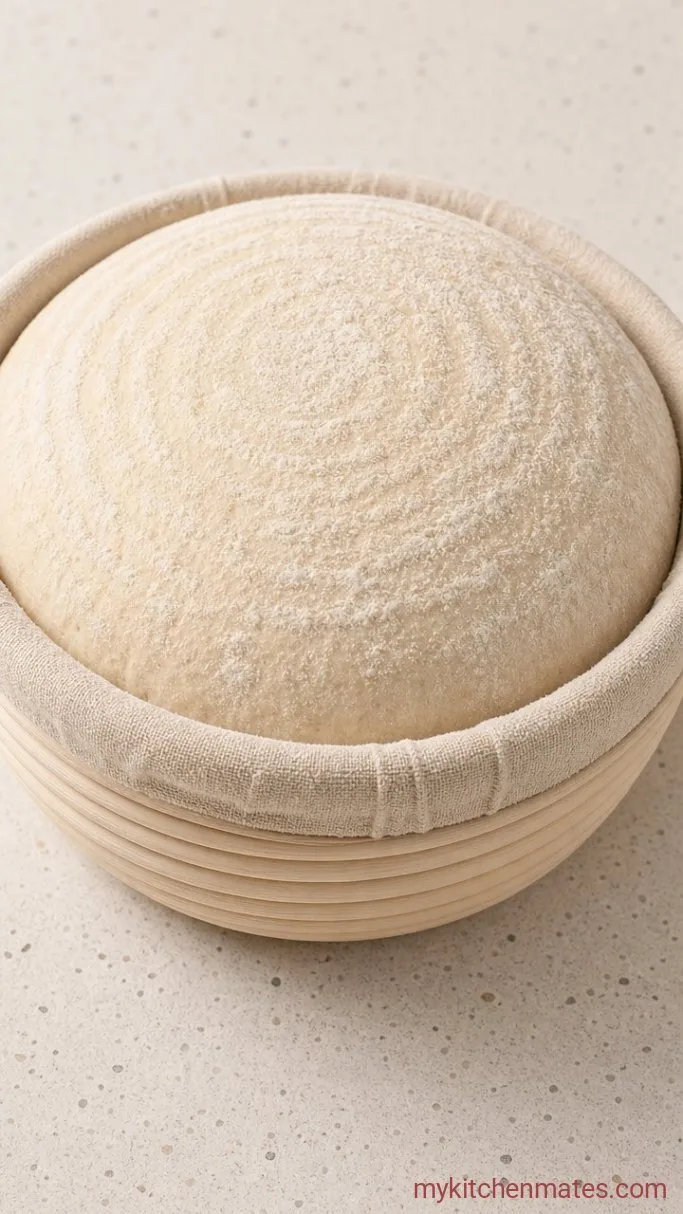
Cover the banneton and let the dough proof at room temperature for about 1 hour, until it looks slightly puffed. Then place it in the refrigerator and cold-proof for 8 to 12 hours. The cold proof develops tang and makes the dough easier to score and handle.
When you poke the chilled dough gently, the indentation should spring back slowly but stay visible. If it springs back fast, give it another 30 minutes at room temp before baking.
An overnight retard fits naturally into a day. You mix and fold in the afternoon, shape in the evening, and bake the next morning.
Step 5: Score and Bake
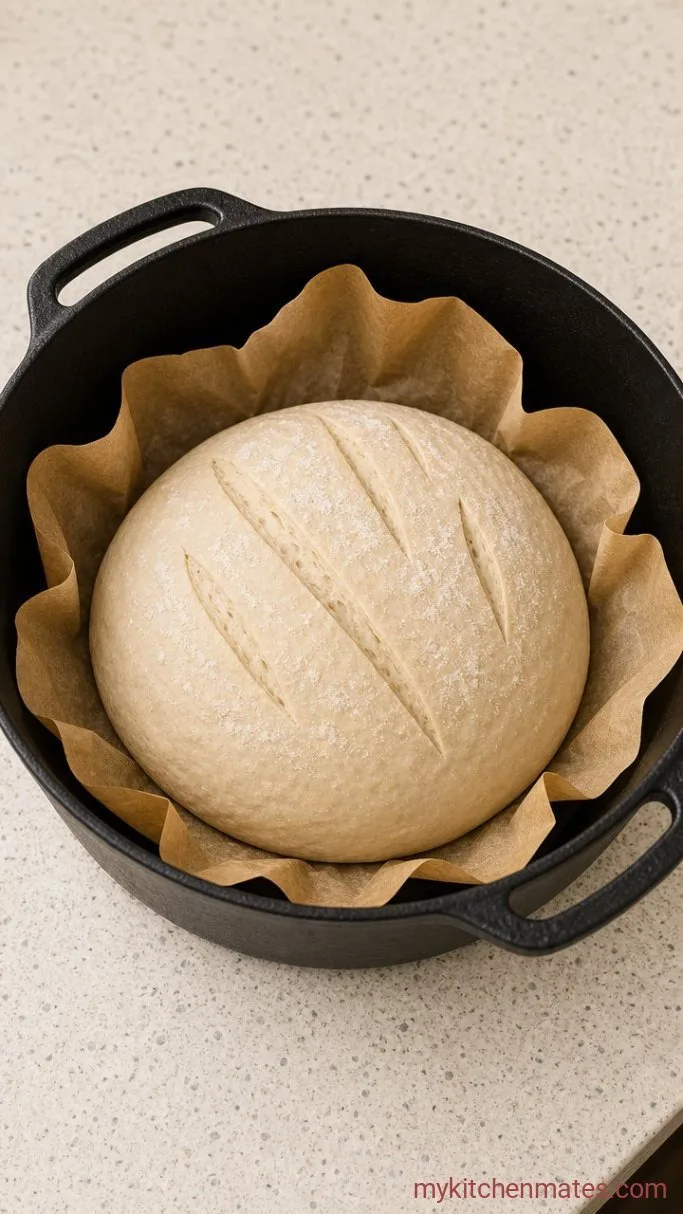
Place a Dutch oven with its lid in the oven and preheat to 450°F (230°C) for at least 30 minutes. Turn the cold dough out onto a piece of parchment paper, dust off excess flour, and slash the top quickly with a sharp lame or razor blade. Use the parchment as a sling to lower the loaf into the hot pot, cover it, and bake for 30 minutes. Then remove the lid and bake another 15 to 20 minutes until the crust is deep amber and the loaf sounds hollow when tapped.
The steam trapped under the lid for the first half creates that blistered, crackly crust. When you pull the lid off, the kitchen fills with the scent of roasted herbs and toasted cheese.
Don’t cut into the loaf right away. The crumb finishes setting as it cools, and the cheese inside will firm up so it doesn’t squish out.
Step 6: Cool and Slice
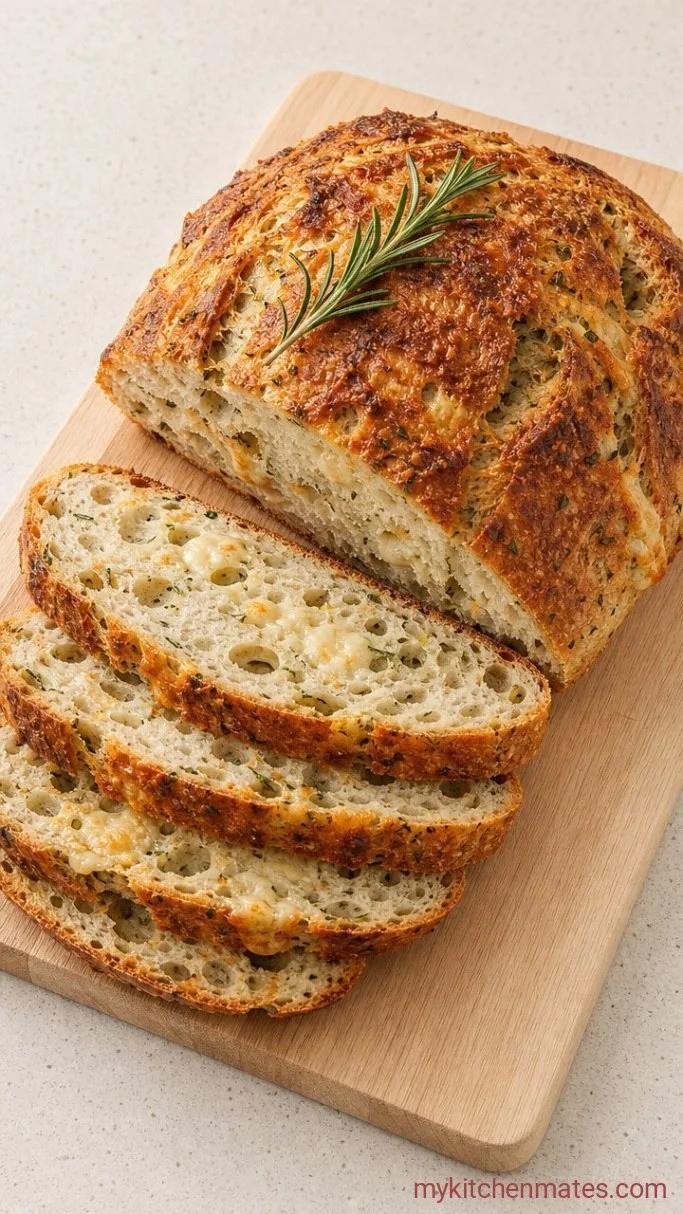
Lift the bread out of the pot and onto a wire rack. Let it cool for at least 1 hour before you slice into it. Once it’s barely warm, saw through the crust with a serrated knife to reveal the swirled ribbons of cheese and herbs.
Tips for the Best Loaf
- Use a starter that has been fed within the last 4 to 6 hours and passes the float test. A sluggish starter won’t give you the rise you need.
- Add the cheese at the first fold, not during the initial mix. Mixing it in too early shreds the mozzarella and makes the dough greasy.
- If your kitchen is cold, extend the bulk fermentation. The dough should be jiggly and noticeably puffed before you shape it, even if that takes an extra hour.
- Line your banneton with a blend of rice flour and bread flour. Rice flour doesn’t absorb moisture and prevents sticking far better than wheat flour alone.
Fermentation time depends heavily on your room temperature. Here’s a guide for the bulk rise after the folds:
| Room Temperature | Approx. Bulk Time |
|---|---|
| 68°F (20°C) | 5 to 6 hours |
| 72°F (22°C) | 4 to 5 hours |
| 78°F (26°C) | 3 to 4 hours |
Keeping the Bread Fresh
Store the loaf cut side down on a wooden board at room temperature for up to 3 days. For longer storage, slice and freeze the bread in a sealed bag. Reheat slices straight from the freezer in a toaster or a 350°F (175°C) oven for a few minutes, and the crust will crisp up again.
What To Serve With Italian Herb and Cheese Sourdough Bread
A bowl of tomato soup is the obvious soulmate. The tangy sourdough soaks up the broth while the melted cheese echoes the richness of the soup. It also stands up to a hearty minestrone or a white bean and kale stew, where the herbs in the bread mirror the herbs in the pot. For something quick, toast a slice and rub it with a garlic clove, then dunk it in good olive oil with a pinch of salt.
Frequently Asked Questions
Can I use whole wheat flour instead of bread flour?
You can, but swap no more than 20% of the bread flour (100g) for whole wheat. Any more and the loaf will be dense and the cheese flavor gets muted.
Do I need a Dutch oven to bake this bread?
A Dutch oven is the easiest way to trap steam, but a baking stone and a pan of hot water on the lower rack works too. The crust won’t be quite as crackly, but it will still be good.
Can I use dried herbs?
Yes. Use 2 teaspoons dried rosemary and 1 teaspoon dried thyme, crumbled between your fingers to wake up the oils.
What if my loaf spreads instead of rising?
That almost always means the dough needed a longer bulk fermentation or a tighter shape. Next time, watch for that jiggly, domed surface and build more tension when rolling.
Italian Herb and Cheese Sourdough Bread Recipe
Ingredients
Method
- Mix flour and water, cover, and rest 30 minutes. Add starter, salt, olive oil, and mix into a shaggy dough.
- Cover and rest 30 minutes. Perform a set of stretch and folds, adding cheese and herbs during the first fold. Repeat folds every 30 minutes for about 2 hours total, until the dough is smooth and elastic.
- Turn dough onto a floured surface, shape into a round, and bench rest 20 minutes. Then shape into a tight batard and place seam-side up in a floured banneton.
- Proof at room temperature for 1 hour, then cold-proof in the refrigerator for 8-12 hours.
- Preheat a Dutch oven at 450°F (230°C) for 30 minutes. Turn dough onto parchment, score the top, and bake covered for 30 minutes. Uncover and bake 15-20 minutes more until deep amber.
- Cool on a wire rack for at least 1 hour before slicing.
Notes
