
Soft Braided Italian Easter Bread with Dyed Eggs

This soft, braided Italian Easter bread brings a little spring magic to the table with its golden crust and a brightly colored egg tucked into each twist. The dough is barely sweet, with a hint of orange zest and anise that fills the kitchen while it bakes.
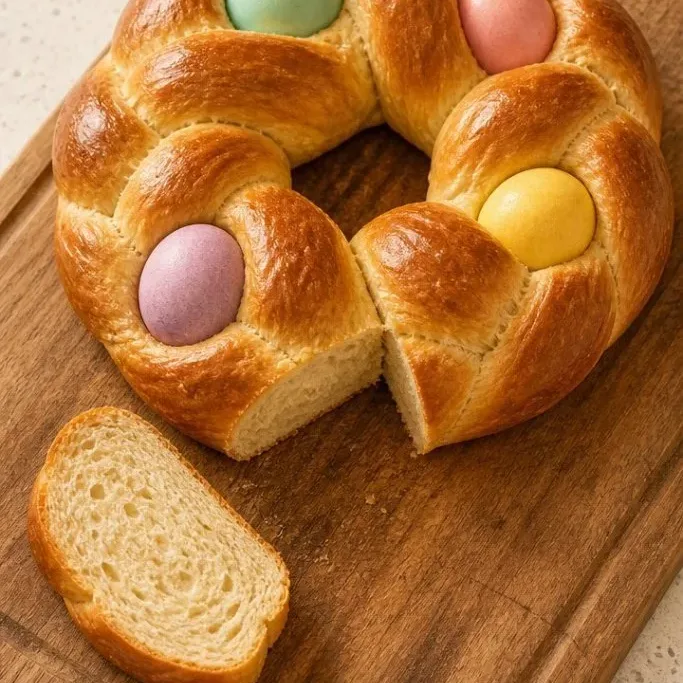
It is simpler to shape than it looks, and once you pull that first braided loaf from the oven, you will want to make it a holiday tradition.
Why This Bread Works
This bread gets its pillowy texture from a generous amount of butter and eggs, so it tastes almost like a brioche but with an airier crumb. Orange zest and a whisper of anise give it the fragrance of an Italian bakery without being overpowering.
Braiding the dough is a forgiving step. Even if your ropes are a little uneven, the second rise smooths things out, and the baked loaf looks handcrafted and beautiful. The eggs are raw when they go in and cook right along with the bread, so they turn out hard-cooked and ready to peel and eat.
I keep coming back to this version because it holds its shape and stays soft for days.
Ingredients
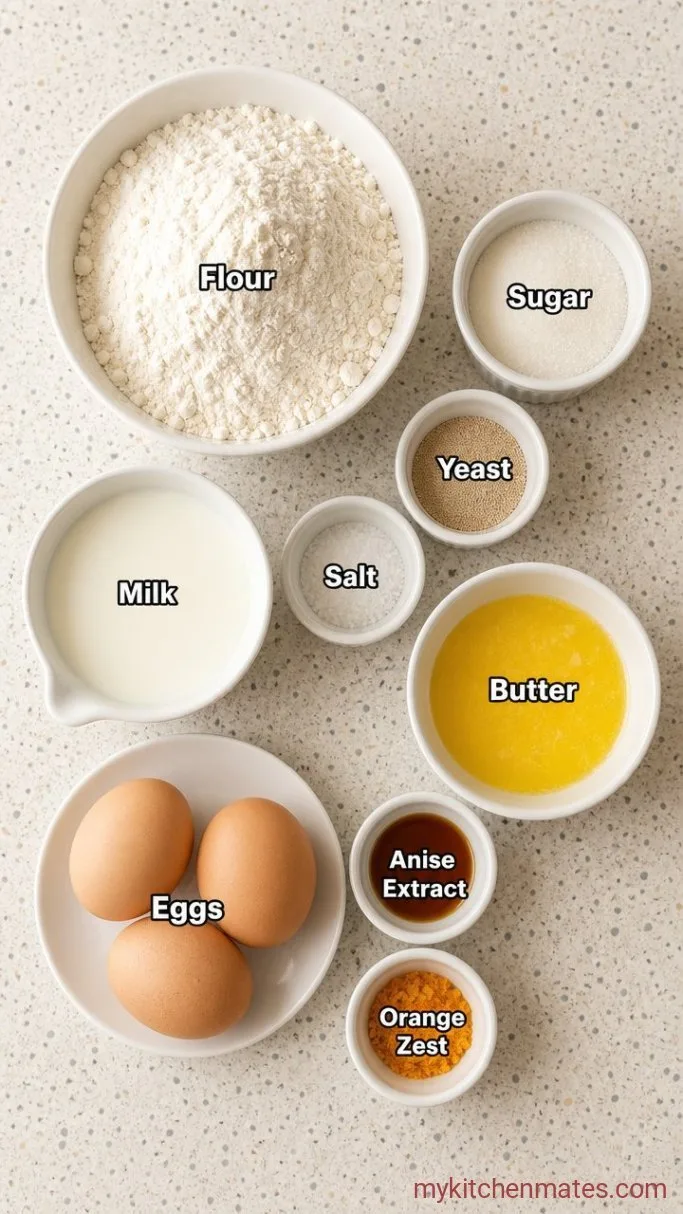
- 4 raw eggs, dyed: any color you like, see tip below for easy dyeing
- 4 cups (500g) all-purpose flour: plus more for kneading
- 1/4 cup (50g) granulated sugar: the dough is only lightly sweetened
- 1 packet (2 1/4 tsp) active dry yeast: or instant yeast
- 1 tsp fine sea salt
- 1/4 cup (60ml) whole milk: warmed to about 110°F (43°C)
- 1/2 cup (1 stick, 113g) unsalted butter: melted and cooled slightly
- 3 large eggs: at room temperature, for the dough
- 1 large egg (for egg wash, optional): beaten with 1 tbsp water
- 1 tsp anise extract: for that classic Easter bread flavor
- Zest of 1 orange: about 1 tbsp
Variations / Substitutions
- Anise extract: Swap with 1 tsp vanilla extract or 1/2 tsp almond extract. The flavor will be less traditional but still lovely.
- Orange zest: Use lemon zest instead for a brighter citrus note.
- Butter: Salted butter is fine; reduce the added salt to 1/4 tsp. For dairy-free, use a plant-based buttery stick.
- Flour: You can substitute up to half whole wheat flour, but the bread will be denser. For a softer crumb, stick with all-purpose.
- Eggs in dough: To make the dough egg-free (not the decorative eggs), use 3 tbsp aquafaba per egg and increase the milk slightly. The crumb will be less rich.
Hearty Italian Sausage Soup is a cozy soup to serve with this bread.
How to Make Italian Easter Bread
Step 1: Mix the Dough

Combine the 1/4 cup warm milk and a pinch of the sugar in a small bowl, sprinkle the yeast over the top, and let it stand for 5 to 10 minutes until foamy. In a large mixing bowl or the bowl of a stand mixer, whisk together the 4 cups flour, the remaining sugar, and the 1 tsp salt. Add the melted butter, 3 room-temperature eggs, orange zest, anise extract, and the yeast mixture, and stir until a shaggy dough forms.
Knead the dough with a dough hook on medium-low speed for 6 to 8 minutes, or turn it out onto a lightly floured surface and knead by hand for about 8 minutes. The finished dough should be smooth and elastic, tacky but not sticky, and it should spring back when you press a finger into it. It will look a little glossy from the butter.
If the dough feels too dry and won’t come together, add milk 1 tablespoon at a time. If it sticks to everything, dust your hands and the surface with a little more flour.
Step 2: Proof the Dough

Shape the dough into a ball and place it in a large greased bowl, turning it once so the top is lightly coated. Cover the bowl with plastic wrap or a clean kitchen towel and set it in a warm, draft-free spot for about 1 to 1.5 hours, until the dough has doubled in volume.
A softly domed top and an indentation that stays when you press a finger lightly into the dough means it is ready. If it looks puffed but springs back immediately, give it another 15 minutes.
Cold kitchen? Turn your oven on for 1 minute, then shut it off and put the covered bowl inside with the oven door cracked. The gentle warmth helps things along without overheating the yeast.
Step 3: Shape the Braids and Nestle the Eggs

Punch the dough down gently and turn it out onto a clean work surface. Divide the dough into 2 equal pieces, then divide each piece into 3 equal portions. Roll each portion into a rope about 14 inches long. Take 3 ropes, pinch them together at one end, and braid them loosely. Pinch the other end together and tuck both ends slightly under. Transfer the braid to a parchment-lined baking sheet. Repeat with the remaining 3 ropes to form a second loaf.
Gently press one dyed raw egg into the center of each braid, nestled between the strands. Don’t push too hard, the dough will poof around it as it rises.
Cover the loaves loosely with a towel and let them rise for 30 to 40 minutes, until puffy and noticeably larger. While they rise, preheat your oven to 350°F (175°C) so it is ready when the loaves are.
Step 4: Bake the Bread

If you are using the egg wash, brush the tops and sides of the risen loaves lightly with the beaten egg. Bake the bread on the center rack for 25 to 30 minutes, rotating the pan halfway through, until the crust is deep golden and an instant-read thermometer inserted into the center of a loaf reads 190°F (88°C).
The eggs will cook through completely, and the crust will be shiny and evenly colored. The kitchen will smell like a bakery.
If the tops brown too quickly before the inside is done, tent the loaves loosely with foil and continue baking.
Step 5: Slice and Serve

Cool the loaves on a wire rack for at least 15 minutes before slicing. The baked eggs will be hard-cooked; peel them and enjoy right alongside the bread. Serve the slices warm or at room temperature, with a smear of butter or a drizzle of honey.
Tips for Beautiful Easter Bread
- Dye the eggs a day ahead: Stir 1/2 cup hot water, 1 tsp white vinegar, and 20 drops of food coloring. Submerge raw eggs, lift out, and let them dry completely on a wire rack so the color does not bleed onto the dough.
- After kneading, the dough should feel tacky but not sticky. Resist adding too much extra flour, it will make the crumb tougher.
- Braid the ropes loosely and let the shaped loaves rise only until puffy, not doubled. Overproofing can cause the eggs to sink or the braids to lose definition.
- If the braid does not look perfect, do not worry. The dough rises around the eggs and fills in gaps, and the finished loaf looks rustic and charming.
- Leftover bread makes incredible French toast.
Storing Leftovers
- Refrigerate: Store cooled bread in an airtight bag or tightly wrapped at room temperature for up to 2 days, or refrigerate for up to 5 days. Warm slices before serving.
- Reheating: Wrap slices in foil and warm in a 300°F (150°C) oven for 10 minutes, or microwave individual slices for 15 seconds.
What to Serve with Italian Easter Bread
It is right at home next to a soft butter and a pot of orange marmalade, but it also pairs beautifully with a savory asparagus frittata, the bread’s subtle sweetness balances the saltiness of the eggs. For a lighter touch, serve slices with fresh ricotta and a drizzle of honey.
Frequently Asked Questions
Can I use instant yeast instead of active dry?
Yes, skip the proofing step and add the yeast directly to the dry ingredients. The dough will rise slightly faster, so check it 10 minutes sooner.
Why are my eggs cracking in the oven?
If the eggs go into the dough straight from the fridge, the shock of heat can crack them. Let the dyed raw eggs come to room temperature before you nestle them in.
Can I make the dough the night before?
Yes, after the first rise, punch down the dough, wrap it tightly, and refrigerate overnight. Let it sit at room temperature for about 30 minutes before shaping.
What if I don’t have anise extract?
You can use 1 tsp crushed anise seeds or swap in vanilla extract. The bread will taste different but still be fragrant and tender.
Are the baked eggs safe to eat?
Yes, they cook fully in the oven. Peel them after baking and store any uneaten eggs in the fridge.
Italian Easter Bread Recipe
Ingredients
Method
- Combine warm milk and a pinch of sugar, sprinkle yeast over top, and let stand until foamy. Whisk flour, remaining sugar, and salt. Add melted butter, 3 eggs, zest, anise extract, and yeast mixture. Knead until smooth and elastic, about 8 minutes.
- Shape dough into a ball, place in a greased bowl, cover, and let rise until doubled, 1 to 1.5 hours.
- Punch down dough. Divide into 2 portions, then each into 3 ropes. Braid ropes, place on baking sheet. Gently press a dyed egg into each braid. Cover and let rise until puffy, 30 to 40 minutes.
- Preheat oven to 350°F (175°C). Brush loaves with egg wash if desired. Bake until deep golden and a thermometer reads 190°F (88°C), 25 to 30 minutes, rotating halfway.
- Cool on a wire rack at least 15 minutes, then slice and serve warm or at room temperature.
Notes
