
No-Cook Italian Antipasto Platter (Ready in 15 Minutes)

This Italian antipasto platter is a no-cook appetizer that comes together in about 15 minutes and looks way more involved than it actually is. Layers of salty cured meats, creamy cheese, tangy pickled vegetables, and briny olives turn a simple board into something people hover around until every last bite is gone.

You don’t need a recipe so much as a road map. Use what your deli counter has that day, and don’t stress about perfect placement. The only real rule is to let the cheese warm up a little so every slice is soft and full-flavored.
Why This Platter Always Disappears First
A good antipasto board hits salty, tangy, creamy, and crisp all in one bite. There is no cooking and barely any knife work, so the hardest part is not eating all the salami while you arrange it.
Because every component is ready to eat, you can put it together moments before guests walk in. It also scales up or down without any math, a bigger board and a few more handfuls of olives is all it takes for a crowd.
Ingredients
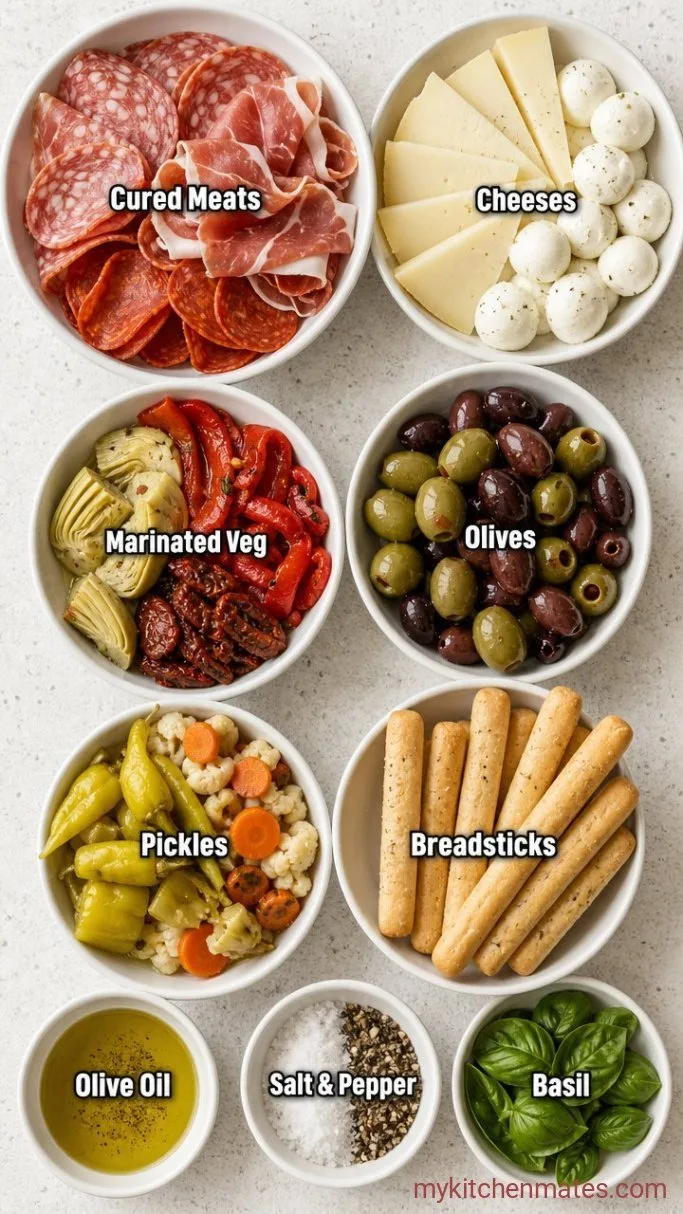
- 6 oz genoa salami, thinly sliced: classic mild, garlicky flavor that folds easily
- 4 oz prosciutto: delicate and salty, drape it loosely so it doesn’t stick together
- 4 oz pepperoni or soppressata: a little spicy kick cuts through the rich cheese
- 6 oz provolone cheese, cut into wedges: nutty and firm, holds its shape on the board
- 4 oz fresh mozzarella balls (bocconcini): soft, milky contrast to the harder cheeses
- 1 cup marinated artichoke hearts, drained: tangy and tender, pat them dry so the oil doesn’t run
- ½ cup roasted red peppers, drained and sliced: sweet, smoky, and brightly colored
- ½ cup sun-dried tomatoes in oil, drained: intense tomato flavor, a small amount goes a long way
- 1 cup mixed olives (Castelvetrano and kalamata): buttery and briny, leave some whole and pit others if you like
- ¼ cup pickled pepperoncini or giardiniera: adds heat and crunch
- Handful of breadsticks or seeded crackers: something crisp to pile everything onto
- Extra virgin olive oil, for drizzling
- Small handful fresh basil leaves
- Flaky sea salt and cracked black pepper
Variations / Substitutions
- Meat: Swap in mortadella, capocollo, or bresaola. Aim for 2 to 3 different textures, one soft and one firm.
- Cheese: A wedge of aged Parmigiano-Reggiano with a small knife works beautifully in place of provolone. Crumbled gorgonzola adds a creamy, sharp note.
- Vegetarian: Omit the meat and double the marinated vegetables, add grilled zucchini ribbons, and include a small dish of seasoned ricotta.
- Gluten-free: Use gluten-free crispbreads or thick cucumber rounds instead of breadsticks.
- Acid: If you don’t have pepperoncini, a scatter of pickled onions or a few caper berries brings the same bright pop.
Italian Hoagie Dip makes the perfect dip to serve with this antipasto platter.
How to Make an Italian Antipasto Platter
Step 1: Layer the Meats and Cheeses
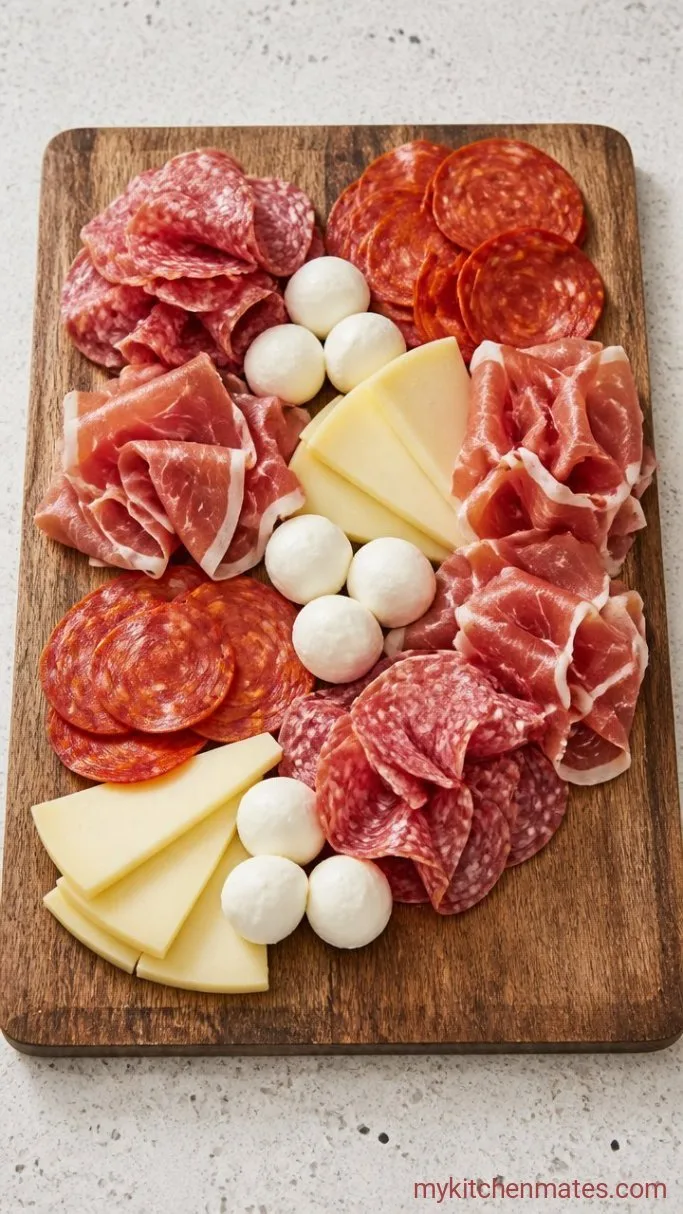
Give yourself about 5 minutes for this step. Choose a large wooden board or a sheet pan lined with parchment, then start with the biggest items so you know how much room you have. Fold the salami into loose ribbons and fan a few slices in one section. Drape the prosciutto in soft piles in another, keeping the slices separated so they don’t tear when guests pick them up. Tuck the provolone wedges and mozzarella balls into the areas between the meats, turning a few pieces so the cut sides face up.
You’ll see the board start to feel full right away. The goal here is to avoid straight lines, the platter looks more inviting when meats and cheeses curve into each other in soft clusters.
Step 2: Scatter the Marinated and Pickled Bites
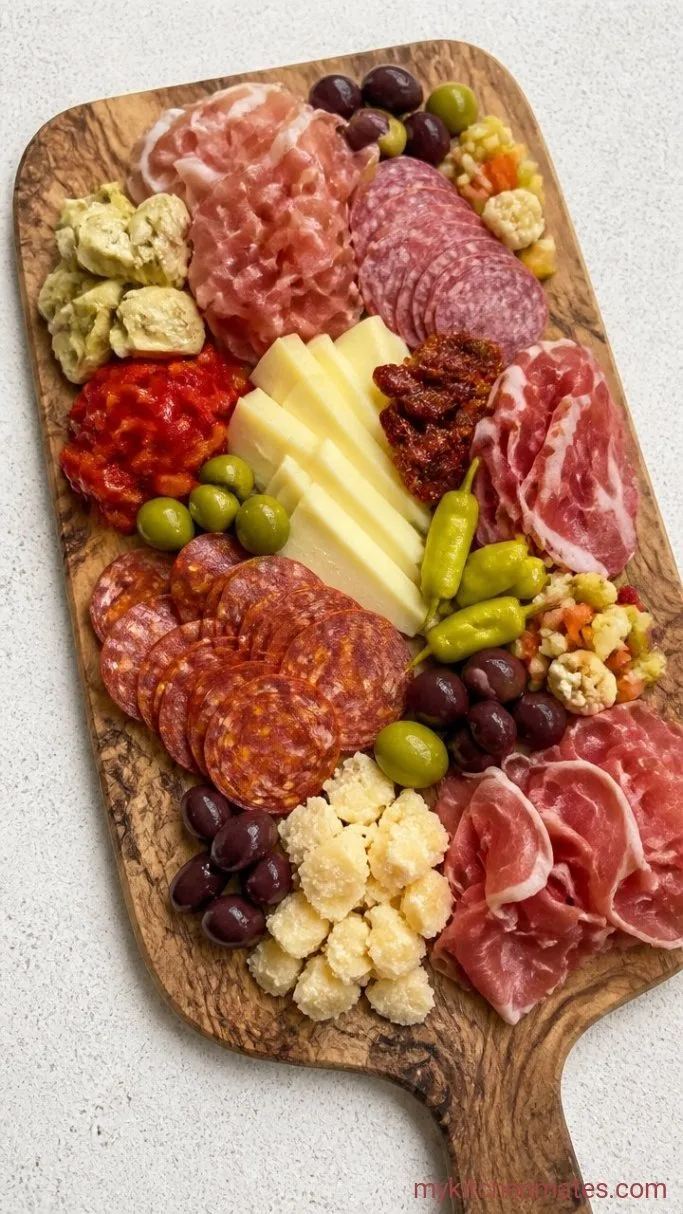
Spend another 3 minutes adding color and acidity. Drain the artichokes, roasted peppers, and sun-dried tomatoes well, then drop them into the open gaps on the board. Tumble the olives and pepperoncini around the edges, letting a few roll next to the cheese so every corner has a little something salty.
At this point the board should look abundant but not messy. If any area looks bare, tuck in an extra artichoke heart or a few olives until the balance feels right. The mix of bright red peppers, deep green olives, and golden cheese is exactly what makes people grab a plate.
Step 3: Add the Crunchy Bits and a Final Drizzle
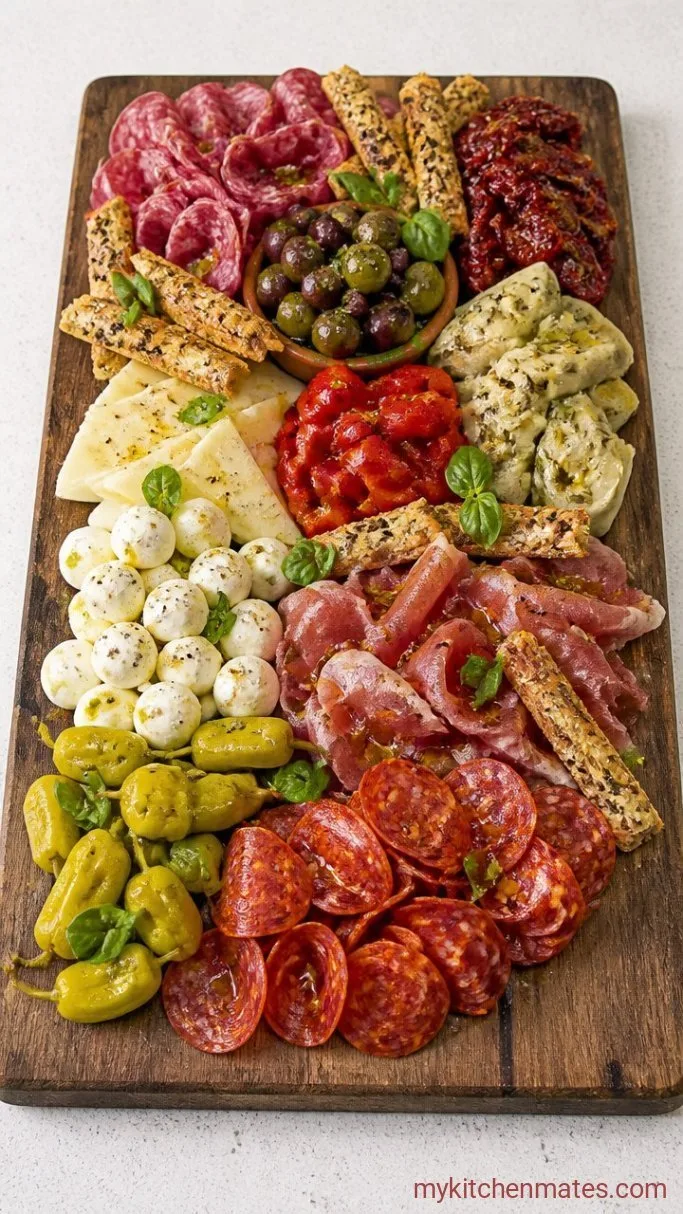
A finishing touch that takes less than a minute. Stand a handful of breadsticks in a short glass or fan them across one side of the board so they don’t go soft from the moisture. If using crackers, pile them in a loose stack next to the cheese.
Scatter the basil leaves over the whole platter, then drizzle everything lightly with a few teaspoons of olive oil. Finish with a pinch of flaky salt and a crack of black pepper right over the cheese and tomatoes. Serve right away while the cheese is still cool but not fridge-cold and the breadsticks are crisp.
A Few Notes Before You Assemble
- Take the cheese out of the fridge 20 to 30 minutes before you plan to serve. Cold cheese tastes muted and feels waxy, a little warmth lets the fat soften and carry the flavor.
- Don’t crowd the board too tightly. Leaving a sliver of wood visible between clusters makes it easier for people to grab what they want without knocking olives onto the floor.
- Pat any wet ingredients (artichokes, peppers, sun-dried tomatoes) dry with a paper towel. Excess oil or brine makes the board slippery and can soak into the crackers.
- If you want to prep early, arrange everything but the bread and basil up to 2 hours ahead, cover loosely, and keep at a cool room temperature. Add the crunch and herbs just before serving.
Scale it to your guest count:
| Serves | Meats (total) | Cheeses (total) |
|---|---|---|
| 4–6 | 10 oz | 8 oz |
| 8–10 | 16 oz | 12 oz |
| 12–14 | 24 oz | 16 oz |
Keeping Leftover Components Fresh
- Refrigerate: Separate the cured meats, cheeses, and wet vegetables into airtight containers. They’ll keep 3 to 4 days. Breadsticks and crackers stay at room temperature in their own bag or tin.
- Serve cold: Leftover meats and cheeses straight from the fridge are great in a sandwich or chopped into a quick pasta salad the next day.
Frequently Asked Questions
Can I make this platter ahead of time?
Yes. Assemble the meats, cheeses, and jarred vegetables on the board up to 2 hours before serving. Cover loosely and keep in a cool spot. Add the bread, basil, olive oil, salt, and pepper right before it hits the table.
What kind of board works best?
A large wooden cutting board or a rimmed baking sheet lined with parchment both work. Just make sure the surface is big enough that ingredients can spread out instead of stacking on top of each other.
Do I need to pit the olives?
It helps, but it’s not required. Castelvetrano olives are often sold pitted, or you can give them a gentle smash with the side of a knife so guests can remove the pit easily. Leaving a small dish for pits is a thoughtful touch.
Can I add fresh fruit to the platter?
Absolutely. Halved fresh figs, clusters of red grapes, or thin slices of ripe pear all work. Tuck them in the spaces between the cheese and meats, and add them just before serving so they don’t dry out.
Italian Antipasto Platter Recipe
Ingredients
Method
- Fold salami into ribbons and arrange on a large board with prosciutto and pepperoni. Tuck provolone wedges and mozzarella balls in between.
- Scatter artichokes, roasted peppers, sun-dried tomatoes, olives, and pepperoncini into the open spaces.
- Add breadsticks or crackers, scatter basil, drizzle with olive oil, and season with salt and pepper. Serve immediately.
Notes
