
Fermented Homemade Hot Sauce with Habanero and Garlic

Homemade hot sauce might sound like a weekend project, but this fermented version takes almost no hands-on time and delivers a deep, bright heat you can’t find in a bottle.

It’s tangy, garlicky, and has a clean pepper flavor that stays on your tongue without harshness. Once you taste it, you’ll want it on everything.
Why This Hot Sauce Is a Keeper
There is something about a ferment that rounds out the edges of a pepper. The habaneros lose their sharp, one-note burn and turn into something fruitier and more complex. That slow tang from the lacto-fermentation gives the sauce a natural depth, without a single drop of vinegar added until the very end.
I love that I can control the salt, the heat, and the tang. A little more garlic, a touch less vinegar — it becomes exactly the sauce I want. And it only takes about 20 minutes of actual work.
Ingredients
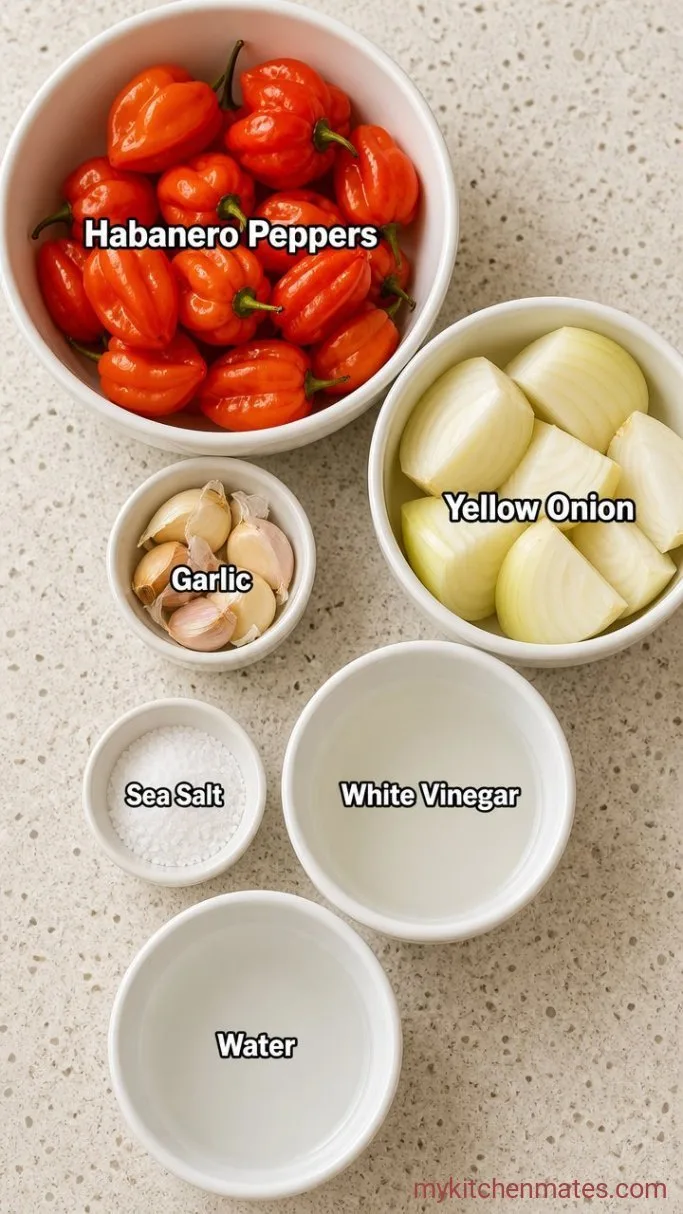
- 1 lb fresh habanero peppers: stems removed, halved (wear gloves!).
- 4 garlic cloves: smashed, no need to peel finely.
- 1 small yellow onion: quartered.
- 2 tbsp fine sea salt: non-iodized, for safe fermentation.
- 4 cups filtered water: or enough to cover.
- 1/2 to 1 cup white vinegar: adjust to taste after blending.
- Reserved brine: for thinning as needed.
Variations / Substitutions
- Milder peppers: Swap habaneros for jalapeños or serranos for a gentle warmth.
- Fruity twist: Add half a cup of diced mango or pineapple to the jar before fermenting for a sweeter finish.
- Smoky depth: Stir in a finely chopped chipotle pepper in adobo after blending.
- Different vinegar: Apple cider vinegar or rice vinegar work well if you prefer a softer acid.
Lemon Garlic Tilapia is one of our favorite ways to use this hot sauce.
How to Make Fermented Homemade Hot Sauce with Habanero and Garlic
Step 1: Pack the Fermentation Jar
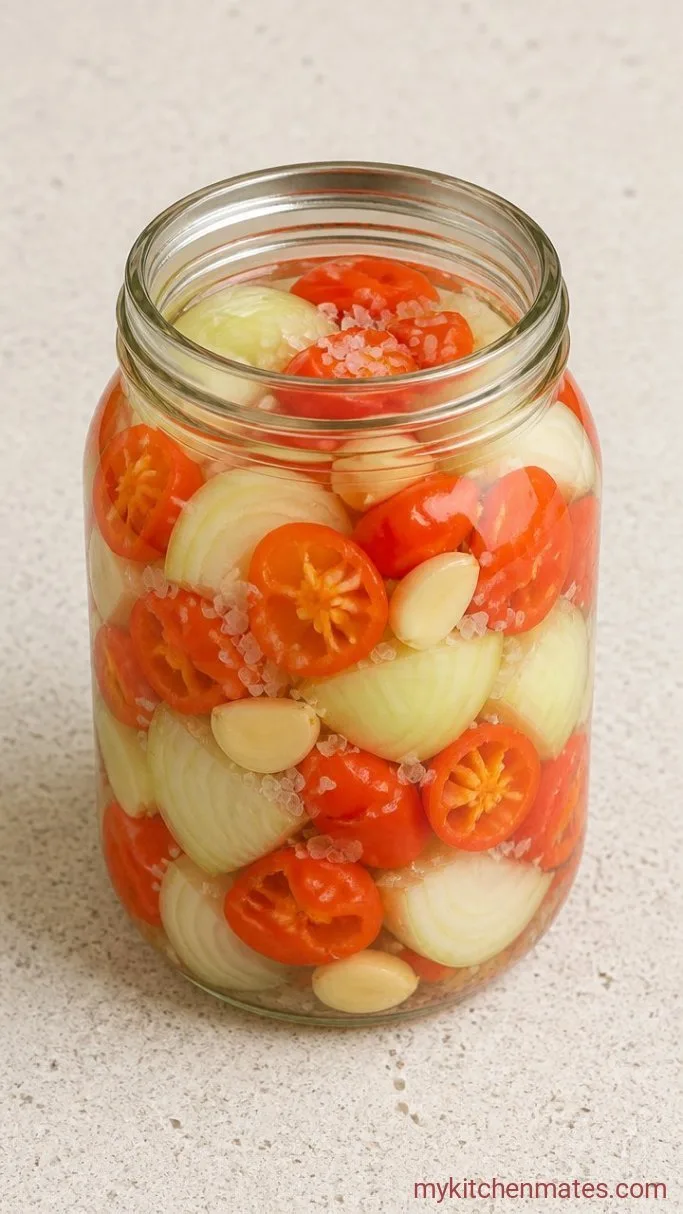
Put on a pair of kitchen gloves — habanero oil is no joke. Halve the peppers and remove the stems, then toss them into a clean quart-sized jar along with the 4 smashed garlic cloves and quartered onion. Sprinkle in the 2 tbsp of salt and pour in enough filtered water to cover everything by about an inch. Use a fermentation weight or a small ziplock bag filled with extra brine to keep all the solids submerged.
The salt at this ratio (about 3% brine) keeps the bad bacteria out while letting the good guys do their work. If you see a few seeds floating, that’s fine; just make sure no pepper pieces poke above the water.
Step 2: Ferment the Peppers
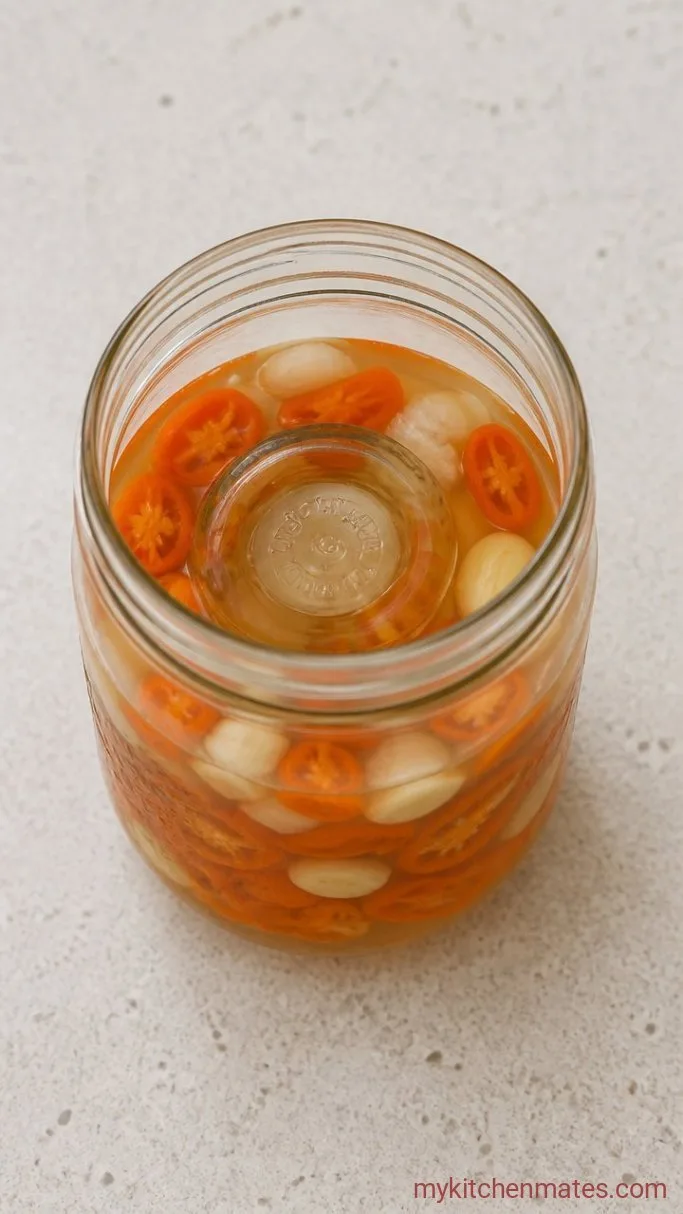
Seal the jar with an airlock lid or a clean cloth fastened with a rubber band. Place it in a spot away from direct sunlight, like a pantry or a cabinet, and let the peppers ferment at room temperature for 5 to 7 days. After a day or two, you will notice tiny bubbles rising, a good sign that fermentation is active.
The brine will turn cloudy and smell pleasantly sour — that’s the lactic acid building up. If you want a milder, less funky flavor, stop at 5 days; for extra tang and a softer pepper texture, let it go the full week. Taste a little brine with a clean spoon as you go and pull the plug when the acidity feels right to you.
Step 3: Blend the Fermented Peppers
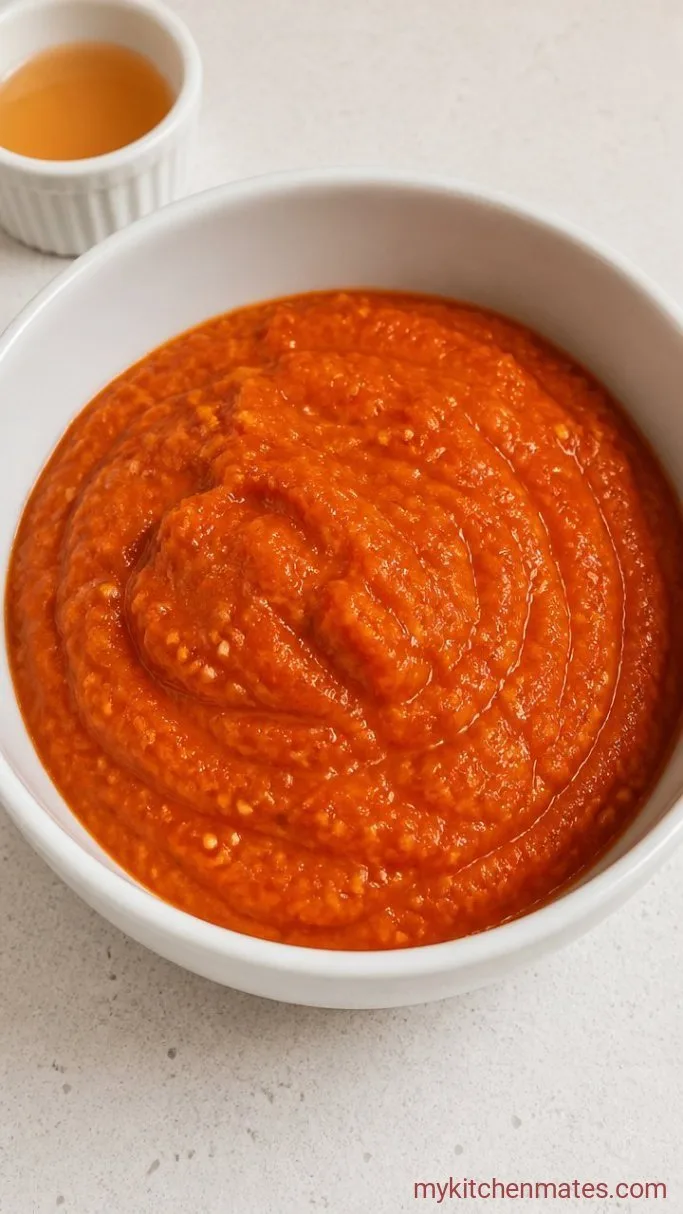
Set a fine-mesh strainer over a large measuring cup and drain the jar, catching all that salty, tangy brine. Transfer the drained solids (peppers, onion, garlic) to a blender. Add 1/2 cup of the white vinegar and 1/2 cup of the reserved brine. Blend on high until the mixture is as smooth as you can get it, then taste. Add more vinegar for extra punch or more brine to loosen the sauce to a pourable consistency.
At this stage the sauce will be thick and a little pulpy; do not worry about getting it perfectly smooth yet. A full minute of blending typically breaks it down enough, but you can always strain it later if you want a thin, Tabasco-style sauce.
Step 4: Simmer the Hot Sauce
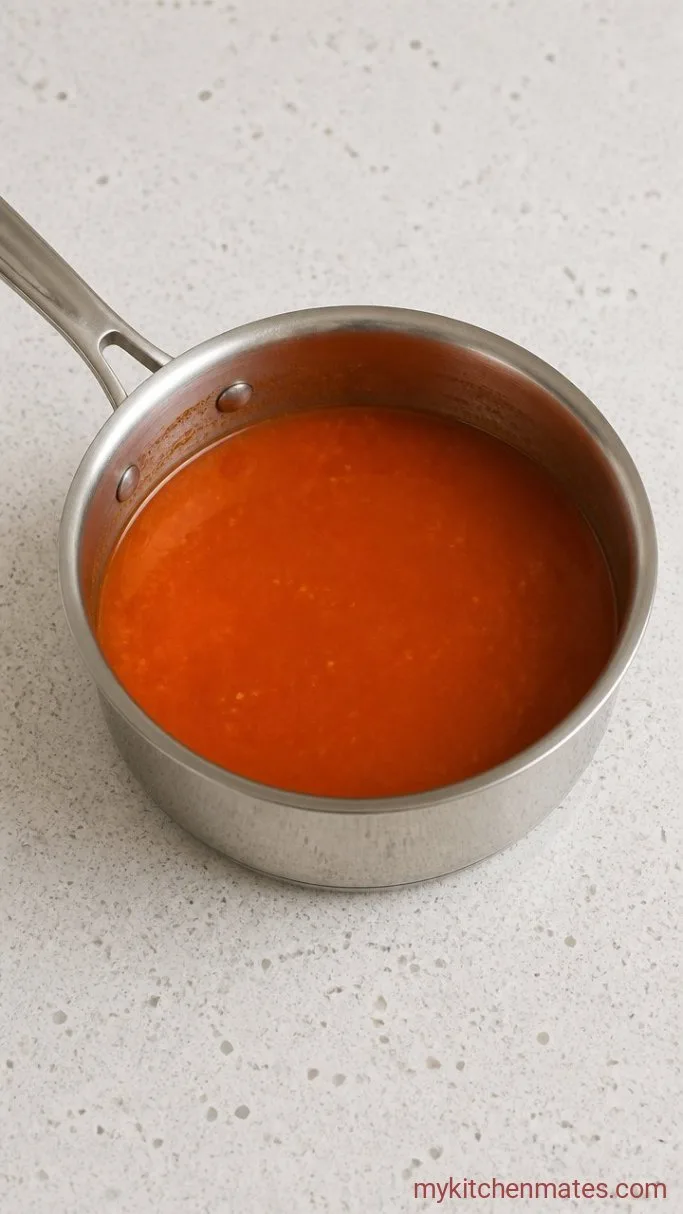
Pour the blended sauce into a small saucepan and set it over medium heat. Bring it to a gentle simmer, then cook for 5 minutes, stirring now and then. This brief cooking step stops the fermentation so your bottle does not keep building pressure in the fridge. It also helps marry the vinegar with the pepper oils and mellows the raw garlic bite just a touch.
Do not boil it hard; a low, steady simmer is plenty. You will see the sauce darken slightly and the aroma will fill the kitchen — bright, garlicky, and warm. If the sauce looks too thick, thin it with a splash of brine or water while it simmers.
Step 5: Bottle and Cool the Sauce
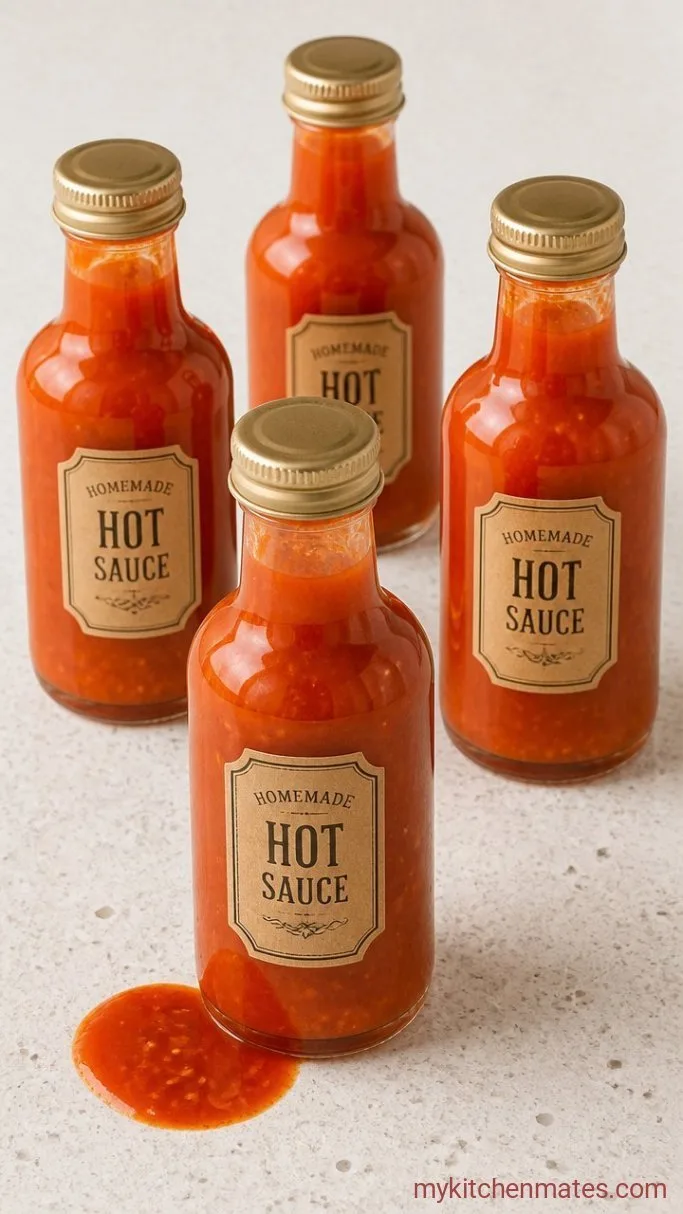
Take the pan off the heat and let the sauce cool for a couple of minutes, just until the steam subsides enough to handle safely. Using a funnel, pour the hot sauce into clean glass bottles or jars. Seal them, then let the bottles sit at room temperature until they are completely cool before moving them to the fridge.
Once chilled, the sauce will thicken a little more. Give it a good shake before you use it, because it tends to settle. That first drizzle onto a taco or a spoonful into a soup is the moment you realize why homemade hot sauce is worth the tiny effort.
Tips for the Best Fermented Hot Sauce
- Use non-iodized salt, like sea salt or kosher salt. Iodine can interfere with fermentation.
- Wear gloves the entire time you handle the peppers. Habanero oils linger on skin and surprise you later.
- Keep all the solids fully submerged during the ferment. Any exposed bits can develop mold, and you would have to toss the whole batch.
- Adjust the final sauce with vinegar and brine after blending, not before. That way you get exactly the tang and consistency you like.
- If you are new to fermenting, start with a 5-day ferment. It gives you a bright, tangy flavor without an overwhelming funk.
Storing Your Homemade Hot Sauce
- Refrigerate: Store the sauce in a tightly sealed jar or bottle in the fridge for up to 6 months. The fermentation is halted, so it stays remarkably fresh. You can also freeze small portions in ice cube trays for longer storage.
What to Serve This Hot Sauce With
This hot sauce shines on anything that can handle a hit of bright, garlicky heat. Drizzle it over carnitas tacos or scrambled eggs, use it to punch up a black bean soup, or add a few drops to a margarita. The fermented tang plays especially well with creamy ingredients like avocado, sour cream, or queso fresco.
Frequently Asked Questions
Can I make this hot sauce without fermenting?
Yes, but the flavor will be sharper and less complex. Skip the ferment step and simmer the raw peppers, garlic, and onion in vinegar and water for 10 minutes, then blend.
Why did my brine turn cloudy?
Cloudiness is completely normal and a sign of active fermentation. It comes from the beneficial bacteria and yeast doing their job.
My sauce tastes too salty. How can I fix it?
If the finished sauce is too salty, add a splash of water and a small spoon of sugar or honey to balance it. Next time, use a little less salt in the brine, but do not drop it below 2% (about 1.5 tbsp per quart).
Do I need to use filtered water?
It is a good idea. Tap water that contains chlorine or chloramine can slow down fermentation. If you only have tap water, let it sit out uncovered for a few hours to let the chlorine dissipate, then use it.
Fermented Homemade Hot Sauce with Habanero and Garlic Recipe
Ingredients
Method
- Pack the peppers, garlic, onion, and salt into a clean quart jar. Pour in enough filtered water to cover the solids by 1 inch and use a weight to keep everything submerged.
- Seal the jar with an airlock or cloth and ferment at room temperature for 5 to 7 days, until the brine is bubbly and sour-smelling.
- Drain the jar, reserving the brine. Blend the drained solids with 1/2 cup vinegar and 1/2 cup brine until smooth. Adjust with more vinegar or brine to taste.
- Pour the blended sauce into a saucepan and simmer gently over medium heat for 5 minutes to stop fermentation.
- Let the sauce cool slightly, then pour into clean bottles. Cool completely before refrigerating.
Notes
