
High Protein Cheesecake (20g Protein, No Sugar)

This high protein cheesecake is the dessert that actually earns its place in your fridge. It has a dense, velvety texture, a tangy-sweet vanilla flavor, and a buttery almond crust.
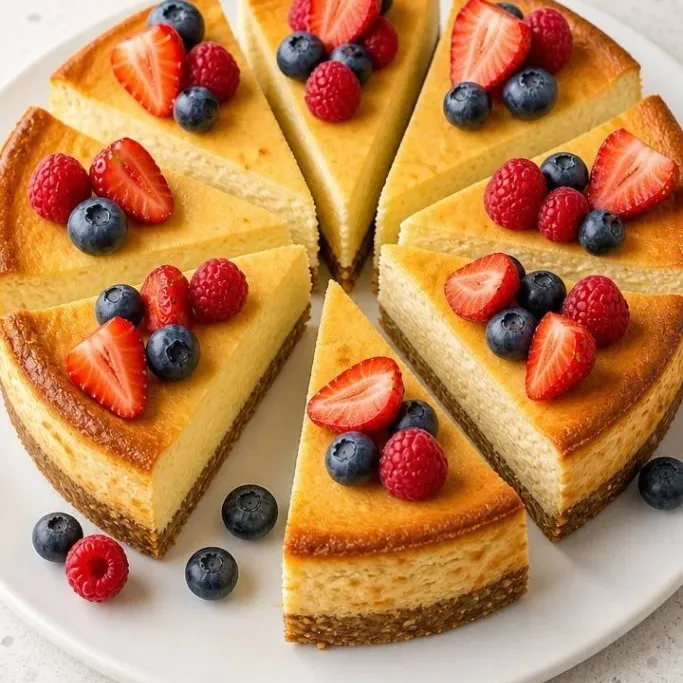
Every bite tastes like real cheesecake, not a protein bar in disguise. The filling leans on cottage cheese and Greek yogurt, so a single slice delivers all the richness you want with over 20 grams of protein and no added sugar.
What Makes This Cheesecake So Good
The texture is the real win here. Blending the cottage cheese until it is completely smooth keeps the filling silky, not grainy. A little lemon juice brightens the tang without tasting like a health food.
You can make it ahead and chill it overnight, and the flavor only gets better. It holds up well as a grab-and-go breakfast or a post-workout treat, but it still feels like a real dessert.
Ingredients

- 1 cup almond flour: fine blanched almond flour gives the crust a shortbread-like texture.
- 2 tbsp melted butter or coconut oil: binds the crust; use refined coconut oil for a neutral taste.
- 1 tbsp granulated erythritol or monk fruit sweetener: just enough sweetness for the crust.
- 2 cups (16 oz) low-fat cottage cheese: small-curd works best; you will blend it smooth.
- 1 cup plain Greek yogurt: full-fat or 2% both work; the fat keeps the cheesecake rich.
- 2 large eggs: bring them to room temperature so the filling mixes evenly.
- 3/4 cup vanilla whey or plant-based protein powder: pick a brand you know tastes good, not chalky.
- 1/3 cup granulated sweetener: use the same kind you used in the crust.
- 1 tsp vanilla extract: adds warmth and rounds out the protein powder.
- 1 tbsp lemon juice: fresh squeezed, not bottled.
Variations / Substitutions
- Dairy-free yogurt: use a thick, plain coconut yogurt and a dairy-free protein powder.
- Nut-free crust: swap almond flour for equal amount of oat flour and add 1 extra tbsp of butter.
- Chocolate cheesecake: use chocolate protein powder and stir 2 tbsp cocoa powder into the filling.
- Fruity swirl: plop small spoonfuls of unsweetened berry compote on top before baking and swirl with a knife.
Cherry Cheesecake Dump Cake is another dessert you’d probably love if you enjoy this cheesecake.
How To Make High Protein Cheesecake
Step 1: Press the Crust

Preheat your oven to 325°F (160°C). In a small bowl, stir together the 1 cup almond flour, 2 tbsp melted butter, and 1 tbsp sweetener until the mixture looks like wet sand. Press it evenly into the bottom of a 7-inch springform pan, using the bottom of a measuring cup to compact it firmly.
You are looking for an even layer that covers the base completely. It will feel a bit oily, and that is fine. The almond flour will toast as it bakes.
Bake the crust for 10 minutes, until the edges start to smell nutty and turn light golden. Set the pan aside and lower the oven temperature to 300°F (150°C). Let the crust cool slightly while you make the filling.
Step 2: Blend the Filling Smooth

Add the 2 cups of cottage cheese to a blender or food processor. Blend on high for a full minute, stopping to scrape the sides as needed, until the cheese is completely smooth and has the consistency of thick cream. Do not rush this. Any tiny curds left behind will show up as a grainy texture later.
Pour the blended cottage cheese into a large bowl. Whisk in the 1 cup Greek yogurt, 3/4 cup protein powder, 1/3 cup sweetener, the vanilla, and the lemon juice until just combined. You want everything evenly distributed without overworking the mixture.
In a separate small bowl, beat the 2 eggs lightly, then fold them into the cottage cheese mixture. Stir gently until no streaks of yellow remain. Overmixing at this stage can whip too much air into the filling, which can cause cracks during baking.
Step 3: Fill and Bake the Cheesecake

Wrap the bottom of the springform pan with a double layer of foil to keep water out if you are using a water bath. Pour the filling over the cooled crust and spread it level with a spatula. Place the pan in a larger roasting pan, and carefully pour hot water into the roasting pan until it reaches about halfway up the sides of the springform.
Bake at 300°F for 50 to 55 minutes. The edges will look set and slightly puffed, while the center should still have a gentle jiggle when you shake the pan. The residual heat will finish setting the middle as it cools.
Step 4: Cool the Cheesecake Slowly

Turn off the oven and crack the door open. Leave the cheesecake inside for 60 minutes. This slow cooling helps the top settle without cracking. The surface will be pale golden with maybe a tiny bit of browning at the edge.
After the hour, take the pan out of the water bath and remove the foil. Let it cool on the counter for 20 more minutes, then cover and refrigerate for at least 4 hours, or overnight. The cheesecake will be fully firm and sliceable only after chilling.
Step 5: Slice and Top with Fruit
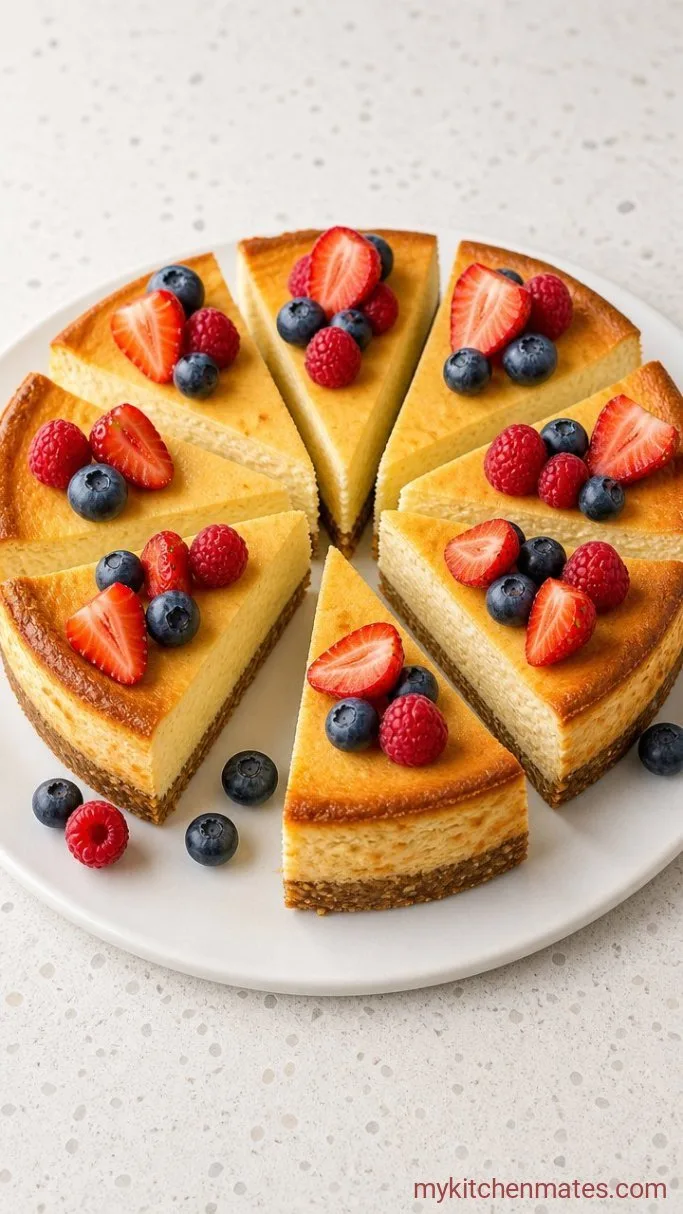
Release the springform ring and slide the cheesecake onto a plate. Run a large knife under hot water between each cut to get clean slices. Top each piece with fresh berries or a drizzle of sugar-free chocolate sauce.
Serve it cold straight from the fridge. The crust stays crisp, the filling is dense and smooth, and the tangy-sweet flavor tastes exactly like a classic cheesecake.
Tips for the Smoothest Cheesecake
- Blend the cottage cheese until it is truly silky.: Run your finger through it; you should feel no grain. A high-speed blender works best.
- Use room temperature ingredients.: Cold eggs or yogurt can seize up and leave lumps, so set them out 30 minutes before you start.
- Pick a protein powder you actually enjoy the flavor of.: Vanilla or unflavored works well. Whey and casein blends give the creamiest result, but a good plant-based blend also works.
- Do not overbake.: The jiggle in the center is your cue. A firmer jiggle means it will be creamy; no jiggle means it is overdone and might get a little dry.
Bake times by pan size:
| Pan Size | Bake Time at 300°F | Notes |
|---|---|---|
| 6-inch | 60 to 65 mins | Filling will be deeper; jiggle test is key. |
| 7-inch | 50 to 55 mins | This is the size used in the recipe. |
| 8-inch | 45 to 50 mins | Thinner cheesecake; watch for the edges pulling away. |
Storing Leftover Cheesecake
- Refrigerate: Cover the cheesecake or wrap slices individually and store in the fridge for up to 5 days. The texture stays creamy and the crust does not get soggy.
- Freeze: Wrap whole slices in plastic and foil and freeze for up to 2 months. Thaw overnight in the refrigerator.
What To Serve With High Protein Cheesecake
A handful of fresh raspberries or sliced strawberries cuts through the richness, and their natural acidity works well with the vanilla. For a more indulgent finish, a spoonful of sugar-free whipped cream and a grating of dark chocolate (85% or higher) makes it feel like a restaurant dessert. If you want crunch, a sprinkle of toasted sliced almonds adds a nice contrast to the smooth filling.
Frequently Asked Questions
Can I make this without a water bath?
Yes. The cheesecake may crack on top but will still taste good. The water bath just gives you a more even, creamy texture and a smoother surface.
Why did my cheesecake crack?
Usually two reasons: overbaking until the center has no jiggle, or cooling it too fast. Let it cool in the turned-off oven with the door cracked, and do not skip that step.
Is there a no-bake version?
Yes, but the method changes. You need to bloom a tablespoon of unflavored gelatin in a little water, then warm it and blend it into the filling before chilling. I have a separate recipe for a No-Bake Protein Cheesecake that covers that.
Can I use a different sweetener?
Absolutely. Any granulated or powdered sweetener that measures 1:1 with sugar works. Liquid stevia drops change the volume, so stick to granulated for the right texture.
Will plant-based protein powder work?
It can, but some plant proteins absorb more liquid and can make the filling denser or drier. I suggest adding an extra 2 tbsp of Greek yogurt if the batter seems too thick.
High Protein Cheesecake Recipe
Ingredients
Method
- Preheat oven to 325°F. Mix almond flour, melted butter, and 1 tbsp sweetener. Press firmly into a 7-inch springform pan. Bake 10 min, then cool. Lower oven to 300°F.
- Blend cottage cheese until completely smooth. Transfer to a bowl and whisk in yogurt, protein powder, 1/3 cup sweetener, vanilla, and lemon juice. Gently fold in beaten eggs just until combined.
- Wrap pan in foil. Pour filling over crust. Set in a roasting pan with hot water halfway up the sides. Bake 50 to 55 min until edges are set and center jiggles slightly.
- Turn off oven, crack door, and leave cheesecake inside for 1 hour. Remove from water, discard foil, cool on counter 20 min, then refrigerate at least 4 hours.
- Release the pan, slice with a hot knife, and serve cold topped with fresh berries.
Notes
