
20-Minute Green Pesto Pasta with Bright, Fresh Basil

This green pesto pasta hits all the notes you want on a busy weeknight: fast, creamy, and genuinely fresh tasting. The pesto comes together while the water heats, so the whole dish is on the table in about 20 minutes.
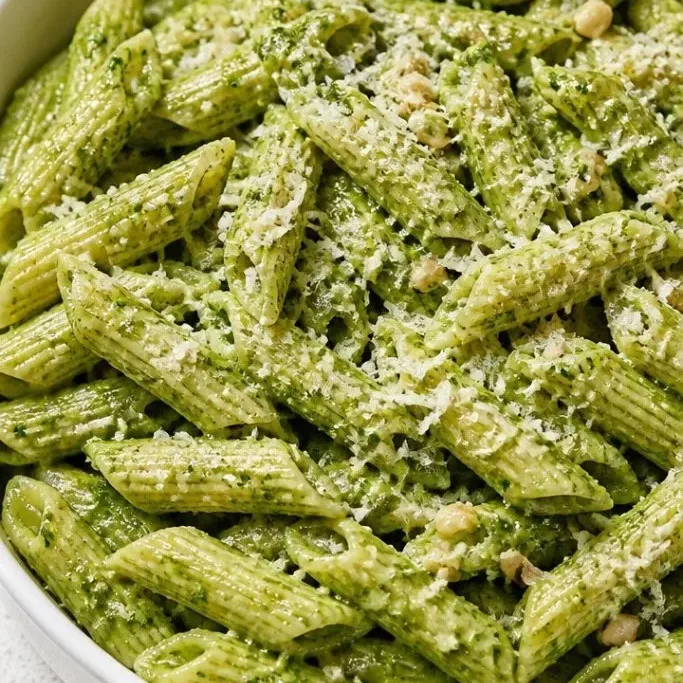
If you have ever been disappointed by pesto that turned muddy or flat, this version will change your mind.
Why This Pesto Pasta Actually Works
The secret is a quick toast of the pine nuts, which deepens their flavor without making the sauce heavy. A generous splash of lemon added right before you toss keeps the basil looking and tasting like it was just picked.
The texture lands somewhere between silky and nubby, with enough grated Parmesan to cling to every ridge of the pasta. It is a bright green, fresh smelling sauce that hugs the noodles instead of pooling at the bottom of the bowl.
Ingredients
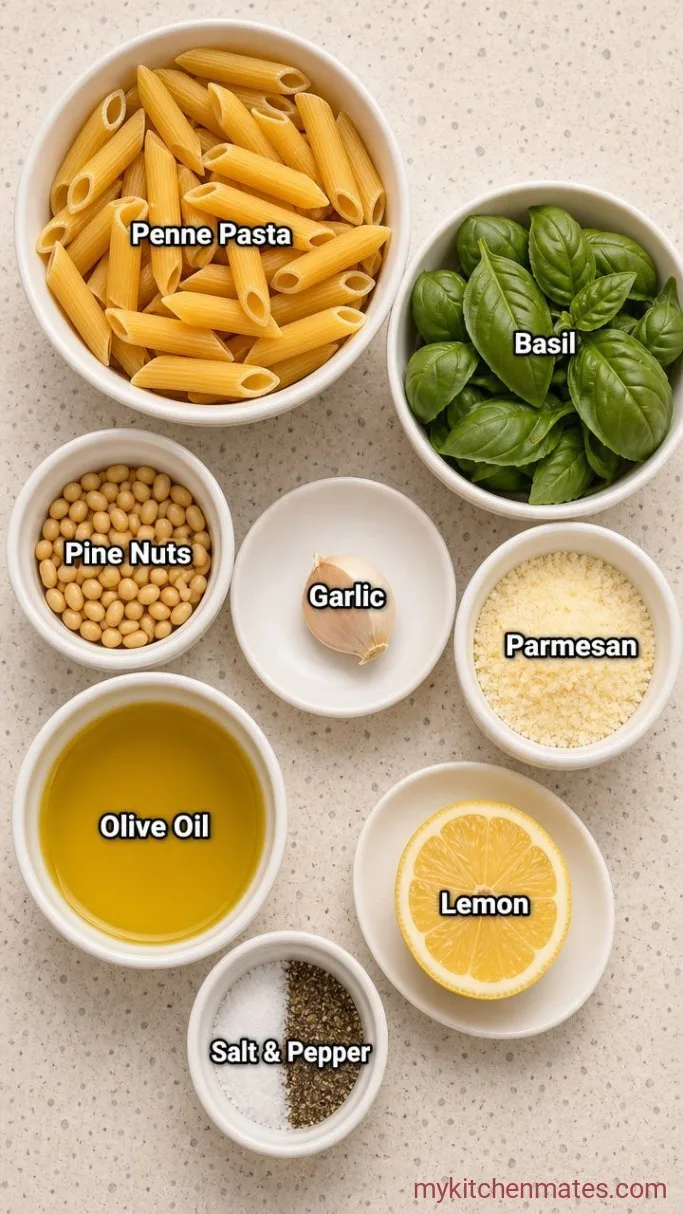
- ¾ lb penne or other short pasta: use a shape with ridges to catch the sauce
- 2 cups packed fresh basil leaves: go for bright green leaves with no dark spots
- ⅓ cup pine nuts: walnuts work in a pinch, but pine nuts give the classic creaminess
- 1 large garlic clove: start with one so it does not overpower the basil
- ½ cup finely grated Parmesan cheese: plus more for serving
- ⅓ cup extra-virgin olive oil: the fruitier the better here
- 1 tbsp fresh lemon juice: use half a lemon, then taste and add more
- ¼ tsp salt: adjust after you toss so you do not overdo it
- ¼ tsp black pepper: freshly ground if you have it
Variations / Substitutions
- Nut-free: swap the pine nuts for an equal amount of sunflower seeds, toasted the same way. The texture stays rich and the flavor stays surprisingly close.
- Dairy-free: use a good plant-based hard cheese alternative, or skip the cheese and add a tablespoon of nutritional yeast for a savory backbone.
- Add protein: stir in shredded rotisserie chicken or quickly seared shrimp right after you toss the pasta, so the pesto coats them too.
- Change the greens: use half arugula for a peppery kick or toss in a handful of baby spinach to stretch the basil without dulling the color.
Herb-Loaded Green Goddess Pasta Salad goes great with this pasta when you want something fresh on the side.
How to Make Green Pesto Pasta
Step 1: Toast the Pine Nuts
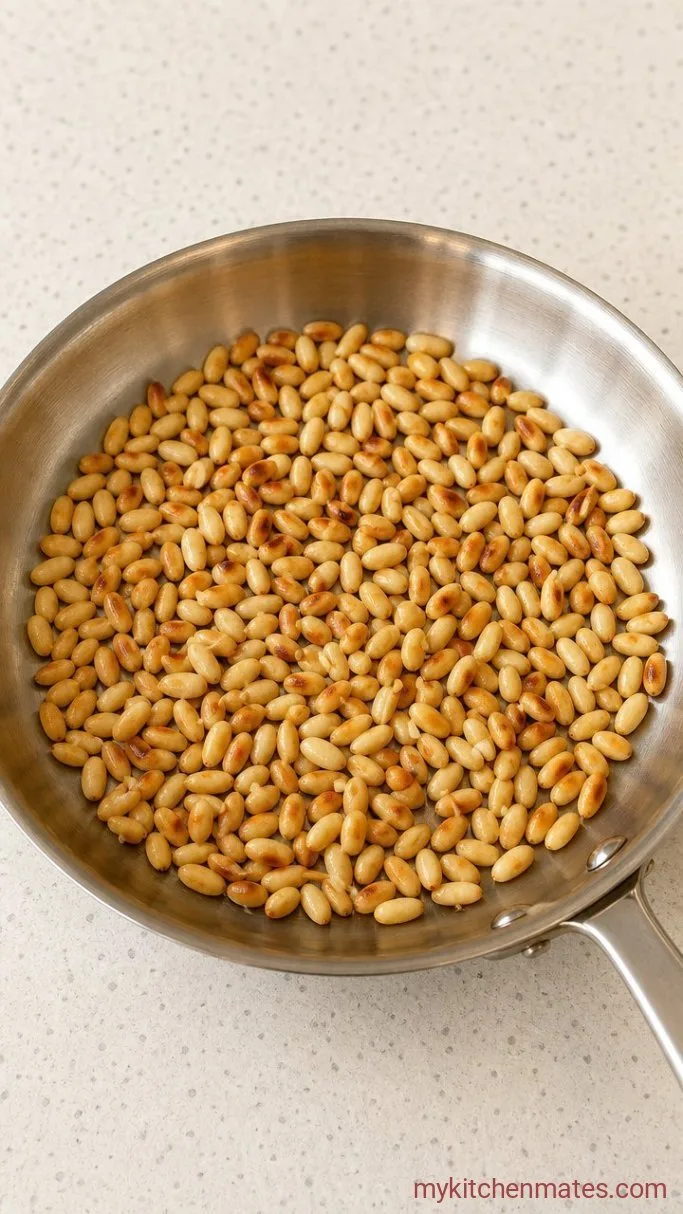
Set a dry small skillet over medium heat. Add the ⅓ cup pine nuts and toast them for about 3 minutes, shaking the pan a couple of times, until they turn light golden and smell nutty.
A pale blonde color is your cue. Pine nuts go from golden to burnt very quickly, so do not walk away. As soon as you catch that warm, buttery scent, slide them into a bowl so they stop cooking.
Step 2: Blend the Pesto
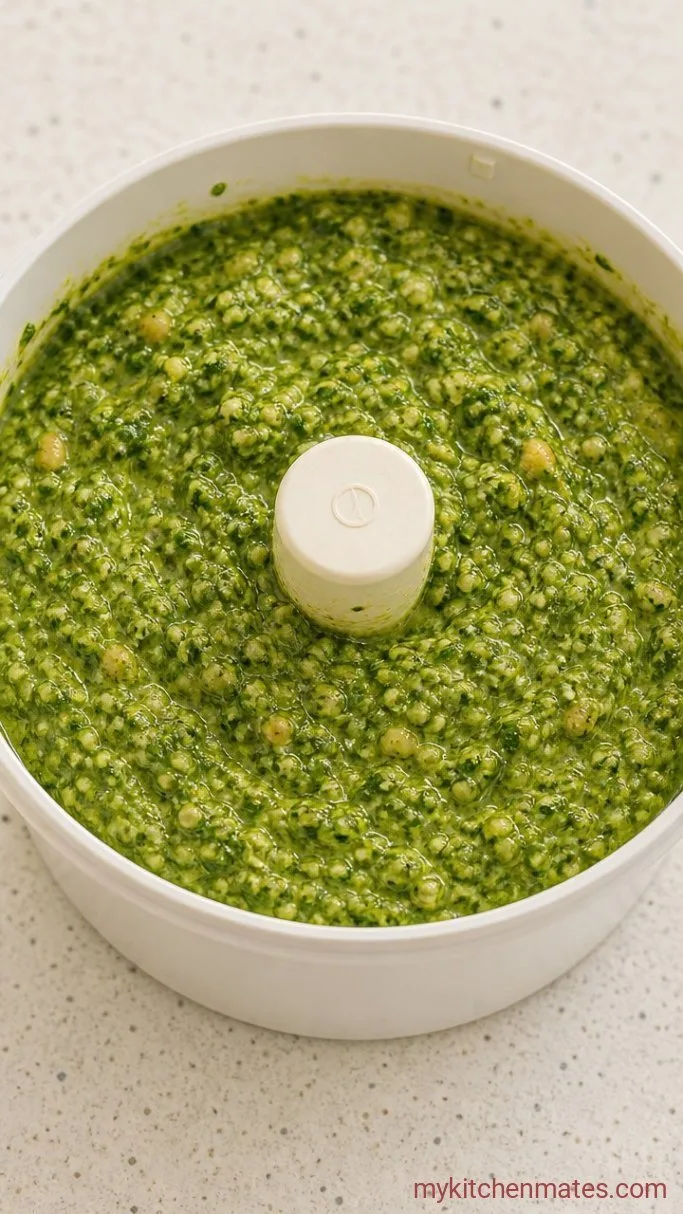
In a food processor, combine the toasted pine nuts, the 2 cups basil leaves, the garlic clove, the ½ cup Parmesan, the ⅓ cup olive oil, the 1 tablespoon lemon juice, the salt, and the pepper. Pulse about 10 times, then scrape the sides and process for 20 to 30 seconds until the sauce is mostly smooth but still has tiny flecks of basil and nut visible.
The pesto should look glossy and bright green, not dark or pasty. A little texture is a good thing here because those small bits catch the pasta and carry more flavor in each bite.
Step 3: Cook the Pasta
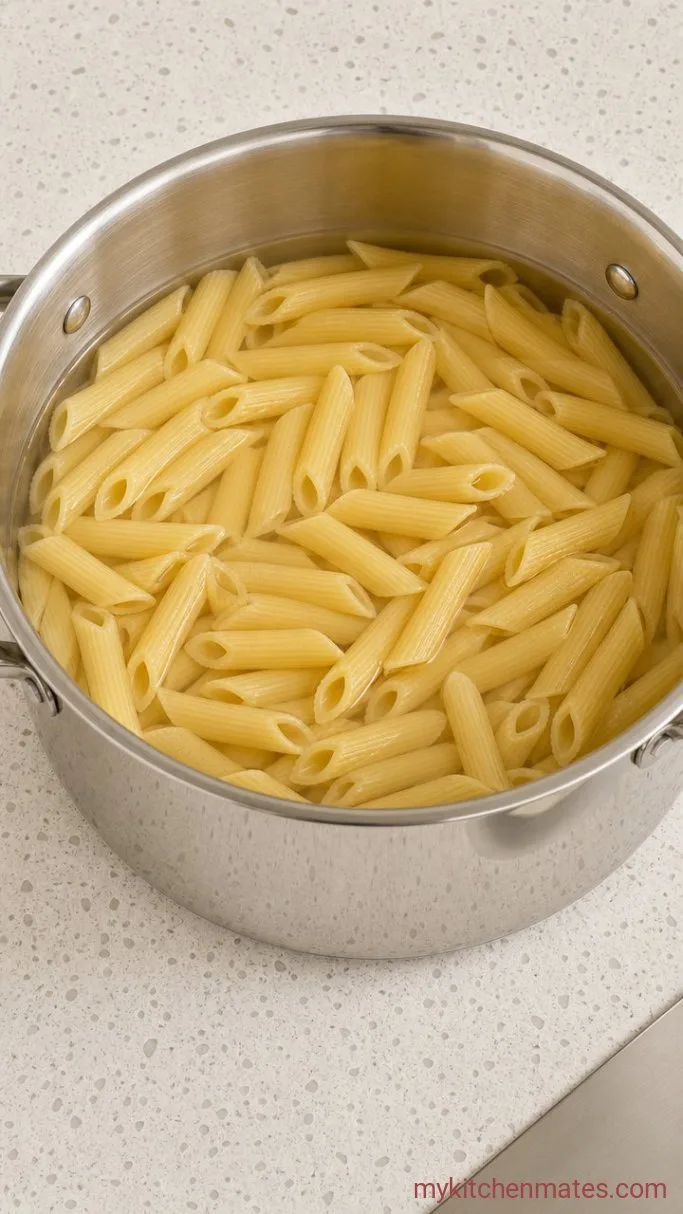
Bring a large pot of salted water to a rolling boil. Add the ¾ lb penne and cook according to the package directions until al dente, typically 9 to 11 minutes. Just before you drain the pasta, scoop out about ½ cup of the starchy cooking water and set it aside. Drain the penne well but do not rinse it.
The pasta should have a slight firmness in the center when you bite it. That little bit of resistance means it will hold up when you toss it with the pesto and soak up the sauce without going mushy.
Step 4: Toss with Pesto and Finish with Parmesan
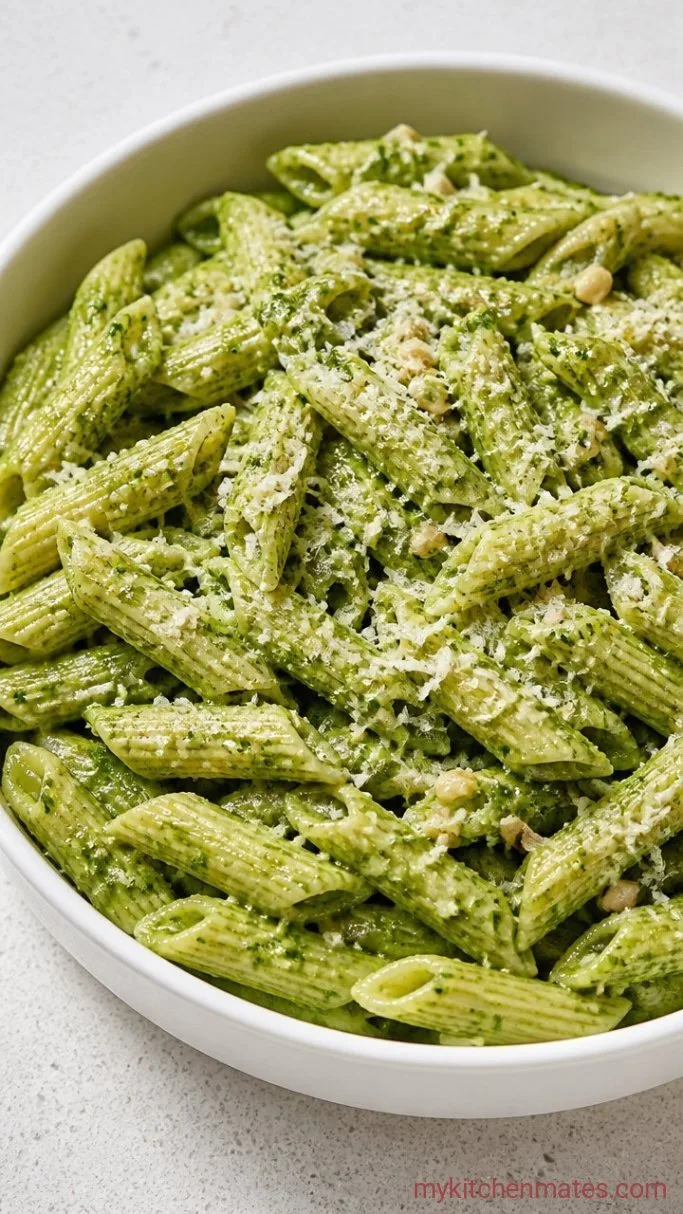
Return the drained penne to the warm pot off the heat. Scrape in all the pesto and pour in about 2 tablespoons of the reserved pasta water. Toss everything together with tongs until the pasta is evenly coated and the sauce turns a shade lighter and a little creamy. Add another splash of water if the pasta seems dry.
Spoon the pasta into bowls, top with an extra snowfall of Parmesan, and serve while the whole kitchen still smells like basil.
A Few Notes Before You Start
- Reserve the pasta water before you drain. That starchy liquid is what turns a thick pesto into a silky sauce that coats every noodle instead of sitting like a paste.
- Let the toasted pine nuts cool for a minute before you drop them into the processor with the basil. Adding them hot can wilt the leaves and dull the color.
- Do not cook the pesto once it is on the pasta. Just toss it through off the heat. Heat breaks down the basil and turns the sauce muddy and brown.
- A single clove of garlic is plenty here. Raw garlic gets sharper as it sits, so if you make the pesto a day ahead, it will taste stronger. You can always grate a bit more in at the table.
Pasta cook times by shape:
| Shape | Cook Time (al dente) |
|---|---|
| Penne | 9 to 11 mins |
| Fusilli | 8 to 10 mins |
| Spaghetti | 8 to 10 mins |
| Farfalle | 10 to 12 mins |
Storing Leftover Pesto Pasta
- Refrigerate: pack leftovers into a sealed container and keep in the fridge for up to 4 days.
- Reheating: warm the pasta gently in a skillet with a small splash of water or milk, stirring constantly over low heat so the sauce does not split.
- Serve cold: this pasta tastes great straight from the fridge as a pasta salad. Give it a squeeze of fresh lemon to wake it up.
What to Serve with Green Pesto Pasta
Crisp, lightly dressed greens cut through the richness of the pesto well, so a simple arugula salad with lemon vinaigrette works beautifully. For something more filling, grilled shrimp or sliced, seared chicken breast add lean protein without competing with the basil. If you want bread on the side, a crusty ciabatta warmed in the oven gives you something to swipe up any leftover sauce with.
Frequently Asked Questions
Can I use store-bought pesto?
Yes. The dish still works. Look for a refrigerated brand with a bright green color and stir in a teaspoon of fresh lemon juice before adding it to the pasta to lift the flavor.
What is the best pasta shape for pesto?
Shapes with nooks and ridges, like penne, fusilli, or gemelli, hold the sauce better. Long noodles like spaghetti work too but the pesto tends to slide off more.
How do I keep the pesto from turning brown?
Use fresh basil leaves that are completely dry, add that lemon juice to the processor, and never heat the pesto directly over a flame. Tossing it into hot pasta off the burner is enough heat.
Can I add vegetables to this dish?
Definitely. Lightly steamed green beans or blanched peas folded in with the pasta add some snap and make the meal feel a bit more complete.
Green Pesto Pasta Recipe
Ingredients
Method
- Toast the pine nuts in a dry skillet over medium heat until golden and fragrant, about 3 minutes. Transfer to a bowl and let cool.
- In a food processor, combine the toasted pine nuts, basil, garlic, Parmesan, olive oil, lemon juice, salt, and pepper. Pulse until nearly smooth but still with small flecks of basil, about 30 seconds.
- Cook the penne in a large pot of salted boiling water until al dente, 9 to 11 minutes. Reserve ½ cup pasta water, then drain.
- Return the hot pasta to the pot off the heat. Add the pesto and 2 tablespoons reserved pasta water and toss until evenly coated. Serve with extra Parmesan.
Notes
