
Gluten-Free Olive Oil Cake (One Bowl, So Moist)

This gluten-free olive oil cake is the dessert you reach for when you want something that feels a little fancy but takes about 15 minutes of actual work. It bakes up tender and fragrant with citrus, stays moist for days, and nobody ever guesses it’s gluten-free.

The olive oil gives the cake a subtle fruitiness that reads as buttery, not savory. The crumb is light but never dry, with a thin, crackly top that catches a dusting of powdered sugar perfectly.
Why This Olive Oil Cake Always Works
Good olive oil cake doesn’t taste like olive oil. It tastes like a really buttery, fragrant vanilla cake, because the oil carries the citrus zest and rounds out everything else. That’s what this one does.
The texture comes from a smart mix of a good gluten-free flour blend, whole milk yogurt, and a generous pour of olive oil. It’s the same trick that keeps any cake soft: fat plus a little tang to tenderize the crumb.
And it’s truly a one-bowl cake. You whisk the dry, you whisk the wet, you fold them together. That’s it. No layers, no frosting, no stand mixer. Just a golden cake that looks like you tried harder than you did.
Ingredients
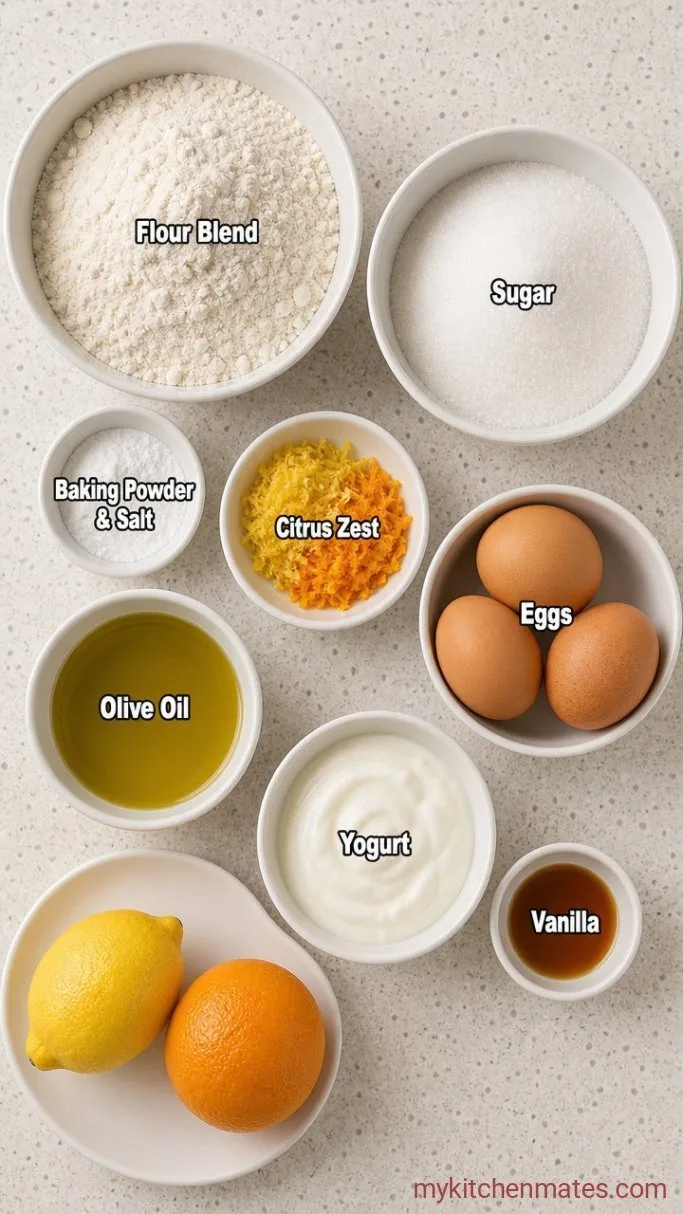
- 1 ¾ cups (245 g) gluten-free all-purpose flour blend (with xanthan gum): any 1:1 blend that includes a binder works best.
- 1 cup (200 g) granulated sugar: white sugar keeps the crumb light.
- 2 teaspoons baking powder: gives the cake its lift.
- ½ teaspoon fine sea salt: balances the sweetness.
- 1 tablespoon lemon zest, plus 1 tablespoon orange zest: from about 1 lemon and 1 orange; the zest is where most of the flavor lives.
- 3 large eggs, at room temperature: cold eggs won’t blend as smoothly with the oil.
- ½ cup (120 ml) extra-virgin olive oil: use one that’s fruity and mild, not grassy or peppery.
- ½ cup (120 ml) plain whole milk yogurt: or buttermilk; the tang helps tenderize the crumb.
- 1 teaspoon vanilla extract: rounds out the citrus.
Variations / Substitutions
- Dairy-free: swap the yogurt for an equal amount of unsweetened coconut yogurt or a thick dairy-free yogurt. The cake will be just as moist.
- Citrus only: use all lemon zest, all orange zest, or even tangerine zest for a more floral note.
- Add a crumb topping: sprinkle a mix of sliced almonds and coarse sugar over the batter before baking for a crunchy top.
- Glaze instead of dusting: whisk ½ cup powdered sugar with 1 tablespoon lemon juice and drizzle over the cooled cake.
Gluten-Free Lemon Blueberry Cake is another dessert you’d probably love if you enjoy this cake.
How to Make Gluten-Free Olive Oil Cake
Step 1: Whisk the Dry Ingredients

Preheat the oven to 350°F (175°C). Line the bottom of a 9-inch round cake pan with parchment and lightly grease the sides. In a large bowl, whisk together the 1 ¾ cups gluten-free flour, 1 cup sugar, 2 teaspoons baking powder, ½ teaspoon salt, and the lemon and orange zest.
The zest releases its oils as you whisk it into the sugar, so the whole bowl smells bright and citrusy right away — that’s your sign the flavor will distribute evenly through the cake.
Step 2: Combine the Wet Ingredients

Crack the 3 eggs into a medium bowl, add the ½ cup olive oil, ½ cup yogurt, and 1 teaspoon vanilla. Whisk until the mixture is completely smooth and no streaks of egg white remain, about 30 seconds.
You want the oil fully emulsified with the eggs and yogurt. If it looks separated, keep whisking another few seconds until it comes together into a uniform, pale yellow liquid.
Step 3: Fold the Batter Together

Pour the wet mixture into the dry ingredients and fold gently with a flexible spatula. Scrape the bottom and sides of the bowl, turning the batter over until no pockets of dry flour are left. Stop as soon as the batter is uniform, after about 15 to 20 strokes.
Overmixing works the gluten-free flour’s starches too much and can make the cake gummy, so a light hand matters. The batter will be thick, shiny, and pourable.
Step 4: Bake the Cake
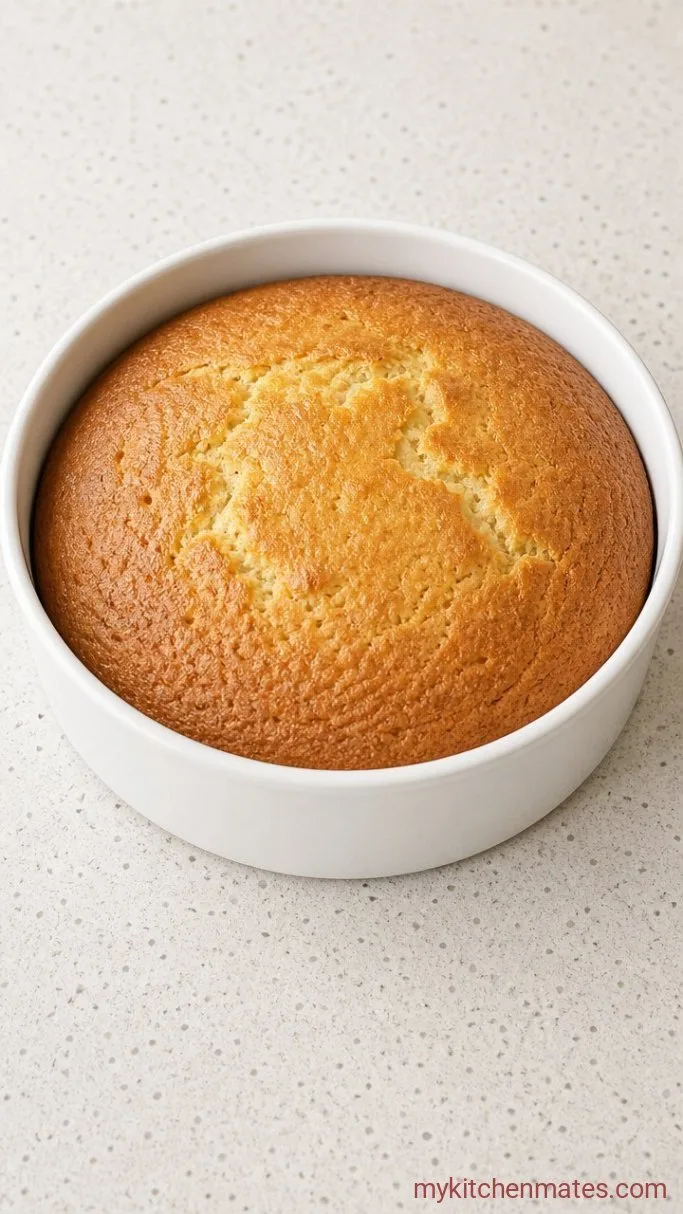
Scrape the batter into the prepared pan and smooth the top. Bake on the middle rack for 30 to 35 minutes, until the top is deeply golden and a toothpick inserted in the center comes out with just a few moist crumbs.
The cake will pull away faintly from the sides and the center will spring back when you press it gently. Don’t open the oven early; gluten-free cakes can dip if they get a cold draft before the structure sets.
Step 5: Dust with Sugar and Serve

Let the cake cool in the pan for 10 minutes, then run a knife around the edge and turn it out onto a rack to cool completely. Once cool, place it on a serving plate and dust the top generously with powdered sugar right before slicing.
The powdered sugar settles into the cracks and highlights the golden crust, so the cake looks rustic and bakery-worthy all at once. Slice and serve at room temperature.
Tips for the Best Texture
- Bring all your cold ingredients, eggs and yogurt especially, to room temperature before you start. That helps the batter emulsify and rise more evenly.
- If your gluten-free flour blend does not include xanthan gum or guar gum, add ¼ teaspoon of xanthan gum to the dry ingredients or the structure may be crumbly.
- The cake is even better the next day. The crumb settles and the citrus comes forward, so it’s a great make-ahead dessert.
Bake times for different pans:
| Pan | Bake time | Toothpick test |
|---|---|---|
| 9-inch round | 30 to 35 minutes | Few moist crumbs |
| 8-inch round | 35 to 40 minutes | Few moist crumbs |
| Loaf pan (9×5) | 40 to 45 minutes | Clean or few crumbs |
Storing Leftover Cake
- Refrigerate: Keep the cake covered tightly at room temperature for up to 2 days. After that, refrigerate it for up to 4 days. The olive oil keeps it from drying out, so even cold slices stay tender.
- Freeze: Wrap the whole cooled cake or individual slices in plastic, then foil, and freeze for up to 2 months. Thaw at room temperature and dust with fresh powdered sugar.
What to Serve with Olive Oil Cake
A slice of this cake is lovely on its own with a cup of tea, but a little fresh fruit makes it feel like a proper dessert. Macerated strawberries or sliced peaches spooned over the top balance the richness, their juices soaking into the crumb a little. A dollop of lightly sweetened mascarpone or crème fraîche adds a cool, tangy layer that plays nicely against the fruity olive oil notes. If you want something classic, a small glass of vin santo or an off-dry moscato is just right for dipping.
Frequently Asked Questions
Why did my cake sink in the middle?
Most likely it was underbaked a few minutes, or the oven door was opened too early. Let it go until the center is fully set.
Can I use a different oil?
Yes, a neutral oil like avocado or light olive oil works, but the cake will lose its signature subtle fruitiness. Do not use coconut oil, which solidifies and can make the cake greasy as it cools.
Do I have to use citrus zest?
No, but the zest carries most of the flavor. If you skip it, increase the vanilla to 2 teaspoons and add ¼ teaspoon almond extract so the cake doesn’t taste flat.
Gluten-Free Olive Oil Cake Recipe
Ingredients
Method
- Preheat oven to 350°F (175°C). Line a 9-inch round pan with parchment and grease the sides. Whisk flour, sugar, baking powder, salt, and zests in a large bowl.
- In a medium bowl, whisk eggs, olive oil, yogurt, and vanilla until smooth.
- Pour wet into dry. Fold gently until just combined, about 15-20 strokes.
- Pour batter into pan, smooth top, and bake 30-35 minutes until golden and a toothpick comes out with moist crumbs.
- Cool in pan 10 minutes, then turn out onto a rack to cool completely. Dust with powdered sugar and serve.
Notes
