
Rich Gluten-Free German Chocolate Cake

This gluten-free German chocolate cake has the same tender crumb and deep chocolate flavor you remember, layered with a thick, gooey coconut-pecan filling. It holds together beautifully and never tastes dry or gritty.
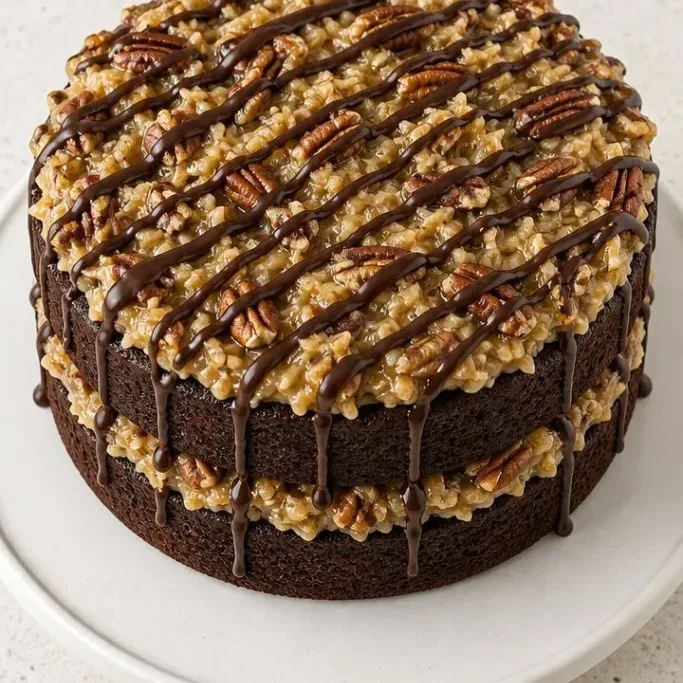
If you thought a classic layer cake like this was off the table after going gluten-free, this recipe will prove you wrong. The cake itself is soft enough to cut with the side of a fork, and the filling sets into a chewy, caramel-like layer that stays perfectly in place between the tiers.
What Makes This One So Good
The cake calls for a straightforward blend of gluten-free flour and a little cocoa, so it tastes like actual chocolate rather than something that sat near a cocoa bean. The crumb is open and moist, never dense or gummy, and it stays that way for days.
That filling is the real star. Coconut, pecans, butter, and brown sugar cook together on the stove until they turn sticky and golden. It thickens as it cools, which keeps the layers from sliding apart when you cut into the cake.
A thin chocolate glaze seals the sides, just like the original. It adds a dark, glossy finish without overwhelming the filling. The whole cake balances rich, sweet, and nutty in a way that feels genuinely old-school.
Ingredients
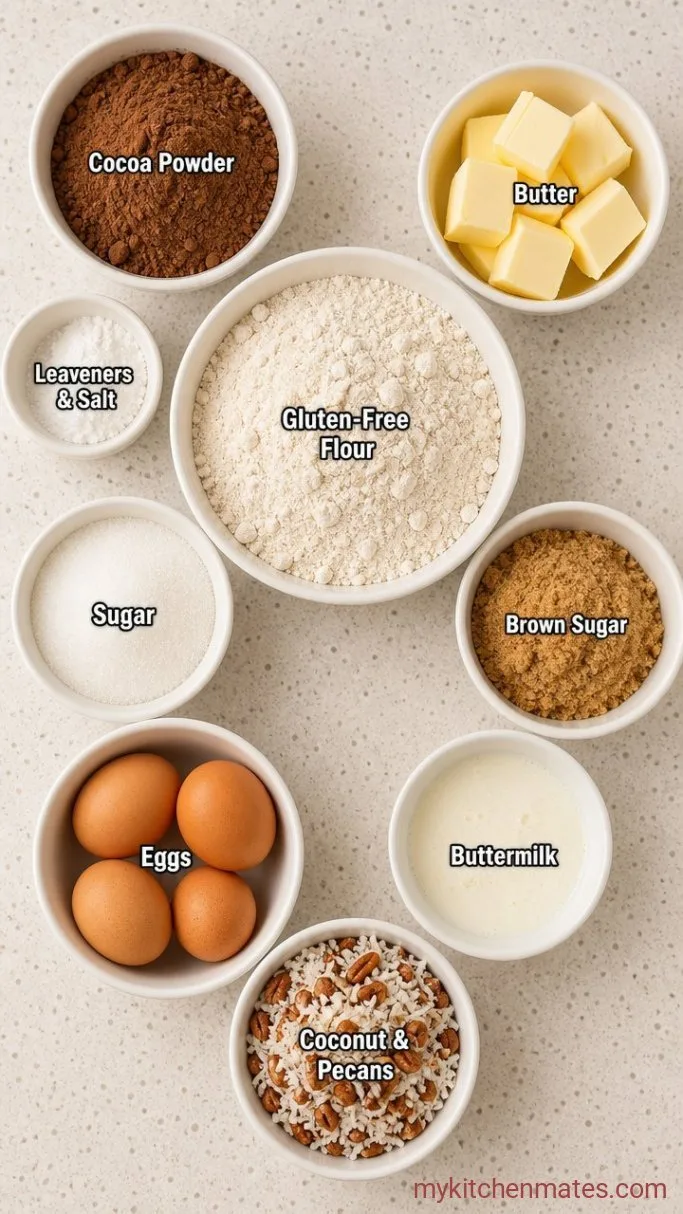
- 1 cup (120g) gluten-free 1:1 flour blend, containing xanthan gum: use a blend like Bob’s Red Mill 1:1 or King Arthur Measure for Measure. If your blend does not contain xanthan gum, add 1/4 teaspoon separately.
- 3/4 cup (60g) unsweetened cocoa powder: Dutch-process or natural both work here
- 1 tsp baking powder
- 1/2 tsp baking soda
- 1/2 tsp fine sea salt
- 1/2 cup (115g) unsalted butter, softened to room temperature
- 1 cup (200g) granulated sugar
- 2 large eggs, at room temperature
- 1 tsp vanilla extract
- 3/4 cup (180ml) buttermilk, at room temperature: if you don’t have buttermilk, stir 2 tsp lemon juice or white vinegar into 3/4 cup whole milk and let it sit 5 minutes
Coconut-Pecan Filling
- 1 cup (200g) packed light brown sugar
- 1/2 cup (115g) unsalted butter, cut into pieces
- 3 large egg yolks
- 1 can (12oz / 354ml) evaporated milk
- 1 tsp vanilla extract
- 1 1/2 cups (120g) sweetened shredded coconut
- 1 cup (110g) chopped pecans
Chocolate Glaze
- 4 oz (113g) semi-sweet or dark chocolate, chopped
- 3 tbsp unsalted butter
- 2 tbsp whole milk
Swaps and Variations
- Dairy-free: use plant-based butter sticks, canned coconut milk instead of buttermilk with a teaspoon of vinegar stirred in, and full-fat canned coconut milk in place of evaporated milk. The coconut flavor will come through a little more, which honestly works in this cake.
- Nut-free: replace pecans with toasted sunflower seeds or pumpkin seeds, chopped the same size. The taste shifts but the crunch stays.
- Coconut haters: you really can’t skip the coconut here without changing the whole cake. The filling is the defining part of German chocolate cake. If you want a similar vibe without coconut, try a chocolate cake with brown butter pecan frosting instead, like my Brown Butter Pecan Layer Cake.
Fudgy Gluten Free Chocolate Cookies are another dessert you’d probably love if you enjoy this cake.
How to Make Gluten-Free German Chocolate Cake
Step 1: Whip the Cake Batter
Whisk the 1 cup (120g) gluten-free flour blend, 3/4 cup (60g) cocoa powder, baking powder, baking soda, and salt together in a medium bowl and set it aside.
In a separate large bowl using a hand mixer or stand mixer, beat the 1/2 cup (115g) softened butter and 1 cup (200g) granulated sugar on medium speed until light and fluffy, about 3 minutes. Scrape down the sides and beat in the 2 eggs one at a time, then add the vanilla.
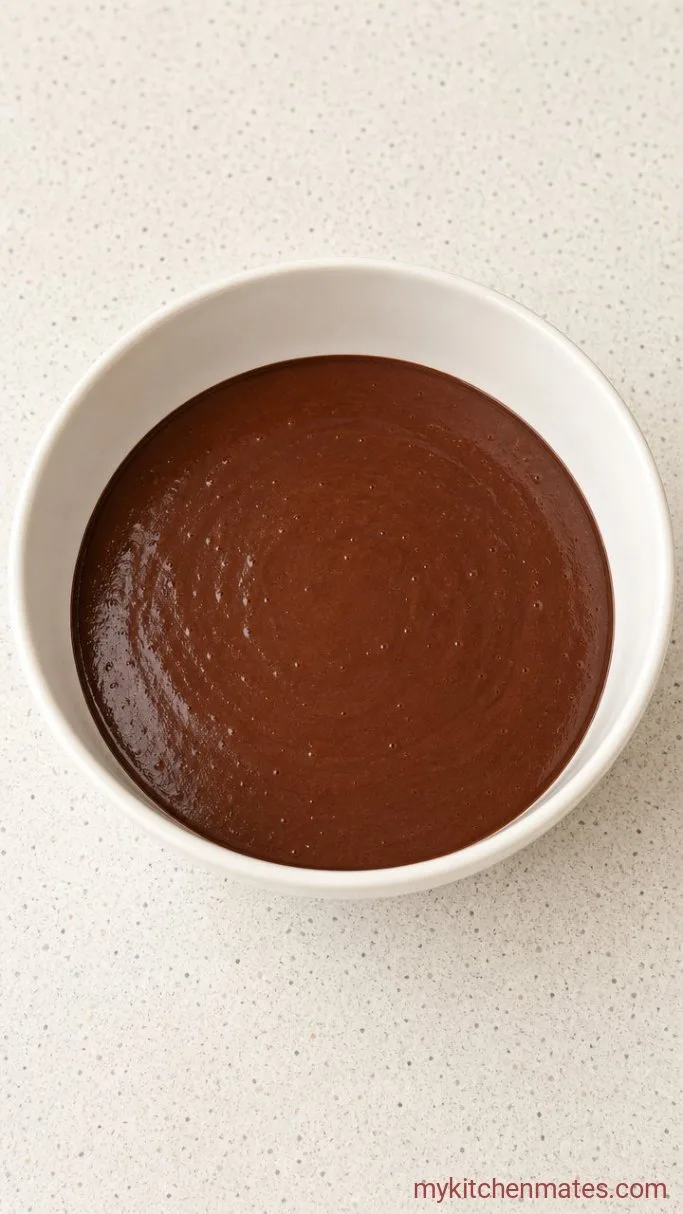
Turn the mixer to low and add the flour mixture in three parts, alternating with the 3/4 cup (180ml) buttermilk, starting and ending with the flour. Stop mixing as soon as the last streak of flour disappears. The batter will be thick and glossy, with a deep cocoa smell that tells you you’re on the right track.
This alternating method keeps gluten-free cakes from turning tough, so resist the urge to mix everything in all at once. If the batter looks slightly curdled when you add the first egg, that’s normal. It will smooth right out.
Step 2: Bake the Layers
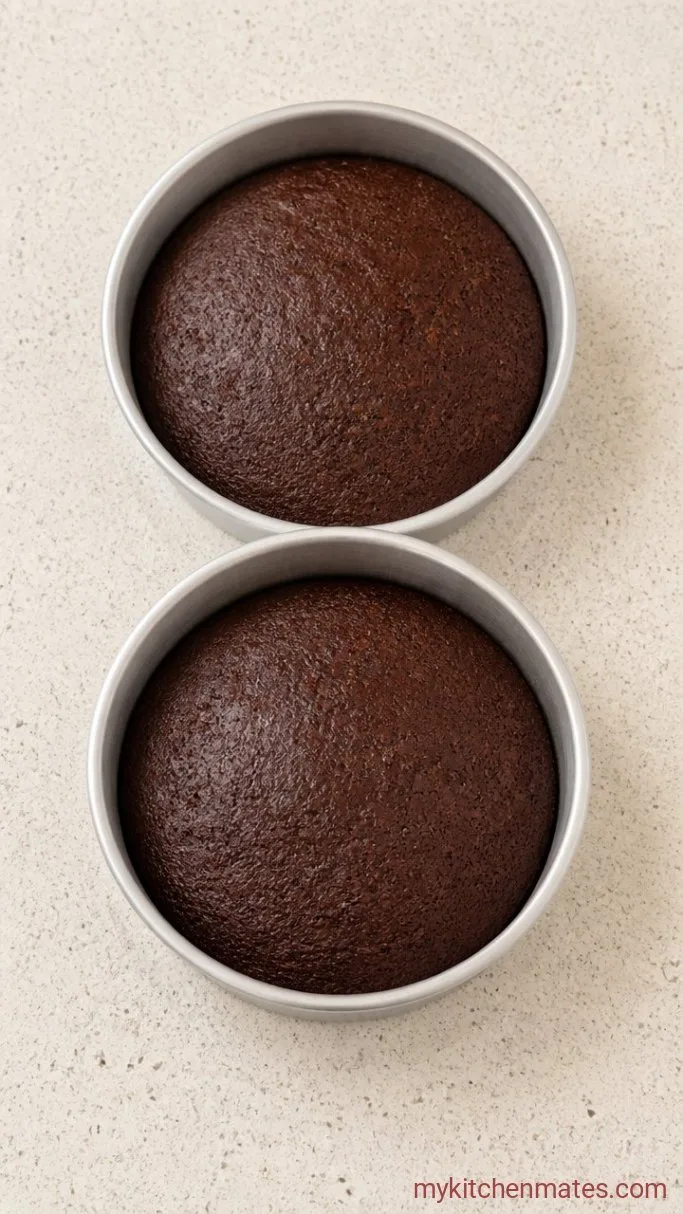
Preheat the oven to 350°F (175°C). Grease two 8-inch round cake pans and line the bottoms with parchment paper.
Divide the batter evenly between the pans, smoothing the tops with a spatula. Bake on the middle rack for 25 to 28 minutes, until the centers spring back when pressed lightly and a toothpick inserted in the middle comes out with only a few moist crumbs. The tops will look matte and the edges will have just begun to pull away from the sides.
If your oven runs hot, check at 22 minutes. Gluten-free cakes can dry out fast, so it’s better to pull them a minute early than a minute late. Let the layers cool in the pans for 10 minutes, then turn them out onto a wire rack to cool completely before you touch the filling.
Step 3: Simmer the Coconut-Pecan Filling
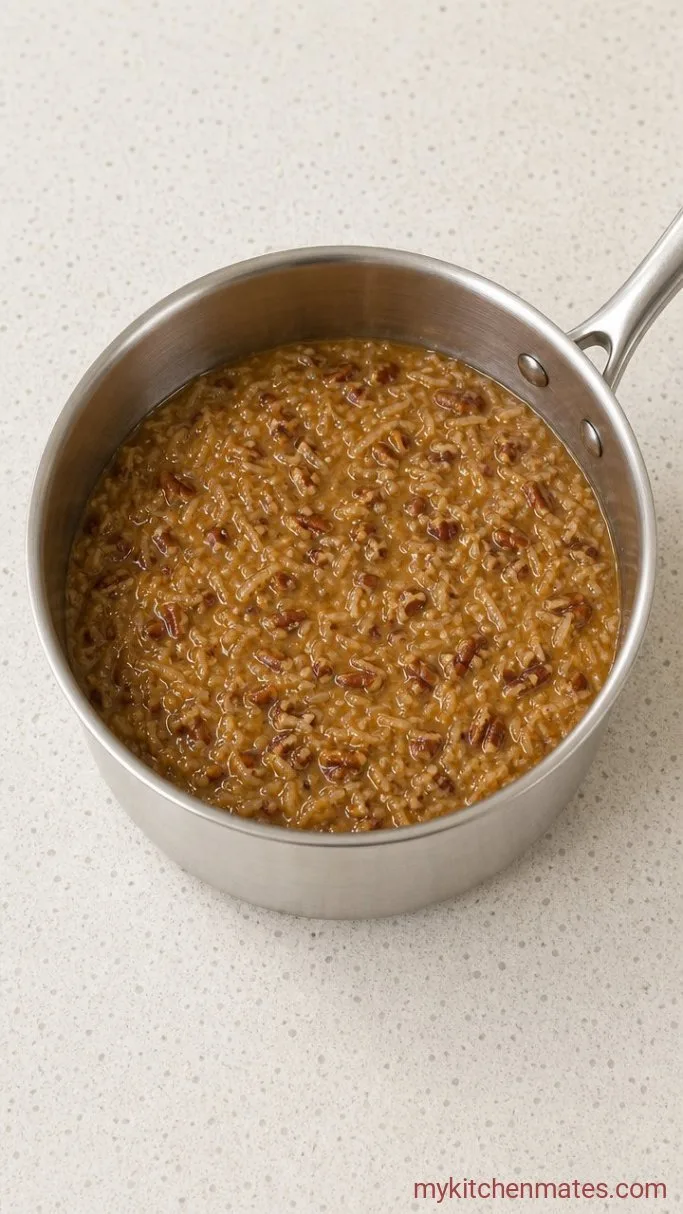
While the cake cools, set a medium saucepan over medium heat. Combine the 1 cup (200g) brown sugar, 1/2 cup (115g) butter, 3 egg yolks, and the can of evaporated milk. Whisk constantly until the butter melts and the mixture is smooth, about 3 minutes.
Bring the mixture to a gentle boil, still whisking, then lower the heat and let it simmer for 10 to 12 minutes, stirring often. The sauce will change from thin and milky to thick and deeply golden, and it will coat the back of a spoon cleanly. Stir in the vanilla, shredded coconut, and chopped pecans off the heat.
The filling will seem loose right now, but it firms up a lot as it cools. I usually slide the whole pan into the fridge while I make the glaze so it thickens to a spreadable consistency by assembly time, about 30 minutes.
Step 4: Whisk the Chocolate Glaze
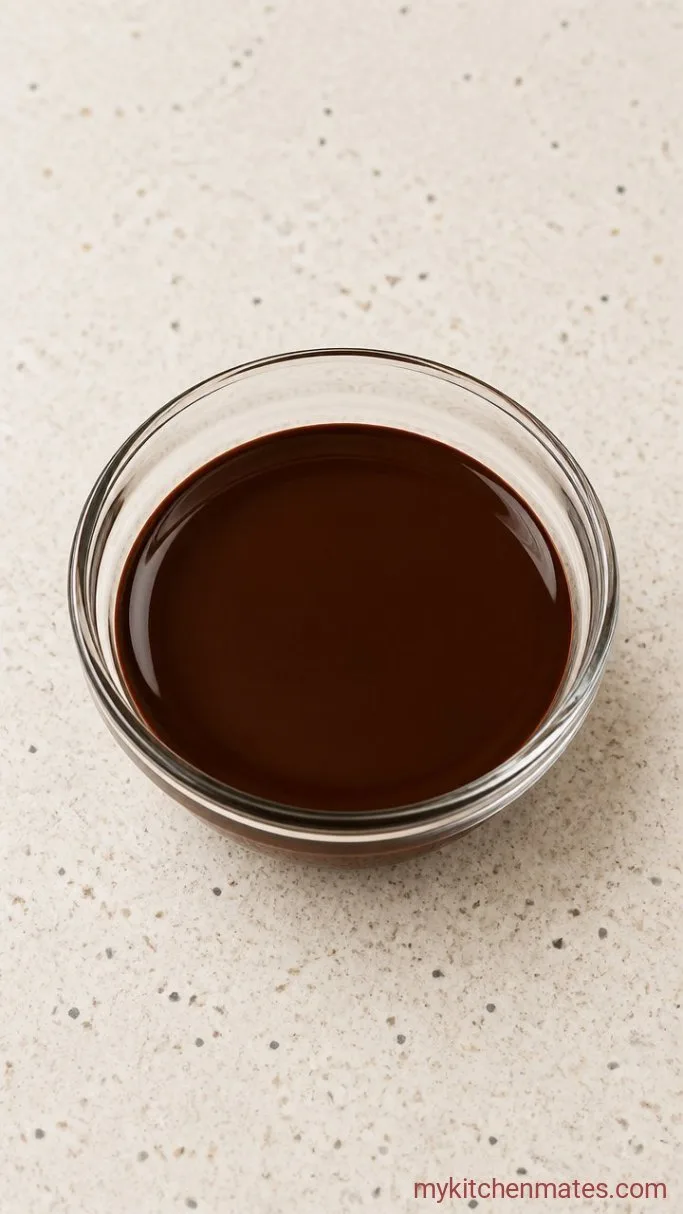
Place the 4 oz (113g) chopped chocolate and 3 tablespoons butter in a heatproof bowl set over a pan of barely simmering water. Stir gently with a spatula until both are fully melted and smooth.
Remove the bowl from the heat and whisk in the 2 tablespoons milk. The glaze should be pourable but still thick enough to cling to the sides of the cake. If it seems too thick to spread easily, stir in an extra teaspoon of milk.
You’re looking for a glossy, dark ribbon that falls slowly from the whisk. It will set up with a slight sheen once it hits the cool cake, so don’t wait too long to use it.
Step 5: Layer and Frost the Cake
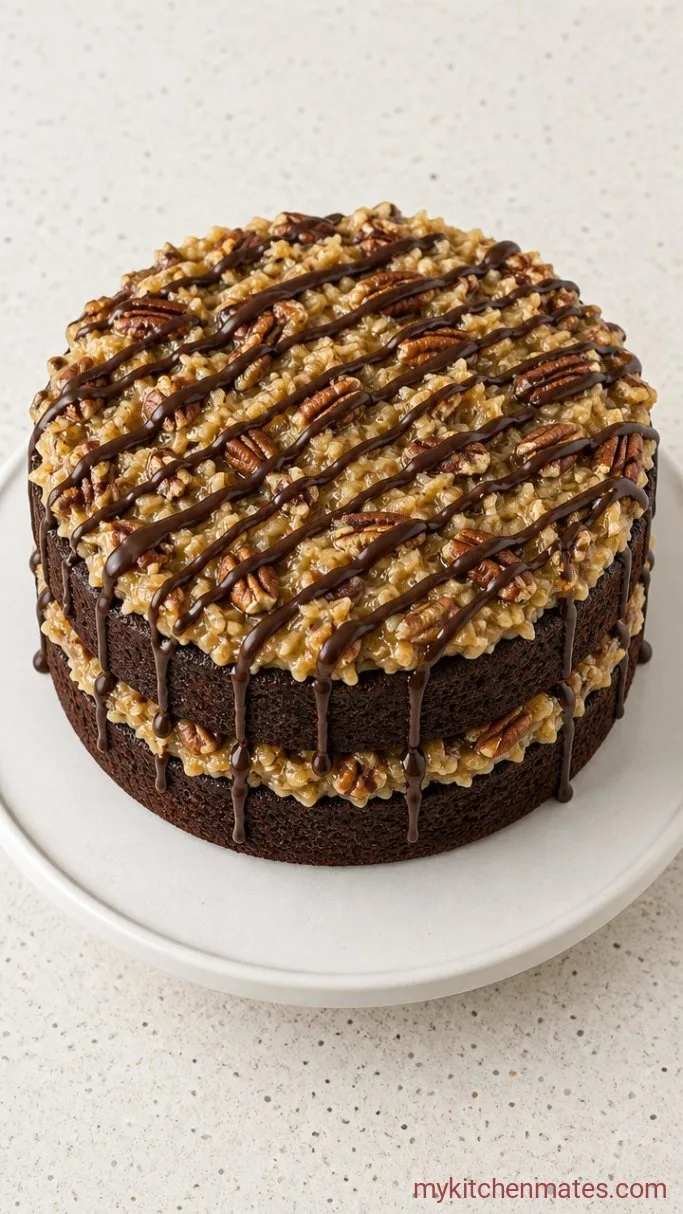
Once the cake layers are completely cool and the filling has thickened, place one layer on a serving plate or cake stand. Spoon half the coconut-pecan filling onto the center and spread it out to about half an inch from the edge. It should be thick enough to hold a soft mound in the middle.
Set the second layer on top, right side up. Spread the remaining filling over the top in the same way. Then, using a small offset spatula or the back of a spoon, spread the warm chocolate glaze around the sides of the cake only, letting a little lip of glaze sit right at the top edge. The filling stays exposed on top, just like a bakery case version.
The finished cake will have tall dark sides, a shaggy golden crown of coconut and pecans, and a faint sheen from the glaze. Serve at room temperature the same day or store it cold and bring slices back to room temp before eating.
Tips for a Tender Gluten-Free Layer Cake
- If your flour blend is on the heavier side, spoon it into the measuring cup and level it instead of scooping. Too much flour leads to a crumbly cake fast.
- The buttermilk isn’t just for tang. The acid reacts with the baking soda to give the cake more lift, so don’t swap it for regular milk without adding a splash of acid.
- The filling can be made a day ahead and stored in the fridge. Bring it to room temperature and stir well before using, because the coconut soaks up moisture overnight.
- Parchment rounds save the cake layers every single time. Even a well-greased pan can grip gluten-free cakes, and a stuck layer is a sad sight.
Bake times for different pans:
| Pan Size | Pan Material | Bake Time |
|---|---|---|
| Two 8-inch rounds | aluminum | 25-28 minutes |
| Two 9-inch rounds | aluminum | 22-25 minutes |
| 9×13 inch sheet pan | aluminum | 28-30 minutes |
Keeping the Cake Fresh
Once assembled, the cake keeps well covered in the fridge for up to 5 days. The filling stays slightly soft when cold and softens more at room temp. Wrap any cut edges with plastic wrap so they don’t dry out. You can also freeze the un-frosted cake layers, well wrapped, for up to 2 months. Defrost them in the fridge before you make the filling and glaze.
Frequently Asked Questions
Can I use a different flour blend?
Yes, but stick to a 1:1 style blend that includes xanthan gum. Single flours like almond or oat won’t give the right structure.
Why is my filling runny?
You likely didn’t simmer it long enough. It needs a full 10-12 minutes on the heat to thicken properly, and it will continue to set as it cools. If it still seems thin after chilling, stir in a few extra tablespoons of coconut to help bind it.
Can I make this cake ahead of time?
The cake layers and filling can each be made a day ahead. Assemble the cake the day you plan to serve it for the freshest texture, or the night before and refrigerate it. The flavors actually meld together nicely overnight.
What if I don’t have buttermilk?
Stir 2 teaspoons of white vinegar or lemon juice into 3/4 cup whole milk and let it sit for 5 minutes. It will curdle slightly, and that’s exactly what you want.
Gluten-Free German Chocolate Cake Recipe
Ingredients
Method
- Whisk together the gluten-free flour, cocoa powder, baking powder, baking soda, and salt.
- Cream the butter and sugar until light and fluffy, then beat in the eggs and vanilla. Alternate adding the dry ingredients and buttermilk, mixing just until combined.
- Divide the batter between two greased and parchment-lined 8-inch pans. Bake at 350°F (175°C) for 25-28 minutes, until a toothpick comes out with a few moist crumbs. Cool completely.
- In a saucepan, whisk the brown sugar, butter, egg yolks, and evaporated milk over medium heat. Simmer 10-12 minutes until thickened, then stir in vanilla, coconut, and pecans. Cool until spreadable.
- Melt the chocolate and butter together, then whisk in the milk to make a pourable glaze.
- Spread half the cooled filling over one cake layer, top with the second layer, and cover the top with the rest of the filling. Spread the glaze around the sides, leaving the coconut-pecan top exposed.
Notes
