
Slow-Cooked Gluten-Free Beef Stew (So Tender, No Flour Needed)

This gluten-free beef stew is every bit as rich and hearty as the classic, with chunks of beef that practically fall apart, and a savory broth that thickens naturally as it simmers. No flour, no cornstarch at the start, just a long gentle cook that pulls gelatin and flavor from the meat.
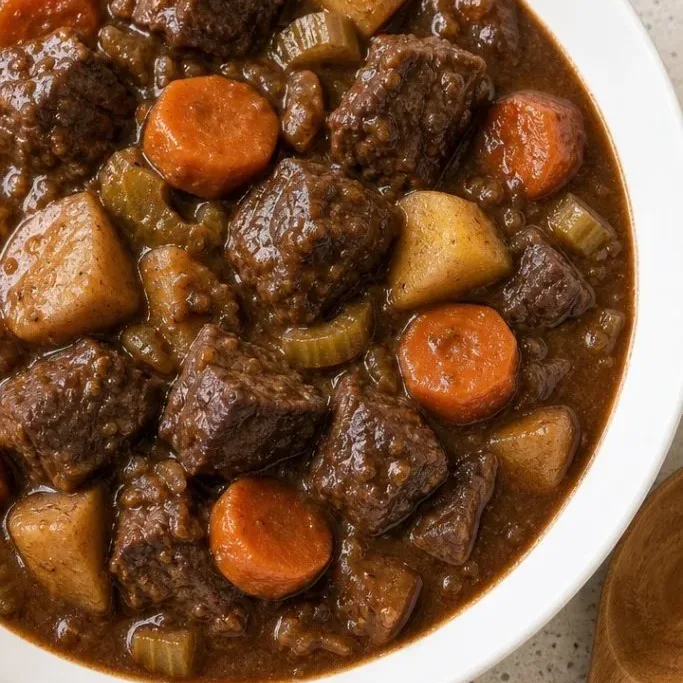
It’s the kind of meal that fills the kitchen with that deep, cozy stew aroma, and it needs almost no attention once everything is in the pot.
Why This Stew Works
Most traditional beef stew recipes start by coating the meat in flour, which helps it brown and thickens the broth. Leaving it out sounds like a compromise, but a long simmer and the natural starches from the potatoes give you a velvety broth that clings to every bite.
The beef stays tender without a flour crust, and the vegetables soften while still holding their shape. Even dedicated flour users won’t miss it.
Ingredients

- 2 lbs beef chuck, cut into 1 1/2-inch cubes: this cut gets buttery-tender with slow cooking
- 1 tsp salt, plus more to taste
- 1 tsp black pepper
- 2 tbsp olive oil
- 1 large yellow onion, chopped
- 3 cloves garlic, minced
- 3 medium carrots, sliced into 1/2-inch rounds
- 2 stalks celery, sliced
- 1 lb Yukon Gold potatoes, cut into 1-inch chunks: they hold up and help thicken the broth
- 2 tbsp tomato paste
- 4 cups gluten-free beef broth: check labels carefully
- 1 tbsp gluten-free Worcestershire sauce: many contain malt vinegar, so look for a certified GF brand
- 1 tsp dried thyme
- 2 bay leaves
- 2 tbsp cornstarch mixed with 2 tbsp cold water (optional): for a thicker stew at the end
Variations and Swaps
- Protein: swap beef for venison, lamb, or even trimmed brisket; the cooking time will stay about the same.
- Root vegetables: parsnips, turnips, or sweet potatoes all work well; add them with the carrots and adjust for their faster cooking if needed.
- No Worcestershire: use an equal amount of gluten-free tamari or coconut aminos for that savory depth.
- Juice note: replace 1/2 cup of the beef broth with a dry red grape juice for more complexity; just simmer it a few minutes before adding the rest of the broth.
Tender, Flaky Gluten Free Buttermilk Biscuits go great with this stew for soaking up every last bite.
How to Make Gluten-Free Beef Stew
Step 1: Brown the Beef
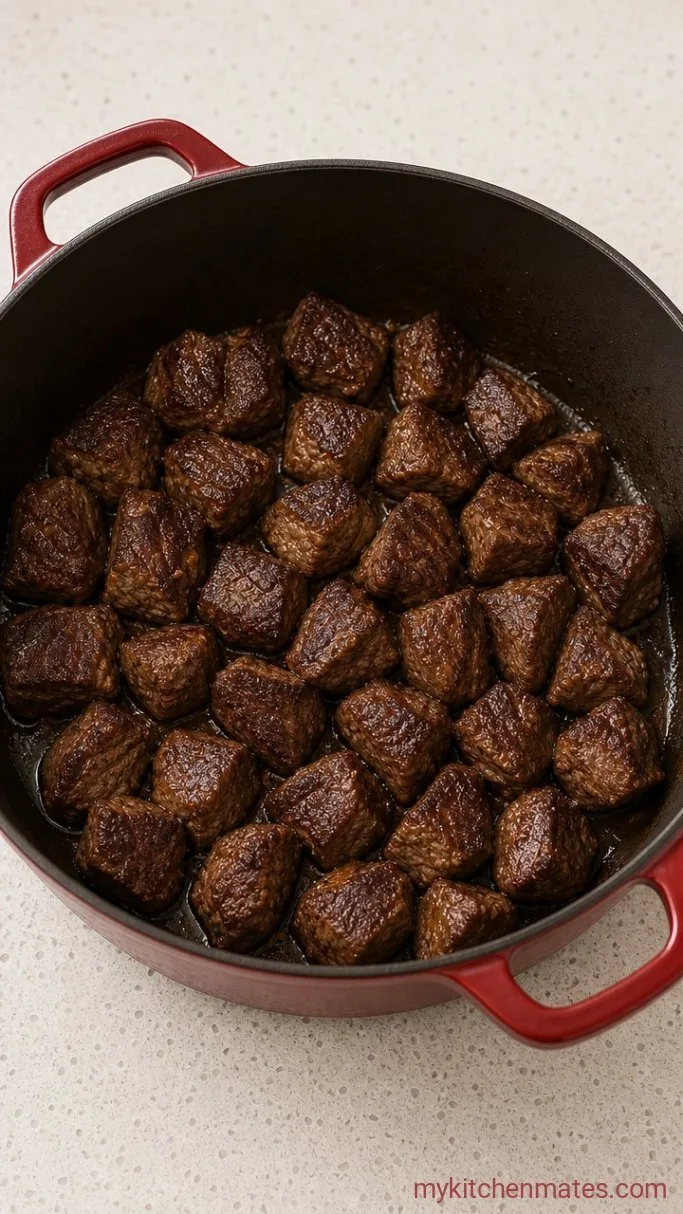
Heat the olive oil in a large Dutch oven over medium-high heat. While it heats, pat the beef cubes dry with paper towels and season them with the salt and pepper. Brown the meat in two batches, letting it sit undisturbed for about 4 minutes per side until a deep crust forms.
The beef will release easily when it’s ready to turn. If you crowd the pot, the meat steams instead of searing, and you lose that rich browned flavor. Transfer the seared beef to a plate and set it aside.
Step 2: Sauté the Aromatics
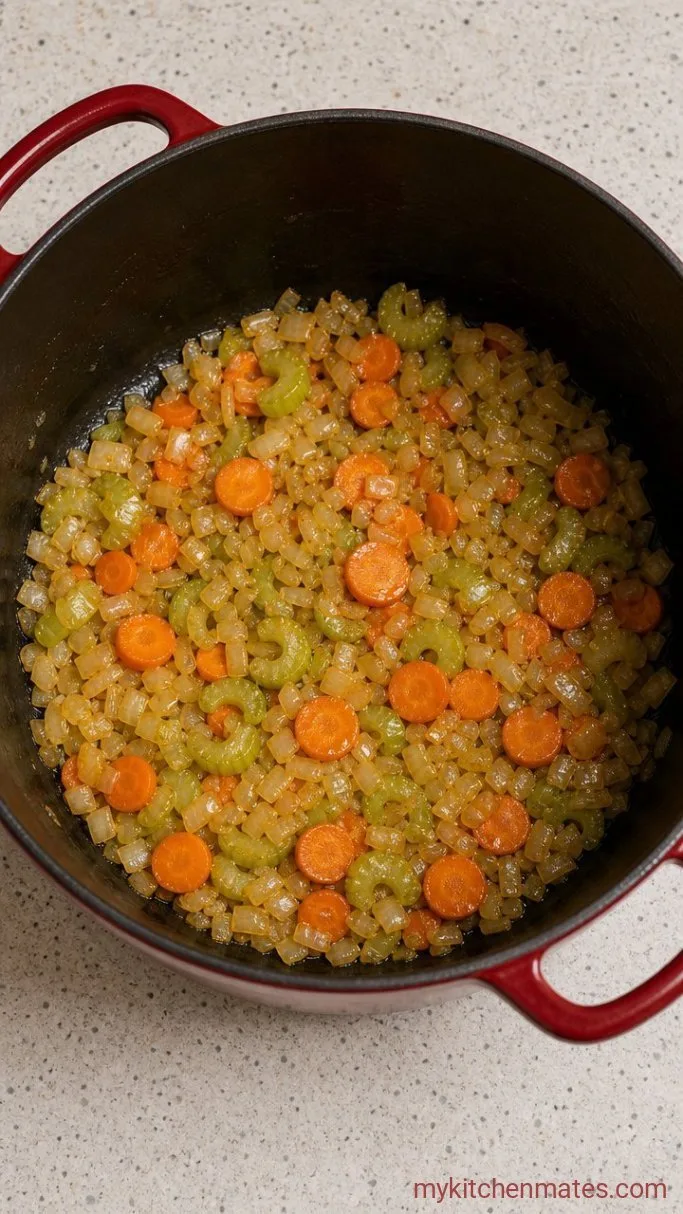
Reduce the heat to medium and add the chopped onion to the same pot with a pinch of salt. Cook for 5 minutes, scraping up any browned bits stuck to the bottom. Stir in the garlic, carrots, and celery, and let them cook another 4 minutes until the onion softens and the carrots show a little color at the edges.
Those dark bits from browning the beef will dissolve into the vegetables and give the broth a head start on its deep, savory taste. The onion will turn glossy and golden, not just translucent.
Step 3: Build the Broth
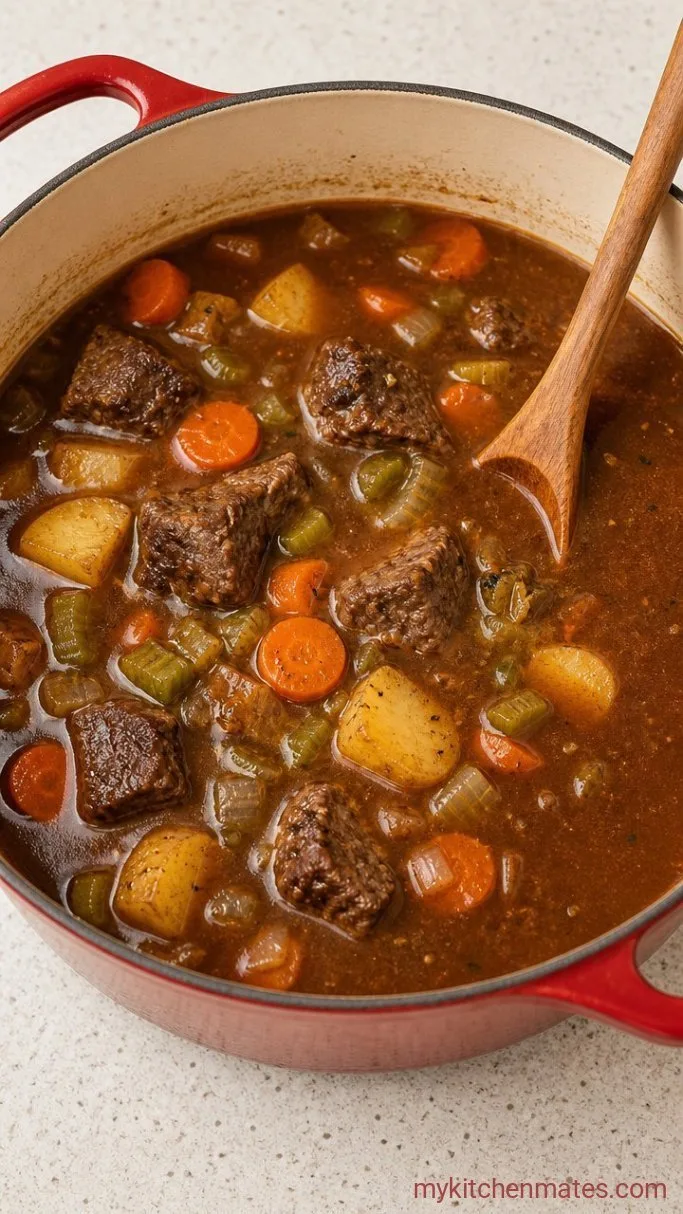
Stir the tomato paste into the pot and cook it for 1 minute, letting it darken and coat the vegetables. Pour in about 1 cup of the beef broth and use a wooden spoon to scrape every bit of fond off the bottom of the pan. Then add the rest of the broth, the Worcestershire sauce, dried thyme, bay leaves, and the seared beef along with any juices that collected on the plate. Tuck the potatoes in among the meat.
Bring everything to a gentle boil, then immediately reduce the heat to low. The liquid should just barely bubble at the edges, not roll. A full boil will make the beef tough, so keep it at a lazy simmer.
Step 4: Simmer Until Tender
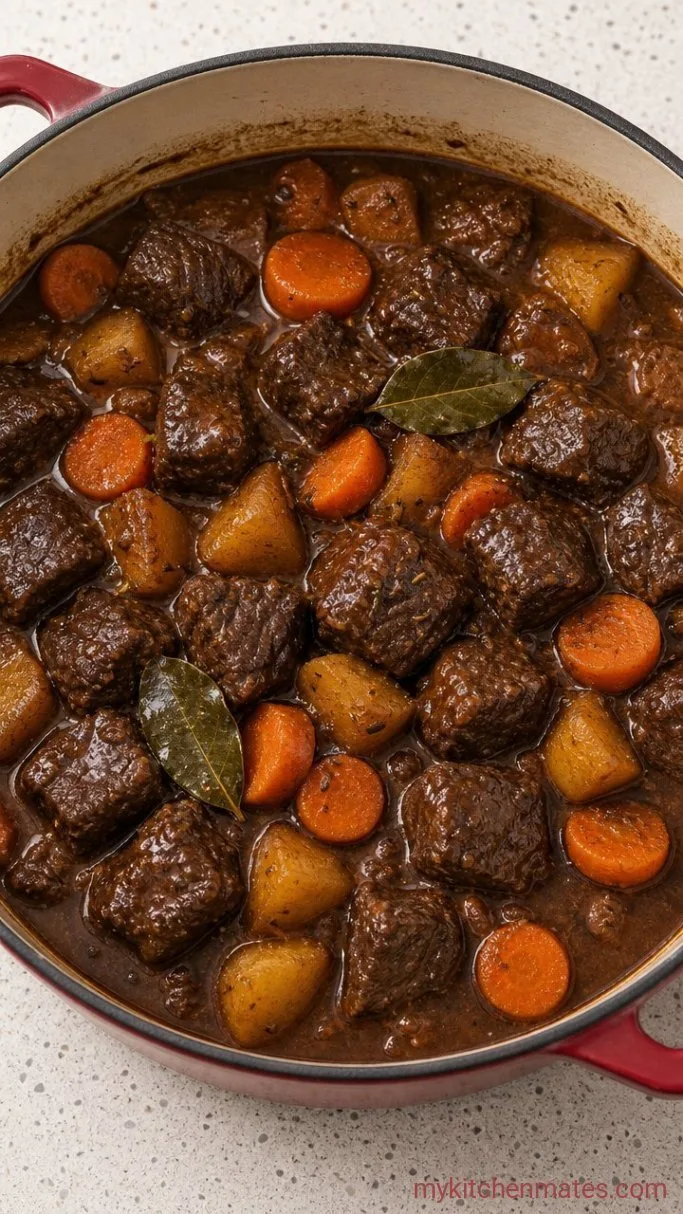
Cover the pot with the lid slightly ajar and let it simmer for about 90 minutes, stirring once or twice. The beef will look firm at first, but it surrenders after the first hour. After 90 minutes, check a piece: it should pull apart with a spoon, and the potatoes should be fork-tender.
If the broth still looks thin, let the stew simmer uncovered for another 15 to 20 minutes. The liquid will reduce a bit, and the potatoes will keep releasing their starch, giving the broth a silky body without any flour.
Step 5: Thicken and Ladle the Stew

Fish out the bay leaves and taste the broth, adding a little more salt if it needs it. If you want a thicker consistency, stir the cornstarch slurry into the simmering stew and cook for 5 more minutes, until it coats the back of a spoon. Ladle the stew into deep bowls and scatter fresh parsley over the top if you have it.
Serve it hot, while the steam rises and the broth is at its glossiest. Each spoonful should have a few pieces of beef, a chunk of potato, and that sticky, rich liquid.
Tips for the Best Stew
- Cut your own chuck instead of buying stew meat.: Pre-cut cubes can come from leaner muscles that stay tough even after a long simmer.
- Slip the celery and carrots in after the onion rather than with the onion.: A quick solo sauté lets the onion release moisture and start to color without steaming the other vegetables.
- For the thickest broth without cornstarch, fish out a few potato chunks after simmering, mash them, and stir them back in.: This is the old-school trick that makes the stew feel creamy but still completely gluten-free.
- Check your Worcestershire sauce label every time.: Brands change formulas, and malt vinegar is a common ingredient in the standard versions.
You can make this stew on the stovetop or in a slow cooker:
| Method | Cook Time | Notes |
|---|---|---|
| Stovetop | 2 hours (1 hour 30 min simmer) | Lid slightly ajar, low heat. |
| Slow cooker | 4 to 6 hours on high, 7 to 8 on low | Brown the beef and sauté the aromatics first. |
Storing and Reheating Leftovers
- Refrigerate: Let the stew cool, then store it in an airtight container for up to 4 days. The flavor actually deepens overnight.
- Reheating: Gently rewarm on the stovetop over medium-low heat, adding a splash of broth if it has thickened too much. The microwave works in a pinch.
- Freezing: Freeze in portioned containers for up to 3 months. Thaw overnight in the fridge before reheating.
What to Serve With Gluten-Free Beef Stew
A hunk of crusty gluten-free bread is the most obvious companion, because you’ll want to mop up every drop of broth. A simple green salad with a sharp vinaigrette cuts through the richness of the meat, and steamed green beans or roasted broccoli add a bright, crunchy contrast without another heavy starch.
Frequently Asked Questions
Why is my beef tough even after simmering?
It likely needed more time. Beef chuck breaks down slowly; keep simmering until a fork slides in with no resistance.
Can I make this in an Instant Pot?
Yes. Brown the beef and vegetables on the sauté setting, then pressure-cook on high for 35 minutes with a natural release.
Do I have to use tomatoes?
The tomato paste adds depth but doesn’t make the stew taste like tomatoes. You can leave it out, though the broth will be a bit flatter.
Can I add mushrooms?
Absolutely. Add 8 ounces of sliced cremini mushrooms with the carrots and celery so they release their liquid into the stew.
Gluten-Free Beef Stew Recipe
Ingredients
Method
- Heat oil in a large Dutch oven over medium-high. Pat beef dry, season with salt and pepper, and brown in two batches, about 4 minutes per side. Transfer to a plate.
- Reduce heat to medium, add onion with a pinch of salt, and cook 5 minutes, scraping up browned bits. Stir in garlic, carrots, and celery; cook 4 minutes.
- Stir in tomato paste and cook 1 minute. Pour in 1 cup broth, deglaze the pot, then add remaining broth, Worcestershire, thyme, bay leaves, beef, and potatoes. Bring to a gentle boil, then reduce heat to low.
- Cover with lid slightly ajar and simmer 90 minutes, stirring once or twice, until beef is fork-tender. For a thicker broth, simmer uncovered 15 to 20 minutes.
- Remove bay leaves. If using, stir in cornstarch slurry and simmer 5 minutes. Ladle into bowls and serve hot.
Notes
