
No-Knead Gingerbread Sourdough Bread

This no-knead gingerbread sourdough brings tangy, long-fermented sourdough together with molasses and warm gingerbread spices. It fills the kitchen with holiday aroma and tastes just as good toasted with a slick of butter.
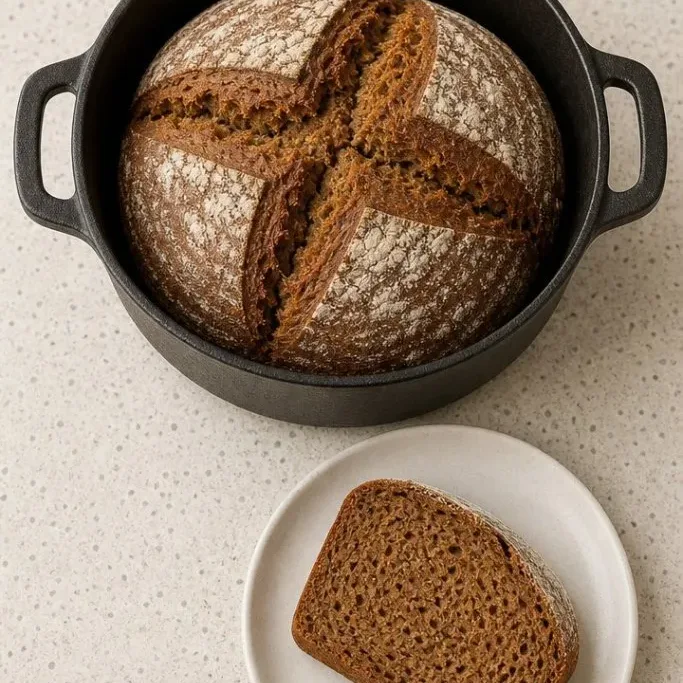
The dough asks for almost no hands-on effort: a few stretch-and-folds while the starter does the heavy lifting over time. The result is a chewy, open-crumb loaf with a deep spice character and a hint of sweetness from the molasses.
What Makes This Gingerbread Sourdough So Good
The tang of a slow fermentation lifts the dark, toasty notes of molasses and keeps the crumb from tasting cloying. You get a bread that reads clearly as gingerbread without crossing into cake territory.
Spices like ginger and cinnamon stay warm and balanced, never harsh. A day-old slice toasts up with crisp edges and a soft center, which is exactly what you want with coffee on a cold morning.
Ingredients
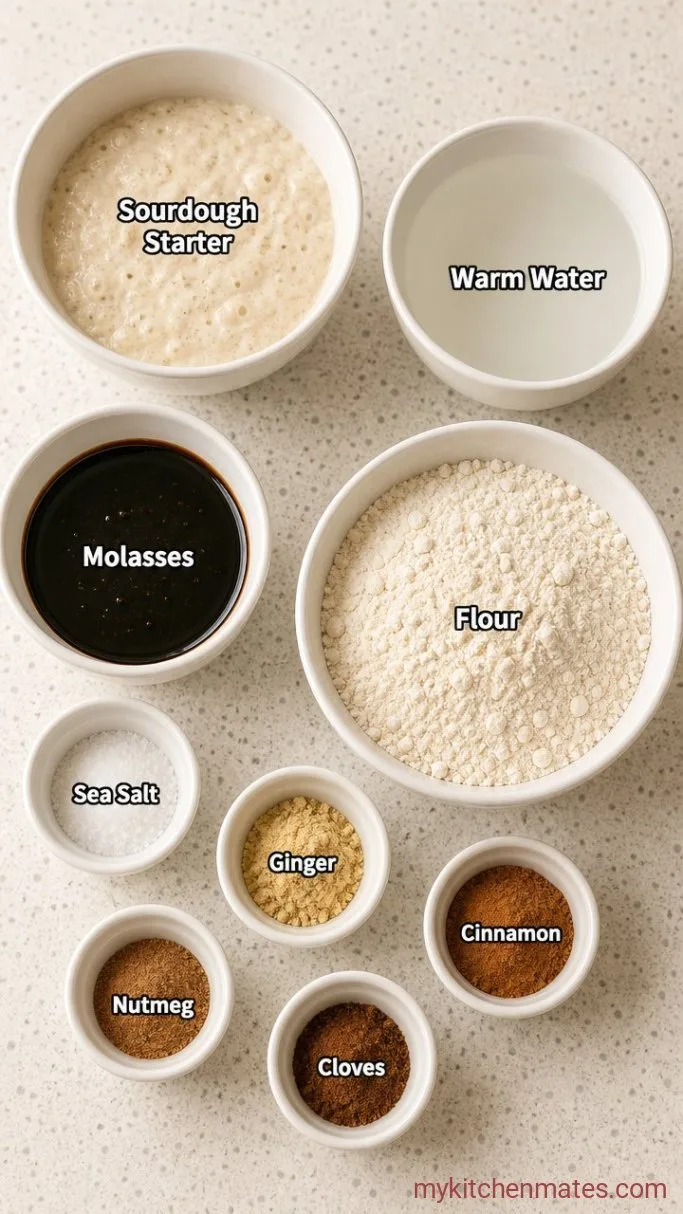
- 1 cup (240g) active sourdough starter (100% hydration): fed and bubbly, at its peak ripeness
- 1 1/4 cups (300g) warm water: about 85°F (29°C)
- 1/4 cup (85g) unsulphured molasses: not blackstrap, or the dough turns bitter
- 3 cups (375g) all-purpose flour: plus more for dusting
- 1 1/2 tsp fine sea salt
- 2 tsp ground ginger
- 1 tsp ground cinnamon
- 1/4 tsp ground nutmeg
- 1/4 tsp ground cloves
Variations / Substitutions
- Swap half the all-purpose flour for whole wheat: the loaf gets earthier and a bit denser, so add an extra tablespoon of water.
- Use maple syrup instead of molasses: the bread loses some of the deep gingerbread punch, but gains a mellow maple note and makes the crumb a little lighter.
- Trade cloves for allspice: a softer background heat that still reads as gingerbread, good if cloves taste too sharp to you.
- Add chopped crystallized ginger: fold in 1/3 cup during shaping for bursts of chewy, spicy sweetness.
Creamy Golden Mushroom Soup goes perfectly with this bread for a cozy meal.
How to Make No-Knead Gingerbread Sourdough Bread
Step 1: Mix the Dough
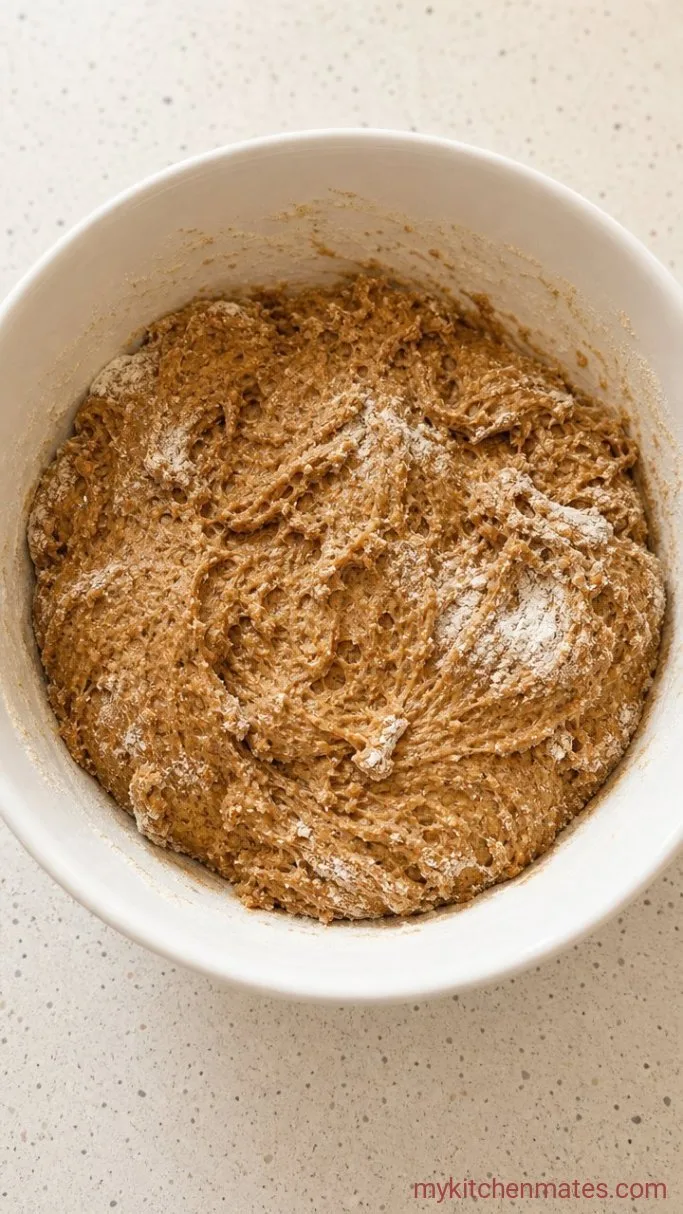
In a large bowl, combine the 1 cup active starter, the 1 1/4 cups warm water, and the 1/4 cup molasses. Whisk until the molasses dissolves and the mixture looks like muddy coffee.
Dump in the 3 cups flour, 1 1/2 tsp salt, 2 tsp ginger, 1 tsp cinnamon, 1/4 tsp nutmeg, and 1/4 tsp cloves. Mix with a sturdy spoon or a damp hand until no dry flour pockets remain. The dough will be sticky and shaggy. Cover the bowl with a plate or plastic wrap and let it rest for 30 minutes. That quick rest gives the flour time to hydrate and starts developing gluten without any work from you.
You are not looking for a smooth ball right now. The dough should look rough and a little messy, and that is exactly right.
Step 2: Stretch and Fold the Dough
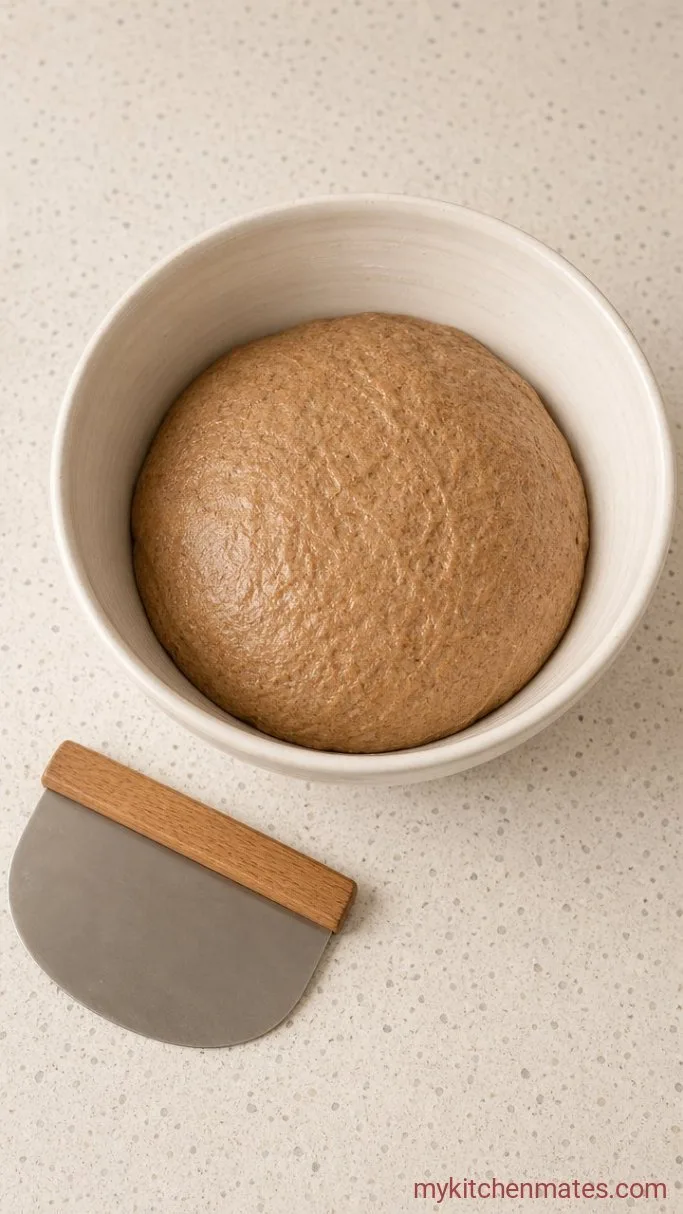
Wet your hand to prevent sticking, then reach under one edge of the dough, pull it up, and fold it over the top. Rotate the bowl a quarter turn and repeat until you have done four folds. Cover and wait 30 minutes.
Do three more sets of stretches and folds, each spaced 30 minutes apart. Over the next 2 hours the dough will go from a loose, shaggy mass to something smoother and more elastic. By the final fold it should feel pillowy and hold a slight dome.
Step 3: Shape the Loaf
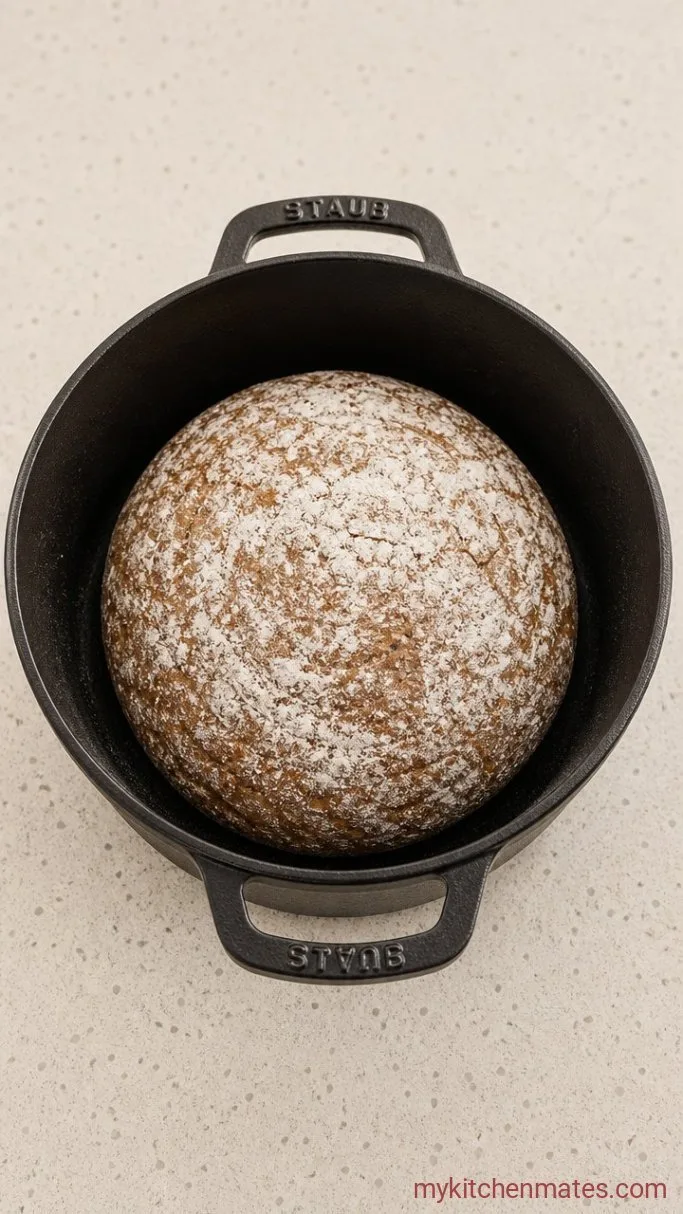
Scrape the dough onto a lightly floured counter. Using floured hands, gently pull the corners toward the center to form a round. Flip it seam-side down and let it rest uncovered for 10 minutes. That short rest relaxes the gluten so you can build tension.
After the rest, dust the top of the dough with a little flour. Use a bench scraper or your hands to cup the dough and drag it toward you across the counter, creating a tight skin on the outside. You want a taut boule that looks smooth and round. Place it seam-side up in a floured banneton or a bowl lined with a floured tea towel.
A tight shape matters because it traps the fermentation gases and helps the bread spring upward in the oven instead of spreading flat.
Step 4: Proof Until Puffy

Cover the banneton loosely and let it rise at warm room temperature for 1 to 2 hours. The dough should look noticeably puffed and jiggle a little when you nudge the basket.
Test readiness with the poke test: flour a finger and press it gently into the dough. If the indentation springs back slowly and leaves a faint mark, it is ready to bake. If it bounces right back, give it more time.
The proof window is forgiving. A little underproofed gives a slightly denser crumb; a little overproofed still bakes into a tasty loaf, just shorter.
Step 5: Score and Bake
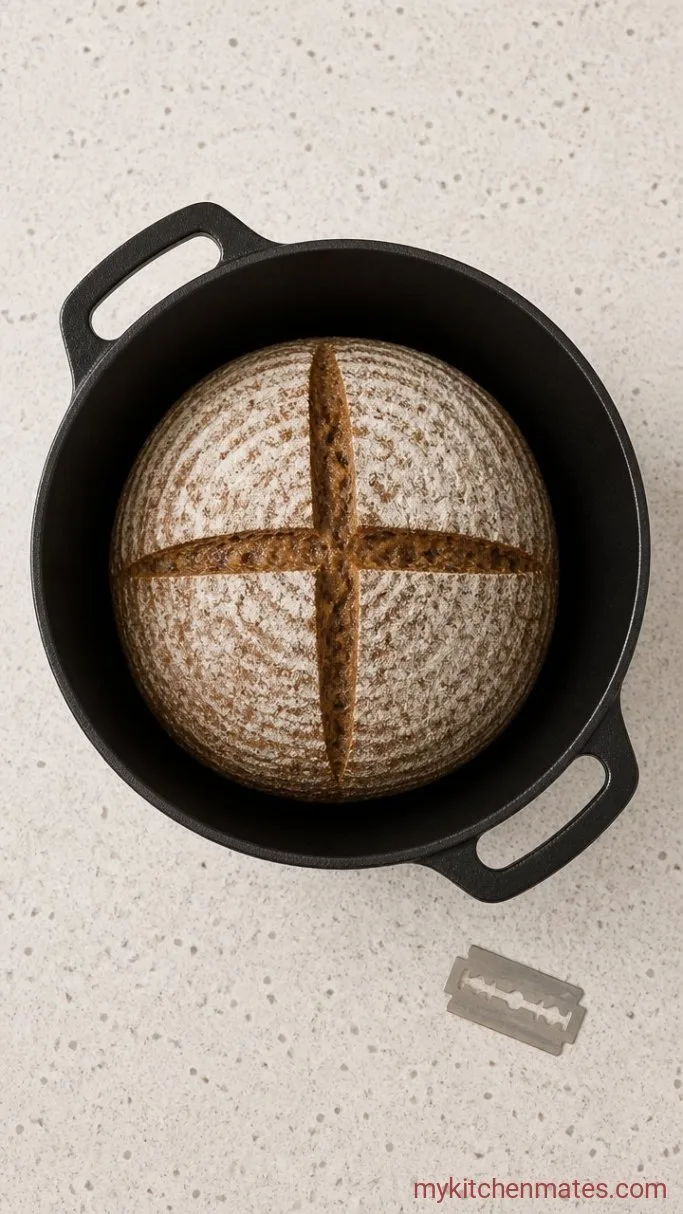
While the dough proofs, put a Dutch oven with its lid on the middle rack and preheat the oven to 450°F (230°C) for at least 30 minutes. You want that pot screaming hot.
Turn the dough out onto a piece of parchment paper. Dust the top lightly with flour and use a sharp lame or razor blade to score a deep slash across the center, or a pattern you like. Lift the parchment into the hot Dutch oven, cover it, and bake for 30 minutes. Take the lid off and bake another 15 to 20 minutes, until the crust turns a deep, glossy brown. The internal temperature should hit 205 to 210°F (96 to 99°C).
The lid traps steam, giving the loaf its blistered crust and helping it climb high. Pulling it off lets the crust crisp and caramelize.
Step 6: Cool and Slice
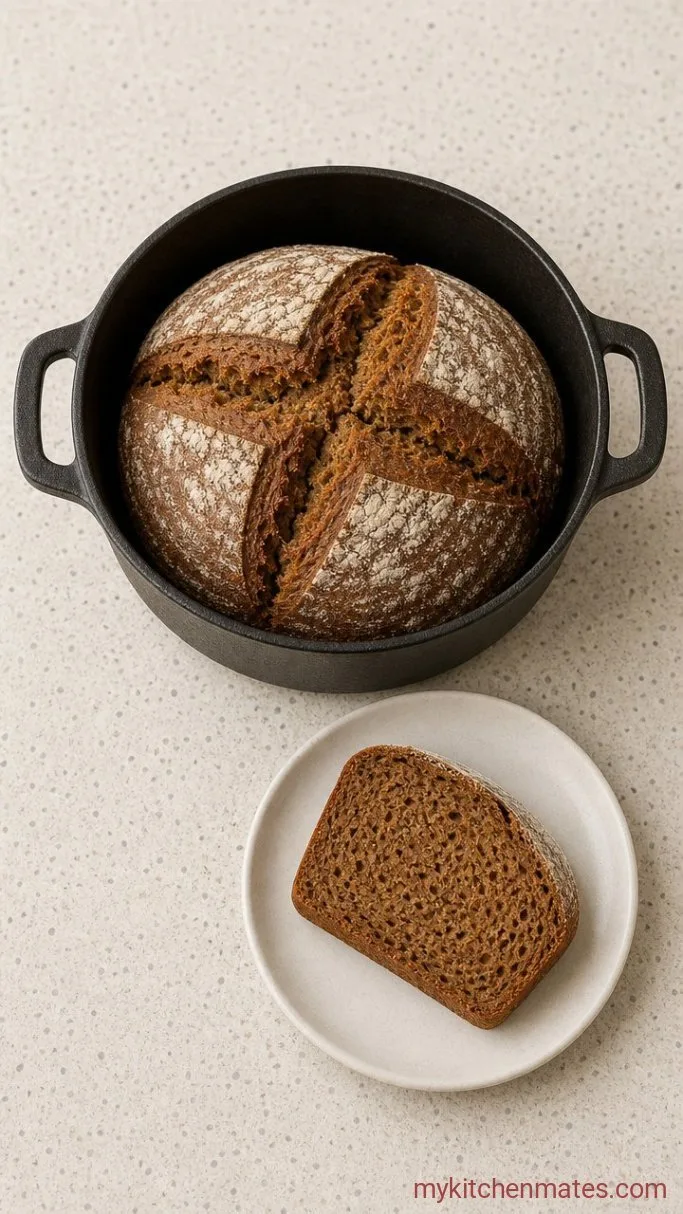
Transfer the bread to a wire rack and let it cool completely before you cut into it, at least 1 hour. Slicing a hot loaf mashes the crumb into a gummy mess.
When you do slice it, you will see an open, irregular crumb with a subtle amber tint from the molasses. Serve thick slices with salted butter, and watch the steam rise off the warm bread.
Tips for the Best Gingerbread Sourdough
- If your kitchen runs cold, let the dough proof in the oven with only the light on; it stays around 75 to 80°F (24 to 27°C) and moves things along.
- Missed a stretch and fold? No harm. Just continue with the next set. This dough is sturdy and forgiving.
- For extra molasses depth, use blackstrap molasses but replace a tablespoon of it with honey to keep bitterness in check.
- A hollow thump when you tap the bottom of the loaf confirms it is baked through, but an instant-read thermometer is more reliable.
Storing Gingerbread Sourdough
- Refrigerate: Store the loaf cut-side down on a board or in a paper bag at room temperature for up to 2 days. After that, wrap it well and refrigerate for another 3 days.
- Reheating: Toast individual slices or warm the whole loaf in a 350°F (175°C) oven for about 10 minutes to revive the crust.
What Goes Well With This Gingerbread Sourdough
Slather a slice with salted butter and a drizzle of honey, and the salty-sweet combo plays off the spiced crumb. On a soup night, dunk it into a creamy butternut squash soup where the ginger warmth mirrors the squash’s sweetness. It also makes an excellent holiday-leftover sandwich layered with turkey, cranberry sauce, and sharp cheddar.
Frequently Asked Questions
Can I bake this without a Dutch oven?
Yes. Place the loaf on a preheated baking stone or an inverted sheet tray, and throw a handful of ice cubes onto the bottom of the oven right after you put the bread in. The steam mimics the Dutch oven lid, though the crust may be a little less dramatic.
My dough feels like wet cement. What should I do?
It likely needs more time during the stretch-and-fold phase. Keep going; the dough tightens up with each set. Wet your hands to handle it without sticking, and avoid adding flour unless the dough truly pools and refuses to hold any shape.
How do I know my starter is really ready?
Drop a spoonful into a glass of water. If it floats, it is gassed up and ready to leaven the bread. It should smell pleasantly tangy, not sharp like acetone.
No-Knead Gingerbread Sourdough Bread Recipe
Ingredients
Method
- In a large bowl, whisk the 1 cup starter, 1 1/4 cups warm water, and 1/4 cup molasses until smooth. Add the 3 cups flour, 1 1/2 tsp salt, 2 tsp ginger, 1 tsp cinnamon, 1/4 tsp nutmeg, and 1/4 tsp cloves. Mix until no dry flour remains. Cover and rest 30 minutes.
- With a wet hand, do a set of 4 stretch-and-folds. Cover and repeat 3 more sets at 30-minute intervals, about 4 sets over 2 hours.
- Turn the dough onto a floured surface. Shape it into a tight boule, then rest 10 minutes. Final shape by dragging the dough to tighten the skin. Place seam-side up in a floured banneton or bowl lined with a floured towel.
- Cover and proof at warm room temperature until puffy and a fingertip leaves a slow spring-back, 1 to 2 hours.
- Meanwhile, preheat the oven to 450°F (230°C) with a Dutch oven inside. Turn the proofed dough onto parchment, score the top, and carefully lower it into the hot pot. Cover and bake 30 minutes, then uncover and bake 15 to 20 minutes more until deep brown.
- Cool on a wire rack for at least 1 hour, then slice and serve.
Notes
