
Crispy German Potato Pancakes (Kartoffelpuffer)

German potato pancakes are the kind of street food that smells like a holiday market, all hot oil and onion, with edges that shatter under a fork. At home they come together with a few basic ingredients and one non-negotiable step that turns a soggy heap into something genuinely crisp.
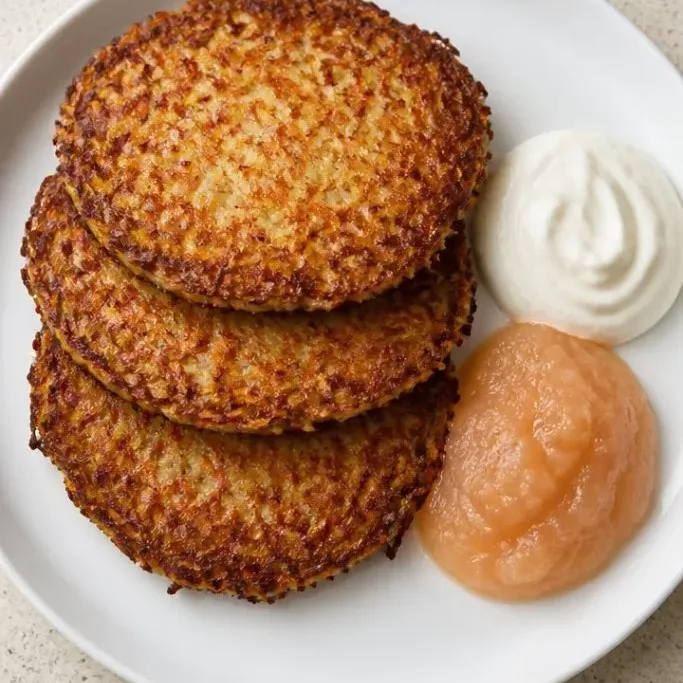
The batter is mostly potato, grated and wrung dry, then mixed with onion, egg, and just enough flour to hold a shape. Fry them in a shallow pan until the outsides are deep gold and the lacy edges curl up, and you have a platter of pancakes that go with everything from applesauce to smoked salmon.
What Makes These Kartoffelpuffer So Good
The texture lands right where you want it. The outside fries into a thin, crackly shell while the inside stays soft and almost creamy. That contrast is what keeps you reaching for one more.
It’s also a recipe that scales without fuss. Make a double batch for a crowd and keep the first round warm in a low oven, or fry them fast for a quick dinner when the fridge feels empty. The same batter works for a snack, a side, or the center of the plate.
Ingredients
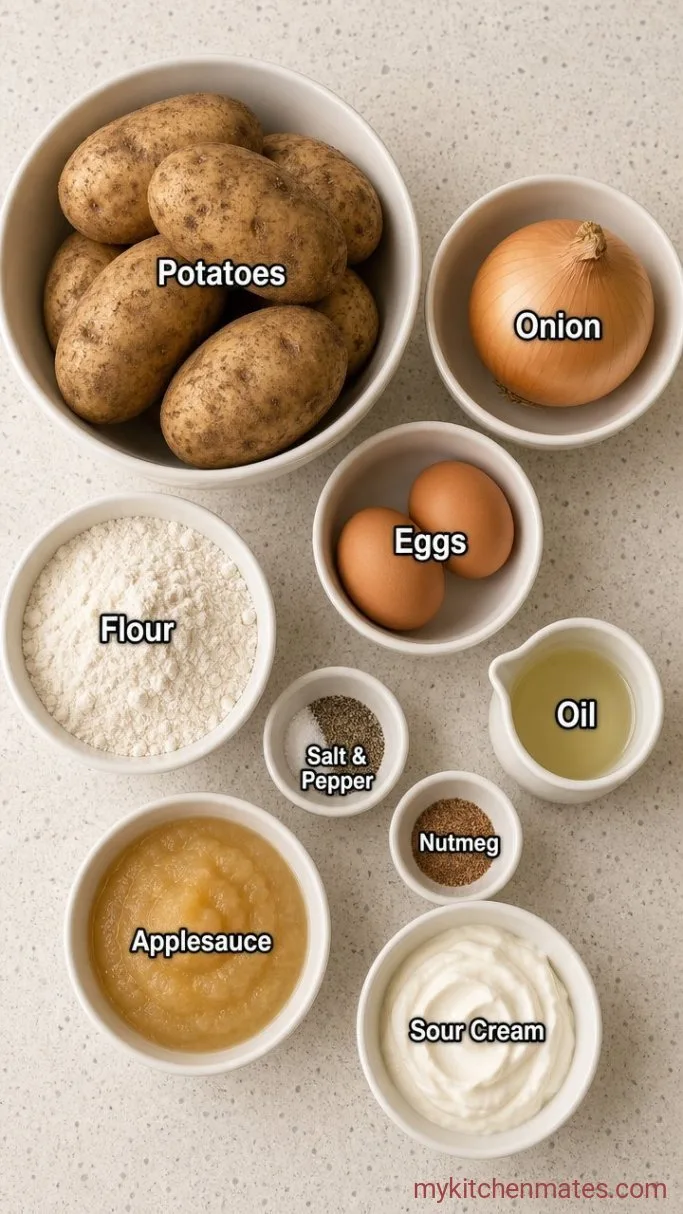
- 2 lbs (about 900g) russet potatoes: starchy potatoes give the crispest edges
- 1 medium yellow onion: grated fine so it disappears into the batter
- 2 large eggs: bind the mixture and add structure
- 3 tbsp all-purpose flour: just enough to hold the pancakes together without making them heavy
- 1 tsp fine sea salt: plus more for sprinkling after frying
- 1/2 tsp black pepper: freshly ground if you have it
- Pinch of freshly grated nutmeg (optional): adds a subtle warmth
- Neutral vegetable oil, for frying (about 1 cup): canola, sunflower, or any oil with a high smoke point
- Applesauce and sour cream, for serving: cold and creamy against the hot pancake
Variations and Substitutions
- Swap a third of the potatoes with shredded apple: the apple adds a gentle sweetness and the pancakes brown beautifully
- Use potato starch instead of flour: makes the pancakes gluten‑free and yields an even lacier edge
- Add a teaspoon of caraway seeds: their mild licorice note feels very traditional
- Grate in a peeled celeriac root with the potato: earthy and a little sharper, wonderful with mustard crème fraîche
Crispy Skillet Sweet Potato Hash Browns are next on our list if these pancakes are your kind of breakfast.
How to Make German Potato Pancakes
Step 1: Grate and Squeeze the Potatoes
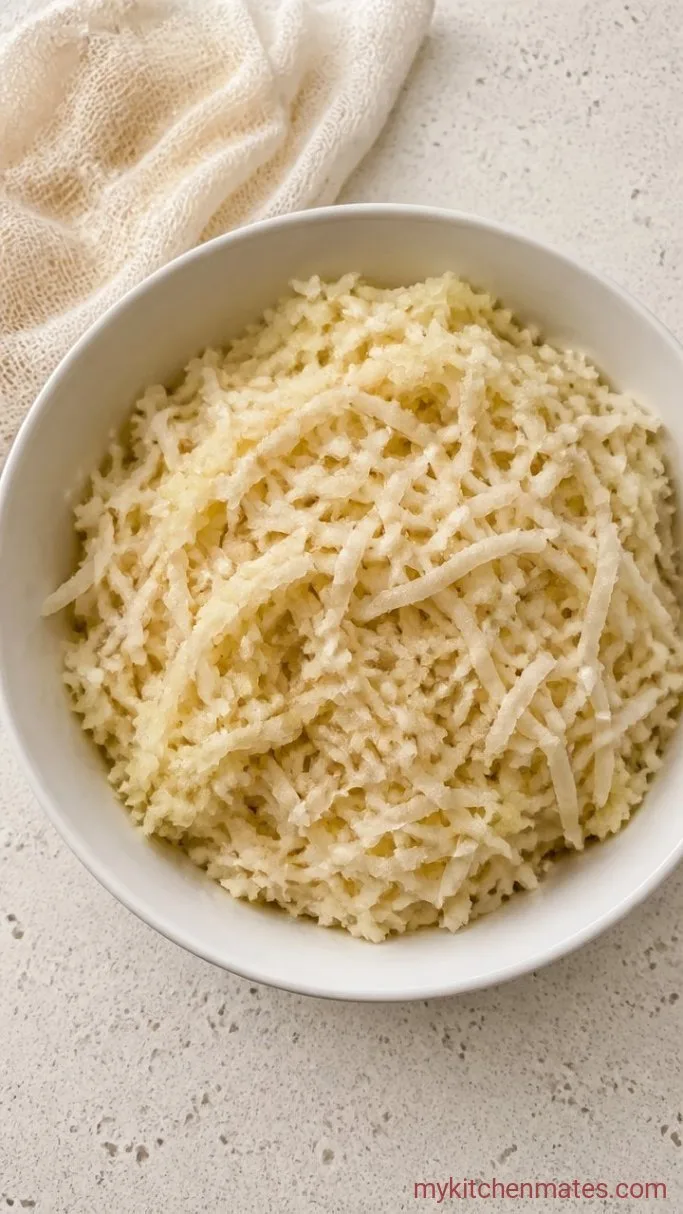
Peel the potatoes and grate them on the large holes of a box grater, along with the onion. Working in batches, pile the shreds into a clean kitchen towel, gather the corners, and twist hard over the sink until no more liquid drips out. You’ll wring out about a cup and a half of starchy water.
The shreds should feel dry to the touch and separate easily when you fluff them with your fingers. If they clump together in wet strands, keep squeezing. This is the single move that decides whether your pancakes fry up crisp or steam inside their own moisture.
Step 2: Mix the Batter
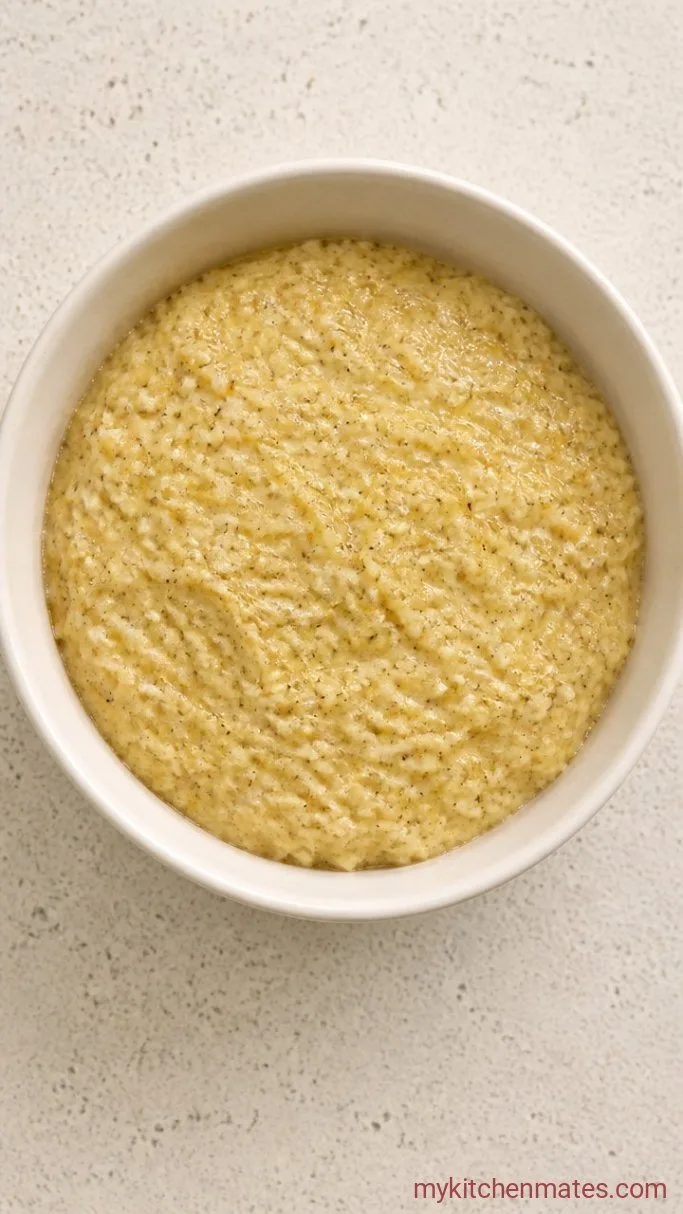
Tip the squeezed potatoes and onion into a large bowl. Crack in the 2 eggs, sprinkle over the 3 tablespoons of flour, the teaspoon of salt, the pepper, and the nutmeg if you’re using it. Stir everything together with a fork until no dry pockets of flour remain and the shreds are coated evenly.
The mixture will look like a ragged, stringy pile rather than a smooth batter. That’s exactly what you want. A few streaks of egg white that aren’t fully incorporated are fine. Overmixing works the starch too hard and can make the finished pancakes dense.
Step 3: Fry the Pancakes
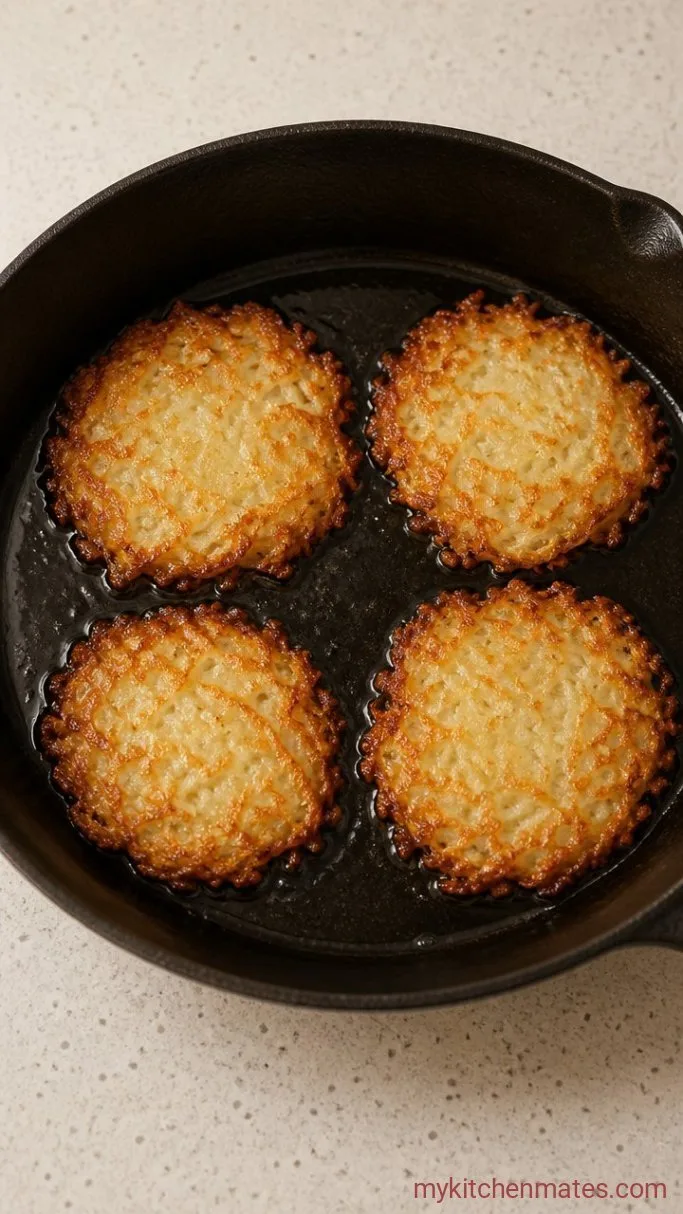
Set a large, heavy skillet over medium‑high heat and pour in enough oil to reach about 1/4 inch up the side. While the oil heats, scoop a loosely packed 1/4‑cup mound of the potato mixture, place it in the pan, and flatten it into a thin round roughly 1/4 inch thick. Fit 3 or 4 pancakes in the skillet without crowding them. Fry for about 3 to 4 minutes on the first side, until the bottom is deep golden brown and the edges start to look lacy and set.
Flip each pancake with a spatula and cook the second side for another 3 to 4 minutes. A tiny shred of potato dropped into the oil should sizzle immediately before you add the first batch. If the oil isn’t hot enough, the pancakes absorb grease and turn limp instead of crisp. Adjust the heat between batches to keep the oil at a steady, lively bubble.
Step 4: Drain and Serve Hot
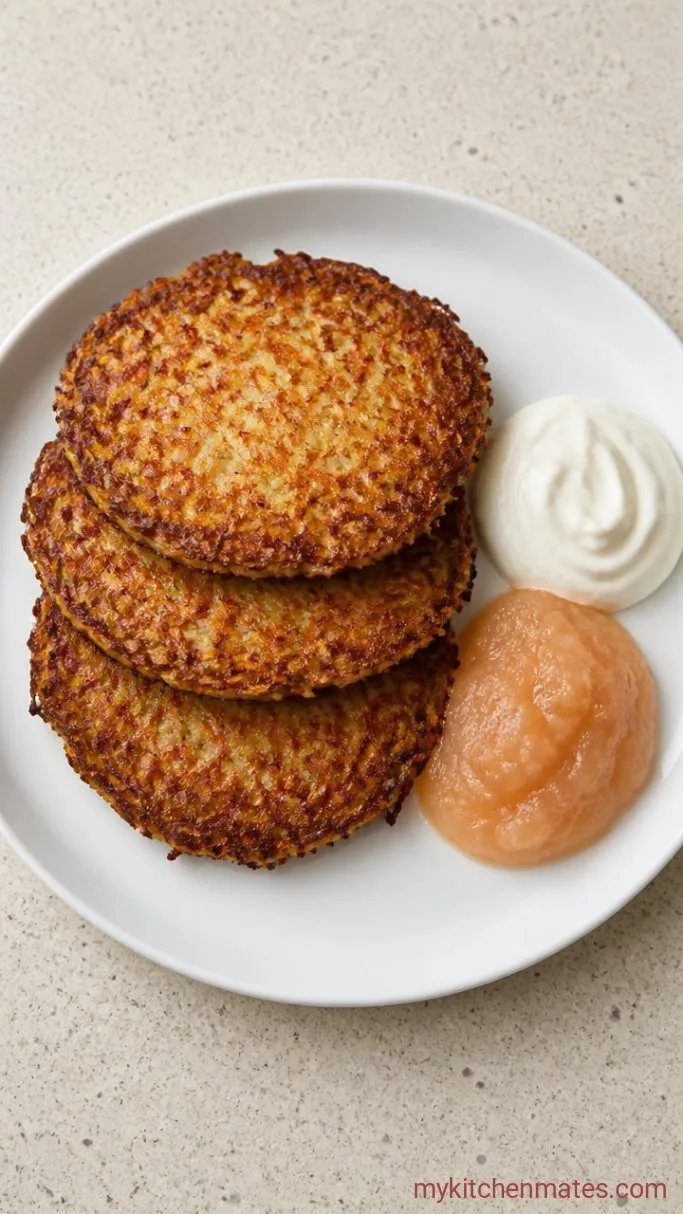
Lift the finished pancakes onto a plate lined with paper towels or, better yet, a wire rack set over a baking sheet if you are working in batches. While they’re still piping hot, scatter a little extra salt over the tops. Spoon a generous dollop of cold applesauce and a swoosh of sour cream right onto the stack and eat them while the edges snap.
The crispness peaks right at the plate, so serve the pancakes as soon as the last one leaves the pan. That first bite of hot, salty pancake against the cold, sweet applesauce is the whole point.
Tips for the Crispest Pancakes
- A cast‑iron skillet holds heat better than a thin nonstick pan and keeps the oil temperature steady as you add cold batter.
- Keep cooked pancakes warm on a wire rack set over a sheet pan in a 200°F oven while you fry the rest. The raised rack stops steam from softening the bottoms.
- Grate the onion right into the bowl with the potatoes. The extra liquid gets squeezed out with everything else, and the flavor blends more thoroughly.
- Pancakes lose crunch after about 15 minutes at room temperature, so fry them right before you plan to eat. Small batches served straight from the pan are always best.
Fry times shift depending on how thick you pat the pancakes.
| Thickness | Cook time per side |
|---|---|
| 1/4 inch | 3 to 4 minutes |
| 1/2 inch | 5 to 6 minutes |
Storing and Reheating Leftovers
- Refrigerate: Cooled pancakes keep in an airtight container for up to 3 days. Stack them with a sheet of parchment between layers so they don’t stick.
- Reheating: Bring them back to life in a dry skillet over medium heat for about 2 to 3 minutes per side, until the outside crisps again and the middle is hot. An oven or toaster oven at 375°F works too; the microwave will make them soft and rubbery.
What to Serve With Potato Pancakes
Classic applesauce and sour cream are hard to beat, but the pancakes also make a good base for cured fish. Smoked salmon with a spoonful of dill crème fraîche turns them into a light meal. When you want something fresh alongside, a green salad with a sharp, mustardy vinaigrette cuts through all that fried richness and rounds out the plate.
Frequently Asked Questions
Why did my pancakes turn out soggy?
Almost certainly two things: the potato shreds still held too much water, or the oil wasn’t hot enough when the batter hit the pan. Squeeze until the shreds feel dry, and wait for a test strand to sizzle before adding the first pancake.
Can I make the batter ahead of time?
It’s not a great idea. Grated potato releases water quickly and discolors, so the batter gets watery and grey. You can grate and rinse the potato a few hours ahead and keep it submerged in cold water, then drain and squeeze right before mixing with the egg and flour.
Can I freeze potato pancakes?
You can. Freeze completely cooled pancakes in a single layer on a baking sheet, then transfer them to a zip‑top bag with parchment between each one. Reheat straight from frozen on a baking sheet in a 400°F oven for about 10 minutes, flipping halfway.
Can I use sweet potatoes instead of russets?
Yes, but sweet potatoes have more sugar and burn faster. Lower the heat to medium and watch them closely, flipping a minute sooner than you would with russets.
Do I need to peel the potatoes?
No. Unpeeled potatoes give the pancakes a more rustic texture and a slightly darker color. Just scrub them well and remove any eyes or blemishes before grating.
German Potato Pancakes Recipe
Ingredients
Method
- Peel and grate the potatoes and onion on the large holes of a box grater. Wring out the shreds in a clean kitchen towel until no more liquid drips.
- Place the squeezed potato and onion in a bowl. Add the eggs, flour, salt, pepper, and nutmeg. Stir until evenly combined; the mixture will look ragged, not smooth.
- Heat 1/4 inch of oil in a heavy skillet over medium-high heat. Scoop 1/4‑cup mounds into the pan, flatten to 1/4‑inch rounds, and fry 3 to 4 minutes per side until deep golden. Drain on paper towels or a wire rack.
- Sprinkle with extra salt while hot and serve immediately with applesauce and sour cream.
Notes
