
Tangy Dill Pickle Sourdough Bread

This dill pickle sourdough bread packs the tangy, savory flavor of your favorite deli pickle right into a crusty, chewy loaf. Fresh dill and chopped pickles run through the crumb, and the brine replaces some of the water, giving the crust a deeper color and a slight salty bite.
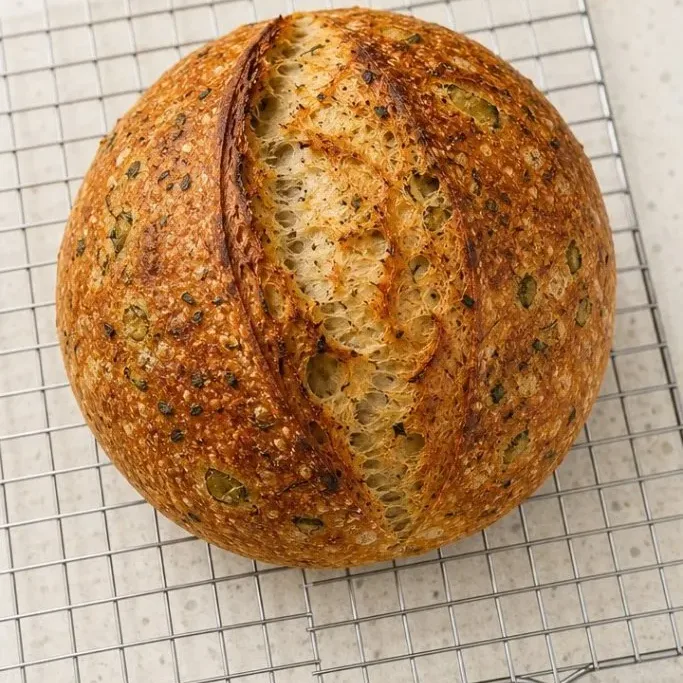
It is the kind of bread that makes a grilled cheese sandwich unforgettable. If you already keep a sourdough starter, you can mix the dough on a weekday evening and bake it the next morning.
What Makes This Bread So Good
The pickle brine does two things. It seasons the dough so the salt tastes brighter, and it helps the crust brown evenly into a deep, glossy amber without any extra steam. The fermented acidity also plays well with sourdough’s own tang, so the loaf tastes more savory and complex than a plain white bread.
Chopped dill pickles make the bread moist and give you little pockets of crunch and saltiness. Just be sure to drain them well so the dough stays manageable. This is the loaf I bake when I want a bread that stands up to sharp cheese and hearty soups.
Ingredients
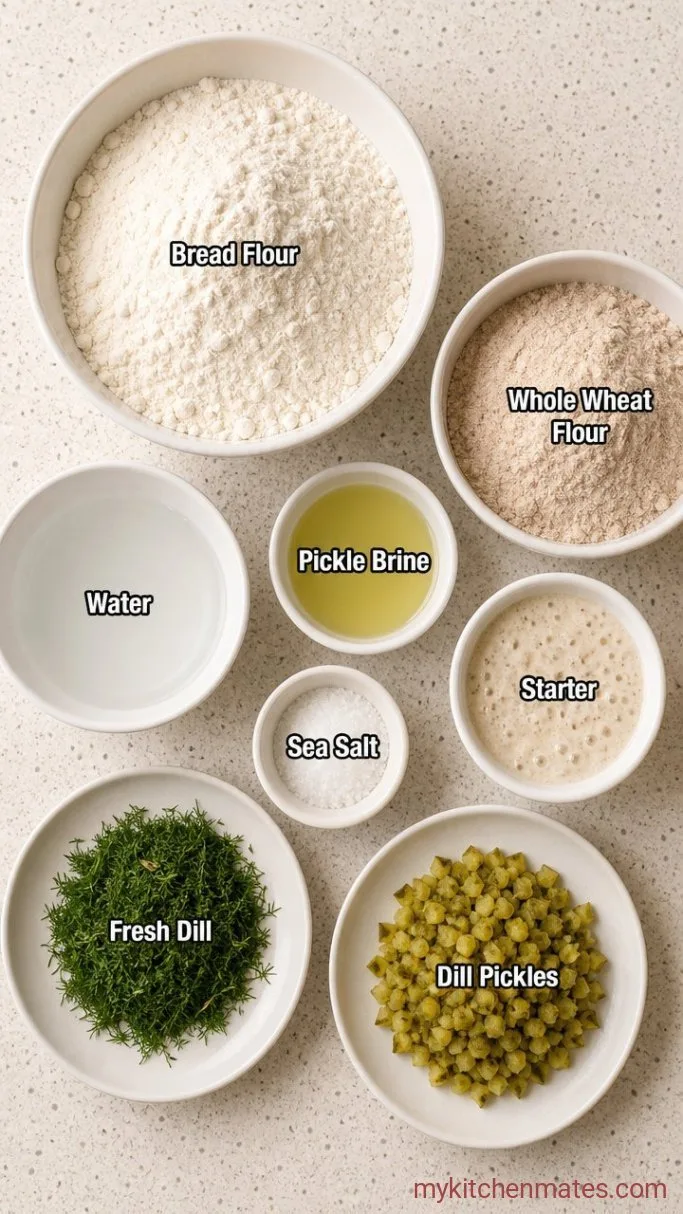
- 450g bread flour: a strong white flour with at least 12% protein works best.
- 50g whole wheat flour: adds a touch of nuttiness and helps the dough hold shape during the long rise.
- 350g water, room temperature: if your kitchen is cold, use slightly warmer water around 25°C (77°F).
- 40g dill pickle brine, room temperature: use brine from a jar of dill pickles, not sweet pickle brine.
- 100g active sourdough starter (100% hydration): feed it 4 to 6 hours before mixing so it is bubbly and doubled.
- 10g fine sea salt.
- 2 tablespoons finely chopped fresh dill.
- 80g finely chopped dill pickles (from the same jar as the brine), drained very well: pat them dry with paper towels so extra moisture does not throw off the dough.
Variations / Substitutions
- Spicy pickle bread: swap half the brine for brine from a jar of spicy pickles and add a pinch of red pepper flakes with the salt.
- Flour swap: if you do not have whole wheat flour, use all bread flour; the dough will be slightly more slack but still works.
- Herbs: dried dill works in a pinch. Use 2 teaspoons instead of fresh and rub it between your fingers as you add it to release the oils.
Creamy Mushroom Soup from Scratch makes a comforting soup to pair with this bread.
How to Make Dill Pickle Sourdough Bread
Step 1: Mix the Dough
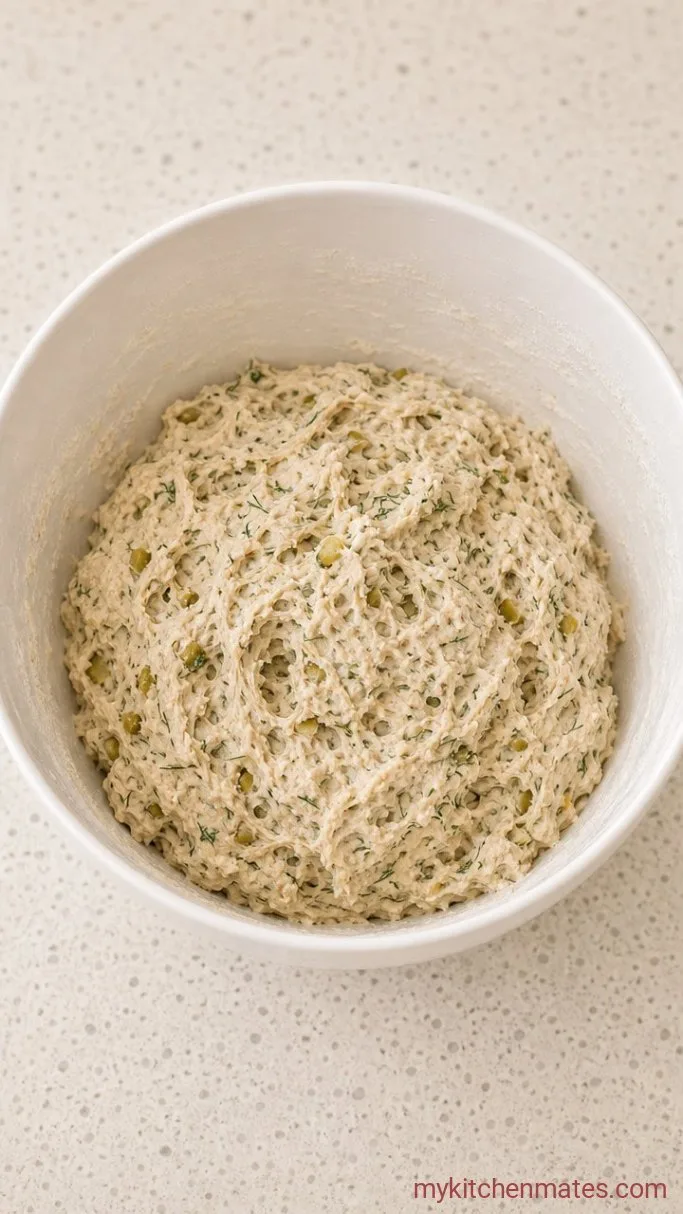
In a large mixing bowl, combine the 450g bread flour, 50g whole wheat flour, 350g water, 40g brine, and 100g active starter. Use your hand or a dough whisk to mix until no dry flour remains. Cover the bowl with a plate or damp towel and let it rest for 30 minutes. This autolyse step hydrates the flour so the dough becomes stretchy on its own.
After the rest, sprinkle the 10g salt, the chopped dill, and the drained chopped pickles over the dough. Pinch and fold the dough over itself until everything is evenly distributed. The dough will look shaggy and feel a little lumpy from the pickles, that is exactly right.
Step 2: Fold the Dough
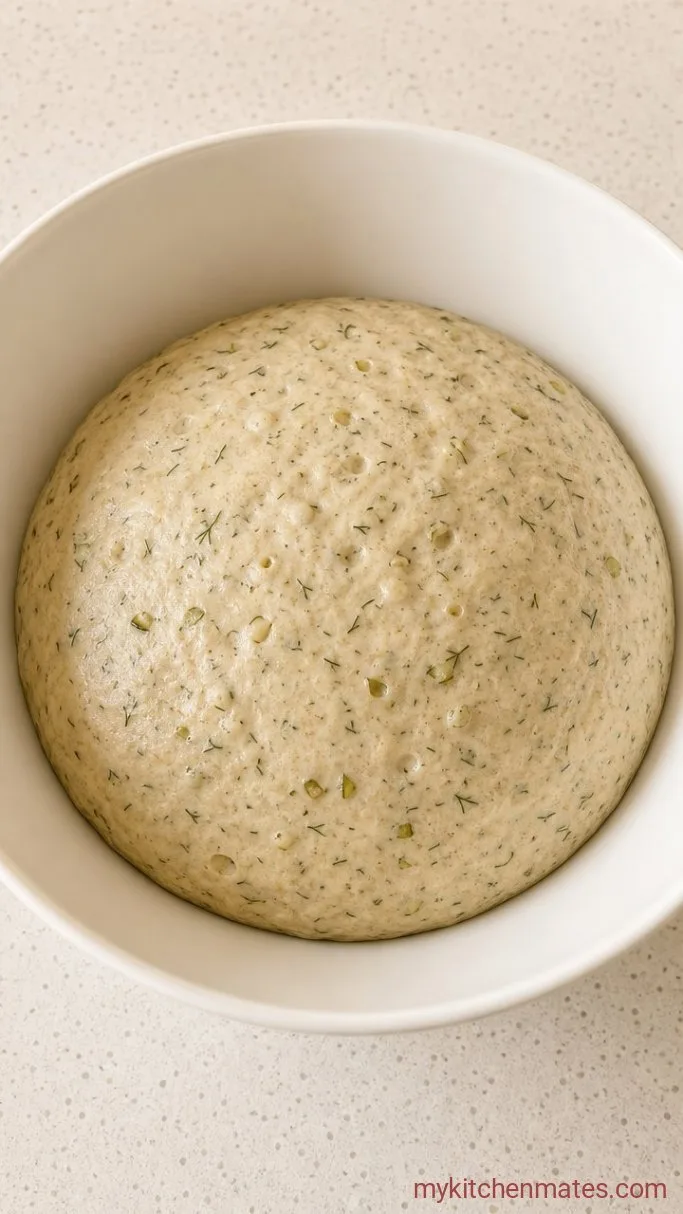
Cover the bowl again and let the dough rest for 30 minutes. Then, with wet hands, reach under the dough, pull one side up, and fold it over the top. Rotate the bowl a quarter turn and repeat until you have folded all four sides. Wait 30 minutes and do this stretch-and-fold series again. In total, perform 3 or 4 sets over the next 2 hours.
By the last set, the dough will feel smoother, more aerodynamic, and hold a gentle dome. You may see small bubbles starting to form around the edges of the bowl, a sign that fermentation is active. Now let the dough rest, covered, for the remainder of bulk fermentation, about 2 to 4 more hours depending on your kitchen’s warmth. It is ready when it has grown by roughly 50% and jiggles if you shake the bowl.
Step 3: Shape the Loaf
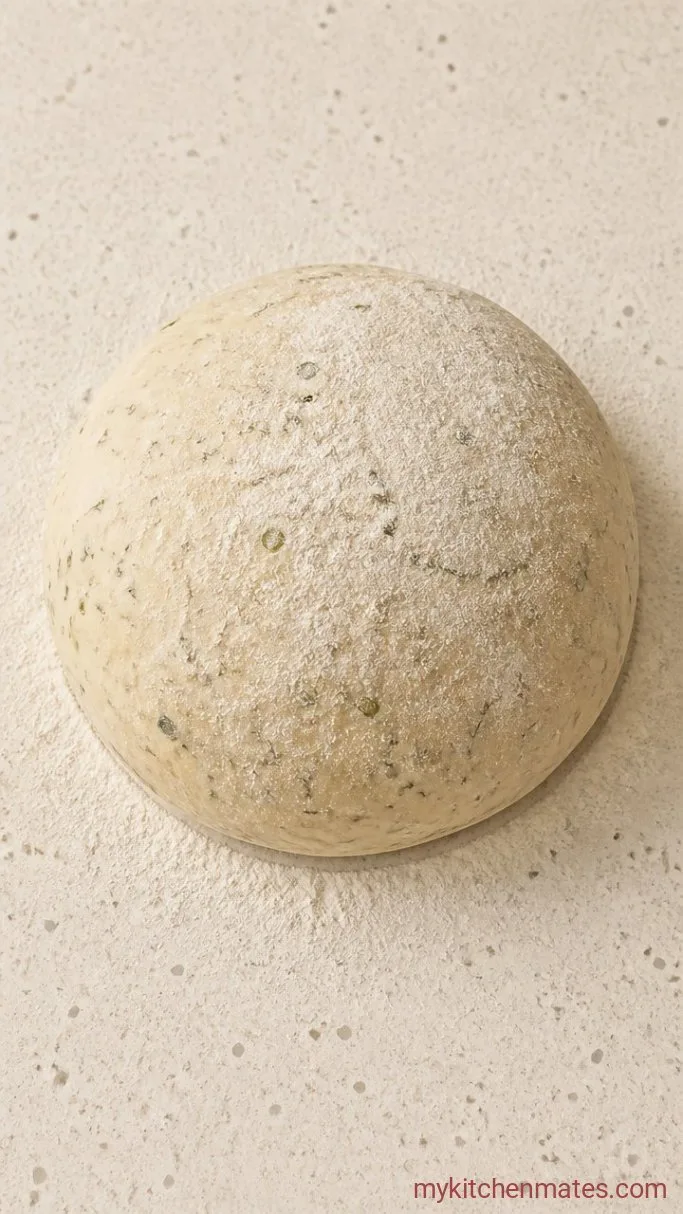
Turn the dough out onto a very lightly floured counter. Shape it into a round by cupping your hands and pulling it toward you, letting the friction of the counter build tension on the surface. Let this pre-shape rest uncovered for 20 minutes so the gluten relaxes.
Lightly flour the top of the dough ball and flip it over. Fold the sides in toward the center, then roll it up into a tight bundle, pinching the seam shut. Place the shaped loaf seam side up in a floured banneton or a bowl lined with a floured tea towel. The dough should feel plump and springy.
Step 4: Proof and Score
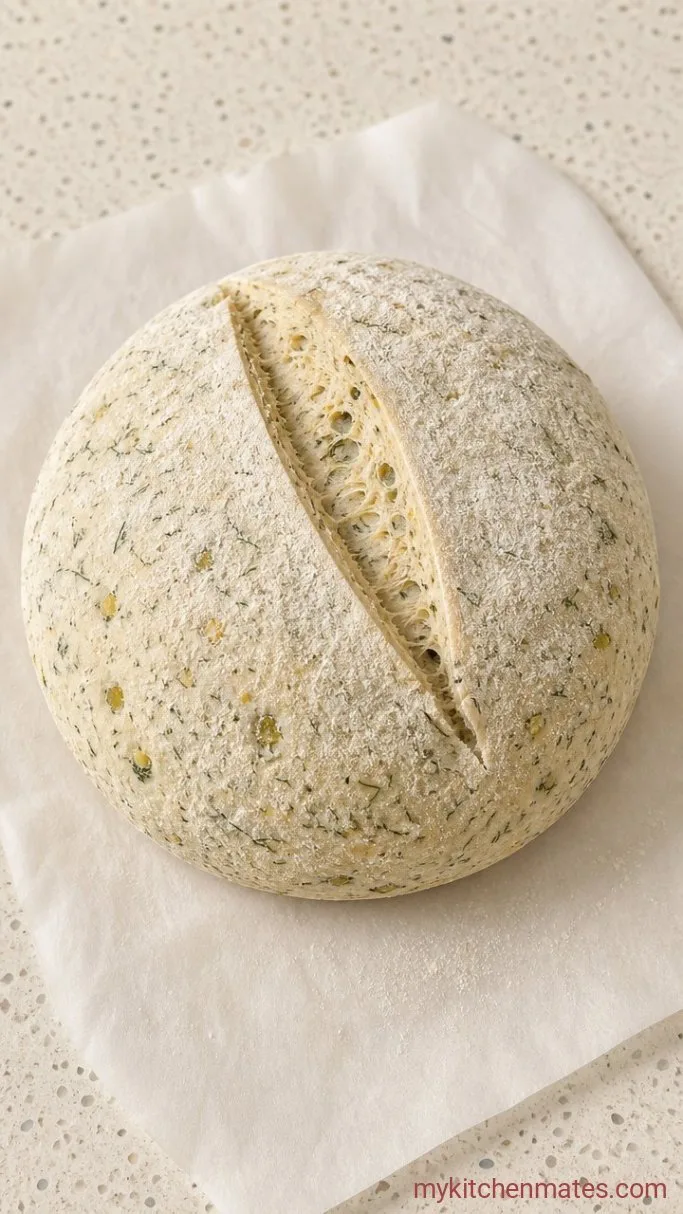
Cover the banneton with a damp towel or a shower cap and let the loaf proof. For the tangiest flavor and easiest handling, place it in the refrigerator for an overnight cold proof, 12 to 16 hours. If you prefer to bake on the same day, proof it at room temperature for 1 to 2 hours until the loaf has risen noticeably and a finger pressed gently into the dough leaves a dimple that springs back slowly.
About 30 minutes before baking, place a Dutch oven with its lid inside your oven and preheat to 450°F (230°C). When you are ready to bake, turn the loaf out onto a piece of parchment paper. Use a sharp lame or a razor blade to score a deep crescent or a cross on the surface. The score should be about half an inch deep and confident, this controls where the bread expands.
Step 5: Bake and Cool
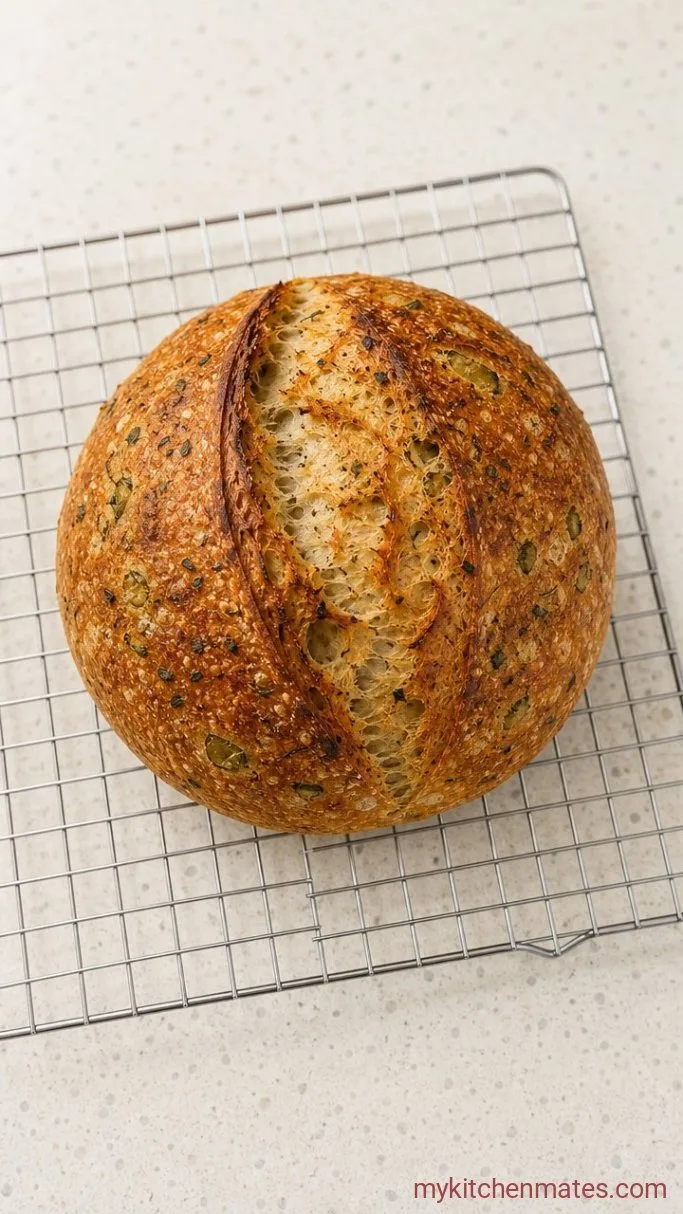
Carefully lower the parchment and dough into the preheated Dutch oven. Put the lid on and bake for 25 minutes. The lid traps steam so the crust stays soft long enough for the loaf to spring up dramatically.
Take the lid off and bake for another 20 minutes, until the crust is a deep golden brown and the loaf sounds hollow when you knock on the bottom. Transfer to a wire rack and cool completely, at least 2 hours, before you slice. Cutting too soon will make the crumb gummy, so pour a coffee and let patience do its work. Then slice and serve, the crumb will be open and the tang will hit right away.
Tips for the Best Sourdough Bread
- A lively starter makes all the difference. Feed it twice before you bake if it has been sitting in the fridge.
- Drain and blot the pickles twice. Too much liquid from the pickles will make the dough sticky and hard to shape.
- Use a kitchen scale. Bread flour compacts differently every time you scoop, so grams are your friend.
- Wet your hands for every stretch-and-fold instead of adding flour. This keeps the dough from sticking without drying it out.
- If your kitchen is very warm and the dough is moving fast, pop the bowl into a cooler spot to slow things down.
Bulk fermentation times change with the temperature of your kitchen. Use this guide to decide when to shape and proof.
| Kitchen Temperature | Approximate Bulk Fermentation (total from mix to shape) |
|---|---|
| 24–26°C (75–79°F) | 4 to 5 hours |
| 21–23°C (70–73°F) | 6 to 8 hours |
| 18–20°C (64–68°F) | 8 to 12 hours |
Keeping the Bread Fresh
Store the cooled loaf cut side down on a wooden board or in a paper bag at room temperature for up to 3 days. For longer storage, slice the bread and freeze it with parchment paper between the slices. Reheat slices straight from the freezer in a toaster or a 175°C (350°F) oven until the edges crisp up again.
What to Serve with This Bread
The salty, tangy crumb turns a simple grilled cheese into something you would order at a deli. Use a sharp cheddar or smoked gouda and add a few extra pickle slices inside the sandwich before you toast it. A thick slice dunked into a bowl of creamy tomato soup is an equally good call, the acidity of the bread balances the sweetness of the tomatoes. Cut into cubes and lightly toasted, it also holds up well on a cheese board next to a soft brie and some grainy mustard.
Frequently Asked Questions
Can I use active dry yeast instead of sourdough starter?
This recipe is designed for sourdough and its long fermentation, so the flavor and structure depend on it. You can convert it to a yeast dough, but you will lose the distinctive tang and will need to adjust the timing and ratios significantly.
My dough feels too sticky and I am struggling to shape it.
Sticky dough usually means the pickles were not dry enough or your kitchen is very warm. Chill the dough in the banneton for 30 minutes before you turn it out, and use parchment paper to handle it. Wet hands always beat extra flour.
Can I use sweet pickle brine instead of dill brine?
I would not. Sweet brine changes the flavor profile entirely and the sugar can affect the crust color and fermentation speed. Stick with dill brine for the savory, tangy bread described here.
Can I add other mix-ins like cheese or garlic?
Yes. Fold in 100g of shredded sharp cheddar when you add the salt, or rub a clove of minced garlic into the flour before mixing. Both play nicely with the dill and pickle notes.
I do not have a Dutch oven. Can I still bake this?
You can bake the loaf on a preheated baking stone or an inverted heavy baking sheet. Place a shallow pan of hot water on the oven floor when you load the bread to create steam, and bake at the same temperature until the crust is deep brown and the loaf sounds hollow.
Dill Pickle Sourdough Bread Recipe
Ingredients
Method
- Mix bread flour, whole wheat flour, water, brine, and starter in a bowl until no dry flour remains. Cover and rest 30 minutes. Sprinkle salt, dill, and pickles over the dough and fold until evenly distributed.
- Cover and rest 30 minutes. Perform a stretch-and-fold series. Repeat 3 to 4 more times at 30-minute intervals, then let the dough bulk ferment until increased by 50% and jiggly.
- Turn the dough onto a floured surface, pre-shape into a round, and rest 20 minutes. Shape into a tight boule and place seam side up in a floured banneton.
- Cover and proof overnight in the refrigerator for 12 to 16 hours, or at room temperature for 1 to 2 hours until puffy. Preheat oven with a Dutch oven inside to 450°F (230°C). Turn loaf onto parchment, score deeply.
- Lower dough into the hot Dutch oven. Bake with lid on for 25 minutes, then remove lid and bake 20 minutes more until deep golden and hollow-sounding. Cool fully on a rack, then slice and serve.
Notes
