
One-Pot Creamy Pasta Primavera

Creamy Pasta Primavera is that rare weeknight dish where a pile of vegetables and a silky sauce come together without a sink full of pans. Everything cooks in one pot, which means less scrubbing and more time to actually eat.
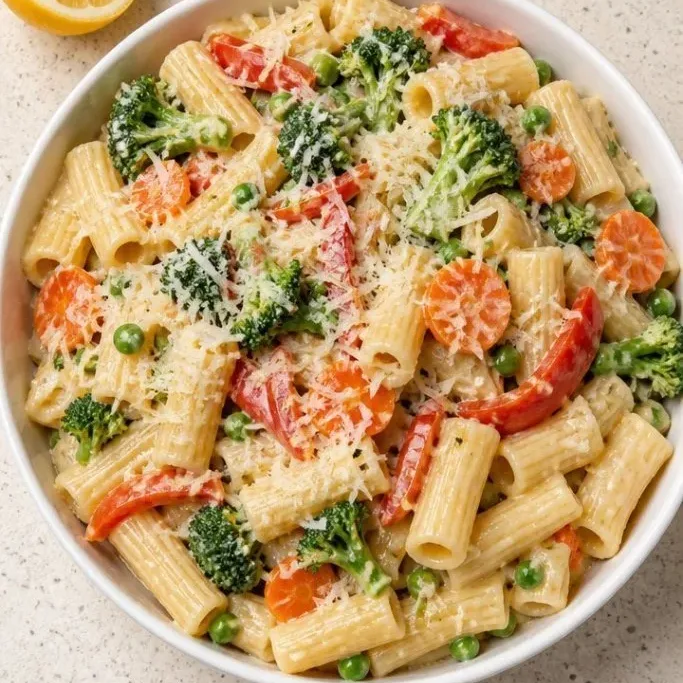
The starch from the pasta thickens the sauce as it simmers, so you skip the roux. Every bite lands with tender broccoli, sweet bell pepper, pops of green peas, and a Parmesan sharpness that balances the cream.
Why This Pasta Primavera Works
The one-pot method builds layers. You sauté the aromatics and harder vegetables first, then let the pasta cook right in the broth. By the time the noodles are tender, the sauce is glossy and clings to every piece.
I keep coming back to this version because it feels generous without being fussy. The cream is just enough to coat, not drown, and the vegetables stay vibrant instead of turning to mush.
Ingredients
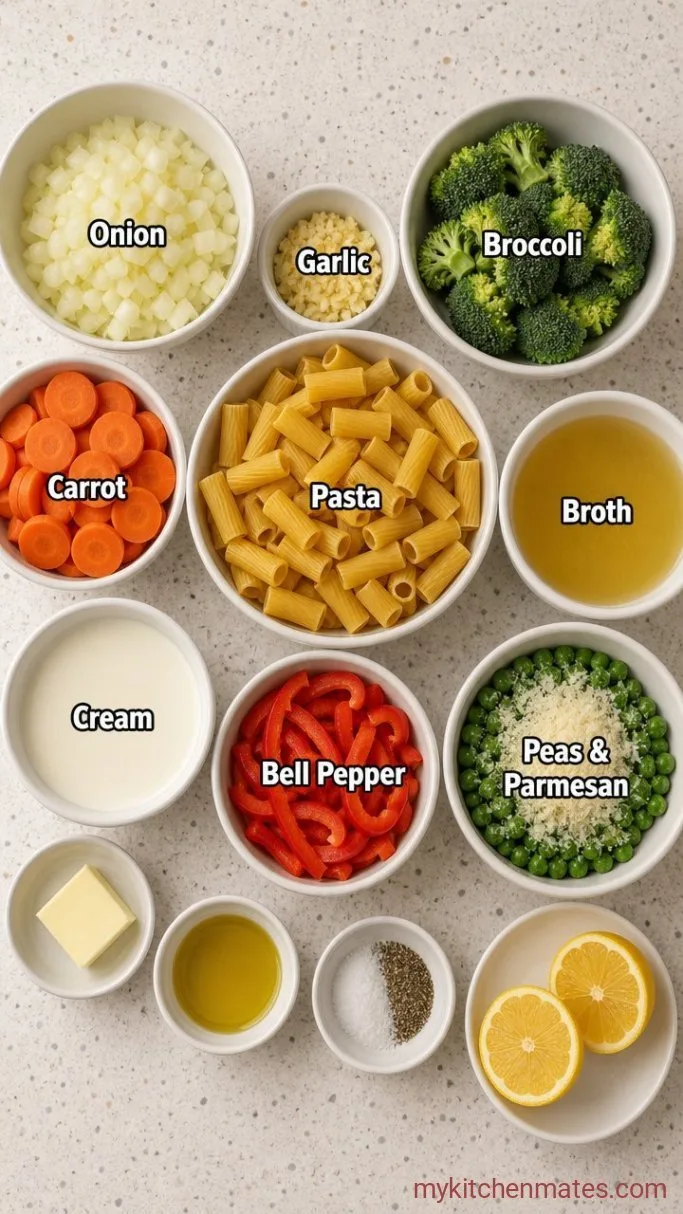
- 2 tbsp unsalted butter: start with a cold pan so it melts gradually.
- 1 tbsp olive oil: helps keep the butter from scorching.
- 1 small yellow onion, diced: about 1 cup.
- 3 cloves garlic, minced: fresh makes a real difference here.
- 1 cup small broccoli florets: cut into bite-size pieces so they cook evenly.
- 1 medium carrot, peeled and sliced into thin rounds: aim for ¼-inch thick.
- 8 oz dry penne or rigatoni: short shapes with ridges hold the creamy sauce best.
- 2½ cups low-sodium vegetable broth: enough to cook the pasta and become the sauce base.
- 1 cup heavy cream: full-fat for the smoothest texture; half-and-half works in a pinch but won’t be as rich.
- 1 red bell pepper, sliced into thin strips: added later to keep some snap.
- ½ cup frozen peas: no need to thaw.
- ½ cup freshly grated Parmesan cheese: plus more for serving.
- 1 tsp kosher salt: adjust to taste.
- ½ tsp black pepper: freshly ground.
- Juice of half a lemon: brightens everything at the end.
Variations and Substitutions
- Swap the vegetables: asparagus, zucchini rounds, or sliced mushrooms all work beautifully. Just cut them to a similar thickness so they finish cooking together.
- Add protein: stir in shredded rotisserie chicken or cooked shrimp when you add the peas.
- Make it dairy-free: replace the butter with more olive oil, use full-fat coconut cream instead of heavy cream, and swap the Parmesan with 2 tbsp nutritional yeast plus an extra pinch of salt.
- A little heat: toss in a pinch of red pepper flakes with the garlic.
Creamy Beef and Garlic Pasta is next on our list if this pasta is your kind of dinner.
How to Make One-Pot Creamy Pasta Primavera
Step 1: Sauté the Aromatics and Harder Vegetables

Melt the 2 tbsp butter with the 1 tbsp olive oil in a large pot or Dutch oven over medium heat. Add the diced onion and cook for about 3 minutes, until it softens and turns translucent. Stir in the minced garlic and let it go for 30 seconds, just until fragrant.
Next, toss in the broccoli florets and sliced carrots. Season with a small pinch of salt and cook for 5 minutes, stirring now and then. The edges of the broccoli will brighten and the carrots will start to feel a little less rigid when you poke them with a spoon.
Step 2: Toast the Pasta and Add the Broth

Pour in the 8 oz dry penne and stir it around with the vegetables for 1 minute. Toasting the pasta in the butter and oil gives it a subtle nutty backbone that stands up to the cream. Then add all 2½ cups of vegetable broth.
Crank the heat to high and bring the liquid to a boil. Once it’s bubbling, drop the heat to low, cover the pot, and let it simmer for 10 minutes. Lift the lid once halfway through to give it a stir, so nothing sticks to the bottom. The pasta should be nearly tender and most of the broth absorbed.
Step 3: Stir in the Cream and Quick-Cooking Veggies

Uncover the pot and pour in the 1 cup heavy cream. Add the red bell pepper strips and the frozen peas. Stir everything together, then let it cook uncovered over medium-low heat for 3 minutes.
The sauce will thicken slightly and the peppers will lose their raw crunch but still have a little bite. You’ll see the cream take on a pale orange tint from the carrots and broth, and the peas will turn bright green.
Step 4: Finish with Parmesan and Serve
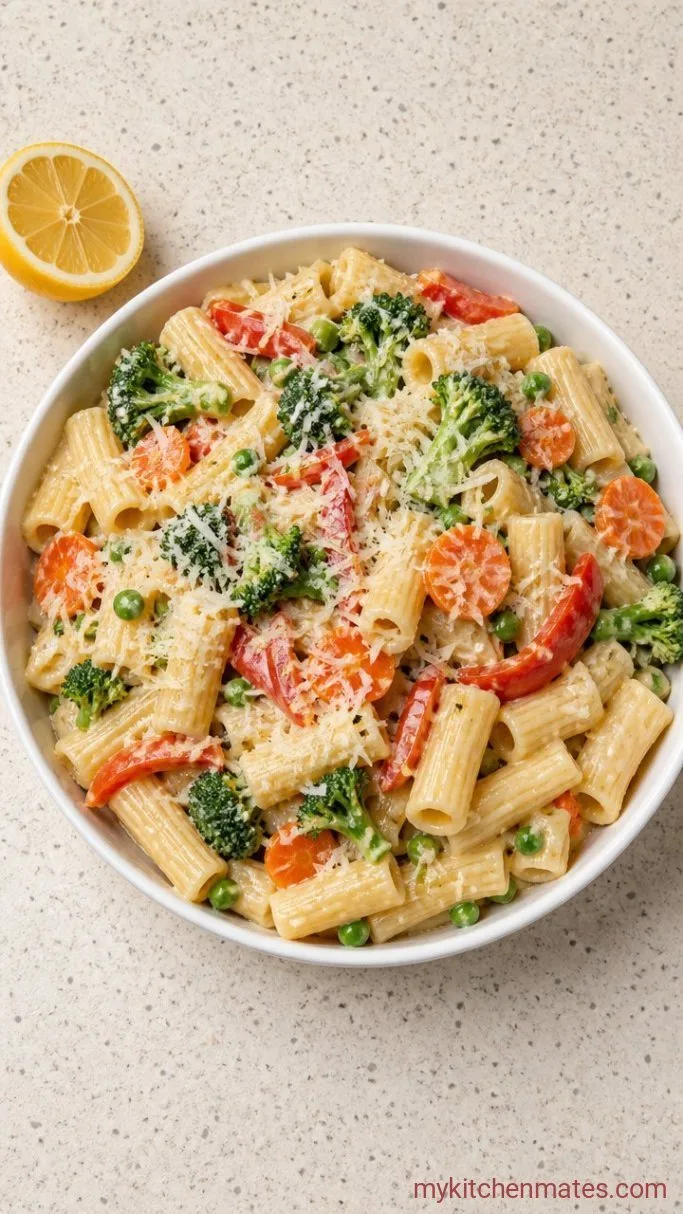
Remove the pot from the heat. Sprinkle in the ½ cup grated Parmesan, the 1 tsp kosher salt, and the ½ tsp black pepper. Squeeze in the lemon juice and stir until the cheese melts into the sauce.
Taste a noodle and adjust the seasoning if needed. Spoon the pasta into wide bowls while it’s hot, and don’t forget a little extra Parmesan on top. The sauce will be velvety, with tiny flecks of pepper and lemon zest.
Tips for the Creamiest Sauce
- Pick short pasta with ridges or tubes. Penne, rigatoni, and cavatappi grab the sauce better than long strands.
- Don’t rush the sauté of the broccoli and carrot. Getting a light sear on them before the liquid goes in builds a deeper flavor that punches through the cream.
- If the sauce seems too thick after adding the Parmesan, stir in a splash of warm water or broth until it reaches the consistency you like.
- A microplane does the best job here for the Parmesan; it melts instantly into the hot pasta.
Pasta cooking times for different shapes:
| Pasta shape | Approx. dry cook time | Adjust simmer time by |
|---|---|---|
| Penne / rigatoni | 11-12 mins | Follow recipe as written |
| Rotini / fusilli | 10 mins | Reduce simmer time by 2 mins |
| Farfalle (bowties) | 12-13 mins | Add 2 mins to simmer time |
| Small shells | 9-10 mins | Reduce simmer time by 3 mins |
Storing Leftover Pasta Primavera
- Refrigerate: let the pasta cool completely, then store it in an airtight container for up to 3 days. The sauce will thicken in the fridge, which is normal.
- Reheating: warm it gently in a skillet over medium-low heat with a splash of water or milk. Stir often to loosen the sauce and bring it back to a creamy texture.
What to Serve with Creamy Pasta Primavera
A simple arugula salad with a lemon vinaigrette cuts through the richness without adding much work. If you want something crunchy alongside, garlic bread toasted under the broiler is never a wrong answer. For a bigger meal, grilled chicken breasts or Italian sausages link nicely on top.
Frequently Asked Questions
Can I use frozen vegetables instead of fresh?
Yes. Frozen broccoli, carrot coins, and bell pepper strips all work. Add them straight from the freezer during Step 3 and extend the cooking time by 2 to 3 minutes so they heat through.
What’s the best pasta shape for primavera?
Short, sturdy shapes with ridges hold the sauce best. Penne, rigatoni, fusilli, and cavatappi are all good choices. Avoid spaghetti or angel hair, because the cream tends to slide off.
How do I keep the pasta from getting mushy?
Be exact with the broth measurement and check the pasta a minute before the simmer time is up. It should be al dente, with a slight firmness at the center. The residual heat will finish it after you take it off the stove.
Creamy Pasta Primavera Recipe
Ingredients
Method
- Melt butter and olive oil in a large pot over medium heat. Add onion and cook 3 minutes until soft. Stir in garlic for 30 seconds.
- Add broccoli and carrot, season with a pinch of salt, and cook 5 minutes, stirring occasionally.
- Add dry pasta and stir for 1 minute to toast. Pour in vegetable broth, bring to a boil, then cover and simmer on low for 10 minutes.
- Uncover and stir in heavy cream, bell pepper, and frozen peas. Cook uncovered 3 minutes, until sauce thickens slightly.
- Remove from heat. Stir in Parmesan, salt, pepper, and lemon juice. Taste and adjust seasoning. Serve hot with more Parmesan.
Notes
