
20-Minute Creamy Carbonara Pasta (No Cream Needed)

Creamy carbonara pasta is the kind of weeknight dinner that feels far more special than the 20 minutes it takes to make. No heavy cream, just eggs, cheese, and starchy pasta water that come together into a sauce that coats every strand of spaghetti.

It is one of those dishes where timing counts, but once you nail it once, you will reach for it on every busy night. The salty, crisp cubes of guanciale and the sharp bite of black pepper do all the heavy lifting.
Why This Carbonara Works
Getting a sauce this silky without cream comes down to one thing: working off the heat so the eggs thicken gently instead of scrambling. That warm, glossy coat is what makes the dish taste so rich, even though the ingredient list is short.
The guanciale gives you a deep, savory fat that clings to the pasta and carries the pepper right through the dish. A little pecorino adds salt, and parmesan rounds it out so the sauce stays smooth and never grainy.
Ingredients

- 1 lb spaghetti: dried works best here, but bucatini or rigatoni are good swaps
- 4 oz guanciale, cut into small batons: pancetta or thick-cut bacon will work in a pinch, but the flavor changes
- 3 large eggs: use them straight from the fridge, the residual heat will do the cooking
- 1 cup finely grated Pecorino Romano: the nutty, salty backbone of the sauce
- ½ cup finely grated Parmesan: adds a gentle roundness so the sauce does not get too sharp
- 2 tsp freshly cracked black pepper: coarse specks you can actually taste, not a fine dust
- Salt: for the pasta water only, the cheese and guanciale bring plenty of salt
Variations / Substitutions
- Swap the chicken: guanciale is the classic choice but pancetta keeps the clean salty note and thick-cut bacon works when that is all you have. Each will change the final fat level, so drain off any excess grease before adding the pasta.
- Go all pecorino or all Parmesan: using 1½ cups of one cheese is fine. All pecorino will be sharper and saltier, all Parmesan will be softer and a touch sweeter.
- Add a pinch of heat: a small shake of red pepper flakes tossed in with the guanciale wakes up the dish without turning it into something else.
Creamy Buldak Ramen Carbonara is another dinner you’d probably love if you enjoy this pasta.
How to Make Creamy Carbonara Pasta
Step 1: Boil the Pasta
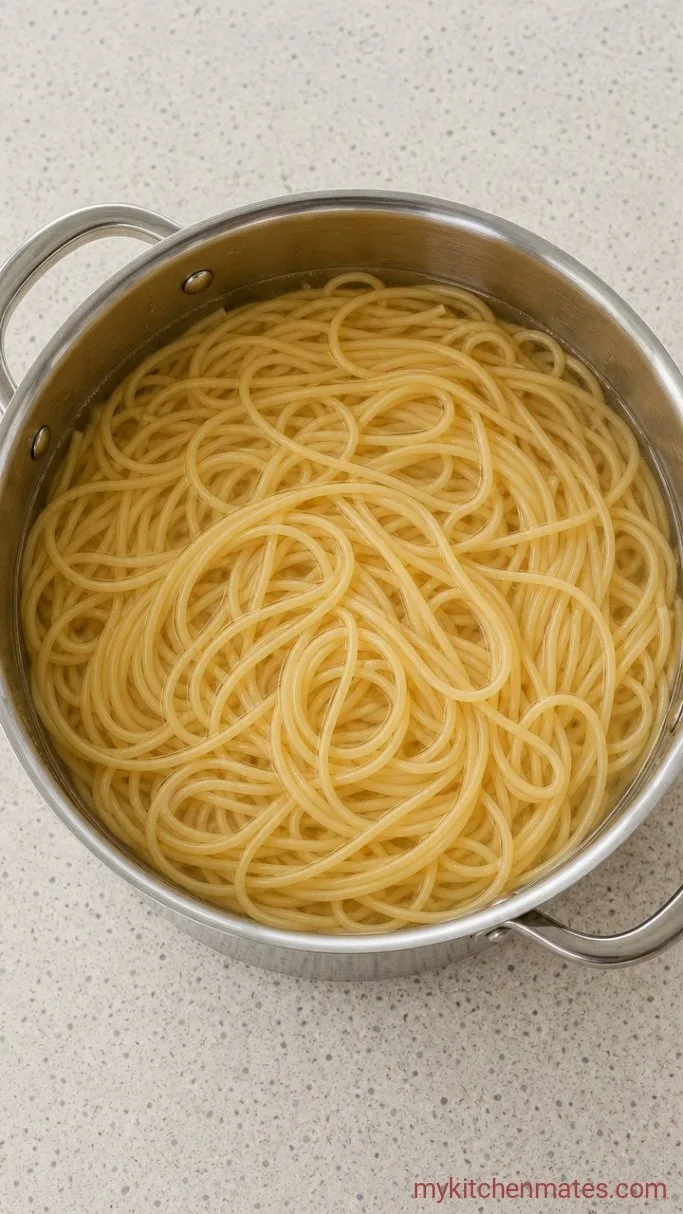
Bring a big pot of water to a rolling boil and salt it generously. You want it to taste like the sea so the spaghetti picks up seasoning from the inside. Drop in the 1 lb of spaghetti and cook it for 8 to 10 minutes, until it is just al dente.
While the pasta bubbles away, scoop out 1 cup of the cloudy cooking water and set it aside before you drain anything. That starchy water is the secret to a loose, creamy sauce.
Step 2: Crisp the Guanciale
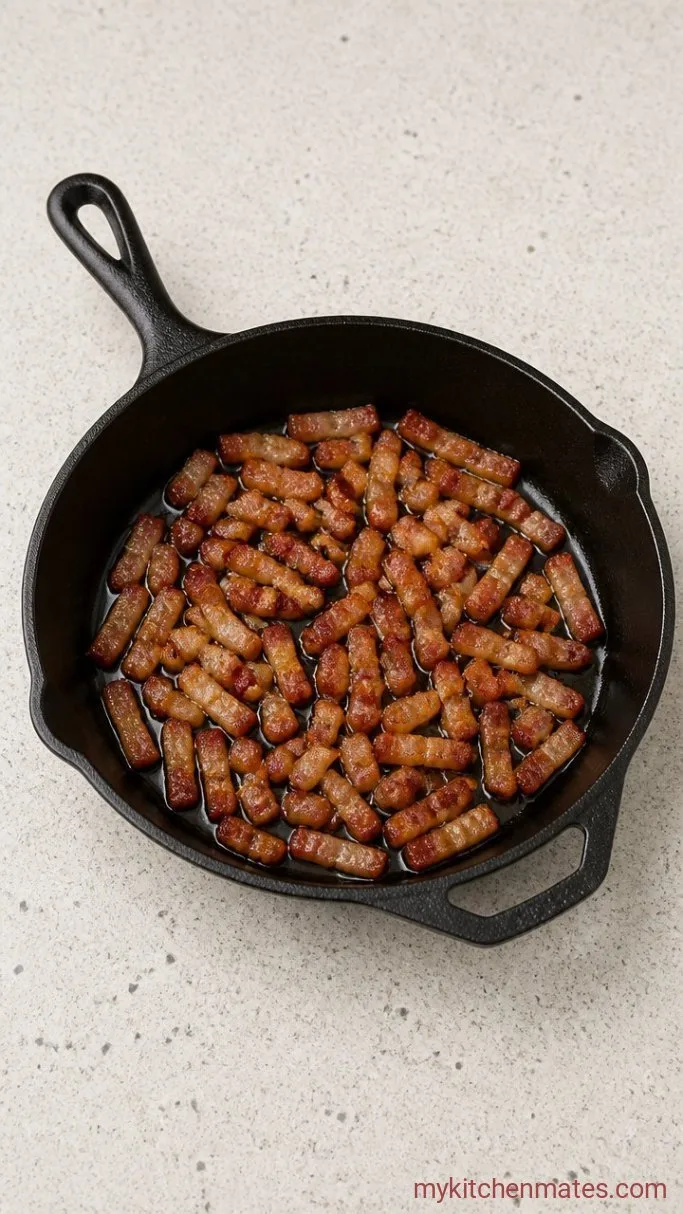
Set a large skillet over medium heat and scatter in the 4 oz of cut guanciale. Let it sizzle for 4 to 6 minutes, stirring only now and then, until the fat has rendered out and the edges are deep golden and crunchy. The pan will fill with a fragrant, savory fat that you do not want to lose.
Kill the heat and slide the skillet off the burner while you finish the next step. Keeping the pan warm, not hot, is what stops the eggs from seizing later.
Step 3: Whisk the Egg Mixture
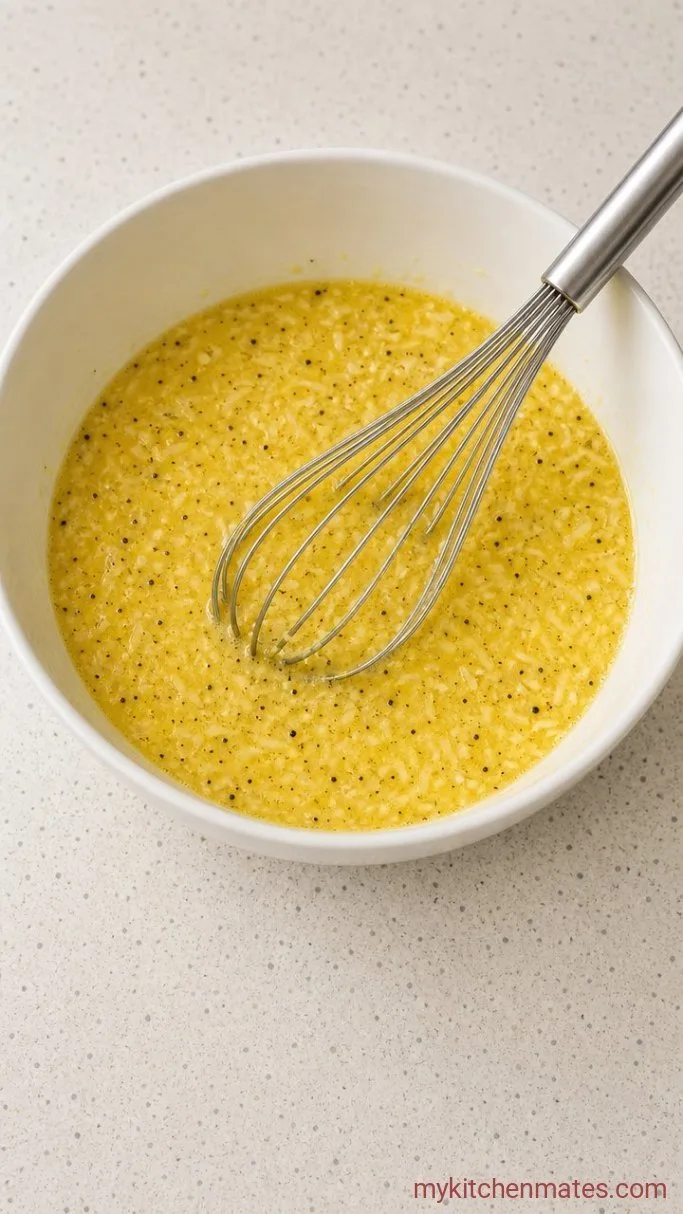
In a medium bowl, crack the 3 eggs and tip in the 1 cup pecorino, ½ cup parmesan, and 2 tsp black pepper. Whisk until the whole thing turns into a thick, pale yellow paste with no streaks, about 30 seconds. It will look almost like a soft cookie dough before you add pasta water.
You are building the sauce here, so taste the mixture for salt. The cheese and guanciale handle most of it, but you can add a tiny pinch now if your pecorino seems mild.
Step 4: Toss and Emulsify the Sauce
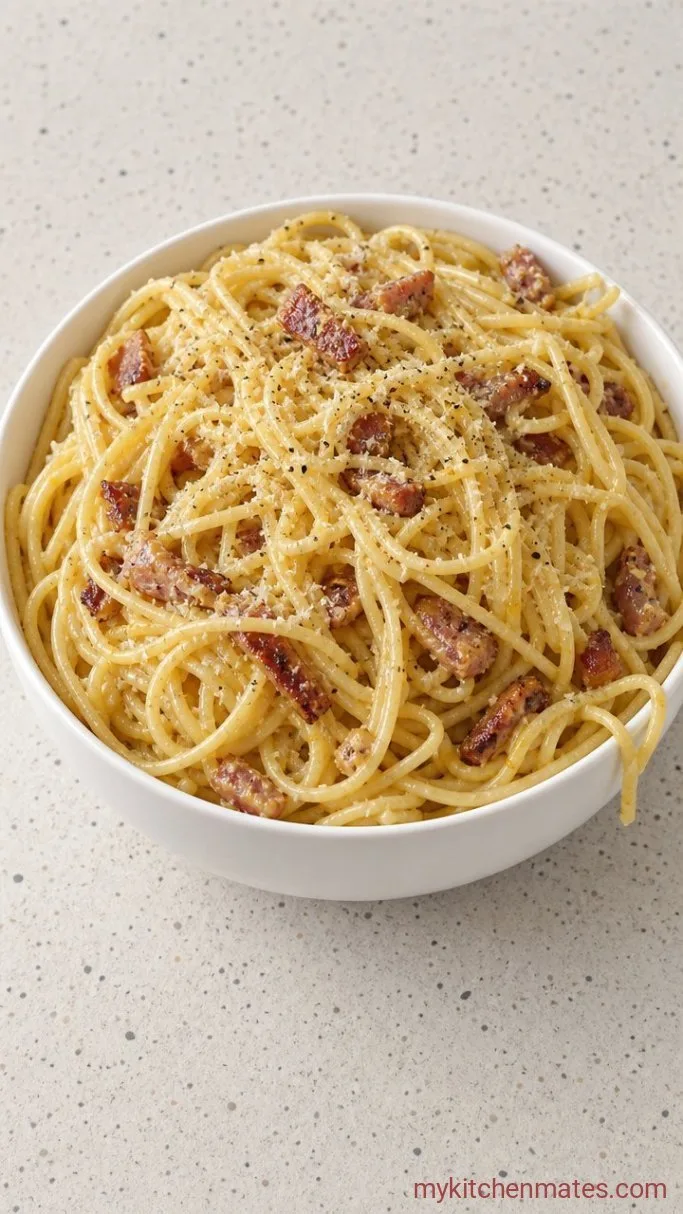
Add the drained spaghetti straight into the skillet with the guanciale, still off the heat. Pour the egg mixture over the top and start tossing fast with tongs. Stream in the reserved pasta water 2 tablespoons at a time, tossing for about 1 minute, until the sauce goes from a thick paste to a glossy coat that clings to every strand.
You will see it change from pale yellow to a silky, ivory sauce right before your eyes. If the pan feels hot to the touch, let it cool for 30 seconds before adding the eggs; you are after a warm, velvety texture, not scrambled bits.
Step 5: Plate and Serve
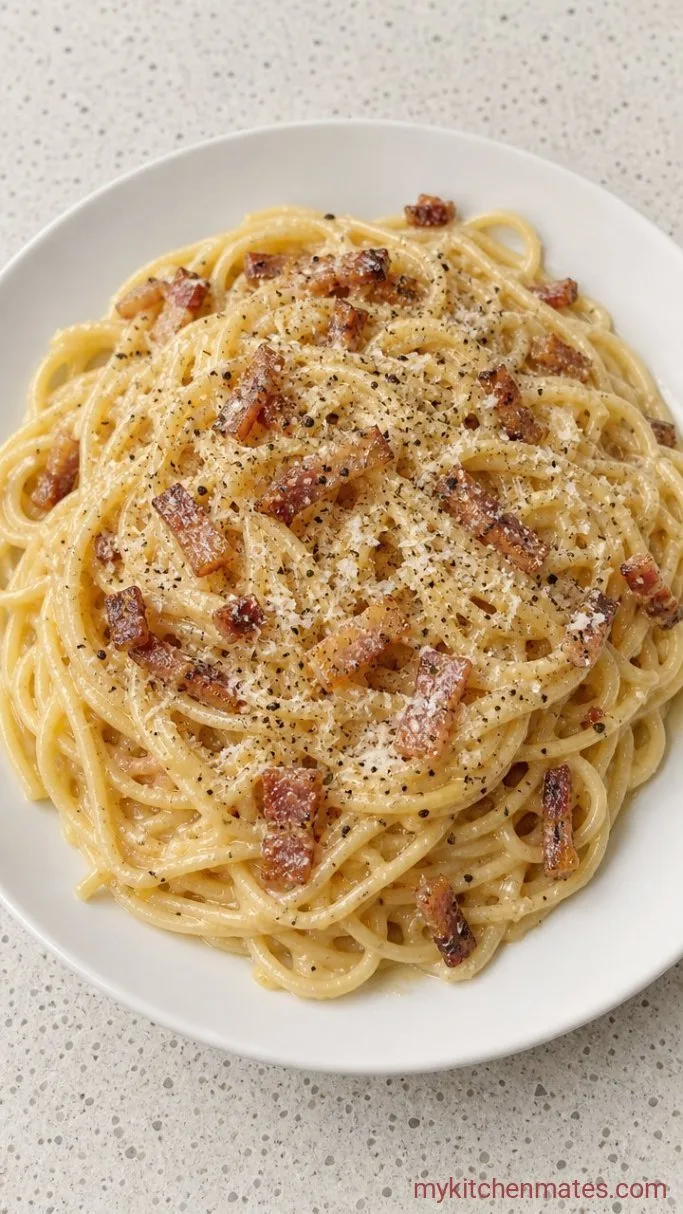
Twirl big nests of the spaghetti into warm bowls and scatter a little extra pecorino and black pepper over the top. Serve it right away, while the sauce is loose and glossy.
The peppery, cheesy scent hits you before the first bite. Every forkful should taste deeply savory, with little nuggets of crisp guanciale throughout.
Tips for the Best Carbonara Sauce
- Use room temperature bowls: set your serving bowls on the counter while you cook. Cold plates suck heat out of the sauce fast.
- Cut the guanciale evenly: batons about the size of a small bean will crisp at the same rate. Bigger chunks stay chewy; tiny ones burn.
- Reserve more pasta water than you think you need: you may only use ½ cup, but having extra means you can loosen the sauce if it tightens while you plate.
- Grate the cheese yourself: pre-shredded cheeses are coated in starch that stops them from melting into a smooth sauce.
Storing Leftovers
Carbonara is never as creamy the next day, but the flavor holds up. Refrigerate any extras in an airtight container for up to 2 days. Reheat it gently in a skillet over low heat with a splash of water, tossing often, until it warms through.
What to Serve with Creamy Carbonara Pasta
The sauce is rich and salty, so a bright side cuts through it nicely. A handful of arugula dressed with lemon juice and olive oil adds a peppery freshness that balances each forkful. Roasted asparagus with a little lemon zest also works, bringing a grassy note that keeps the meal from feeling heavy.
Frequently Asked Questions
Can I add cream to carbonara?
You can, but it will change the character of the dish completely. True carbonara gets its creaminess just from the egg and cheese emulsion, and that is what gives it a velvety, clingy texture rather than a heavy dairy one.
Can I use bacon instead of guanciale?
Yes, but the result will be smokier. Thick-cut bacon works best, and you may want to drain some of the rendered fat so the sauce does not get greasy.
What if my sauce turns out too thick?
Add another splash of the warm reserved pasta water, a tablespoon at a time, and toss vigorously. It will thin out and return to that glossy, loose state almost instantly.
Is the sauce safe to eat since the eggs are not cooked over direct heat?
Yes. The residual heat from the pasta and the warm pan raises the egg temperature enough to pasteurize it gently. The sauce should reach around 140°F while you toss, which is safe and keeps it silky.
Creamy Carbonara Pasta Recipe
Ingredients
Method
- Bring a large pot of salted water to a boil. Cook the spaghetti until al dente, 8 to 10 minutes. Reserve 1 cup of pasta water, then drain.
- While the pasta cooks, set a large skillet over medium heat. Add the guanciale and cook until crisp and golden, 4 to 6 minutes. Remove the skillet from the heat.
- In a bowl, whisk together the eggs, both cheeses, and black pepper until smooth.
- Add the drained spaghetti to the skillet off the heat. Pour in the egg mixture and toss quickly, adding pasta water 2 tablespoons at a time until a glossy sauce forms, about 1 minute.
- Twirl into warm bowls and top with extra cheese and pepper. Serve immediately.
Notes
