
Fluffy High-Protein Cottage Cheese French Toast

Cottage cheese French toast is the breakfast that keeps me full all morning without any extra work. The cottage cheese blends right into the eggs to create a custard that turns thick slices of bread into something almost soufflé-like.
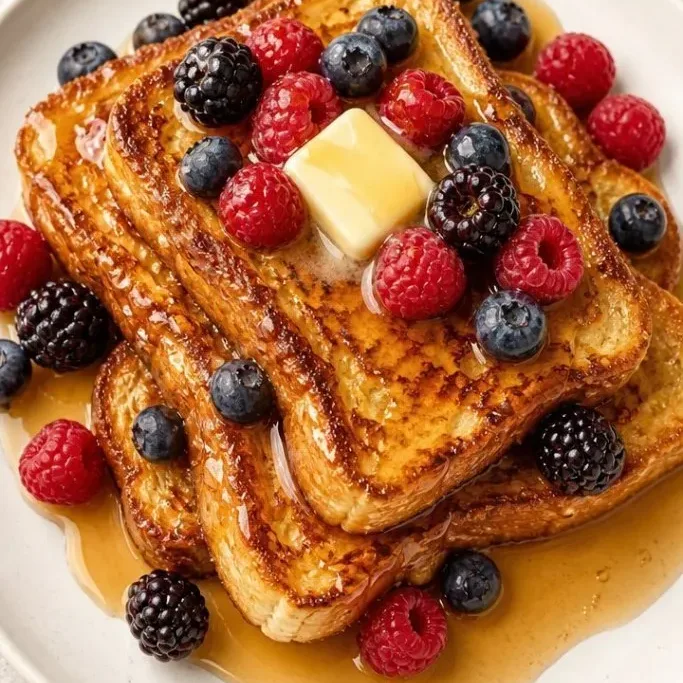
It cooks up with crisp, buttery edges and a soft, creamy middle, and it takes about 15 minutes from blender to plate.
Why This French Toast Works
The cottage cheese does two jobs. It adds enough protein that you skip the mid-morning crash, and it makes the custard extra thick so the toast puffs up nicely as it cooks.
There is no cottage cheese taste, just a faint tang that plays off the vanilla and cinnamon. I reach for this recipe on days when plain French toast feels too light.
Ingredients
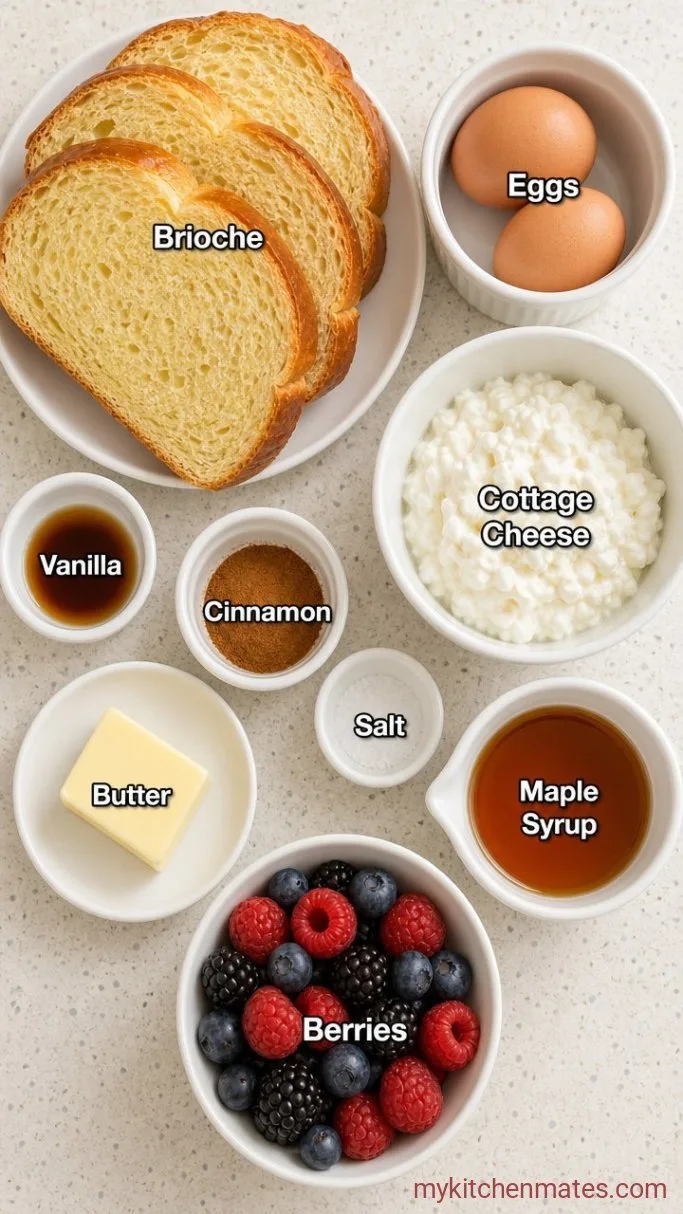
- 4 slices thick-cut brioche or challah bread: day-old works best; avoid thin sandwich bread.
- 2 large eggs: cold or room temp, either works.
- 1/2 cup full-fat cottage cheese: small curd blends smoothest; 2% works but 4% gives the best texture.
- 1 teaspoon vanilla extract: adds warmth; a splash of almond extract works too.
- 1/2 teaspoon ground cinnamon: freshly grated nutmeg is lovely as a swap.
- Pinch of fine sea salt: just enough to wake up the sweetness.
- 1 tablespoon unsalted butter: for the pan, plus more for serving.
- Maple syrup, fresh berries, and a pat of butter: for serving.
Variations
- Dairy-free: use a plant-based cottage cheese or blended silken tofu for a similar creamy base.
- No cinnamon: sub cardamom or pumpkin pie spice.
- Thinner bread: sandwich bread will work but reduce soaking time to 15 seconds per side so it doesn’t get mushy.
Tortilla Quiche Bake is another reader favorite breakfast worth making next.
How To Make Cottage Cheese French Toast
Step 1: Blend the Custard
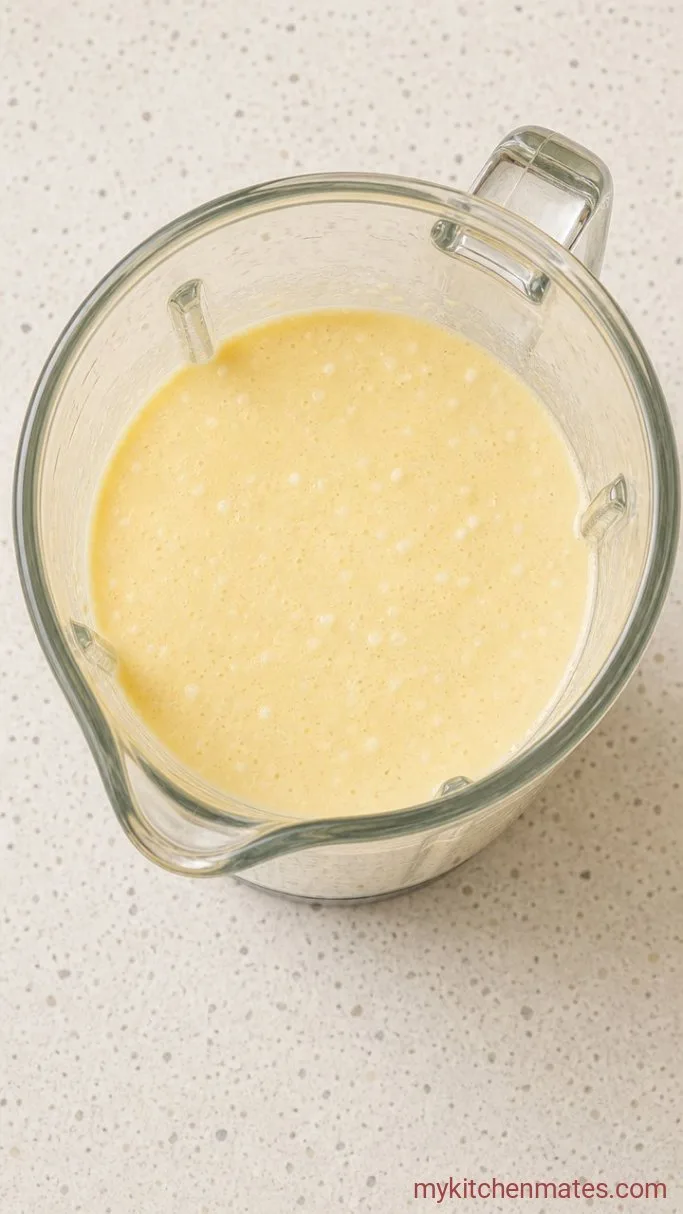
Combine the 1/2 cup cottage cheese, 2 eggs, 1 teaspoon vanilla, 1/2 teaspoon cinnamon, and a pinch of salt in a blender. Blend on high for 20 to 30 seconds, until the mixture is completely smooth and no curds remain.
The custard will be pale and pourable but noticeably thicker than a plain egg mixture. This thickness is what helps the toast stay fluffy, not wet.
Step 2: Soak the Bread
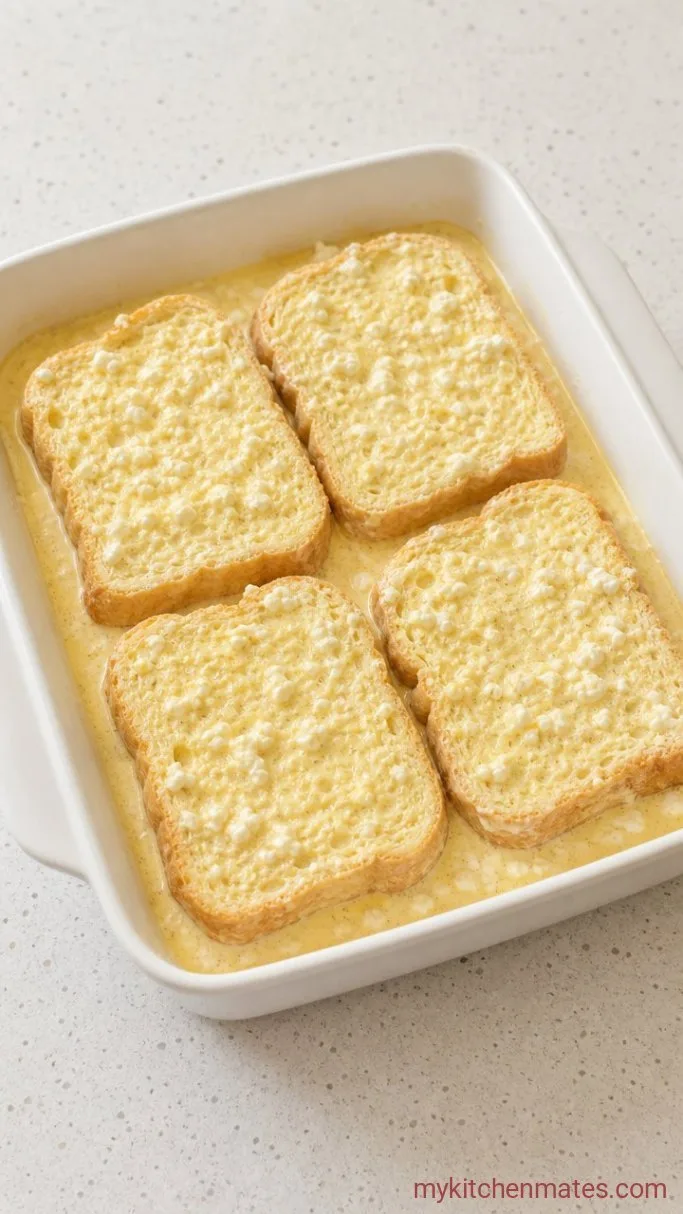
Pour the custard into a shallow dish large enough to hold one or two slices flat. Place a slice of bread in the dish and let it soak for about 30 seconds. Flip and soak the other side for another 30 seconds. Repeat with the remaining slices, adding them as the dish empties.
You want the bread to feel heavy and saturated but still hold its shape. If your bread is especially thick, you can go up to 45 seconds per side.
Step 3: Cook the French Toast
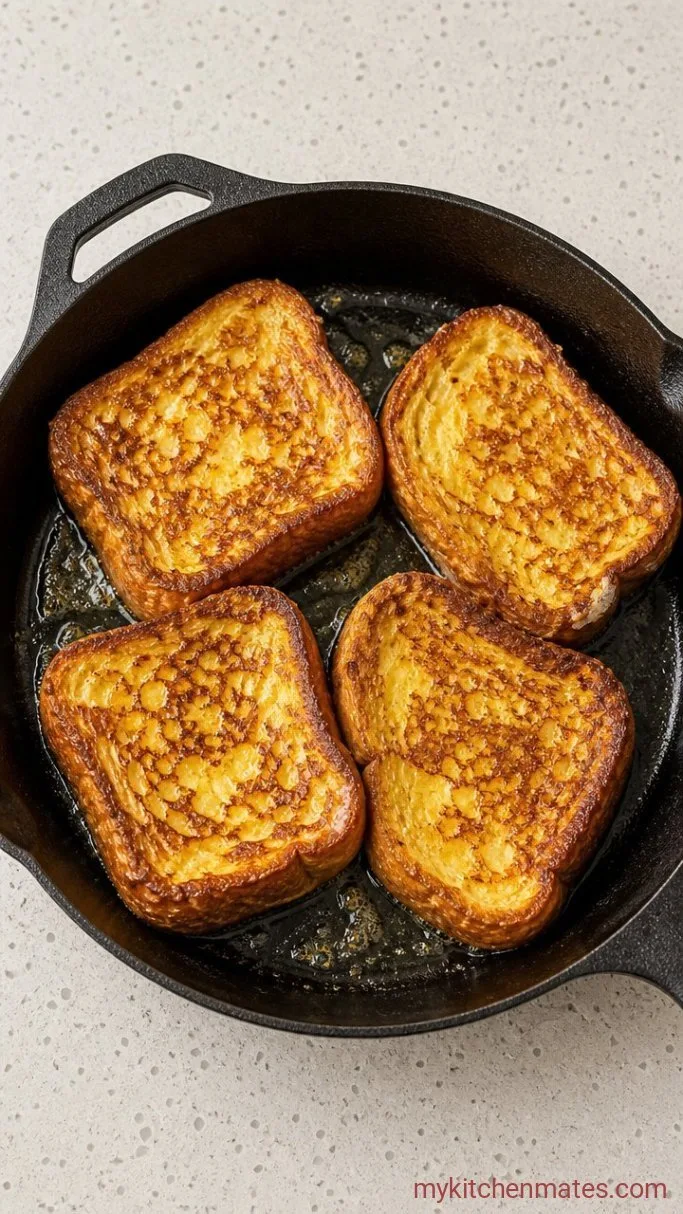
Set a large nonstick or cast-iron skillet over medium heat and add the 1 tablespoon butter. Give the butter 2 to 3 minutes to melt and just start to foam. Then lay the soaked bread in the pan, leaving a little space between each slice.
Cook undisturbed for 2 to 3 minutes, until the underside is deeply golden and the edges look set. You can lift a corner to check. Flip carefully and cook the second side for another 2 to 3 minutes, pressing lightly with a spatula so the middle cooks through.
If the pan seems dry before flipping, drop another small knob of butter in and let it melt before turning the toast. The extra fat helps the crust get really crisp.
Step 4: Stack and Serve
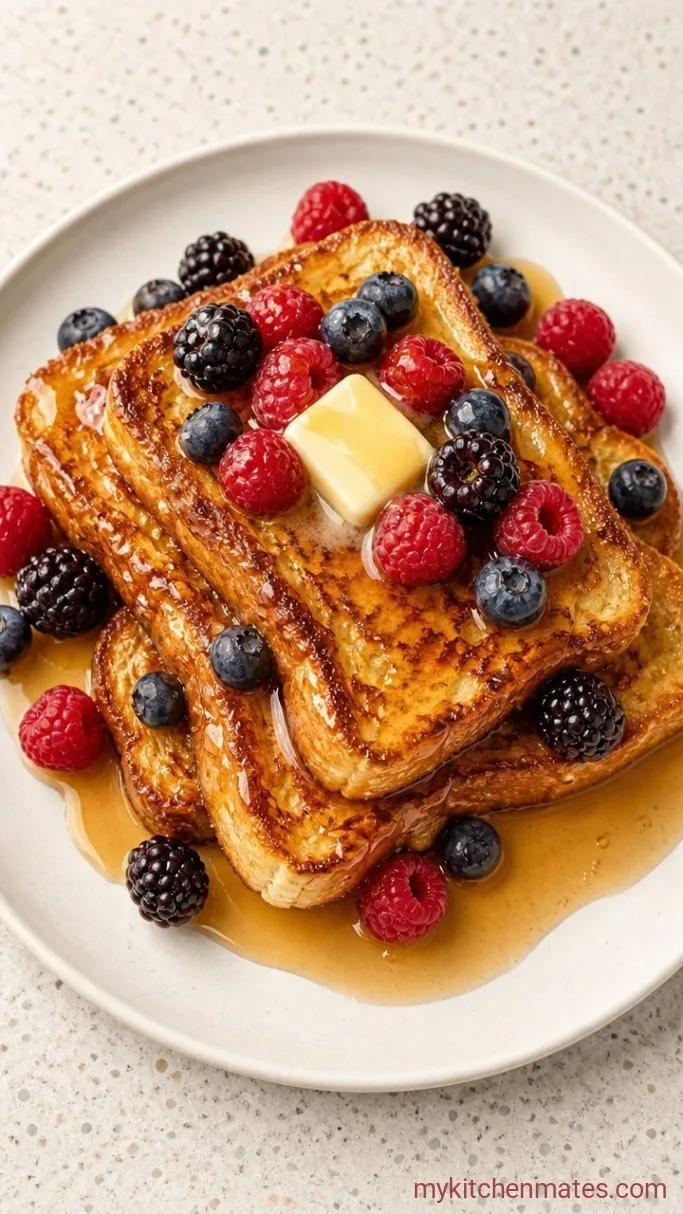
Transfer the French toast to a plate and stack the slices. Add a pat of butter, a generous pour of maple syrup, and a handful of fresh berries right on top.
Serve right away while the toast is hot and the butter softens into the bread. Leftovers will keep but the texture is best fresh.
A Few Tips for Perfect French Toast
- Use day-old bread: slightly stale slices absorb the custard without falling apart.
- Blend until silky: any visible curd will leave a lumpy coating that cooks into chewy spots.
- Keep the heat at medium: higher heat burns the butter and the sugar in the bread before the middle sets.
- Give the pan a quick wipe between batches if browned bits start to smoke.
Cooking times by pan surface:
| Pan surface | Time per side |
|---|---|
| Nonstick | 2 to 3 minutes |
| Cast iron | 2 to 3 minutes |
| Griddle | 3 to 4 minutes |
Storing Leftover French Toast
Refrigerate: Place cooled slices in a single layer in an airtight container for up to 3 days. Reheat in a toaster or a dry skillet over medium heat until warmed through.
What To Serve With Cottage Cheese French Toast
A bowl of fresh berries or sliced peaches adds brightness that cuts the richness. Crispy bacon or breakfast sausage gives a salty contrast that plays well with the maple syrup. A dollop of Greek yogurt with a drizzle of honey makes it even more filling, if you’re after a serious weekend breakfast.
Frequently Asked Questions
Can I blend the custard with an immersion blender?
Yes, just run it in a deep cup until completely smooth, about 30 seconds.
Do I have to blend the cottage cheese?
Blending is what makes this French toast fluffy instead of grainy, but you can whisk vigorously and strain through a fine-mesh sieve if you don’t mind a little extra work.
Can I use low-fat cottage cheese?
Low-fat works, but the toast will be slightly less rich and may not puff as much. Full-fat cottage cheese gives the best texture.
How do I keep French toast warm for a crowd?
Place cooked slices on a wire rack set over a baking sheet in a 200°F oven for up to 20 minutes. This keeps them crisp while you finish the batch.
Cottage Cheese French Toast Recipe
Ingredients
Method
- Blend the cottage cheese, eggs, vanilla, cinnamon, and salt on high for 20 to 30 seconds until smooth.
- Pour the custard into a shallow dish. Soak each bread slice for 30 seconds per side.
- Melt the butter in a nonstick or cast-iron skillet over medium heat. Cook the soaked bread for 2 to 3 minutes per side until deeply golden.
- Stack the French toast on a plate and serve warm with butter, maple syrup, and berries.
Notes
