
Ultra-Creamy Cottage Cheese Cheesecake

This cottage cheese cheesecake is silky, tangy, and just sweet enough. It blends up fast, bakes into a golden top, and slices so clean you’d never guess there’s a whole tub of cottage cheese hiding in there.
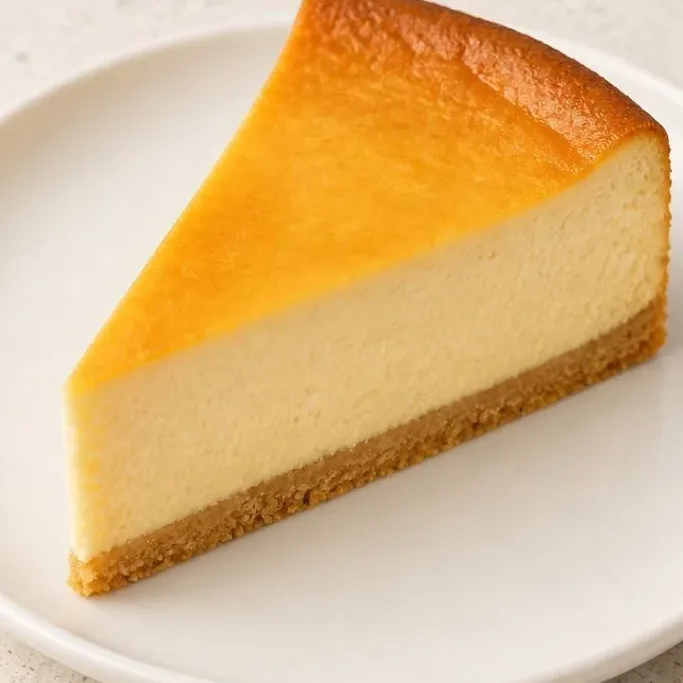
The filling is smooth and creamy, with no hint of grainy curds. It tastes like a classic cheesecake but feels a little lighter, which makes it the kind of dessert you can make once and then crave every week.
What Makes This One So Good
I keep coming back to this version because it uses cottage cheese in place of heavy cream or sour cream. That gives you a real cheesecake tang and a nice hit of protein without any fussy steps.
A blender does all the work, turning the cottage cheese into a pourable custard that bakes up dense and creamy. No water bath, no mixer, no cracking anxiety.
It’s the sort of dessert you can prep in 15 minutes, pop in the oven, and then forget about until it’s time to chill and slice the next day. Quietly impressive with very little effort.
Ingredients
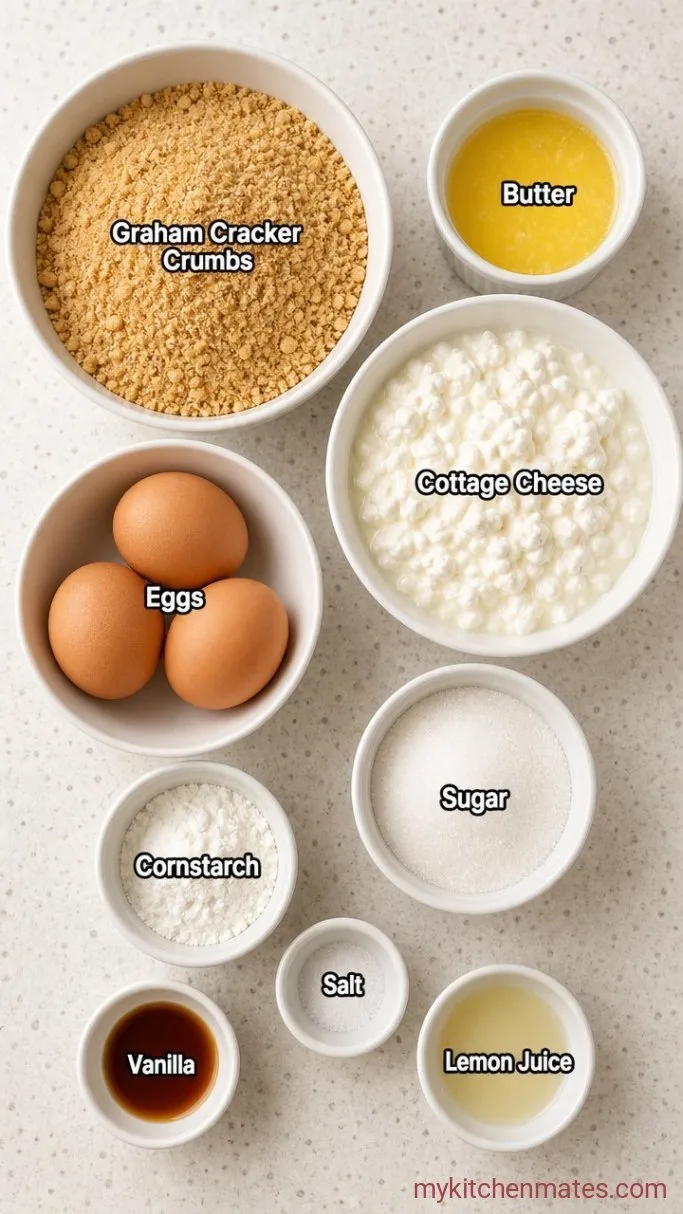
- 1 1/2 cups graham cracker crumbs: from about 12 whole crackers; crush them in a bag or use a food processor.
- 2 tbsp granulated sugar: adds just enough sweetness to the crust.
- 1/4 tsp salt: keeps the crust from tasting flat.
- 5 tbsp unsalted butter, melted: helps the crumbs stick together and toast.
- 16 oz cottage cheese, full-fat: full-fat gives the creamiest, richest texture. 2% works but the result will be a little less lush.
- 3/4 cup granulated sugar: sweetens the filling without burying the tang.
- 3 large eggs: at room temperature for the best bake.
- 2 tbsp cornstarch: helps the cheesecake set and gives it that clean slice.
- 2 tsp vanilla extract: warm, aromatic sweetness.
- 1 tbsp lemon juice: brightens everything and balances the richness.
- 1/4 tsp salt: makes all the flavors pop.
Variations / Substitutions
- Cottage cheese: use full-fat for the best result. You can use 2% but the cheesecake may be slightly less creamy. Avoid fat-free cottage cheese; it tends to be grainy and watery.
- Crust swap: use crushed vanilla wafers or digestive biscuits for a sweeter, more buttery base.
- Gluten-free: use gluten-free graham crackers for the crust and check that your cornstarch is gluten-free.
- Lemon: for a lemon cheesecake, add 1 tablespoon of lemon zest to the filling and increase the lemon juice to 2 tablespoons.
Rich Cottage Cheese Chocolate Cake is next on our list if this cheesecake is your kind of dessert.
How to Make Cottage Cheese Cheesecake
Step 1: Make the Crust
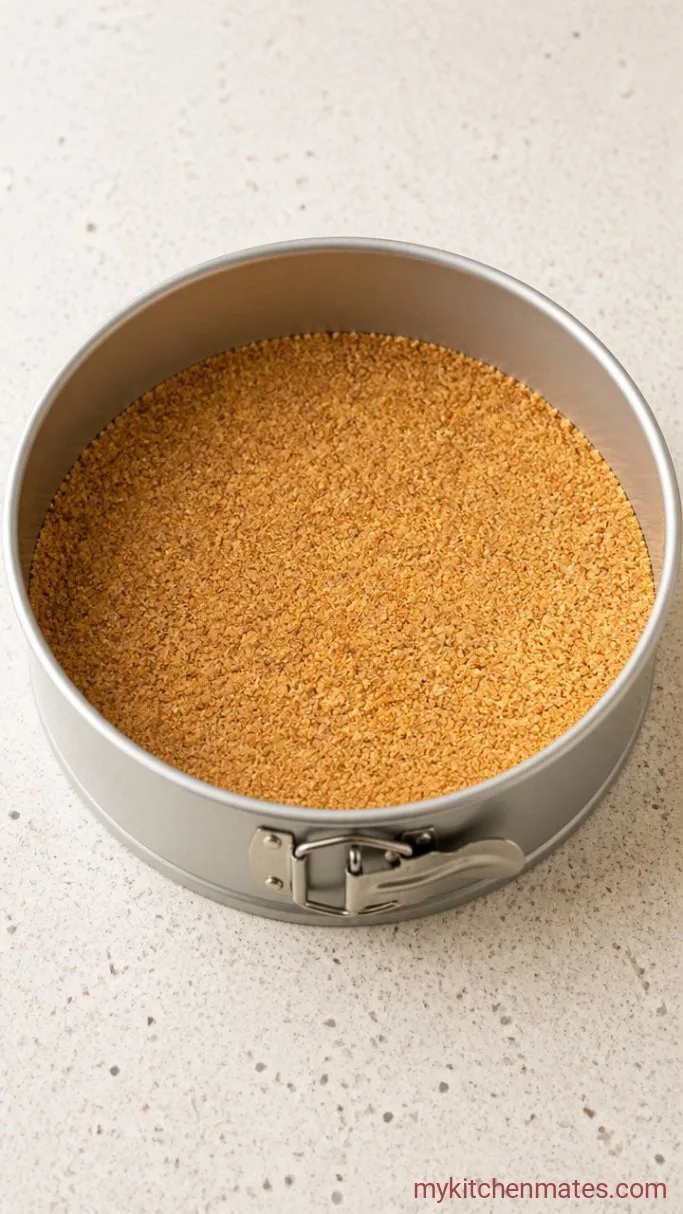
Preheat your oven to 350°F (175°C). In a bowl, stir together the 1 1/2 cups graham cracker crumbs, 2 tablespoons sugar, 1/4 teaspoon salt, and the 5 tablespoons melted butter until the mixture feels like wet sand. Press it firmly and evenly into the bottom of a 9-inch springform pan. Bake for 8 to 10 minutes, just until lightly golden.
The crust will smell toasty and feel set when you press it gently with your fingertip. Set it aside to cool while you make the filling.
Step 2: Blend the Filling
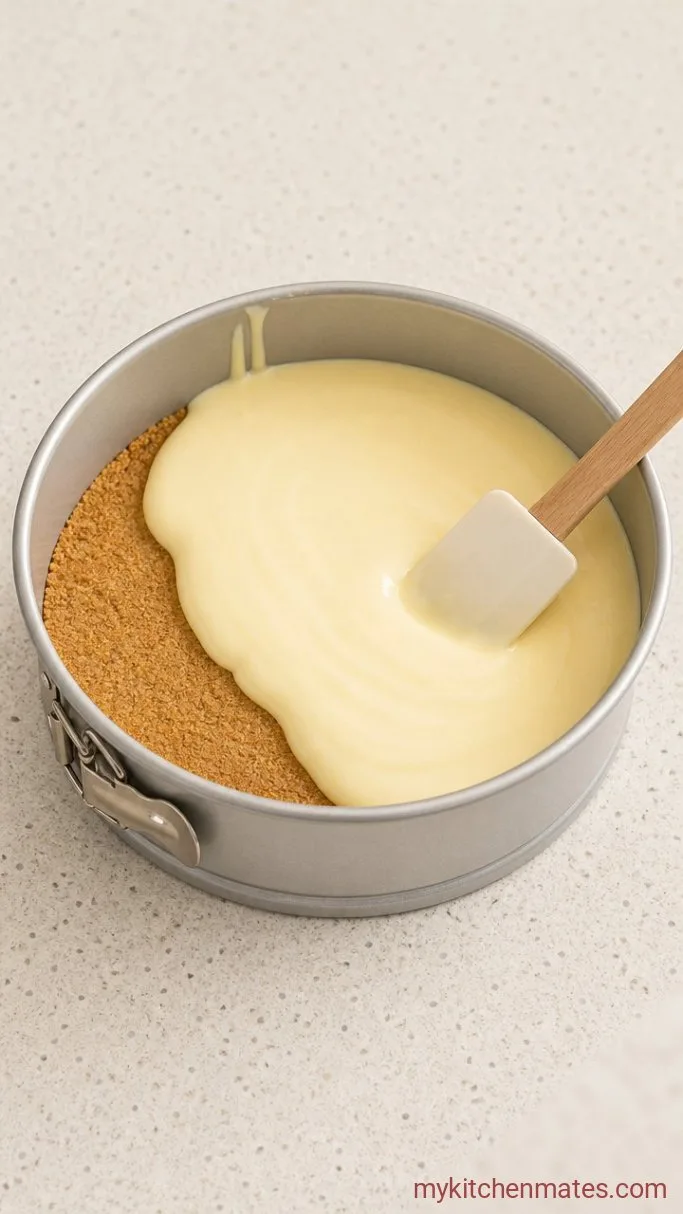
In a blender or food processor, combine the 16 ounces cottage cheese, 3/4 cup sugar, 3 eggs, 2 tablespoons cornstarch, 2 teaspoons vanilla, 1 tablespoon lemon juice, and 1/4 teaspoon salt. Blend on high until completely smooth, about 1 minute, scraping down the sides once or twice.
The mixture will look like thin pancake batter and there should be no visible specks of cottage cheese. If it is not perfectly smooth, give it another 30 seconds.
Step 3: Bake and Cool the Cheesecake
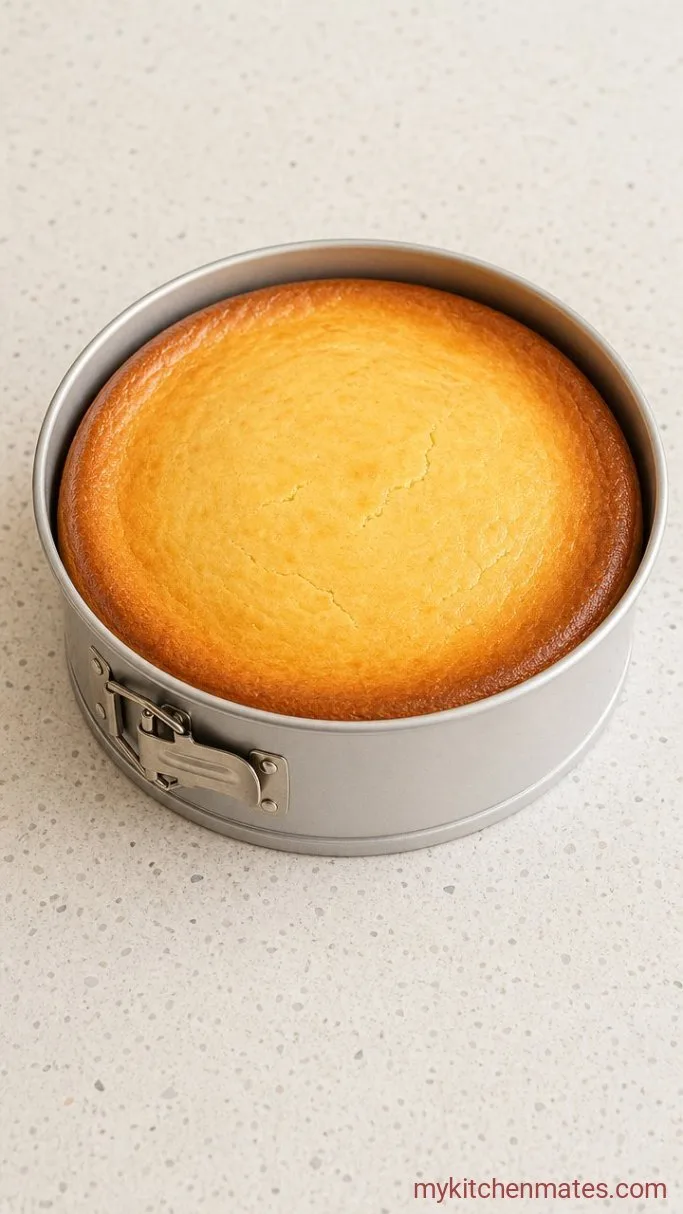
Reduce the oven temperature to 325°F (160°C). Pour the filling over the cooled crust and give the pan a few gentle taps on the counter to release any large air bubbles. Bake for 45 to 50 minutes, until the edges are set and lightly puffed and the center still wobbles like soft gelatin when you gently shake the pan. Turn off the oven, crack the door open a few inches, and leave the cheesecake inside for 1 hour. This slow cooling helps the top settle without deep cracks. Then move the pan to a wire rack and let it cool completely to room temperature.
The top will be a pale golden color with a slight sheen. A small crack or two is normal and will become less noticeable as the cheesecake chills.
Step 4: Slice and Serve
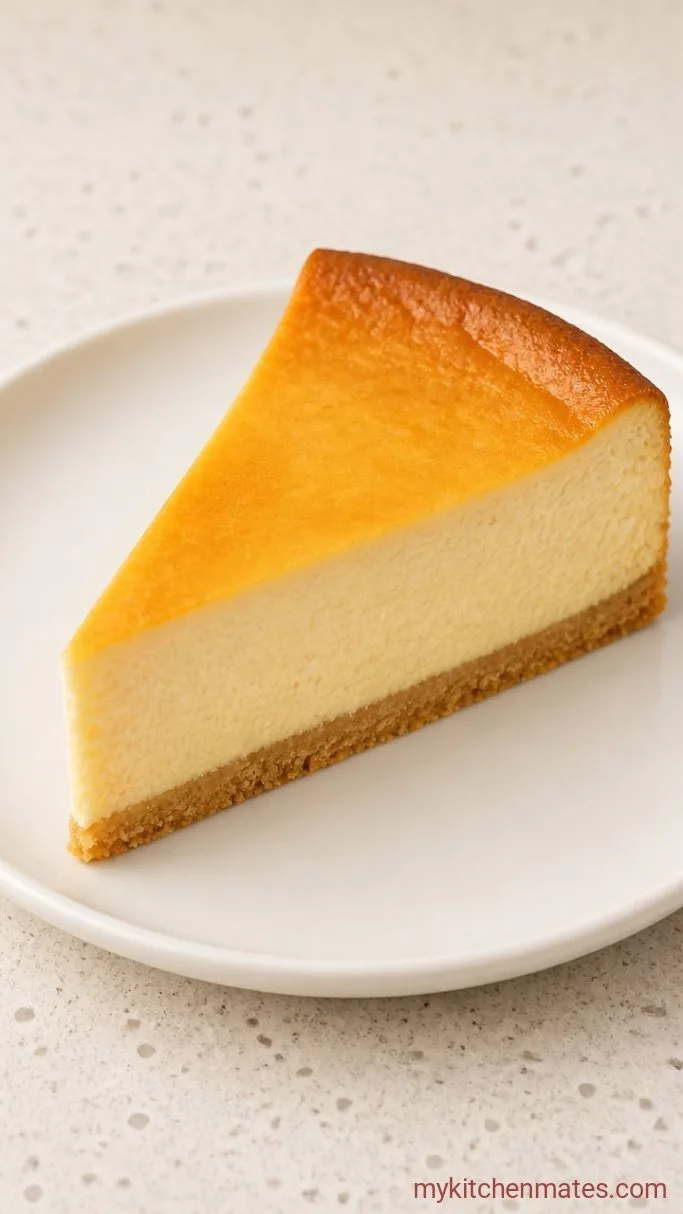
Once the cheesecake is fully cool, cover the pan and refrigerate for at least 4 hours, preferably overnight. Run a thin knife around the inside edge of the pan, then unlock and remove the ring. Use a sharp knife to slice, dipping it in hot water and wiping it clean between cuts for the neatest pieces.
Serve cold from the fridge, or let the slices sit at room temperature for about 10 minutes if you prefer a softer texture. The cheesecake will be dense, creamy, and tangy-sweet.
A Few Tips for the Creamiest Cheesecake
- Room temperature ingredients matter: letting the eggs and cottage cheese sit out for 20 to 30 minutes before blending helps the filling bake more evenly and reduces the risk of a sunken center.
- Don’t overbake: the cheesecake is ready when the edges are puffed and the center still has a distinct jiggle. It continues to set as it cools and chills, so pulling it out at the right moment keeps the texture creamy rather than dry.
- Clean slicing: dip your knife in hot water and wipe it dry between each cut. This cuts through the filling without dragging.
Bake times by pan size:
| Pan Size | Bake Time |
|---|---|
| 9-inch springform | 45 to 50 minutes |
| 8-inch springform | 50 to 55 minutes |
Storing Leftovers
- Refrigerate: store covered in the refrigerator for up to 5 days.
- Freeze: wrap individual slices tightly in plastic wrap and then foil, and freeze for up to 3 months. Thaw overnight in the fridge.
What to Serve with Cottage Cheese Cheesecake
A simple berry topping brings out the tang in the cheesecake. Spoon over macerated strawberries or a quick raspberry sauce made by simmering frozen raspberries with a little sugar. For a richer finish, a drizzle of warm caramel or a spoonful of lightly sweetened whipped cream works beautifully.
Frequently Asked Questions
Can I make this cheesecake without a crust?
Yes. Pour the filling directly into a greased 9-inch springform pan and bake as directed. The cheesecake will be slightly softer and creamier, but still sliceable.
Do I need a water bath for this recipe?
No. The lower baking temperature and the cottage cheese mixture are forgiving enough that a water bath is not necessary. The gradual oven cooling also helps prevent cracks.
Why does the center still jiggle after baking?
A slight jiggle means the cheesecake is set just right. It will firm up completely as it cools and chills. If it looks liquid in the center, bake for another 5 to 8 minutes.
Can I make the filling without a blender?
No. A blender or food processor is essential to break down the cottage cheese curds completely. Mixing by hand will leave a grainy, lumpy texture.
Cottage Cheese Cheesecake Recipe
Ingredients
Method
- Preheat oven to 350°F. Mix graham crumbs, 2 tbsp sugar, 1/4 tsp salt, and melted butter. Press into a 9-inch springform pan and bake 8 to 10 minutes until lightly golden. Set aside.
- Reduce oven to 325°F. In a blender, combine cottage cheese, 3/4 cup sugar, eggs, cornstarch, vanilla, lemon juice, and 1/4 tsp salt. Blend until completely smooth.
- Pour filling over crust and tap the pan to release air bubbles. Bake 45 to 50 minutes until edges are set and center jiggles slightly. Turn off oven, crack the door, and cool in the oven for 1 hour, then cool completely on a wire rack.
- Cover and chill at least 4 hours or overnight. Run a knife around the edge, slice, and serve.
Notes
