
Creamy Coconut Cream Pie with Toasted Meringue

Coconut cream pie with meringue is the kind of dessert that makes a regular Tuesday feel like a special occasion. A crisp pastry shell holds a rich, velvety custard that’s thick with real coconut flavor, and the whole thing gets topped with a cloud of meringue that’s toasted just until golden.

This version keeps things honest. The filling uses both coconut milk and cream of coconut so the flavor cuts through the sweetness, and the meringue stays soft and marshmallowy even after a night in the fridge. It’s the pie I make when I want something that looks like a bakery window but comes together with a whisk and a saucepan.
Why This Coconut Cream Pie Stays in the Rotation
A lot of coconut pies taste like vanilla pudding with a few shreds of coconut thrown in. Not this one. The custard gets its deep, nutty sweetness from coconut milk, cream of coconut, and shredded coconut that’s toasted until it smells like warm caramel.
The meringue is the other reason I never skip it. It’s billowy and lightly sweet, and the toasted peaks give the whole pie a toasty, almost marshmallow-like crunch. Slice in and you get cream, crunch, and that soft meringue all in one forkful.
It also happens to be a pie that likes your schedule. You can make the filling a day ahead and pile on the meringue just before serving, so there’s no last-minute scramble.
Ingredients

- 1 (9-inch) baked pie crust: homemade or a good store-bought deep-dish pastry crust
- 3/4 cup sweetened shredded coconut: look for the smaller shreds, not large flakes
- 1/2 cup granulated sugar: this sweetens the custard
- 1/4 cup cornstarch: gives the filling its sliceable structure
- 1/4 teaspoon fine salt: a small amount, but it wakes up the coconut flavor
- 1 (13.5 oz) can full-fat coconut milk: shake the can well before opening
- 1 (15 oz) can cream of coconut (such as Coco Lopez): this is sweetened; if using unsweetened coconut cream, add 1/4 cup extra sugar
- 4 large egg yolks, at room temperature: save the whites for the meringue
- 2 tablespoons unsalted butter, cut into pieces
- 1 teaspoon vanilla extract
- 4 large egg whites, at room temperature: no trace of yolk, for the meringue
- 1/4 teaspoon cream of tartar: helps the meringue hold its shape
- 1/2 cup granulated sugar: to sweeten and stabilize the meringue
Variations / Substitutions
- Graham cracker crust: swap the pastry crust for a 9-inch graham cracker crust for a sweeter, crunchier base.
- Dairy-free: use a vegan butter substitute and the full-fat coconut milk called for; the custard sets just as well.
- Whipped cream topping: if you’re not up for meringue, skip the egg whites and top the chilled pie with sweetened whipped cream and toasted coconut.
- Extra coconut depth: add 1/2 teaspoon coconut extract to the custard along with the vanilla.
- Lighter custard: replace half the coconut milk with whole milk for a softer coconut taste that some people prefer.
Impossible Coconut Pie is another reader favorite dessert worth making next.
How to Make Coconut Cream Pie with Meringue
Step 1: Toast the Coconut

Preheat the oven to 350°F (175°C). Spread the 3/4 cup shredded coconut in a single layer on a small rimmed baking sheet. Toast for 5 to 7 minutes, stirring once halfway through, until the shreds are mostly golden brown with a few pale pieces.
The coconut can go from toasty to burnt quickly, so pull the tray the moment you smell that warm, nutty aroma. Set it aside to cool while you make the custard.
Step 2: Cook the Custard

In a medium saucepan, whisk together the 1/2 cup granulated sugar, the cornstarch, and the salt. Pour in the coconut milk and the cream of coconut, whisking until smooth. Add the egg yolks and the butter pieces.
Set the pan over medium heat and cook, whisking constantly, until the mixture thickens and starts to bubble lazily, about 5 to 7 minutes. Once it hits a full bubble, keep stirring and let it cook for 1 more minute. The custard should coat the back of a spoon and leave a clean trail when you drag your finger through it.
Take the pan off the heat and stir in the vanilla extract and 1/2 cup of the toasted coconut. The filling will look soft and glossy at this stage; it firms up as it chills.
Step 3: Assemble and Chill the Pie

Pour the hot custard straight into the baked pie crust and smooth the top with a spatula. Press a sheet of plastic wrap directly onto the surface of the filling to stop a skin from forming. Refrigerate the pie until it’s fully set and cool all the way through, at least 4 hours or overnight.
The wait is non-negotiable here. A properly chilled pie slices cleanly and won’t melt the meringue when you add it later.
Step 4: Whip the Meringue

Place the 4 egg whites and the cream of tartar in a large, clean bowl. Using a hand mixer or a stand mixer, beat on medium speed until the whites look foamy and then rise into soft, droopy peaks. With the mixer running, slowly rain in the 1/2 cup sugar, about a tablespoon at a time, and then increase the speed to high. Beat until the meringue is thick, glossy, and holds stiff peaks.
When you lift the beaters, the peaks should stand straight up without curling over. If they droop, keep beating for another minute. The meringue needs to be sturdy enough to sit on the pie and hold its shape while it browns.
Step 5: Brown the Meringue and Serve
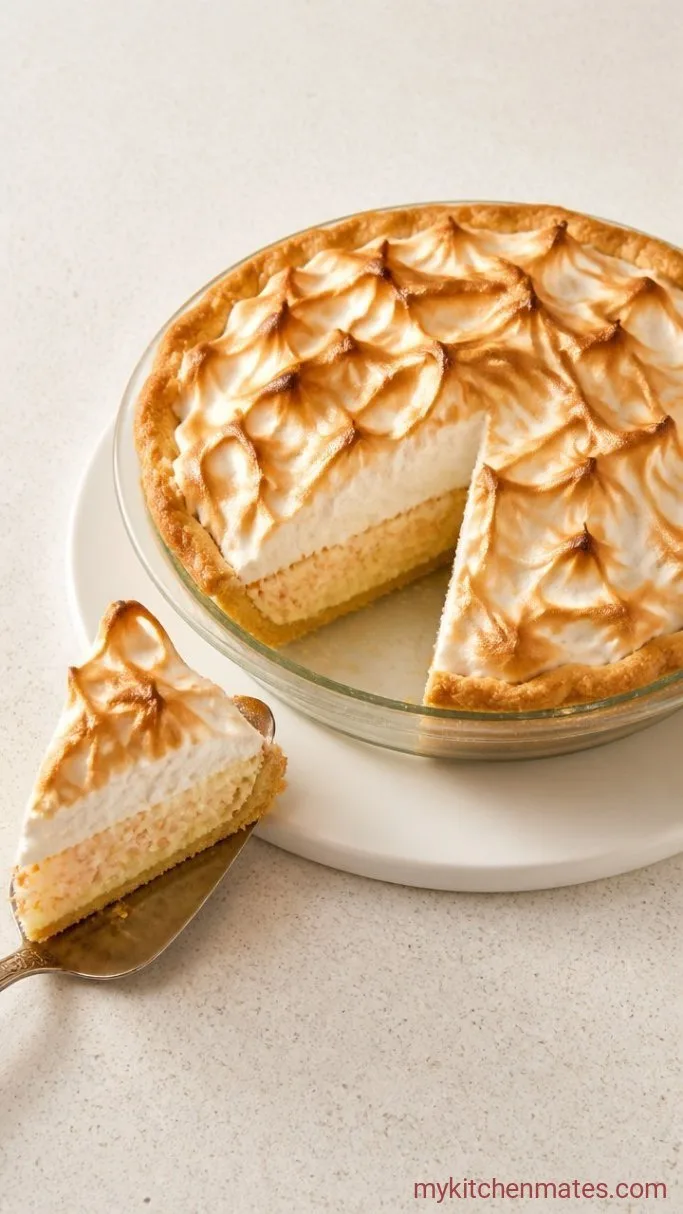
Turn the oven up to 400°F (200°C). Take the chilled pie out of the fridge and peel off the plastic. Pile the meringue on top, then use a rubber spatula to spread it all the way to the edges, making sure it touches the crust to seal the filling. Swirl and lift the meringue into peaks with the back of a spoon, then scatter the remaining 1/4 cup toasted coconut across the top.
Set the pie on a baking sheet and bake for 4 to 5 minutes, just until the peaks turn golden brown in spots. If you have a kitchen torch, you can toast the top that way instead, keeping the torch moving so the coconut doesn’t burn.
The meringue will look crisp at the edges and pillowy underneath. Slice the pie while it’s warm if you want that just-baked feel, or let it cool and serve it chilled; the meringue stays soft either way.
A Few Tips for Meringue Success
- Make sure the bowl and beaters are completely clean and grease-free before you start the meringue. Even a tiny bit of fat can stop the egg whites from whipping up.
- Room-temperature egg whites whip faster and reach more volume. Take the eggs out of the fridge about 30 minutes before you begin, or set the whole eggs in a bowl of warm water for 5 minutes before separating.
- Spreading the meringue so it touches the crust edge seals the filling underneath and helps keep the meringue from shrinking as it bakes.
- For the cleanest slices, dip a large knife in hot water and wipe it dry between each cut. The warmth lets you glide through the custard and meringue without tearing it.
- The pie is easiest to slice when fully chilled, but the meringue looks its most dramatic at room temperature. Take the pie out about 20 minutes before serving if you want both neat cuts and full height.
Storing Leftover Pie
Cover any leftover pie loosely with plastic wrap (tent it so the meringue doesn’t stick) and refrigerate for up to 3 days. The meringue will soften a little and may release a few beads of moisture, but the custard underneath stays creamy and the flavor holds. This pie is meant to be served cold straight from the fridge; there’s no need to reheat it.
Frequently Asked Questions
Can I make the pie a day ahead?
Yes. Prepare the pie through Step 3 and refrigerate it, covered, overnight. Make the meringue and brown it the day you plan to serve it.
My meringue shrunk and pulled away from the crust. What went wrong?
That usually happens when the meringue isn’t spread all the way to the crust edge. Make sure it seals against the pastry everywhere so it has something to cling to as it bakes.
Can I use a kitchen torch instead of the oven?
Yes. After piling the meringue on the pie, move the flame back and forth over the peaks until they’re golden. The coconut will toast at the same time.
The filling didn’t set. Was it undercooked?
Likely yes. The custard must come to a full boil while you whisk it and then bubble for about a minute after thickening. That step activates the cornstarch fully, so don’t rush it off the heat.
Why did my meringue turn out flat?
If the egg whites didn’t whip up, there may have been a speck of yolk in them or a bit of grease on the bowl or beaters. Separate the eggs carefully and wipe the bowl with a little vinegar before you begin, just to be safe.
Coconut Cream Pie with Meringue Recipe
Ingredients
Method
- Toast the coconut at 350°F (175°C) for 5 to 7 minutes until mostly golden, stirring once. Set aside to cool.
- Whisk sugar, cornstarch, and salt in a saucepan. Add coconut milk, cream of coconut, egg yolks, and butter. Cook over medium heat, whisking constantly, until thick and bubbly, about 5 to 7 minutes, then cook 1 minute more. Remove from heat; stir in vanilla and 1/2 cup toasted coconut.
- Pour custard into baked pie crust, smooth the top, and press plastic wrap directly onto the surface. Refrigerate at least 4 hours until fully set.
- Beat egg whites and cream of tartar to soft peaks. Gradually add 1/2 cup sugar while beating on high until stiff, glossy peaks form.
- Increase oven to 400°F (200°C). Spread meringue over chilled pie, sealing it to the crust, then lift into peaks. Sprinkle reserved 1/4 cup coconut on top. Bake 4 to 5 minutes until golden in spots. Serve warm or chilled.
Notes
