
Slow-Simmered Classic Tomato Sauce

A tomato sauce you can count on takes six pantry ingredients and a little time on the stove. It tastes like whole tomatoes cooked down with garlic and onion until they turn sweet and jammy, and it makes any bowl of pasta feel like a real meal.
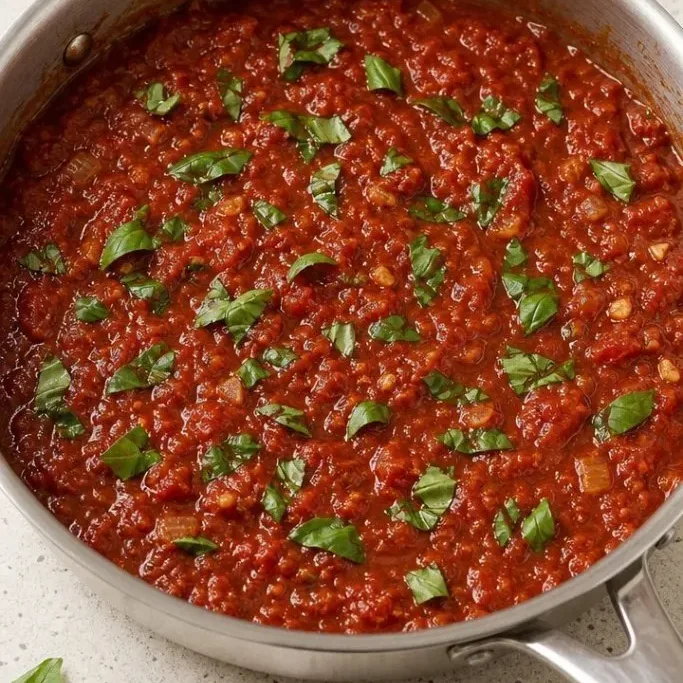
Why I Keep Coming Back to This Sauce
It works the same way every time. Canned whole tomatoes give you a smooth, rich base that you control, and a long gentle simmer draws out the onion’s sweetness without any sugar.
The texture stays spoonable but not watery, exactly what you want for coating spaghetti or layering into a casserole. I’ve tried quick versions with crushed tomatoes and they never get the same body.
Ingredients
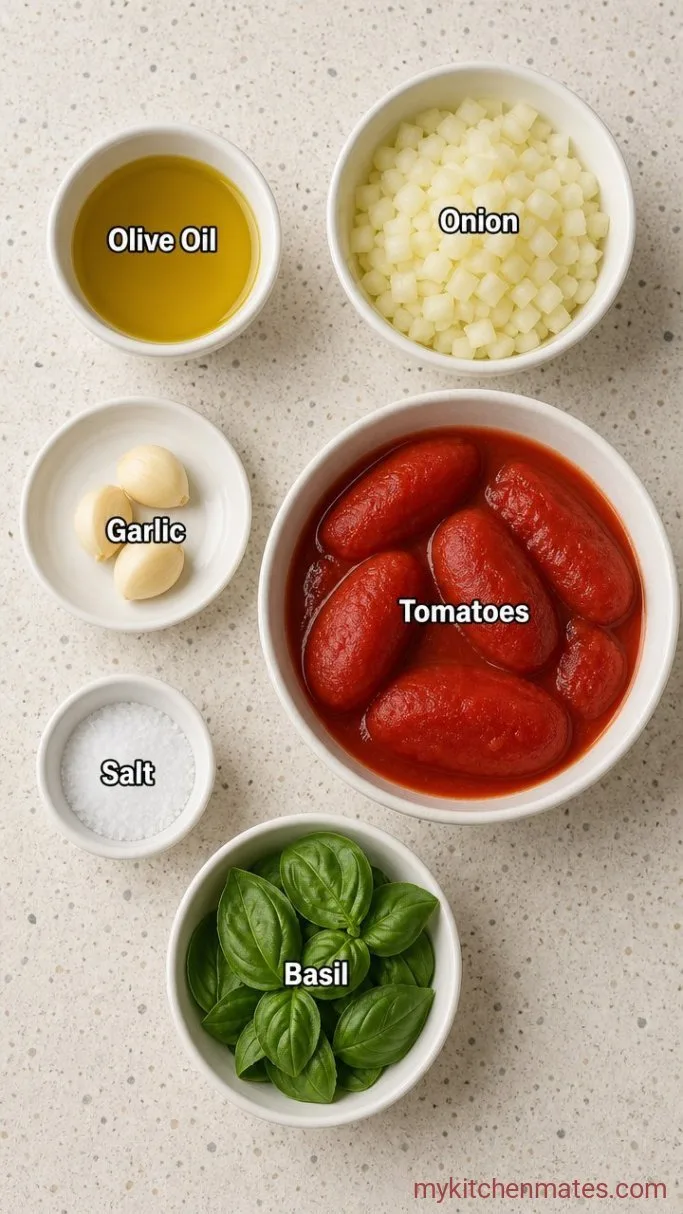
- 2 tbsp olive oil: extra-virgin adds good fruity pepperiness
- 1 medium yellow onion, diced small: about 1 cup once chopped
- 3 cloves garlic, thinly sliced: the slices soften into the sauce rather than scorching like minced garlic can
- 1 (28-oz) can whole peeled tomatoes: San Marzano or any plum tomato variety, crush them by hand in a bowl before they go into the pan
- ½ tsp kosher salt: plus more to taste at the end
- 1 handful fresh basil leaves: torn right before stirring in, reserve a few for serving
Variations and Swaps
- Dried herbs: a teaspoon of dried oregano or a pinch of red pepper flakes goes in with the garlic for a more robust Sunday gravy feel
- Butter finish: stir a tablespoon of cold butter into the hot sauce off the heat for a silkier texture and gloss
- No fresh basil: a small Parmesan rind simmered in the sauce adds the same savory depth
- Carrot sweetness: if your tomatoes taste especially sharp, grate half a small carrot into the onion as it cooks
- Protein add-in: brown a few Italian sausages first, set them aside, then return them to the sauce for the last 20 minutes of simmering
Creamy Sundried Tomato Pasta is an easy way to put this sauce to good use.
How to Make Classic Tomato Sauce
Step 1: Sauté the Onion and Garlic
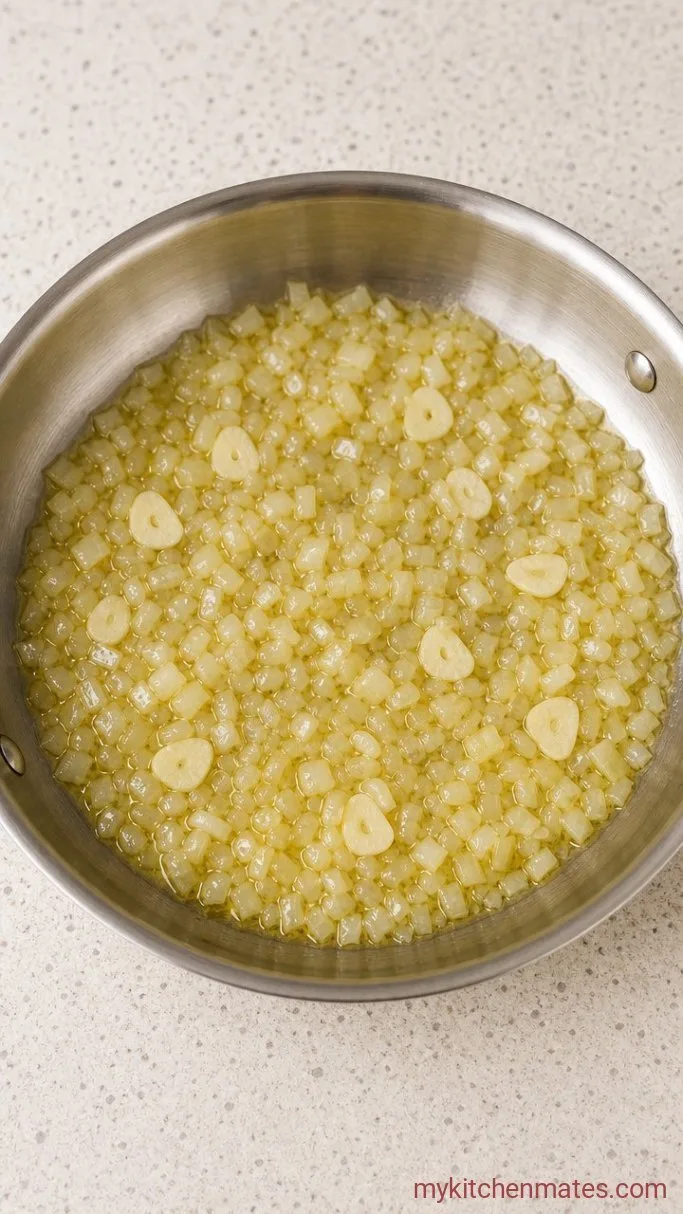
Set a large saucepan or Dutch oven over medium heat and pour in the 2 tbsp olive oil. Once the oil shimmers, add the diced onion and cook, stirring now and then, for about 5 minutes, until the pieces turn translucent and soft. Toss in the sliced garlic and let it sizzle for another 2 minutes. The kitchen should smell sweet and garlicky, not sharp or browned.
If the garlic starts to take on any color too fast, drop the heat a little. Burnt garlic gives the whole sauce a bitter edge that you cannot fix.
Step 2: Pour in the Tomatoes and Start the Simmer
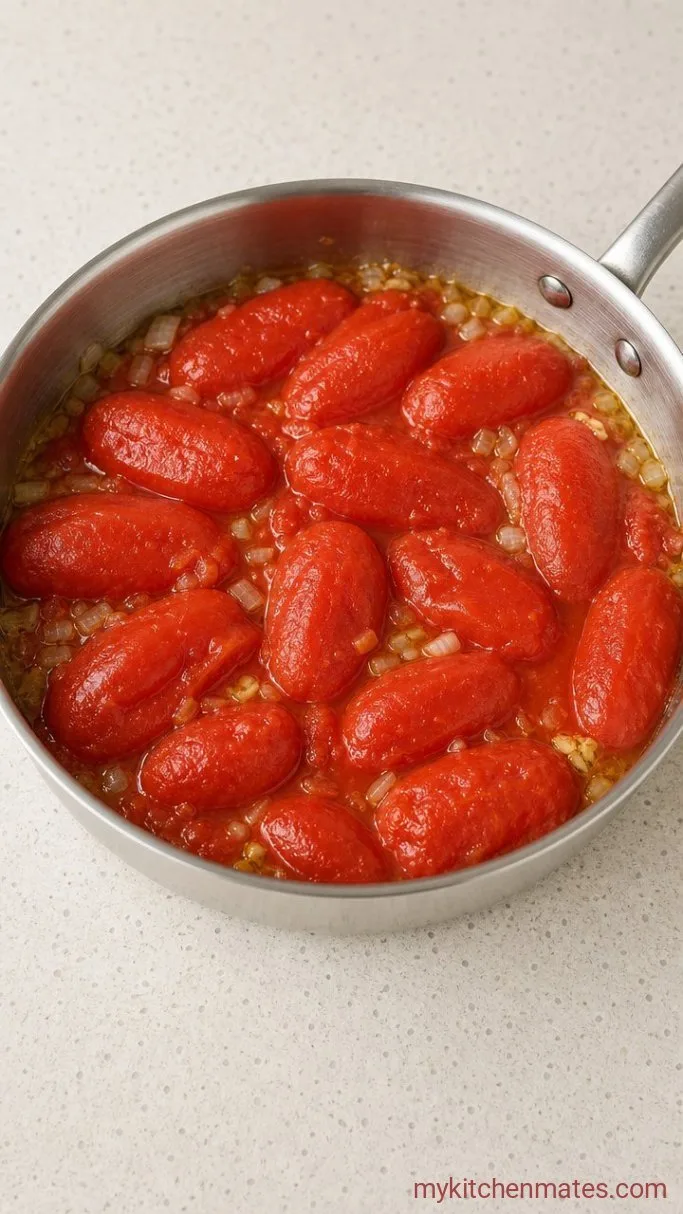
Carefully tip the bowl of hand-crushed tomatoes and all their juices into the pan. The liquid will hiss and steam as it hits the hot oil. Stir in the ½ tsp kosher salt, bring the sauce to a lively bubble, then turn the heat down to low so it barely burbles.
You want a simmer that sends up a few lazy bubbles every second, nothing violent. Stir once, then let it cook uncovered for at least 30 minutes, scraping the bottom of the pan a couple of times so nothing sticks.
Step 3: Crush the Tomatoes as They Soften
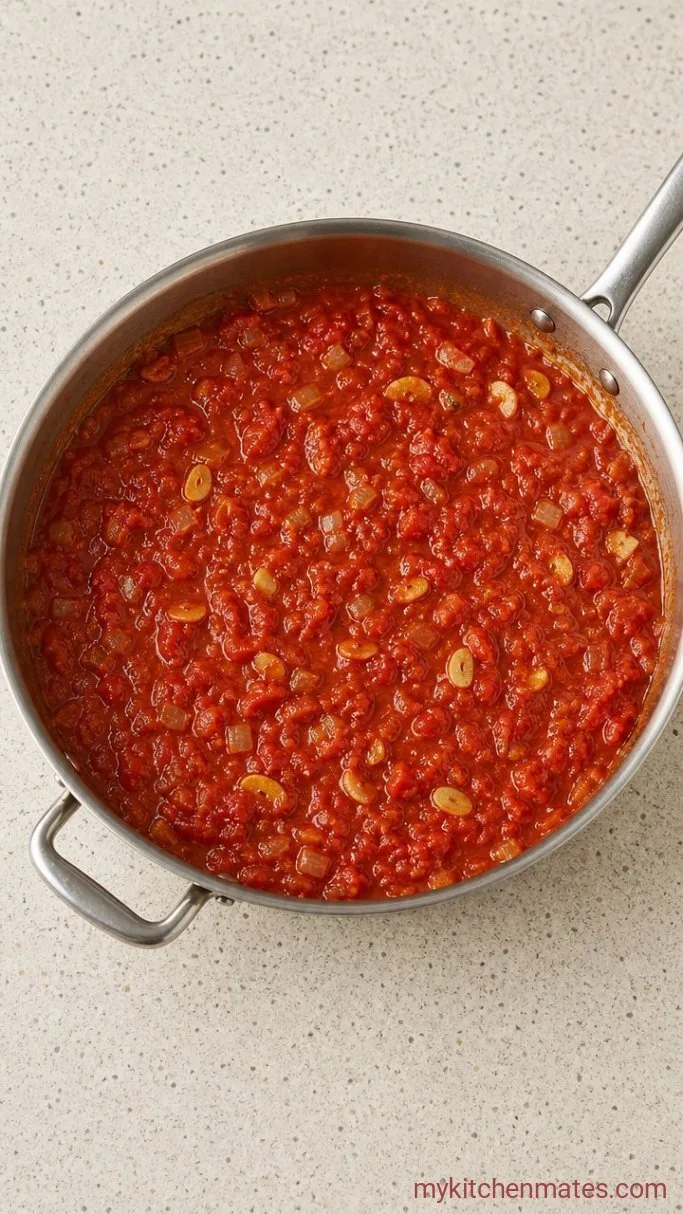
After 10 minutes or so, the whole pieces of tomato will have relaxed but still hold some shape. Use a wooden spoon or a potato masher right in the pot to break them down into whatever texture you like. A few rustic chunks keep the sauce interesting, while a good press against the side of the pan gives you a smoother result.
You are not aiming for perfectly uniform purée. The variation in size is what gives the sauce its homemade look.
Step 4: Season and Finish with Fresh Basil
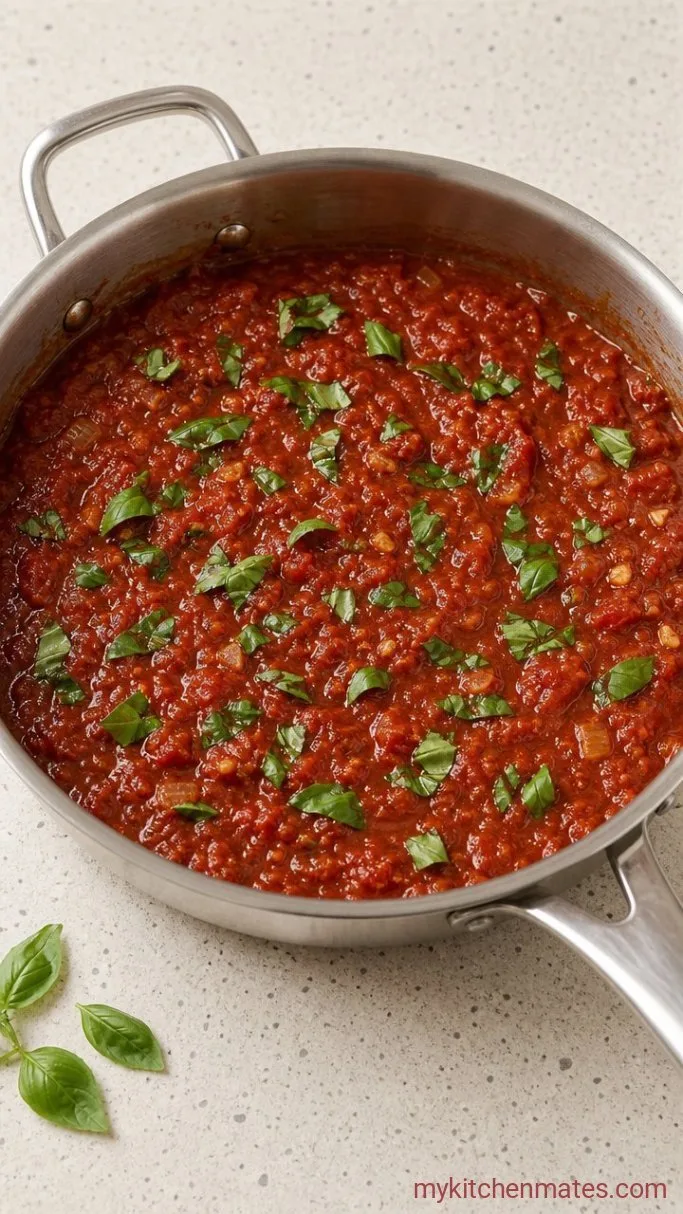
Taste the sauce after the 30-minute mark. Add more salt a pinch at a time, stirring and tasting between each addition, until the tomato flavor rounds out and feels full on your tongue. Fold in the torn basil leaves, let them wilt for just 30 seconds off the heat, and spoon the sauce over pasta right away.
The basil should soften but stay bright green against the deep red sauce. Serve with a grind of black pepper and a little grated Parmesan.
Tips for a Deeper, Richer Sauce
- A full 45 minutes of gentle simmering turns the sauce from thin and acidic to thick and mellow. If you have an extra 20 minutes, take it.
- Stirring too often breaks up the heat and slows the reduction. Stir only when you check the bottom of the pan.
- The sauce thickens as it cools, so if you are making it ahead, stop cooking a little looser than you want it at the table.
Simmer times by desired texture:
| Texture | Total simmer time (low heat) |
|---|---|
| Loose and pourable | 30 mins |
| Spoonable, coats pasta | 45 mins |
| Thick and jammy | 60 mins |
Storing and Freezing
- Refrigerate: cool the sauce completely and store in an airtight container for up to 5 days. The flavor often improves overnight.
- Freeze: portion into zip-top bags or freezer-safe jars and freeze flat for up to 3 months. Thaw in the fridge the night before you need it.
- Reheating: warm gently in a saucepan over low heat, adding a splash of water if it looks too thick. Stir in a bit of fresh olive oil just before serving to wake it up.
What to Serve with Classic Tomato Sauce
It does not need much. A 12 oz box of spaghetti or rigatoni gives you the right ratio of sauce to pasta for 4 servings. Toss some broccolini into the boiling water for the last two minutes and you have a vegetable side with no extra pan. A simple green salad dressed with lemon and olive oil cuts through the richness of the sauce without competing.
Frequently Asked Questions
Can I use crushed tomatoes instead of whole?
Yes, but the sauce may be thicker and slightly more acidic. Look for a brand with only tomatoes and salt, and add a splash of water if it gets too heavy during simmering.
Does this sauce need sugar?
No. A low, slow simmer naturally brings out the sweetness in the onion and tomatoes. If your canned tomatoes taste especially tinny or sour, a tiny pinch of sugar can balance it, but always taste first.
Can I make this sauce in a slow cooker?
Yes, after sautéing the onion and garlic, transfer everything to a slow cooker and cook on low for 4 to 5 hours. The flavor will be deep, but the sauce stays thinner than stovetop versions, so leave the lid slightly ajar during the last hour.
How do I fix a sauce that turned out too acidic?
Stir in a small pat of butter or a tiny pinch of baking soda (no more than ⅛ tsp) and let it bubble for a minute. Both methods soften the sharp edge without altering the flavor.
Classic Tomato Sauce Recipe
Ingredients
Method
- Warm the olive oil in a large saucepan over medium heat. Sauté the onion for about 5 minutes until soft, then add the garlic and cook 2 more minutes.
- Pour in the crushed tomatoes and their juices, stir in the salt, and bring to a bubble. Lower the heat and simmer uncovered for at least 30 minutes, stirring occasionally.
- Break down any large tomato pieces with a spoon or masher to your preferred texture during the first 10 minutes of simmering.
- Taste and add more salt as needed. Remove from heat, stir in the torn basil, and serve over hot pasta.
Notes
