
Dark Chocolate Espresso Sourdough Bread

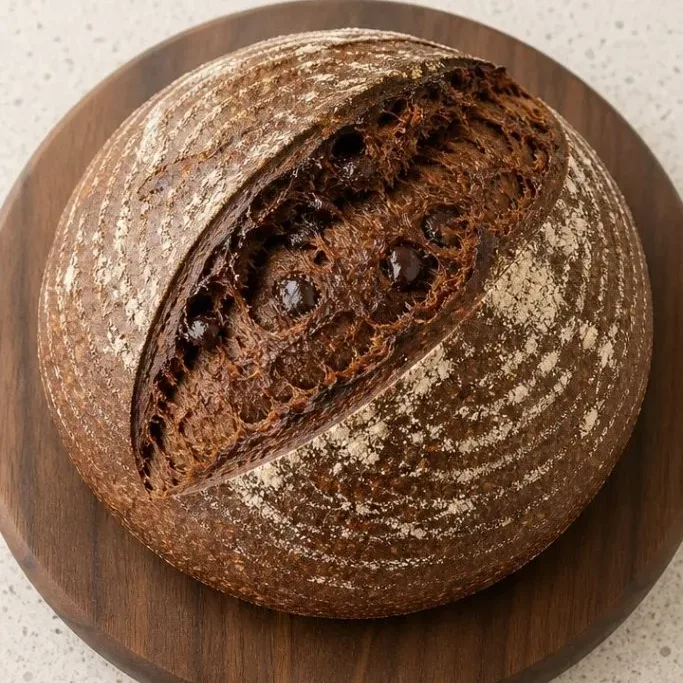
This dark chocolate espresso sourdough bread bakes into a deeply bronzed loaf with a crackly crust and a soft, cocoa-dark crumb shot through with pockets of melted chocolate. The real cocoa and espresso powder bring bittersweet depth, not sugar, so every slice tastes like the best part of your morning latte. It is the loaf I pull out when regular sourdough sounds too plain and I want something that feels special without being fussy.
What Makes This Sourdough So Good
The espresso does more than add flavor. It sharpens the chocolate so the whole crumb tastes deeper, not sweeter, and the cocoa tints the dough a rich mahogany that deepens even more in the oven.
The crumb stays open and tender, and the chocolate chips soften into little ribbons as the bread bakes. Slices hold their moisture for days, and toasting brings back that just-baked chocolate smell. There is no cloying sweetness here, just a proper loaf that happens to taste like dark chocolate and coffee.
Ingredients
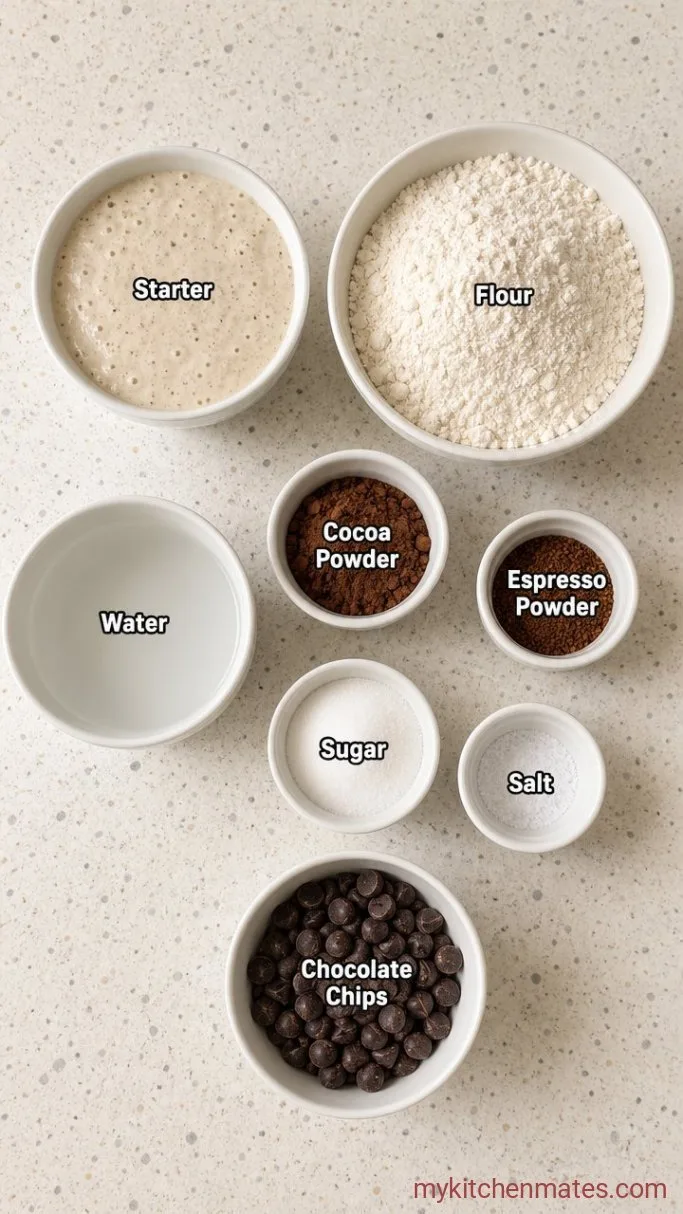
- 100 g active sourdough starter: fed and doubled within the last 8 hours
- 500 g bread flour: higher protein gives better structure for the cocoa
- 350 g water, at room temperature: plus a splash more if the dough feels tight
- 30 g unsweetened cocoa powder: Dutch-processed will give you a smoother, darker flavor
- 2 tbsp instant espresso powder: the fine powder, not ground coffee
- 30 g granulated sugar: just enough to round out the cocoa without making it sweet
- 10 g fine sea salt
- 100 g dark chocolate chips or chopped chocolate: 60 to 70 percent cacao works best
Variations / Substitutions
- Swap half the bread flour for white whole wheat: adds a nutty note and a little more chew, but you may need an extra tablespoon of water.
- Skip the chocolate chips: the loaf will still be deeply flavorful, just with a more even crumb. Or fold in toasted walnuts for a different crunch.
- Use natural cocoa powder: the crumb will be slightly redder and the flavor a bit sharper and fruitier.
- Reduce the espresso powder to 1 tbsp: you will lose some of that coffee backbone but still get a dark, chocolatey bread.
Sourdough Banana Bread is next on our list if this bread is your kind of bake.
How To Make Chocolate Espresso Sourdough Bread
Step 1: Mix the Dough

In a large bowl, whisk together the 500 g bread flour, 30 g cocoa powder, 2 tbsp espresso powder, and 30 g sugar until the powders look evenly speckled. Pour in the 350 g water and add the 100 g active starter. Mix with a stiff spatula or your hand until all the flour disappears and you have a shaggy, sticky mass. Cover and let it rest for 30 minutes. This rest, called an autolyse, hydrates the flour and starts the gluten forming, which will make the dough easier to handle later.
The dough will look dry at first, but don’t add extra water yet. Cocoa powder soaks up a lot of liquid as it sits. After the 30 minutes, sprinkle the 10 g salt over the dough, wet your hand, and pinch and fold the dough to work the salt in evenly for about a minute. It should feel tacky but not stiff.
Step 2: Strengthen with Folds

Keep the dough in the bowl and perform a set of stretch and folds: reach under one edge, pull it up, and fold it over the center. Turn the bowl a quarter turn and repeat, doing this 4 times total. Cover and let the dough rest for 30 minutes. The dough will be a little slack at first but will tighten with each set.
Repeat the same stretch and fold set three more times, resting 30 minutes between each. By the end of the fourth set, the dough should feel smoother and hold a slight dome shape in the bowl. You will see small bubbles starting to form under the surface, and the dough will smell faintly of chocolate and yeast.
Step 3: Bulk Ferment and Add the Chocolate

After the last set of folds, let the dough continue its bulk fermentation at room temperature, covered, for about 2 to 3 more hours until it has grown by roughly half and looks puffy. The timing depends on your kitchen temperature, so watch the dough, not the clock. It should feel airy when you lift it and jiggle slightly in the bowl.
When the dough is ready, scatter the 100 g chocolate chips over the top and gently fold them in with a damp hand, turning the dough a few times to distribute them without deflating it too much. The chocolate will stay in little pockets that melt later, so don’t overwork the dough.
Step 4: Shape and Cold Proof
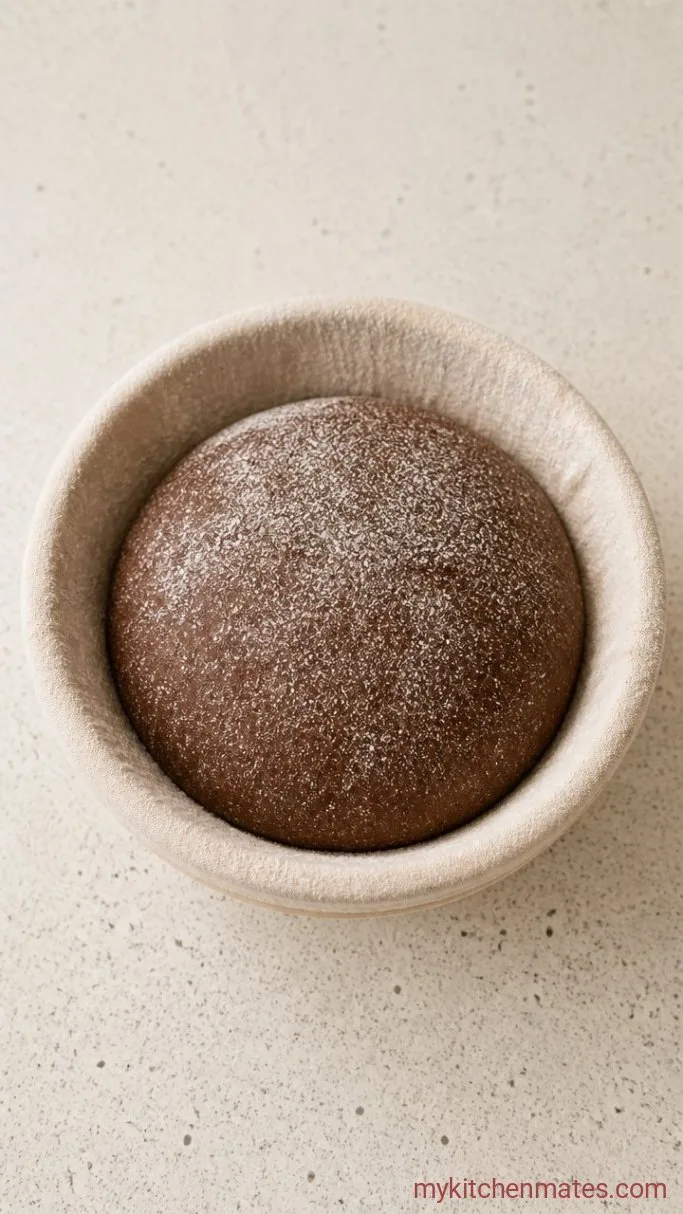
Turn the dough onto a lightly floured surface and shape it into a tight round or oval, depending on your proofing basket shape. Let the shaped loaf rest seam-side up on the counter for 15 minutes, then transfer it to a floured proofing basket, seam-side down. Cover with a damp towel or a reusable shower cap and place the basket in the refrigerator for 12 to 16 hours. The long, cold proof builds more sourdough tang and deepens the chocolate notes.
The next morning, the loaf will have risen some but will feel firm and cold. A gentle poke with a floured finger should leave a slight indentation that fills back slowly. If it springs back instantly, give it another hour at room temperature before baking.
Step 5: Score, Bake, and Cool
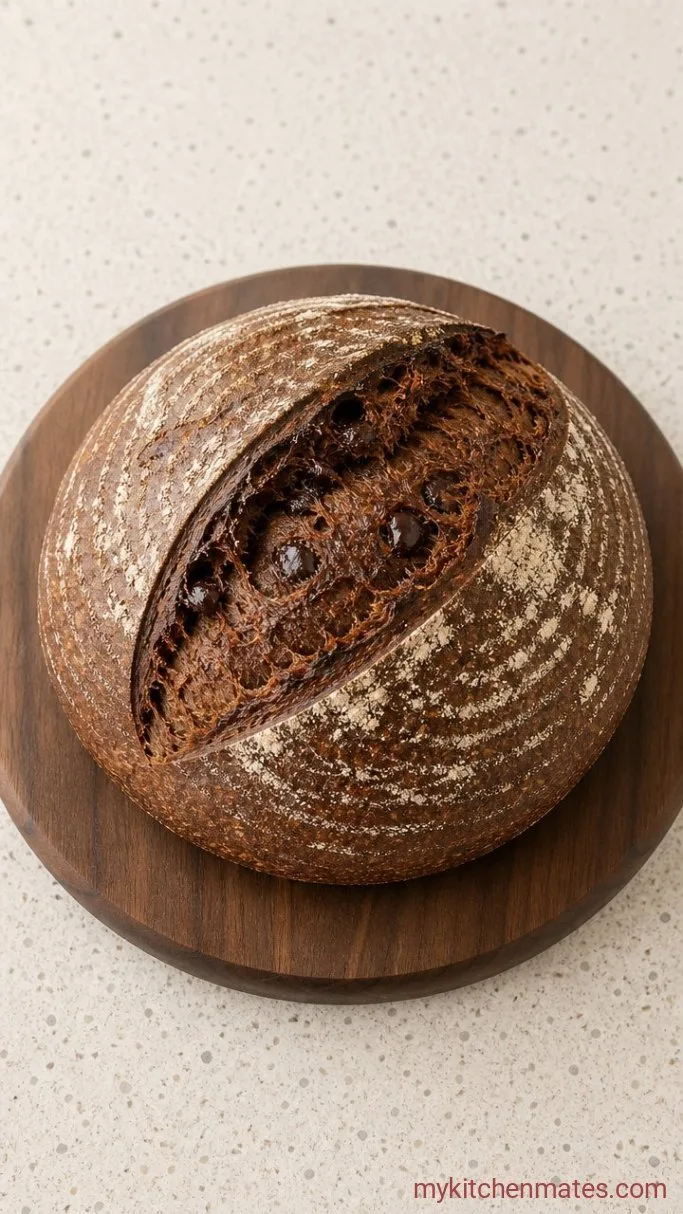
Set your oven to 475°F (245°C) with a Dutch oven inside and let it preheat for at least 30 minutes. When you are ready to bake, cut a piece of parchment paper, place it over the basket, and invert the loaf onto it. Dust the surface lightly with rice flour if you like the contrast, then use a sharp lame or razor blade to score a simple cross or a few swift slashes on top.
Lift the parchment and lower the loaf into the hot Dutch oven, cover it, and bake for 30 minutes. Remove the lid, drop the oven temperature to 425°F (220°C), and bake another 15 to 20 minutes until the crust is deeply cracked and sounds hollow when tapped on the bottom. Let the bread cool on a wire rack for at least 2 hours before slicing. The chocolate chips will still be soft and warm, and the crumb will finish setting as it cools.
A Few Tips Before You Start
- Use a starter that is at its peak and passes the float test. A sluggish starter will struggle with the heavier cocoa dough.
- Cocoa can make dough feel tighter than plain sourdough. When in doubt, wet your hands instead of adding more flour during shaping.
- If your kitchen is cool, bulk fermentation may take longer. You can speed it slightly by placing the bowl in a turned-off oven with the light on.
- The dark color of the dough can trick you into thinking it is burning. The crust should look deep brown and dry, not black. Trust your nose, charred chocolate smells burnt, not toasty.
Here’s the bake schedule for a preheated Dutch oven:
| Stage | Temperature | Time |
|---|---|---|
| Covered bake | 475°F (245°C) | 30 mins |
| Uncovered bake | 425°F (220°C) | 15 to 20 mins |
| Cool on rack | removed from oven | at least 2 hours |
Storing Leftover Chocolate Sourdough
- Room temperature: wrap the cooled loaf in a clean kitchen towel and store it cut-side down on a cutting board for 2 days. After that, move it to a paper bag or bread box for another day.
- Freezing: slice the whole loaf and freeze the slices flat in a zip-top bag. Pull out what you need and toast straight from frozen.
- Reheating: for a whole day-old loaf, mist it with water and warm it in a 350°F (175°C) oven for 10 minutes to refresh the crust.
What to Serve with This Bread
A thick slice toasted and spread with salted butter is all it really needs. The salt cuts the bittersweet chocolate and brings out the coffee notes. For something more, spoon some ricotta and a drizzle of honey over a warm slice, or fry a couple of slices in butter for a chocolatey French toast that barely needs syrup. A sharp aged cheddar melted on top also works because the salty tang plays off the dark cocoa.
Frequently Asked Questions
Can I make this without a Dutch oven?
Yes. Place a baking stone or an inverted baking sheet in the oven as it preheats, and set a shallow pan of hot water on the lower rack. Slide the loaf onto the hot surface and bake at 475°F for 20 minutes with steam, then remove the water pan and lower to 425°F for another 20 to 25 minutes.
Why is my dough so stiff even after mixing?
Cocoa powder absorbs a large amount of water. Add an extra tablespoon of water at a time during the stretch and folds if the dough feels tight and resists pulling. It should be tacky and pliable, not dry.
Can I use brewed coffee instead of espresso powder?
No. The liquid from brewed coffee would throw off the hydration balance and you would not get enough coffee flavor without making the dough slack. Stick with instant espresso powder.
Should I flour the proofing basket with cocoa or flour?
Use a 50/50 mix of bread flour and rice flour, or just plain bread flour if that is all you have. Dusting with cocoa alone can cause sticking because it lacks gluten and holds moisture. The flour blend keeps the dark loaf from sticking without leaving large white patches.
Dark Chocolate Espresso Sourdough Bread Recipe
Ingredients
Method
- Whisk flour, cocoa, espresso powder, and sugar in a large bowl. Add water and starter, mix into a shaggy dough, cover, and rest for 30 minutes. Add salt and pinch it in.
- Perform 4 sets of stretch and folds, 30 minutes apart, until the dough smooths and strengthens.
- Continue bulk fermentation at room temperature for 2 to 3 hours until puffy and half again in size. Gently fold in chocolate chips.
- Shape into a round or oval, rest 15 minutes, place in a floured proofing basket seam-side down, cover, and cold proof in the refrigerator for 12 to 16 hours.
- Preheat a Dutch oven at 475°F (245°C) for 30 minutes. Invert the loaf onto parchment, score, and bake covered for 30 minutes. Uncover, lower to 425°F (220°C), and bake 15 to 20 minutes more until deeply cracked. Cool on a wire rack for at least 2 hours before slicing.
Notes
