
15-Minute Chicken Fried Steak Gravy

A good chicken fried steak gravy is the rich, peppery finish that turns a crispy fried steak into a full plate of Southern comfort. This one comes together in about 15 minutes right in the same skillet you fried the steak in, so you pull every bit of savory flavor into the sauce.
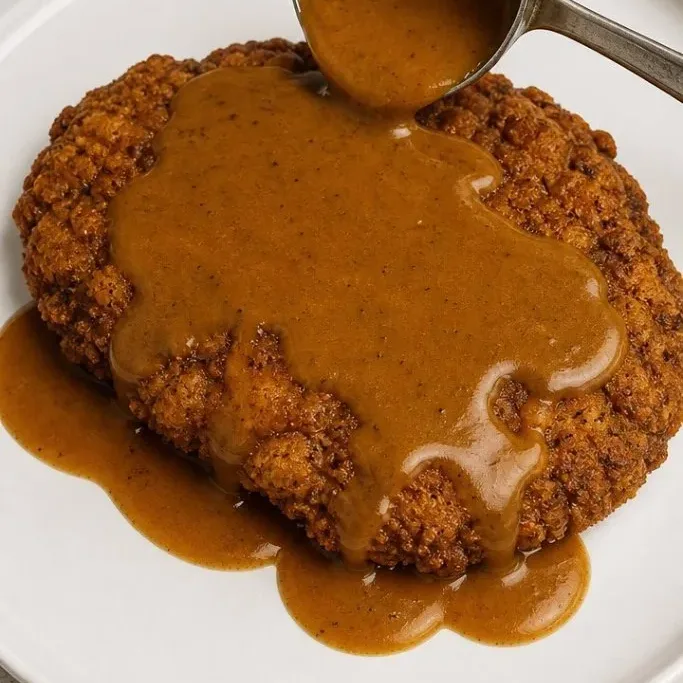
It’s creamy enough to coat the crust but carries a real kick of black pepper, the way a country gravy should. No shortcuts here, just a simple roux, whole milk, and a heavy hand with the pepper mill.
Why This Gravy Steals the Show
I’ve made a lot of gravies, and this is the one people drag their fork through first. The trick is browning the flour in the hot fat until it smells nutty, which gets rid of any raw, pasty taste, then whisking in warm milk so it thickens without a single lump.
The pepper is the real star. Freshly cracked black pepper brings a sharp warmth that cuts through the richness of the fried coating and the creaminess of the gravy. A tiny pinch of cayenne, if you’re in the mood, adds a background hum without shouting.
Ingredients
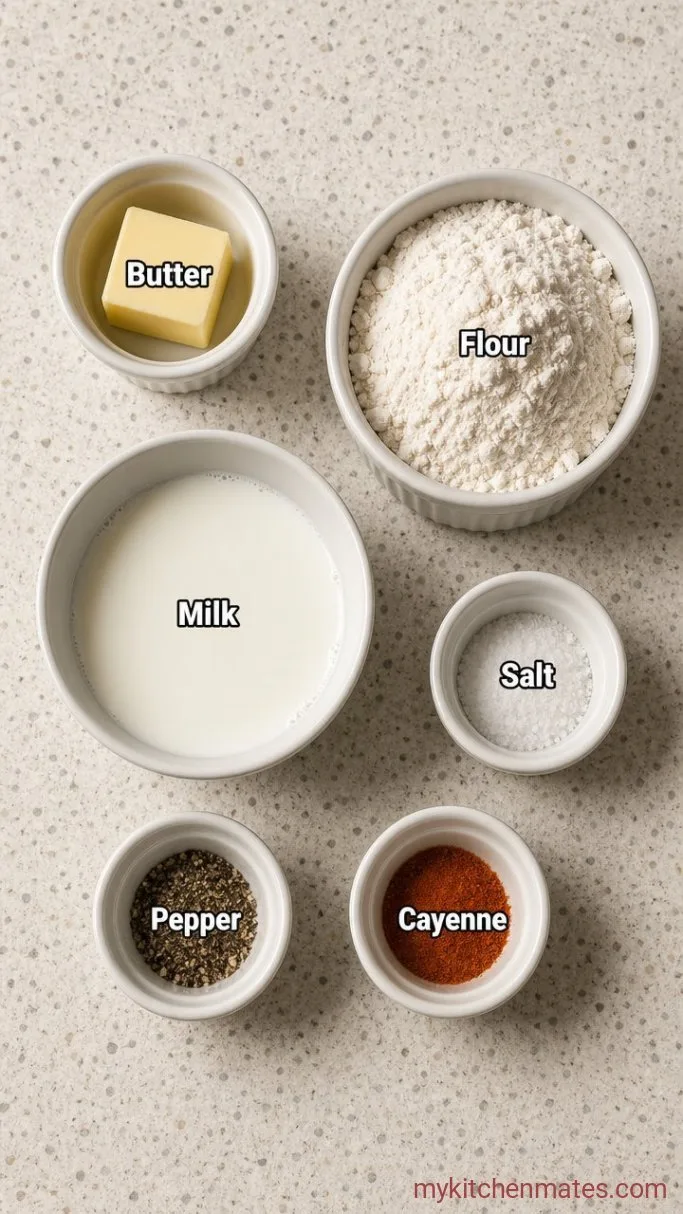
- 2 tbsp pan drippings (or unsalted butter): use the fat left in the skillet after frying the steak, or butter if starting from scratch
- 2 tbsp all-purpose flour: spooned and leveled, for a smooth roux
- 1 1/2 cups whole milk, warmed: high-fat milk gives the silkiest body
- 1/2 tsp kosher salt: adjust after tasting, especially if drippings are salty
- 1 tsp freshly cracked black pepper: coarse grind works best here
- Pinch of cayenne (optional): adds a gentle warmth without heat
Variations / Substitutions
- Half-and-half: replace half the milk with half-and-half for an even richer gravy that clings thicker.
- Bacon grease: swap half the drippings for bacon fat to bring a smoky, savory layer.
- A splash of hot sauce: stir in a few drops of Louisiana-style hot sauce with the milk for a tangy kick.
- Vegetarian gravy: use 2 tbsp butter and a pinch of smoked paprika to mimic the meaty depth without drippings.
Double Stuffed Baked Potatoes make a perfect side for this gravy.
How to Make Chicken Fried Steak Gravy
Step 1: Brown the Roux
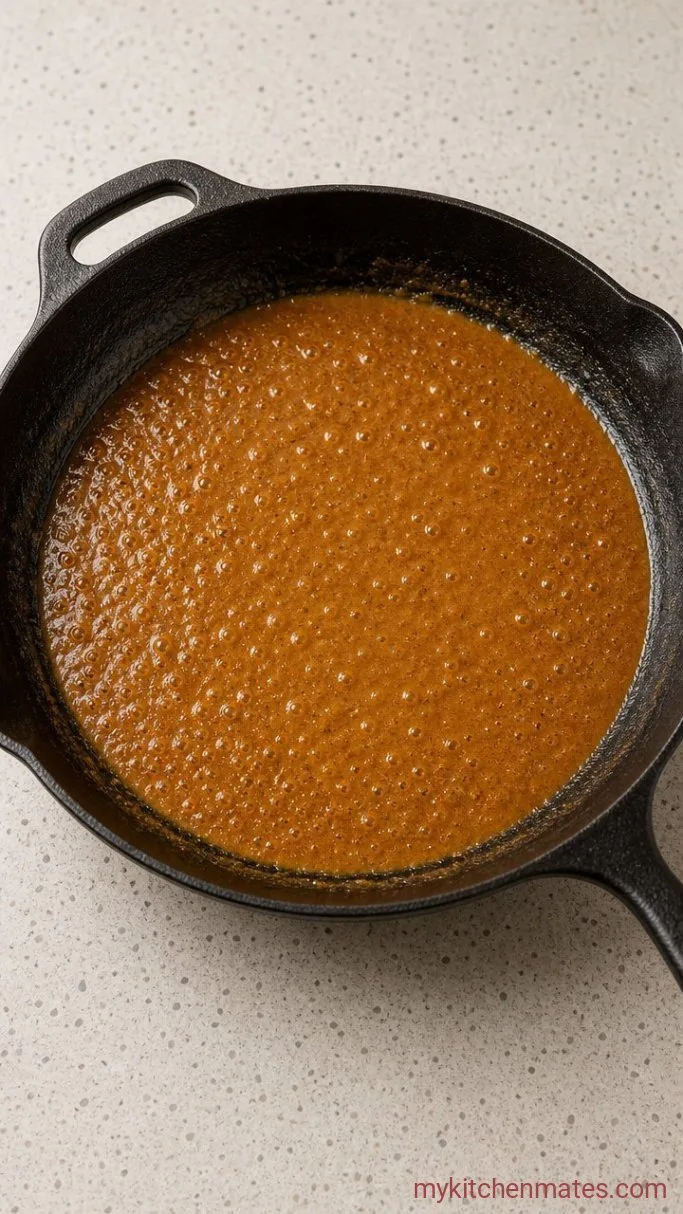
Set the skillet you used to fry the steak over medium heat, leaving about 2 tablespoons of drippings in the pan. If you don’t have enough, add unsalted butter to fill the gap. Sprinkle the 2 tablespoons of all-purpose flour evenly over the fat and start whisking right away. Cook the mixture, whisking nonstop, for 1 to 2 minutes. You’re looking for the flour to turn a shade or two darker, somewhere between pale straw and light golden, and to give off a warm, nutty scent. That tells you the raw flour taste is gone and the roux is ready to thicken the milk.
Keep the heat steady but not so high that the flour browns too fast. You don’t want a dark roux for this gravy. If you see any dark specks forming, lower the heat and whisk the whole thing a little faster.
Step 2: Whisk in the Milk
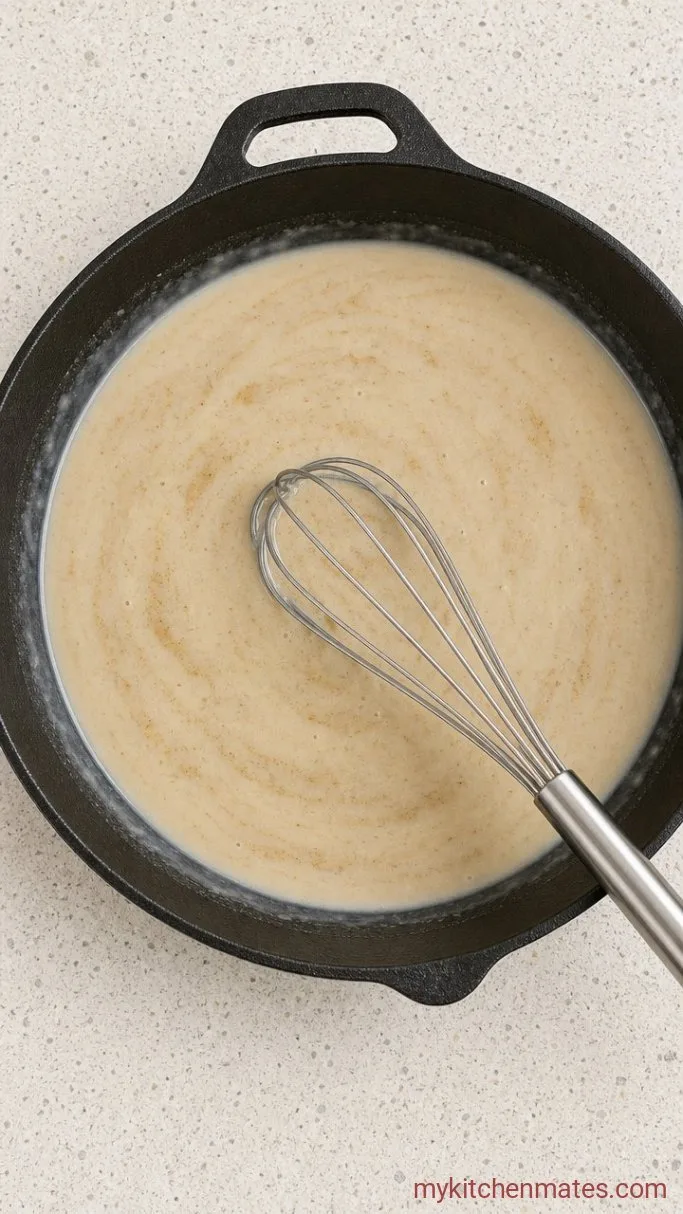
With one hand on the whisk and the other holding a measuring cup of the 1 1/2 cups whole milk, start pouring in a slow, steady stream as you whisk vigorously. It’s important the milk is warm (I microwave it for 45 seconds) because cold milk hitting hot fat is the fastest way to get lumps. Keep whisking until the mixture smooths out, turning from a tight paste into a thin, creamy liquid. Once all the milk is in, stir until the gravy begins to bubble gently at the edges.
The whole process takes about a minute of active whisking. You’ll feel the gravy start to resist the whisk as the flour does its work. If a few tiny lumps appear, whisk faster and they’ll usually dissolve. If larger clumps hang on, pour the gravy through a fine-mesh strainer before it thickens much more, then return it to the pan.
Step 3: Simmer Until Thick
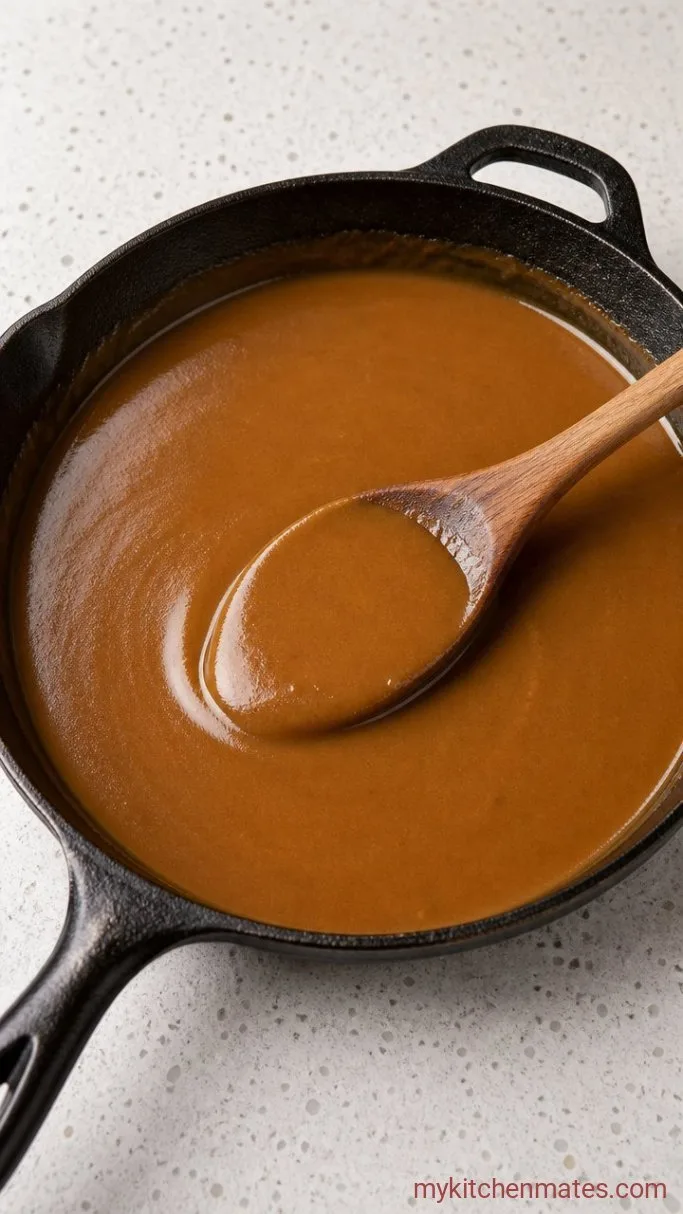
Lower the heat to low so the gravy just barely bubbles. Let it cook, whisking every minute or so to prevent a skin from forming, for 5 to 7 minutes. You’ll see the gravy visibly tighten up. To check, dip a spoon in and run your finger across the back: a clean line that holds its shape means it’s ready. If it’s too thin, give it another minute or two.
Once it reaches that nappe stage, stir in 1/2 teaspoon kosher salt and 1 teaspoon freshly cracked black pepper. Taste right away and add more salt or pepper if you like. The pepper should be prominent, almost spicy, because it mellows slightly as the gravy sits. A tiny pinch of cayenne goes in here too if you’re using it.
Step 4: Ladle Over the Steak
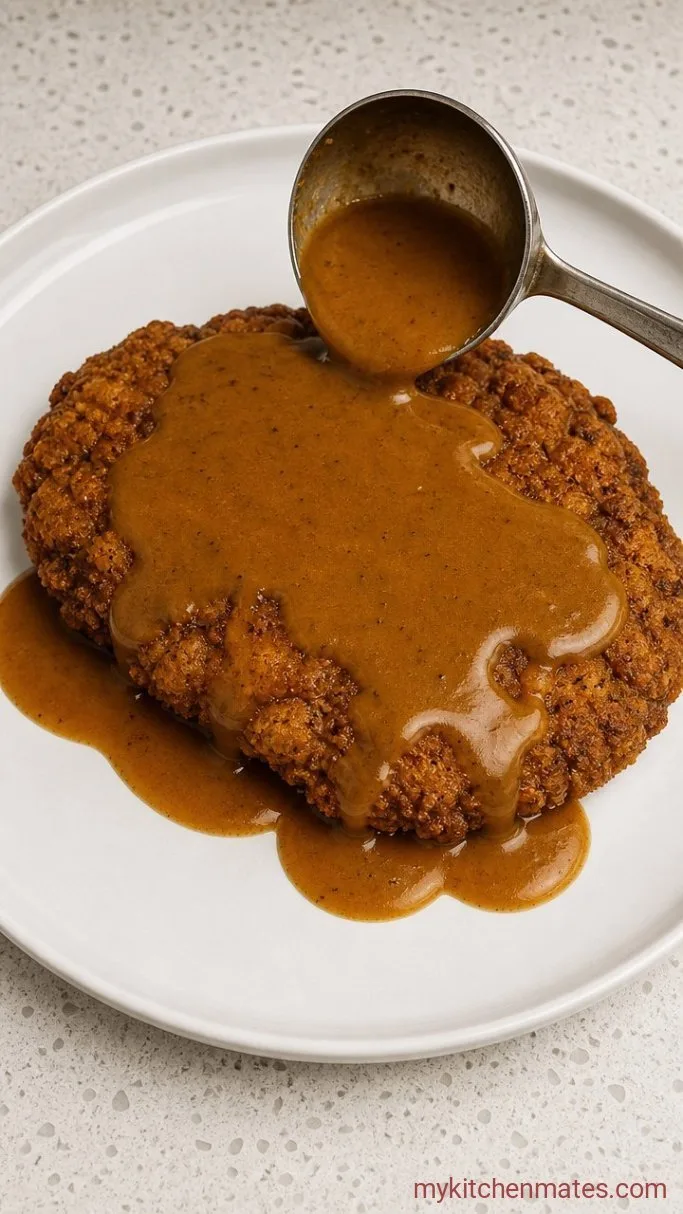
Take the pan off the heat. Have your chicken fried steak already plated and waiting, because the gravy thickens fast as it cools. Spoon the hot gravy generously over each steak, letting it pool around the edges. Scatter a few extra cranks of black pepper on top so the first forkfuls get that fresh, sharp bite.
Don’t let the gravy sit on the steak too long before eating; the coating will eventually soften, and the best moment is right after you ladle it on. If you’re serving family style, bring the skillet to the table and let everyone spoon their own.
Tips for a Silky Smooth Gravy
- Keep the heat at medium for the roux. High heat will burn the flour in seconds and leave bitter specks in the finished gravy.
- Use the same skillet you fried the steak in. Those browned bits stuck to the bottom dissolve into the gravy and add a savory depth you can’t replicate with butter alone.
- Taste before you salt heavily if your steak or breading was well seasoned. Extra salt can push it over the edge quickly.
- If you want a thinner gravy at the end, whisk in a splash more warm milk and heat through for a minute. It loosens up without breaking.
Storing Leftover Gravy
- Refrigerate: Cool the gravy completely, then store in an airtight container for up to 4 days. A skin will form on top; just whisk it back in when reheating.
- Reheating: Warm gently in a saucepan over low heat, whisking in a splash of milk to loosen it back up. Skip the microwave, which tends to make the milk separate and turn grainy.
Frequently Asked Questions
Can I make this gravy gluten-free?
Yes, swap the all-purpose flour with a 1-to-1 gluten-free flour blend that contains xanthan gum. It thickens the same way, and the flavor won’t change.
Why did my gravy turn out grainy?
Grainy texture usually means the flour wasn’t cooked long enough in the fat. Next time, whisk the roux for a full 2 minutes over medium heat, until it smells toasty and looks smooth, before adding any liquid.
Can I freeze this gravy?
It’s not ideal. The milk tends to separate and turn watery when thawed, leaving a broken texture that’s hard to bring back. Fresh gravy is best, but leftovers hold in the fridge for a few days.
Can I use skim milk instead of whole?
You can, but the gravy will be thinner and less creamy. Skim milk lacks the fat that gives the sauce its body, so you’ll need to simmer a few minutes longer to get the same cling, and the result will taste lighter overall.
Chicken Fried Steak Gravy Recipe
Ingredients
Method
- Place the skillet with drippings over medium heat. If using butter, melt it first. Sprinkle in the flour and whisk constantly for 1-2 minutes until the mixture smells nutty and turns light golden.
- Slowly pour in the warmed milk while whisking continuously to prevent lumps. Keep whisking until smooth and the gravy bubbles at the edges.
- Reduce heat to low and simmer, whisking every minute, for 5-7 minutes until the gravy coats the back of a spoon. Stir in salt and black pepper. Taste and adjust.
- Remove from heat and ladle the hot gravy generously over freshly fried chicken fried steak. Scatter extra cracked black pepper on top and serve right away.
Notes
