
Spiced Carrot Cake Jam (No Pectin Needed)

Carrot cake jam takes your favorite spiced carrot cake and turns it into a glossy, spoonable spread that tastes like the real thing, warm with cinnamon and nutmeg, flecked with crushed pineapple and shredded carrot. It’s made in one pot with simple ingredients and no store bought pectin, so the fruit does all the setting work.
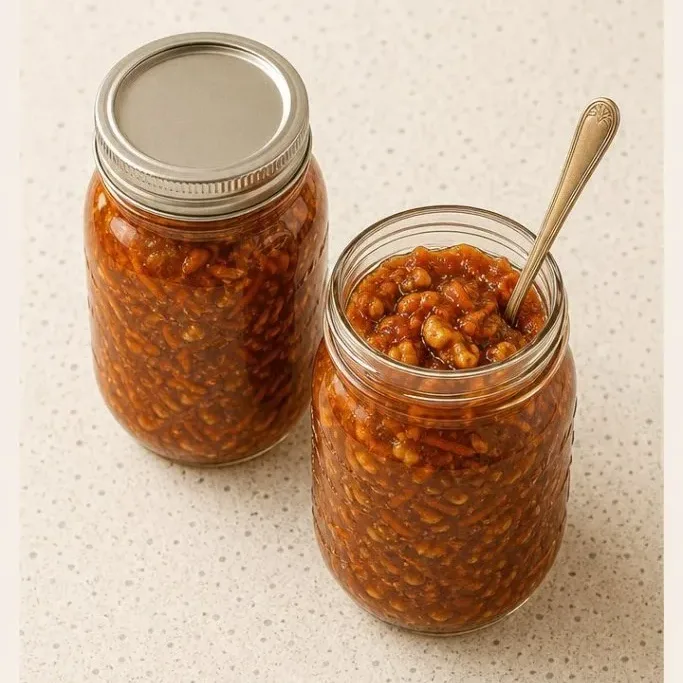
A smear of this on buttered toast or swirled into morning yogurt brings a little bakery case comfort to an ordinary weekday, and it makes a lovely gift jar too.
Why I Keep Coming Back to This Jam
It has the sticky, spoon-coating texture of cake batter, with tender bits of carrot and pineapple suspended in a deep amber jam. The spices bloom as it cooks, so the final spoonful tastes like the filling of a carrot cake, not just sweetened carrots.
I make a batch whenever carrots pile up in the fridge. Tucked into a jar, it brightens breakfasts for weeks and works just as nicely on a cheese board as it does on a biscuit.
Ingredients
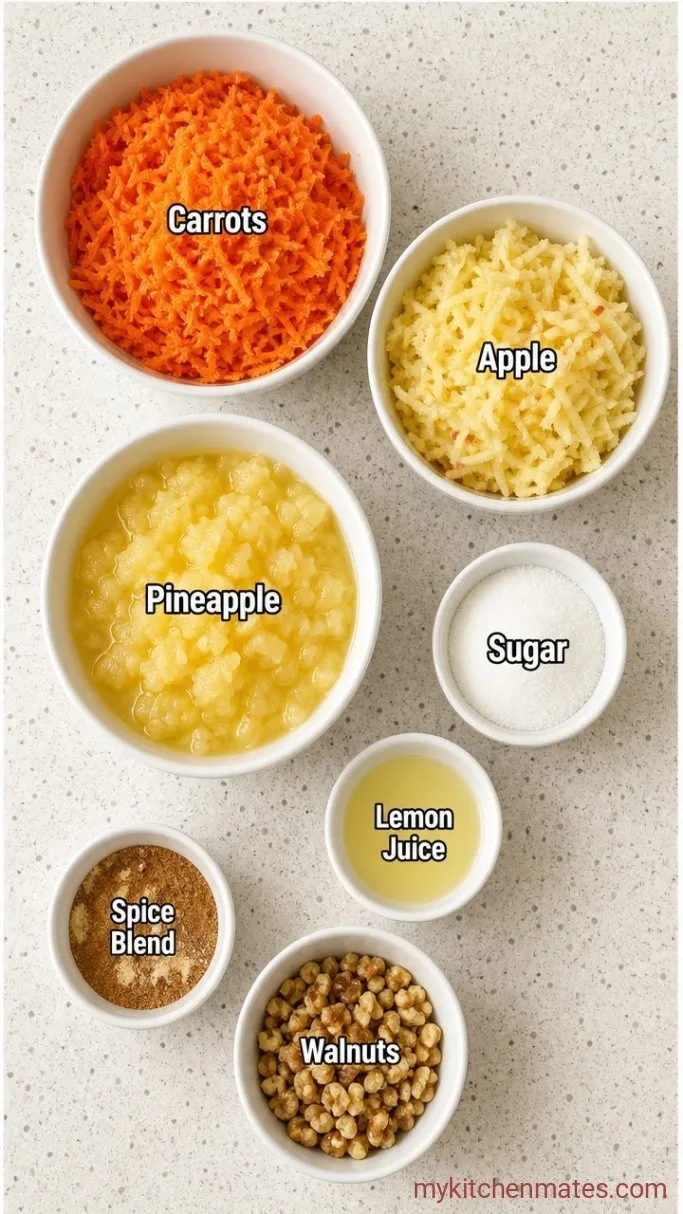
- 4 cups finely grated carrots: use the large holes of a box grater, roughly 4 large carrots
- 2 cups finely grated peeled apple: a firm tart apple like Granny Smith adds needed pectin; about 2 medium
- 20 oz can crushed pineapple in juice, undrained: the juice and fruit both help with the set
- 2 cups granulated sugar: this is less than a traditional jam, but enough for a soft spread
- 1/4 cup fresh lemon juice: brightens the flavor and helps activate the natural pectin
- 2 tsp ground cinnamon
- 1/2 tsp ground nutmeg
- 1/4 tsp ground ginger
- Pinch of salt
- 1/2 cup chopped walnuts, optional: stir in at the end so they keep their crunch
Variations / Substitutions
- No walnuts: swap in an equal amount of chopped pecans, or leave the nuts out entirely for a smoother jam.
- Extra warm spice: add 1/4 teaspoon of ground cardamom or a pinch of cloves along with the other spices.
- Raisin version: stir in 1/3 cup of golden raisins with the walnuts at the end.
- Apple swap: if Granny Smiths are not on hand, another firm tart apple like Honeycrisp works, but avoid soft mealy varieties.
- Firmer set: if you prefer a very firm jam, you can stir in 1 tablespoon of powdered pectin with the sugar at the start, but the natural pectin usually does the job.
Creamy Carrot Cake Cheesecake is an easy way to put this jam to good use.
How to Make Carrot Cake Jam
Step 1: Grate the Fruit
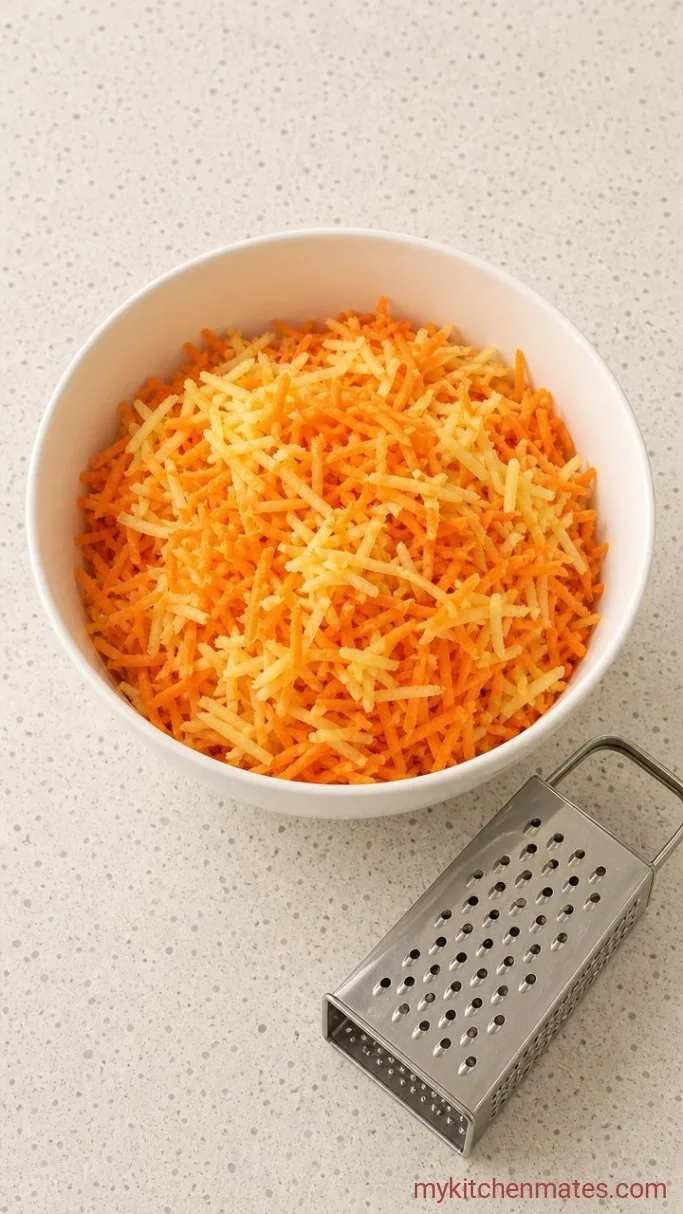
Shred the carrots and peeled apple on the coarse side of a box grater or with a food processor fitted with the shredding disc. Tip the grated fruit into a large, heavy-bottomed pot along with the can of crushed pineapple and its juice, the 2 cups of sugar, lemon juice, cinnamon, nutmeg, ginger, and the pinch of salt. Give everything a thorough stir, then set the pot over medium heat.
At first the mixture looks dry and fibrous, but as it warms, the sugar draws out moisture and the whole pot turns into a loose, glossy slurry in about 10 minutes. You will see the sugar dissolve and the carrots start to soften.
Step 2: Simmer the Mixture
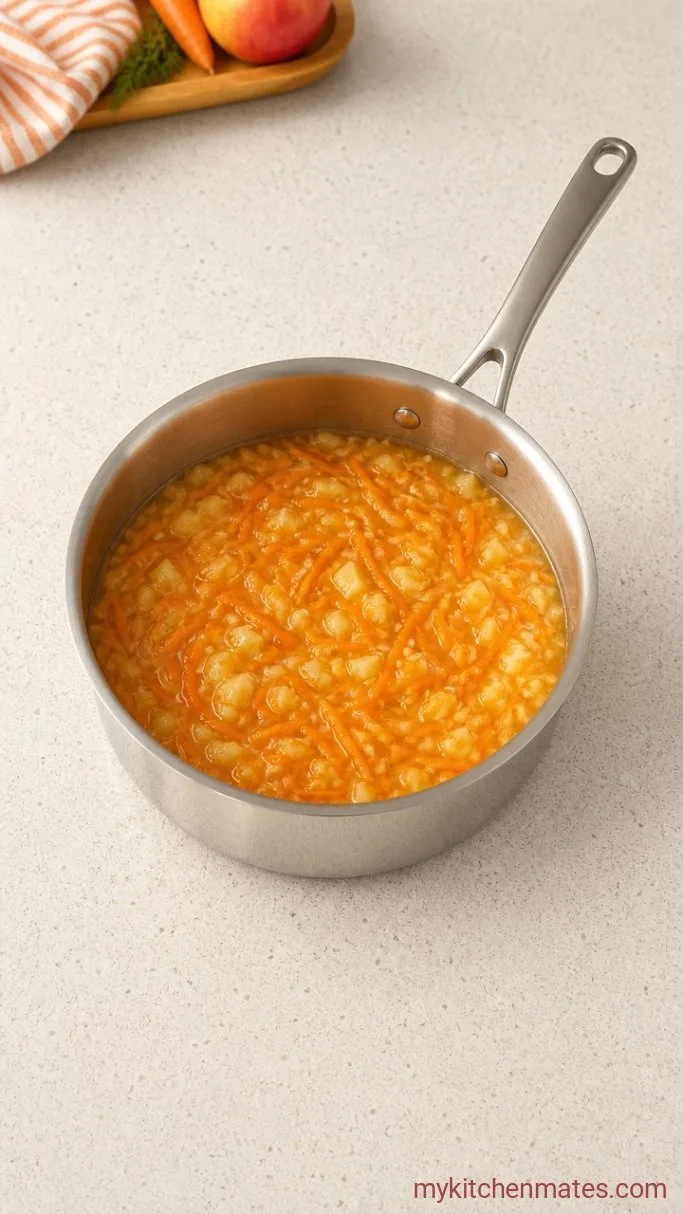
Once the pot reaches a full, rolling boil, lower the heat to medium-low to keep a steady simmer. Cook uncovered for 35 to 45 minutes, stirring occasionally with a heatproof spatula and more often toward the end as the jam thickens.
The kitchen will smell unmistakably like carrot cake, and the shreds of carrot will turn translucent. The jam darkens to a rich amber and reduces by about a third. Stir carefully in the last 10 minutes so nothing catches on the bottom.
Step 3: Test the Set
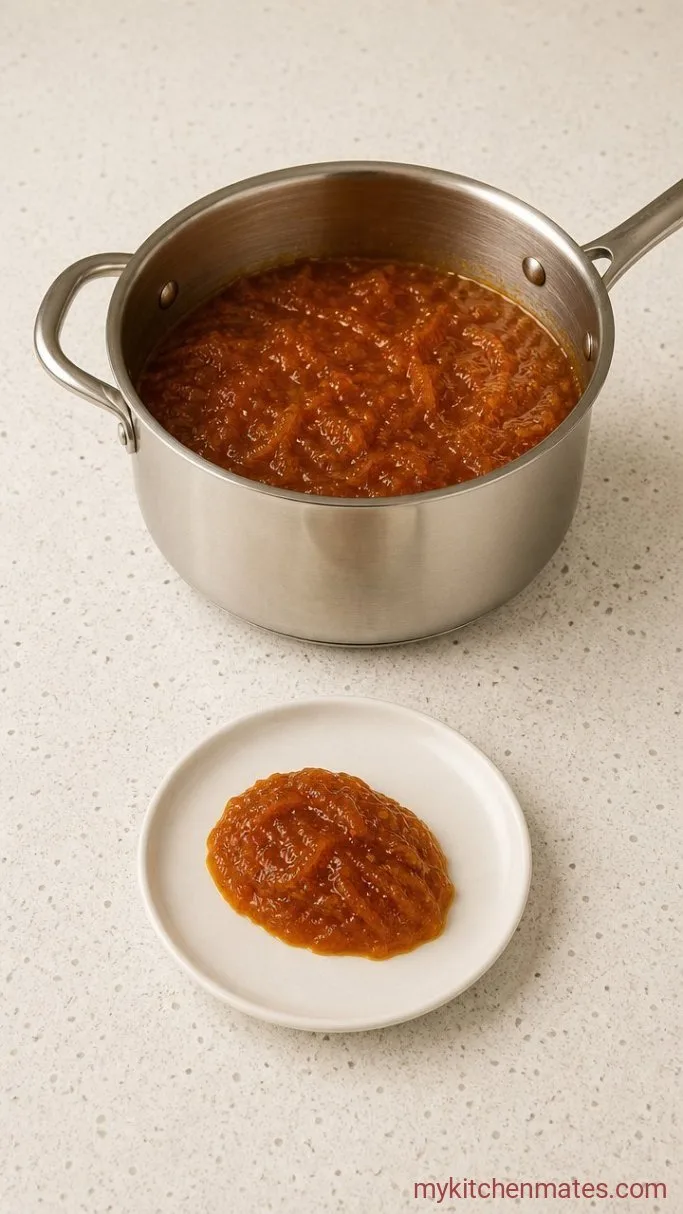
To check if the jam is ready, put a small plate in the freezer for a few minutes. Drop a spoonful of the hot jam onto the chilled plate, let it sit for 1 minute, then push the blob with your finger. If it wrinkles and holds a clean line without running, it is set. If it is still thin, keep simmering for another 5 minutes and test again.
The jam should look glossy and thick on the spoon. A candy or instant-read thermometer inserted into the mixture should read 220°F (104°C) for a soft set that spreads easily. Do not rely on the clock alone because moisture content varies with the carrots.
Step 4: Stir in the Walnuts
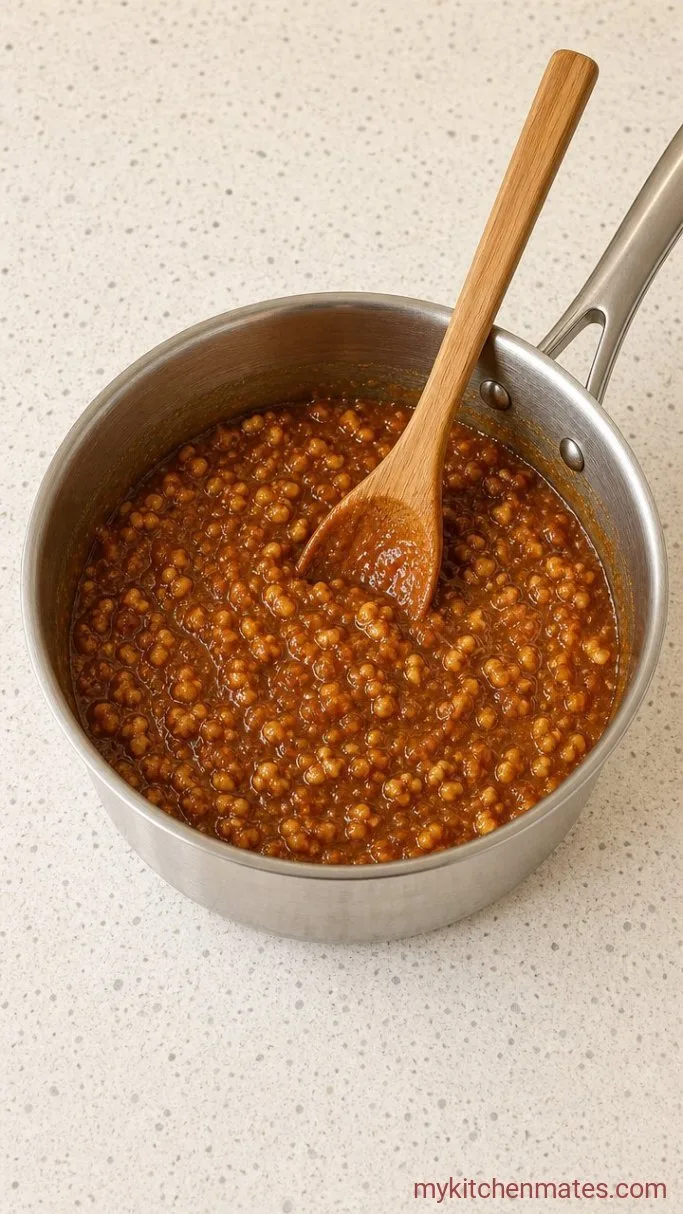
Remove the pot from the heat. If you are using walnuts, fold them in now so they warm through without losing their crunch. The jam will still bubble gently; stir until the nuts are evenly distributed and the jam settles.
Step 5: Jar and Seal
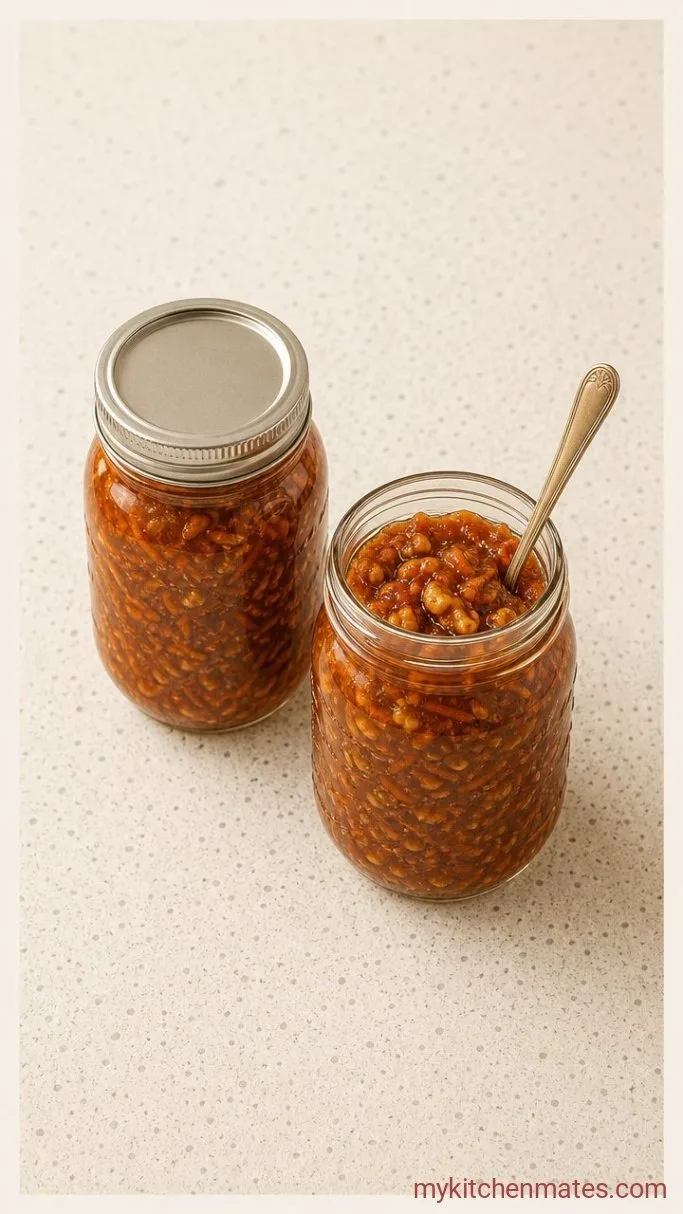
Ladle the hot jam into clean, warm jars, leaving about 1/4 inch of headspace at the top. Wipe the rims with a damp paper towel, set the lids on, and screw the bands fingertip tight. The jam will be a burnished gold with wisps of spice and visible flecks of carrot and pineapple.
For refrigerator storage, let the jars cool completely, then chill; the jam keeps up to 3 weeks. For shelf-stable jars that last up to a year, process the filled jars in a boiling water bath for 10 minutes, adjusting for altitude as needed.
A Few Notes Before You Start
- Do not cut the sugar: it helps pull moisture from the fruit and works with the natural pectin to set the jam. Cutting it back may leave you with a runny result.
- Use the coarse side of the grater: shredding the carrot and apple too fine turns the jam pasty. Coarse shreds give you that pleasant, slightly nubby texture.
- Toast the spices if you like a deeper flavor: blooming the cinnamon, nutmeg, and ginger in the dry pot over medium heat for 30 seconds before adding the other ingredients adds a warm, rounded note.
- If the jam still seems thin after testing: continue simmering and test again every 5 minutes. In a pinch, you can stir in 1 tablespoon of powdered pectin and boil for 1 minute, but natural pectin almost always gets there with patience.
Keeping Carrot Cake Jam Fresh
- Refrigerate: cooled jars keep well in the fridge for up to 3 weeks. Always use a clean spoon to scoop it out.
- Can for the pantry: properly sealed and processed jars last up to a year in a cool, dark cupboard.
- Serve cold: the jam is meant to be enjoyed straight from the fridge, and it spreads smoothly even when chilled.
What To Serve With Carrot Cake Jam
Spread it thick on toasted bagels or crusty sourdough with a smear of cream cheese for a true carrot cake breakfast. A spoonful swirled into warm oatmeal or plain yogurt turns a basic bowl into something special, and it holds its own next to a sharp white cheddar or a soft bloomy rind on a cheese plate. The gentle spice also pairs nicely with pancakes or waffles instead of syrup.
Frequently Asked Questions
Can I double this batch?
Yes, but use a wider pot rather than a deeper one so the mixture reduces properly. Plan for the simmering time to increase by about 10 to 15 minutes, and test the set more than once.
Can I make this sugar free?
Traditional jam relies on sugar for both flavor and set, so a fully sugar free version will be very thin and tart. You can try a low sugar pectin designed for that purpose, though the taste and texture will shift noticeably.
What if I do not have a thermometer?
Rely on the frozen plate test described in Step 3. It is a reliable way to check for the set without any equipment, and it has been used for generations.
Can I use fresh pineapple instead of canned?
Fresh pineapple contains an enzyme that can interfere with setting, so canned is the safer bet here. If you must use fresh, bring it to a boil in a little water for 5 minutes first to deactivate the enzyme, then drain and use only the fruit, adding a couple tablespoons of apple juice.
Carrot Cake Jam Recipe
Ingredients
Method
- Combine the grated carrots, apple, crushed pineapple with its juice, sugar, lemon juice, spices, and salt in a large heavy-bottomed pot and stir well. Place over medium heat.
- Bring to a rolling boil, then reduce heat to medium-low and simmer uncovered for 35 to 45 minutes, stirring occasionally and more often as it thickens, until the jam is amber and reduced.
- Test for set by dropping a spoonful onto a chilled plate. If it wrinkles when pushed, it is ready. Check with a thermometer reaching 220°F (104°C) for a soft set.
- Remove from heat and stir in walnuts if using.
- Ladle into clean jars, leaving 1/4-inch headspace. Wipe rims, apply lids, and cool completely before refrigerating. For shelf-stable storage, process in a boiling water bath for 10 minutes.
Notes
