
Homemade Butternut Squash Ravioli with Brown Butter and Sage

Making butternut squash ravioli from scratch is a weekend kitchen project that rewards you with tender pasta packets full of sweet, nutty squash.

A simple brown butter sauce with crispy sage leaves is all they need to shine. The effort is real, but every step is straightforward, and you’ll end up with a dish that feels like a restaurant meal straight from your own kitchen.
Why I Make These Every Fall
The filling has a concentrated squash flavor because I roast the squash instead of boiling it. That way the puree is dense and sweet, not watery, so it stays inside the pasta without leaking.
Ricotta and Parmesan add richness and a little salt, and a whisper of nutmeg brings out the squash’s natural warmth. It’s comfort food that still feels special.
The browned butter sauce is the perfect partner. It’s nutty and aromatic, and the fried sage leaves turn crisp and fragile, giving each bite a little crunch. Together they make a dish I look forward to all year.
Ingredients
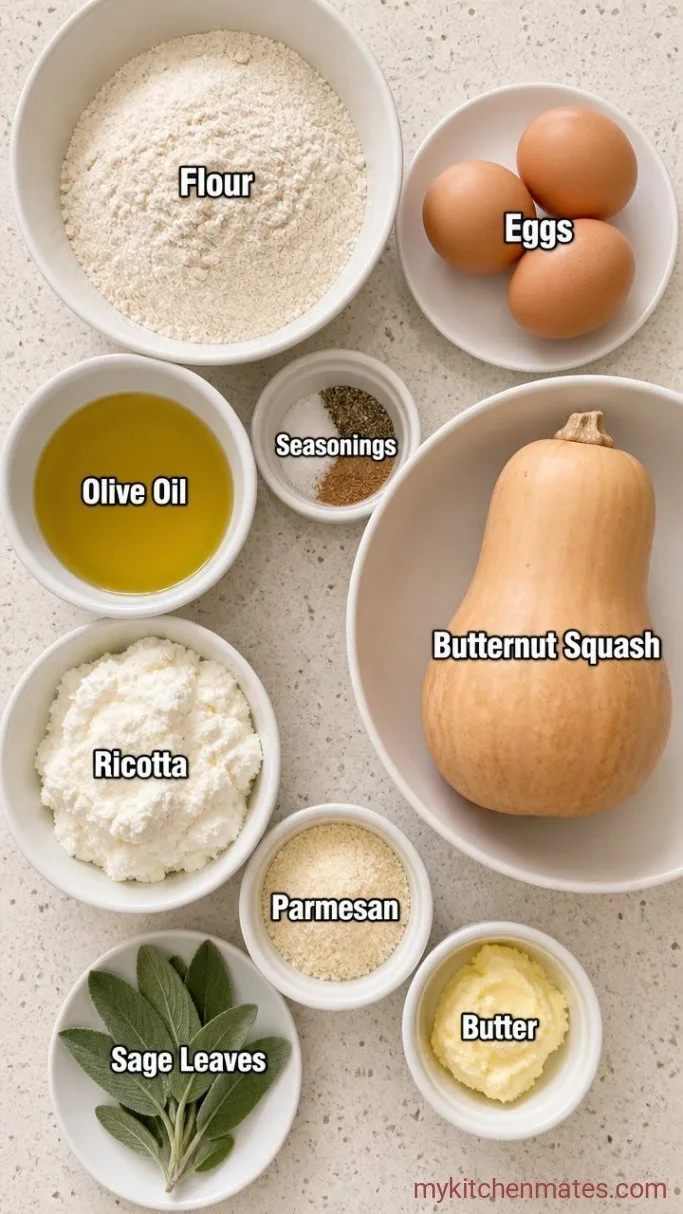
For the pasta dough:
- 2 cups all-purpose flour: plus more for dusting
- 3 large eggs: at room temperature
- 1 tablespoon olive oil
- ½ teaspoon salt
For the filling:
- 1 small butternut squash (about 2 pounds): halved and seeds scooped out
- ½ cup whole-milk ricotta: drained if watery
- ¼ cup grated Parmesan cheese
- ¼ teaspoon freshly grated nutmeg
- ½ teaspoon salt
- ¼ teaspoon black pepper
For the sauce:
- 4 tablespoons unsalted butter
- 12 fresh sage leaves
- ¼ teaspoon salt: more to taste
Variations and Substitutions
- Swap the ricotta: soft goat cheese gives the filling a tangier edge.
- Use wonton wrappers: they skip the pasta-making step and cook in about 2 minutes.
- Make it dairy-free: use a plant-based ricotta, a dairy-free Parmesan, and vegan butter for the sauce.
- Add a little heat: a pinch of red pepper flakes in the brown butter warms everything up.
Instant Pot Spaghetti Squash is an easy side dish to serve with this ravioli.
How to Make Butternut Squash Ravioli
Step 1: Roast the Squash

Heat your oven to 400°F (200°C). Place the halved squash cut side down on a parchment-lined baking sheet and roast until the flesh is very tender, about 45 minutes. Let it cool enough to handle, then scoop the flesh into a bowl. You need 1 packed cup of squash for the filling.
The squash should be soft all the way through and starting to brown where the cut edges touched the pan. That caramelization gives the filling a deeper, almost toasty sweetness.
Step 2: Mix and Knead the Dough
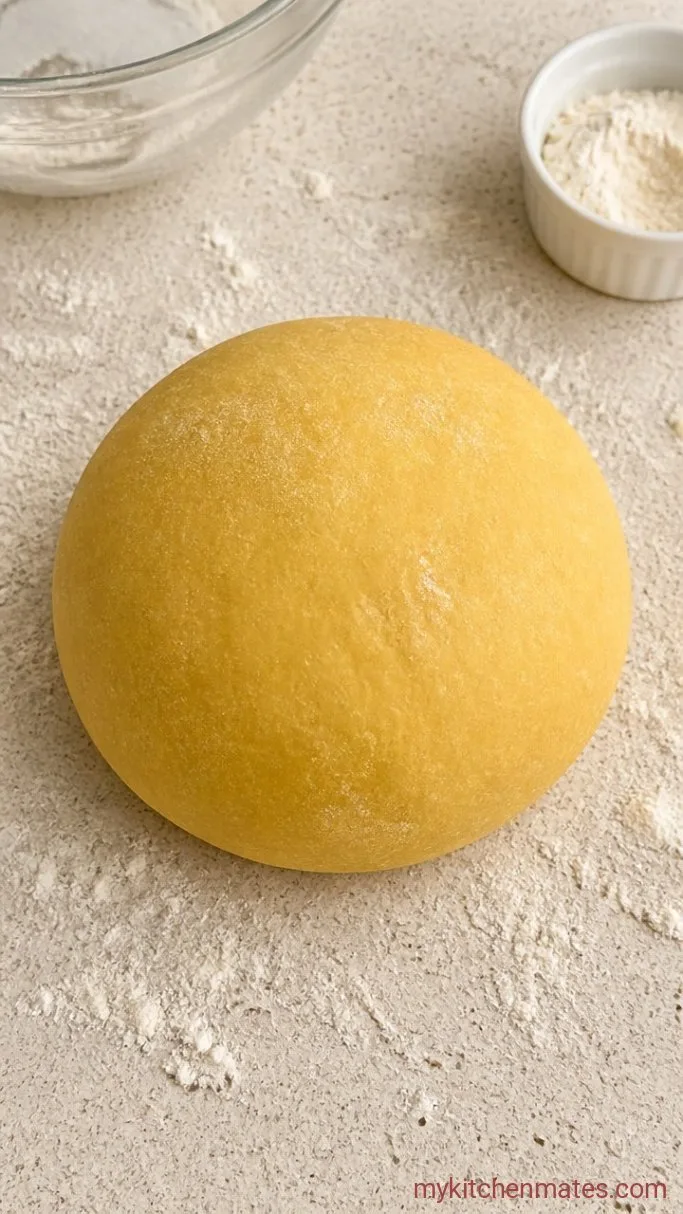
Mound the 2 cups flour on a clean work surface and make a wide well in the center. Crack the 3 eggs into the well, add the 1 tablespoon olive oil and ½ teaspoon salt. Use a fork to whisk the eggs, slowly pulling in flour from the inner wall of the well until a shaggy dough forms. Knead everything together for 8 to 10 minutes, until the dough is smooth and supple. Wrap it in plastic and let it rest at room temperature for 30 minutes.
The dough should feel firm but not tough. If it seems dry and won’t come together, wet your hands with a little water and keep kneading. The rest period relaxes the gluten, so rolling becomes much easier.
Step 3: Roll and Fill the Ravioli
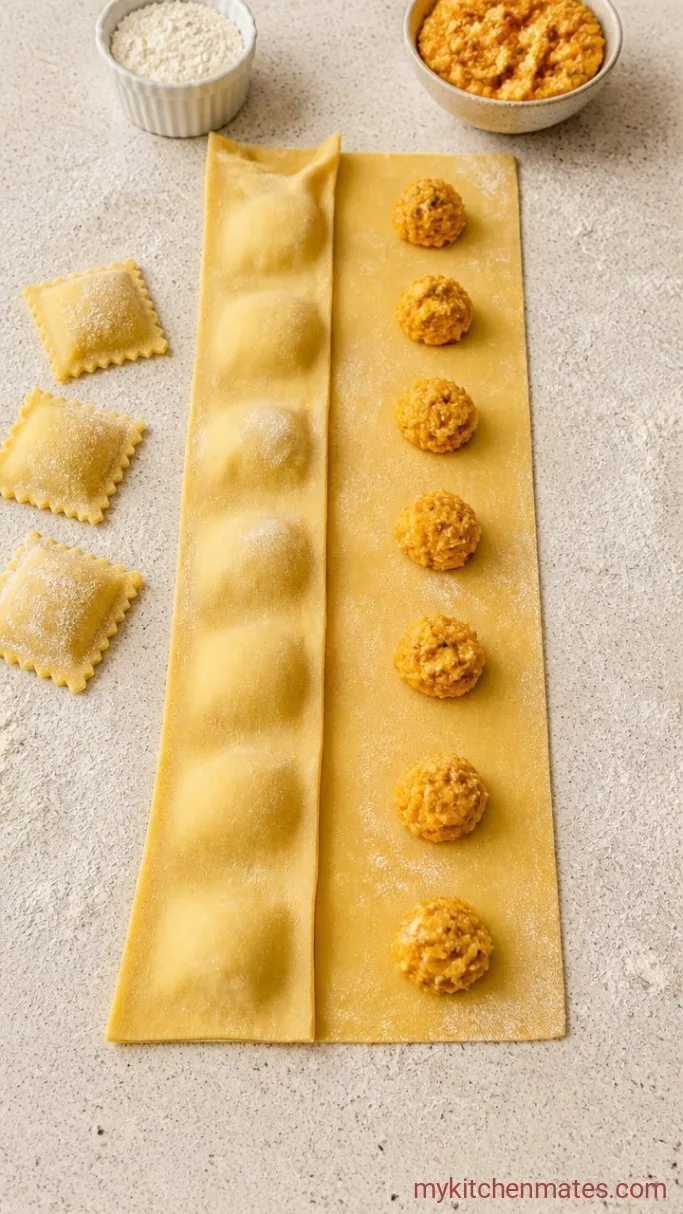
In a bowl, mix the 1 cup squash puree with the ½ cup ricotta, ¼ cup Parmesan, ¼ teaspoon nutmeg, ½ teaspoon salt, and ¼ teaspoon pepper. Stir until just combined, then set aside. Divide the rested dough into four pieces and keep the ones you are not using covered. Roll one piece through a pasta machine or with a rolling pin until it is thin enough to see your hand through it, about setting 6 on most machines. Repeat with a second piece.
Working on a lightly floured surface, lay one pasta sheet flat. Drop rounded teaspoonfuls of filling onto the sheet, leaving about 2 inches between each mound. Brush a little water around each mound, place the second sheet on top, and press gently around the filling to seal, pushing out any air pockets. Cut the ravioli into squares with a fluted cutter or a sharp knife, then transfer them to a floured baking sheet while you finish the rest.
Step 4: Boil and Toss in Sage Butter

Bring a large pot of salted water to a boil. Slide the ravioli in and cook them for 3 to 4 minutes, just until they float to the top. While they cook, melt the 4 tablespoons butter in a wide skillet over medium heat. Add the 12 sage leaves and let the butter foam, then settle into a gentle sizzle. Cook, swirling the pan now and then, until the butter smells nutty and turns golden with brown flecks, about 3 minutes. Lift the ravioli from the water with a slotted spoon and add them directly to the skillet. Toss gently to coat, then plate them while the butter is still warm and the sage leaves are crisp.
A Few Tips for Perfect Ravioli
- Let the roasted squash cool completely before mixing the filling. Warm squash can scramble the egg and loosen the filling.
- Don’t overwork the pasta dough. Knead just until smooth, then let it rest so the gluten relaxes.
- Seal every ravioli carefully. Press firmly around the filling and push out any trapped air to keep them from opening in the water.
- Boil the ravioli in a large pot with plenty of room. Crowding them can drop the water temperature and make the pasta gummy.
Here’s how long to boil them:
| State | Time |
|---|---|
| Fresh | 3 to 4 minutes |
| Frozen (uncooked) | 4 to 5 minutes |
Keeping Leftover Ravioli Fresh
- Refrigerate: store cooked ravioli in an airtight container for up to 3 days. Reheat gently in a skillet with a small knob of butter.
- Freeze: arrange uncooked ravioli in a single layer on a parchment-lined sheet. Once solid, transfer them to a zip-top bag and freeze for up to 2 months. Cook straight from frozen, adding an extra minute to the boil time.
What to Serve Alongside
A simple arugula salad dressed with lemon vinaigrette cuts right through the richness of the brown butter. Roasted asparagus or quick green beans finished with a squeeze of lemon also work beautifully.
Frequently Asked Questions
Can I use canned pumpkin instead of roasted squash?
Yes, but the texture is wetter. Drain the puree in a fine-mesh sieve for at least 30 minutes so the filling doesn’t turn watery.
Do I need to peel the squash before roasting?
No. The skin will soften in the oven, and you can scoop the flesh right out of the shell when it is cool enough to handle.
My ravioli burst in the pot. What happened?
You probably overfilled them or didn’t seal the edges tightly enough. Press firmly around the filling and push out any air next time, and use a scant teaspoon of filling per ravioli.
Can I skip the nutmeg?
You can, but it adds a warmth that really rounds out the squash. A pinch of cinnamon works too if you want a slightly different spice note.
Homemade Butternut Squash Ravioli with Brown Butter and Sage Recipe
Ingredients
Method
- Roast the squash at 400°F (200°C) for 45 minutes until very tender. Cool, then scoop 1 cup of flesh into a bowl.
- Make the dough by mounding the flour, creating a well, and mixing in eggs, olive oil, and salt. Knead 8 to 10 minutes until smooth, then rest covered for 30 minutes.
- Combine the squash, ricotta, Parmesan, nutmeg, salt, and pepper. Roll the pasta dough into thin sheets, place small mounds of filling, seal with a second sheet, and cut into ravioli.
- Boil the ravioli in salted water for 3 to 4 minutes. Brown the butter with sage leaves in a skillet, then toss the cooked ravioli in the sauce and serve immediately.
Notes
