
Tender Buttermilk Cinnamon Rolls with Brown Butter Glaze

These cinnamon rolls bake up soft and pillowy, with a gentle tang from the buttermilk and a gooey brown sugar filling that stays put. A brown butter cream cheese glaze melts right into the warm spirals, making them the kind of breakfast that pulls everyone to the kitchen before the coffee’s done.
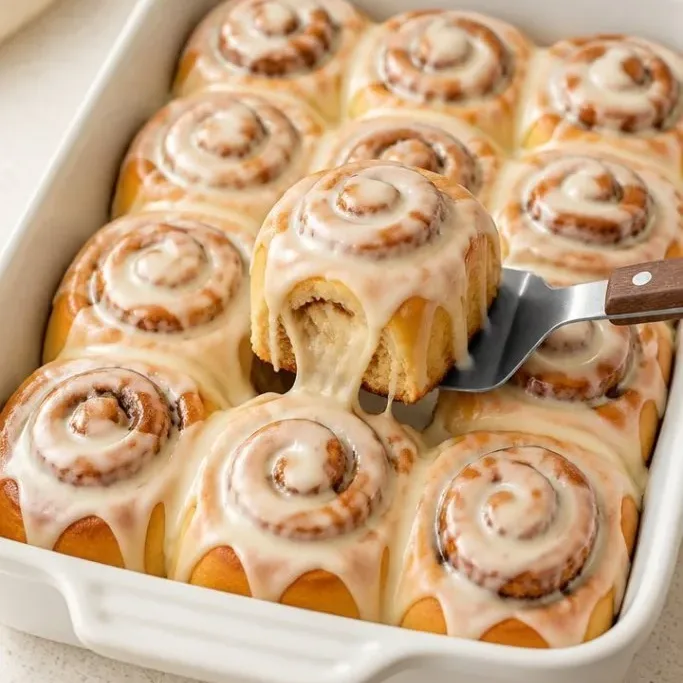
They look like a weekend project but the dough is surprisingly forgiving. You can even shape them the night before and bake them fresh in the morning.
What Makes These Rolls So Tender
The buttermilk does most of the heavy lifting here. Its acidity relaxes the gluten just enough so the dough stays easy to roll and the crumb bakes up extra soft, never tough.
That same tang plays off the sweet filling so the whole roll tastes balanced, not cloying. And because buttermilk locks in moisture, leftovers stay tender for a couple of days, which is a rare thing for a yeasted pastry.
Ingredients
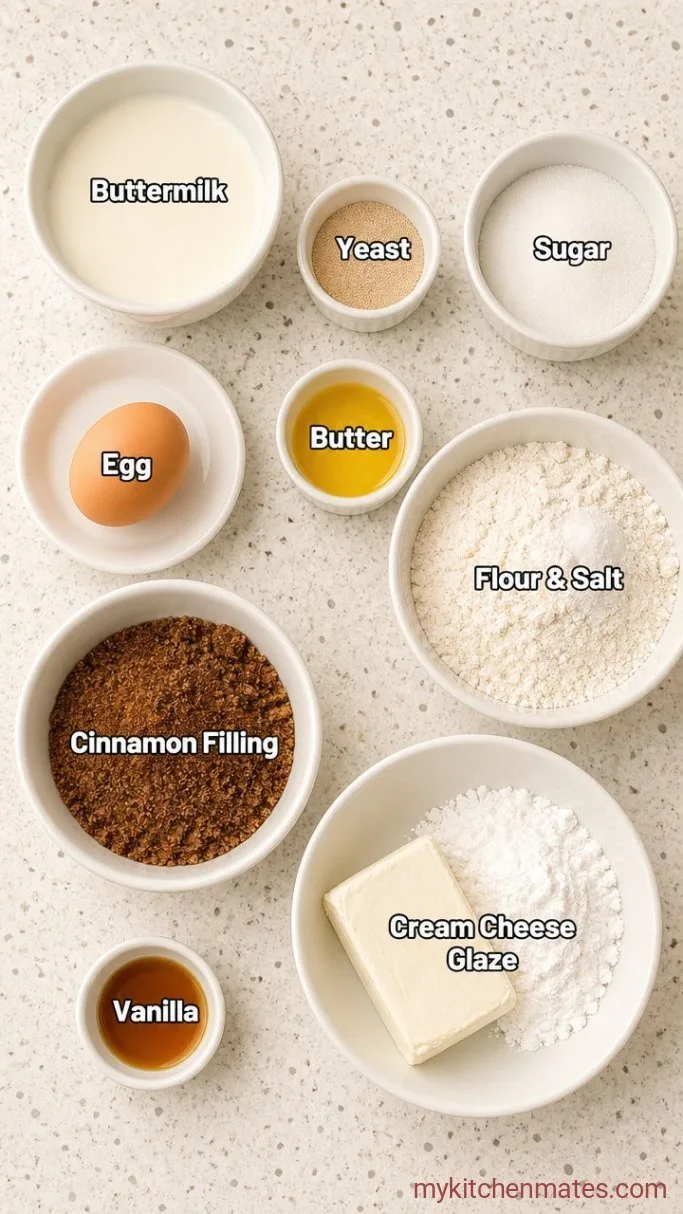
- 1 cup warm buttermilk (about 110°F / 43°C): brings the tang and tenderness; gently warm it so it activates the yeast without killing it
- 2 ¼ tsp instant yeast (1 packet): use fresh yeast for the most reliable rise
- ¼ cup granulated sugar: feeds the yeast and sweetens the dough lightly
- 1 large egg: gives structure and richness, set it on the counter for 20 minutes so it isn’t fridge-cold
- ⅓ cup unsalted butter, melted and cooled slightly: adds richness without weighing down the dough
- 4 cups bread flour, spooned and leveled: bread flour gives a chewy-soft texture; all-purpose works in a pinch but the rolls will be a touch less lofty
- 1 tsp fine sea salt: balances the sweetness
For the Filling
- ¾ cup packed dark brown sugar: dark brown sugar has more molasses, which deepens the caramel notes
- 2 tbsp ground cinnamon: the warm spice backbone of the filling
- 6 tbsp unsalted butter, very soft: spreads easily without tearing the dough
For the Glaze
- 4 oz cream cheese, softened: use full-fat block cream cheese for the smoothest glaze
- 2 tbsp unsalted butter, browned and cooled to lukewarm: brown butter adds a nutty depth that ties the whole roll together
- 1 cup powdered sugar: sift it if it’s lumpy
- ½ tsp vanilla extract
- Pinch of fine sea salt
- 1 to 2 tbsp milk or buttermilk: loosens the glaze to a spreadable consistency
Variations and Substitutions
- Cardamom filling: swap the cinnamon for 1 tbsp ground cardamom and 1 tbsp cinnamon; it adds a floral, citrusy note that feels special for holidays.
- Orange zest: add 1 tsp finely grated orange zest to the brown sugar mixture; it brightens the whole roll and cuts the richness.
- Maple glaze: replace the vanilla in the glaze with ½ tsp maple extract, or use 2 tbsp real maple syrup and reduce the milk to keep it thick.
- Nut sprinkle: scatter ½ cup chopped toasted pecans over the filling before you roll; the crunch works well against the soft dough.
- Dairy-free: use a thick plant-based milk with 1 tbsp white vinegar per cup in place of buttermilk, swap in vegan butter and cream cheese.
Soft Cinnamon Roll Cookies are a sweet treat to enjoy alongside these cinnamon rolls.
How to Make Buttermilk Cinnamon Rolls
Step 1: Bloom the Yeast
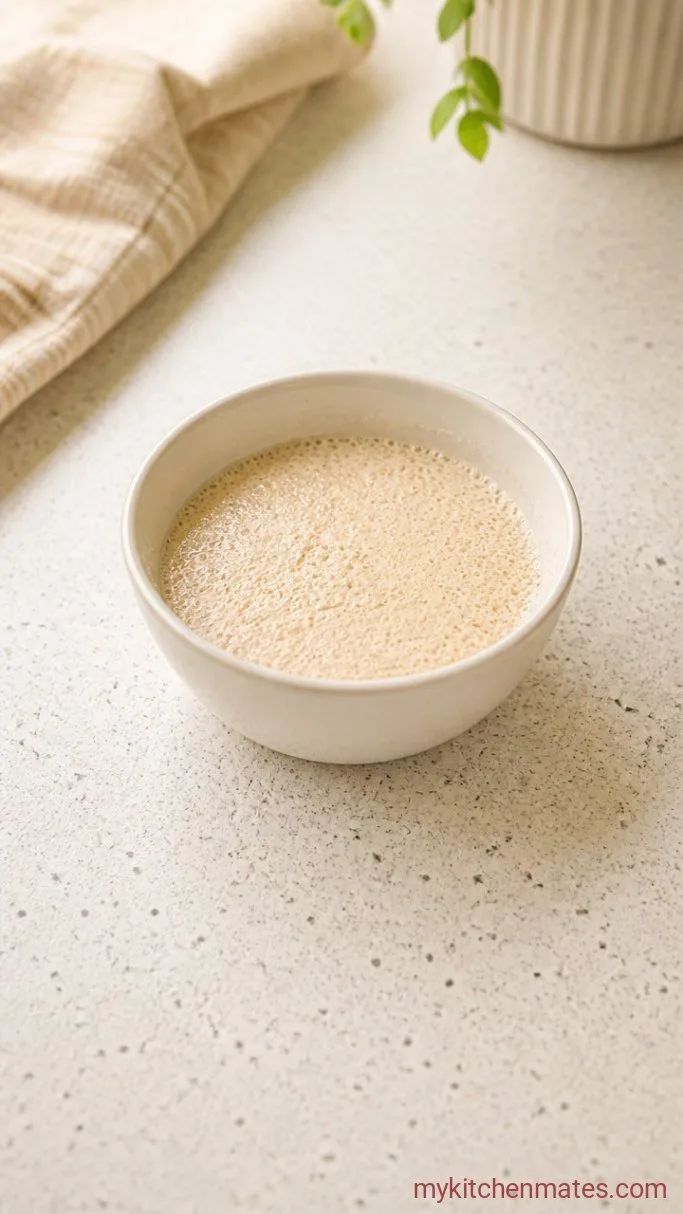
Pour the 1 cup warm buttermilk into the bowl of a stand mixer and whisk in the ¼ cup sugar. Sprinkle the 2 ¼ tsp yeast over the top and let it sit undisturbed for about 7 minutes. When it’s ready, the surface will be covered in a thick, creamy foam. A thin dusting of bubbles or no foam at all means the yeast is too old or the milk was too hot, so trust the visual here. That foam is your guarantee the dough will rise.
Step 2: Mix and Knead the Dough
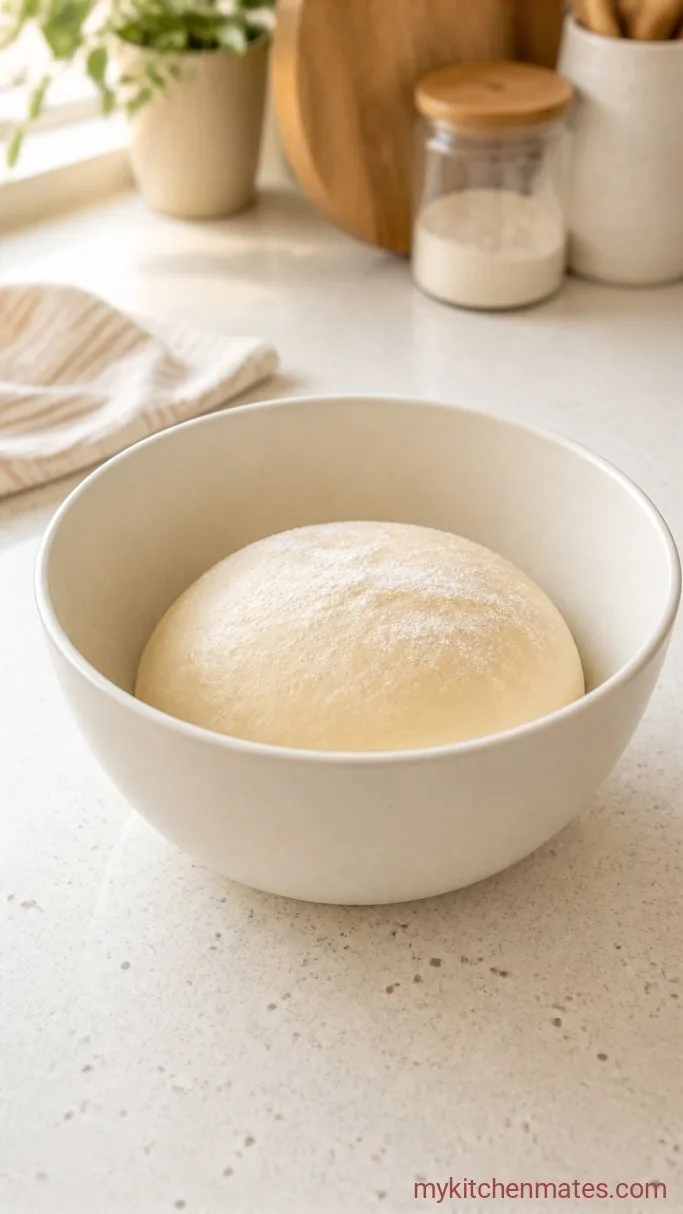
Add the 1 egg, the ⅓ cup melted butter, the 4 cups flour, and the 1 tsp salt to the yeast mixture. Mix on low speed with the dough hook until the flour is fully incorporated, about 2 minutes. Crank the speed to medium-low and let the machine knead for 6 to 7 minutes. The dough should wrap around the hook and slap the sides of the bowl in a steady rhythm, and by the end it will feel smooth and springy. Pull off a small piece and stretch it gently. If it forms a thin, translucent window without tearing, you’re there. The first time you make it, that windowpane test is the most reassuring sign that the gluten is properly developed.
Step 3: Roll Out and Fill the Dough
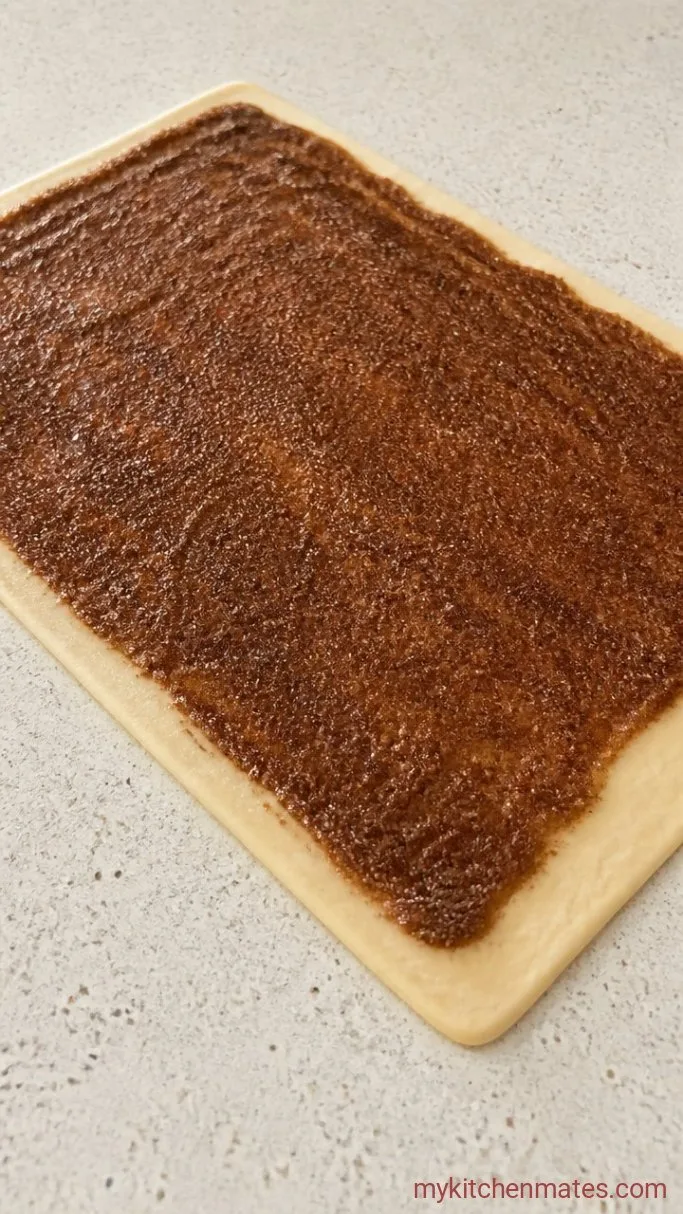
Turn the dough out onto a very lightly floured counter and pat it into a rough rectangle. Use a rolling pin to shape it into a 24-by-14-inch rectangle, lifting and nudging the edges so they stay even. Spread the 6 tbsp very soft butter all over the surface with an offset spatula, leaving a ½-inch border along the far long side. Sprinkle the ¾ cup brown sugar and 2 tbsp cinnamon evenly across the butter, then press the mixture down gently with your palm so it adheres. The butter layer keeps the filling from sliding out as you roll, so don’t skip the smearing and pressing.
Step 4: Slice and Arrange the Rolls
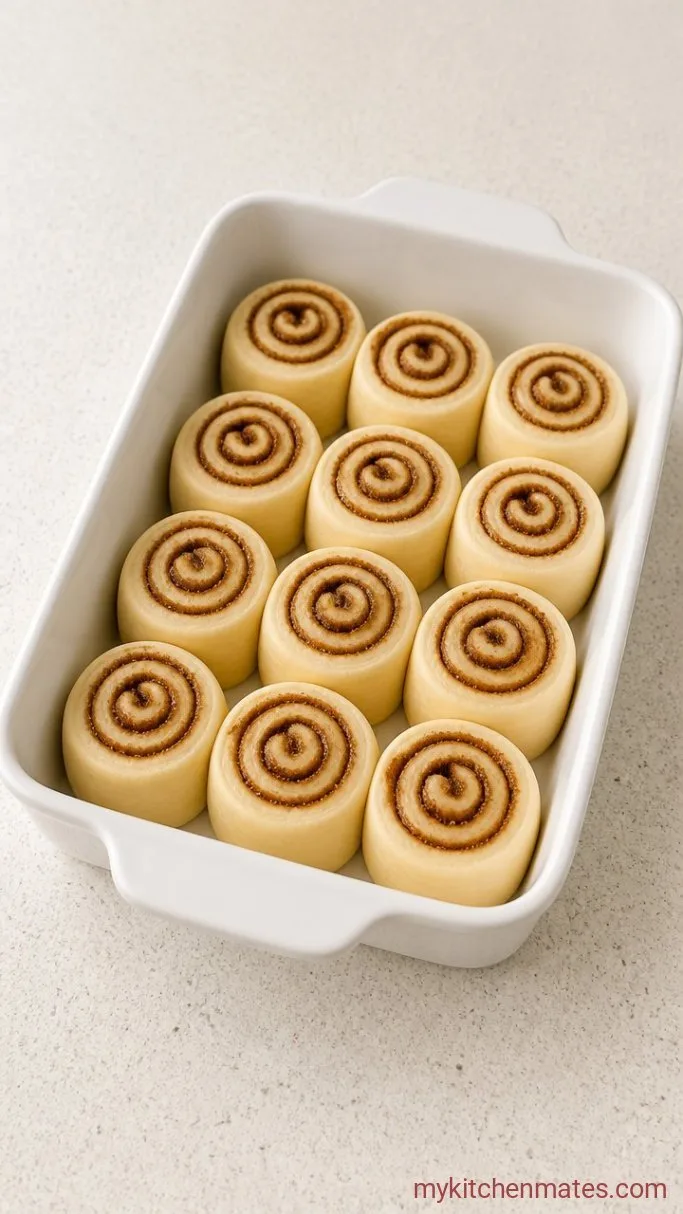
Starting from the long side closest to you, roll the dough up tightly into a log. Use your fingertips under the dough to keep the tension even, and pull back slightly as you go so the spiral stays snug. When you reach the bare border, pinch the seam closed along the whole length. Slide unflavored dental floss or a sharp serrated knife under the log, cross the ends over the top, and pull through to cut clean spirals. You’ll get 12 rolls. Nestle them cut-side down in a buttered 9-by-13-inch baking dish, spacing them so they have room to double.
Step 5: Proof and Bake the Rolls
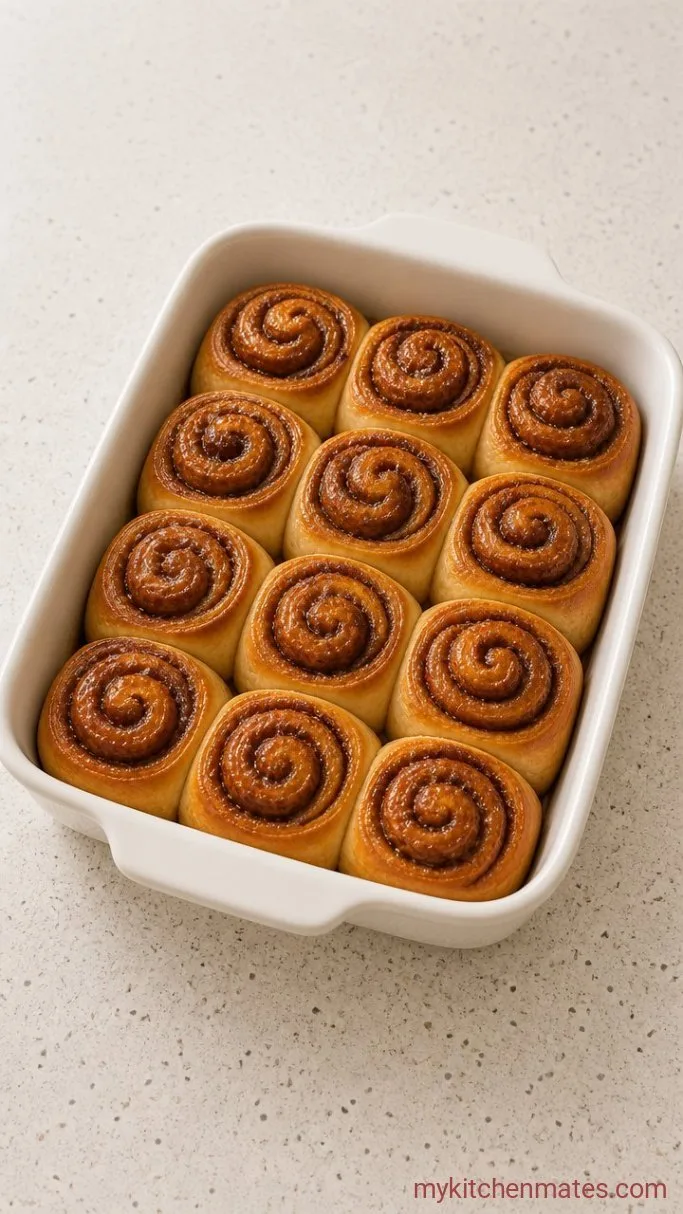
Cover the dish with a clean kitchen towel and let the rolls rise in a warm spot until they’re puffy and touching, 45 minutes to 1 hour. Meanwhile, set a rack in the middle and preheat the oven to 350°F (175°C). Uncover and bake until the tops are golden brown and the center rolls feel set when you nudge the pan, about 22 to 25 minutes. The filling will be bubbling around the edges. If you have an instant-read thermometer, the internal temp of a center roll will read around 190°F when they’re done. Don’t wait for deep brown or the edges will dry out before the middles are baked through.
Step 6: Glaze and Serve
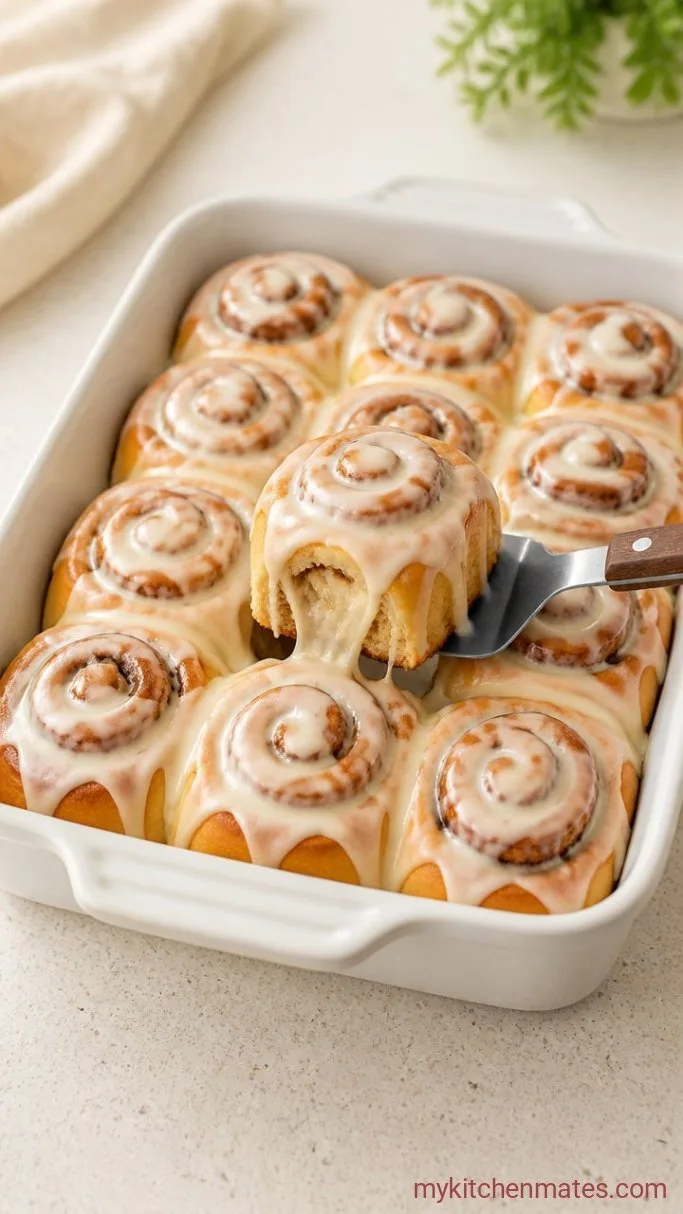
While the rolls cool for 5 minutes, make the glaze. Beat the 4 oz cream cheese in a bowl until smooth, then whisk in the 2 tbsp browned butter, 1 cup powdered sugar, ½ tsp vanilla, and a pinch of salt. Add 1 tbsp milk and whisk, then add the second tablespoon only if needed to reach a thick but pourable consistency. Spoon the glaze generously over the warm rolls and spread it with the back of the spoon so it melts into every spiral. Serve them straight from the pan while the glaze is still glossy and the centers are soft as a pillow.
Tips for Warm, Fluffy Rolls Every Time
- Watch your buttermilk temperature.: If it feels bathwater-warm on your wrist, it’s perfect. Too hot and the yeast dies; too cool and the rise drags on forever.
- Use room temperature egg and butter in the dough.: Cold ingredients shock the yeast and create a dense loaf, so pull the egg and melted butter out early.
- Let the dough tell you when it’s ready.: Rise times depend on kitchen warmth more than the clock, so double in size is the rule, not the minute hand.
Bake times by pan type:
| Pan Type | Bake Time at 350°F |
|---|---|
| 9×13-inch metal pan | 22-25 minutes |
| 9×13-inch glass dish | 25-28 minutes |
| Two 9-inch round cake pans | 20-22 minutes |
Storing Leftover Rolls
- Refrigerate:: Keep baked rolls in an airtight container for up to 4 days. They lose a little loft but not much tenderness.
- Reheating:: Warm individual rolls in the microwave for 20 to 30 seconds, or tent a few with foil and warm in a 300°F oven for 8 minutes. A fresh drizzle of glaze on top brings them back to life.
- Freezing:: Freeze unglazed rolls in a single layer, then transfer to a freezer bag for up to 2 months. Thaw at room temperature, warm, and glaze.
What to Serve with Buttermilk Cinnamon Rolls
A batch of these turns any morning into an occasion, but a few simple sides round out the plate. A bowl of pink grapefruit segments with a little honey cuts through the richness beautifully. Mugs of hot black coffee or a spiced chai latte play against the sweet glaze without competing. For a full brunch spread, pile crispy bacon or breakfast sausage on the side so the salty crunch balances every gooey bite.
Frequently Asked Questions
Can I use active dry yeast instead of instant?
Yes, but you’ll need to bloom it the same way and give the dough a little more time. Active dry yeast rises slightly slower, so expect the first and second proofs to take about 10 to 15 minutes longer.
Can I make the rolls ahead overnight?
Absolutely. Shape the rolls and place them in the buttered pan, then cover tightly and refrigerate for up to 12 hours. In the morning, let them sit at room temperature for 45 minutes to puff up before baking.
Why did my filling melt out of the rolls?
The butter underneath likely seeped out because the dough wasn’t rolled tightly enough or the seam wasn’t sealed well. Pinch the seam all the way along and use the border without butter to help it stick.
Is bread flour really necessary?
Not strictly. All-purpose flour makes tender rolls that are a little less structured, so the spirals may separate slightly as they bake. The taste is the same, just a softer bite.
Buttermilk Cinnamon Rolls Recipe
Ingredients
Method
- Whisk warm buttermilk and sugar together, sprinkle yeast on top, and let stand 7 minutes until foamy.
- Add egg, melted butter, flour, and salt. Mix and knead 6-7 minutes until a smooth, elastic dough forms that passes the windowpane test.
- Roll dough to a 24×14-inch rectangle, spread with soft butter, sprinkle with brown sugar and cinnamon, and press gently.
- Roll up tightly from the long side, seal the seam, and cut into 12 rolls. Place in a buttered 9×13-inch pan.
- Cover and let rise until puffy and touching, 45-60 minutes. Bake at 350°F 22-25 minutes until golden.
- Beat cream cheese, browned butter, powdered sugar, vanilla, and salt. Thin with milk. Spread over warm rolls and serve.
Notes
