
Deeply Nutty Buckwheat Sourdough Bread

Buckwheat sourdough bread sounds like a bakery splurge, but it’s straightforward to pull off in your own kitchen. The dough behaves like any other slowly fermented loaf and rewards you with a week’s worth of incredible toast.
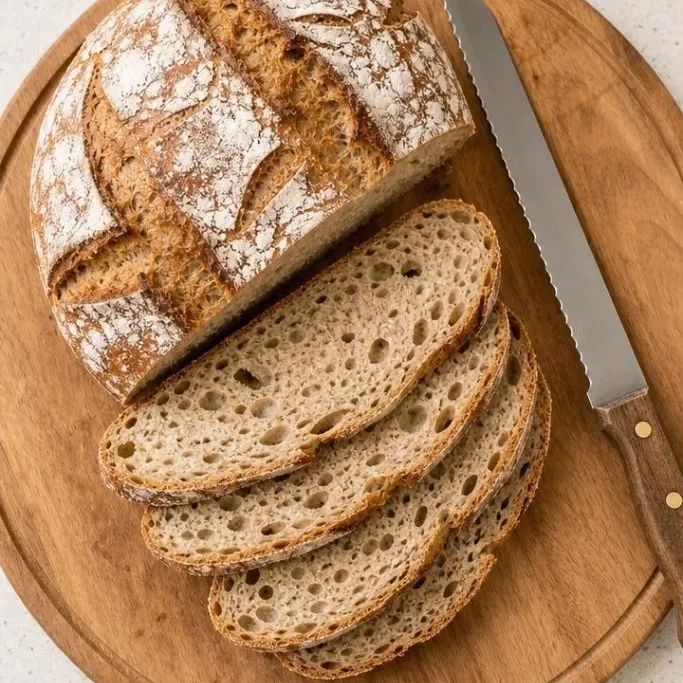
The crumb is soft and faintly sweet, while the crust shatters when you bite into it. That earthy, nutty character from the buckwheat flour makes it stand out in a morning routine or next to a bowl of soup.
Why This Loaf Earns a Regular Spot
Buckwheat brings a rustic, nutty depth that regular wheat flour can’t match. It doesn’t taste bitter or gritty here because the long fermentation softens its edges and lets the natural sweetness come through.
I reach for this recipe when I want a bread with real character. The nuttiness hangs around in the aftertaste, and the dark crust just looks beautiful on the counter.
The loaf stays moist for days thanks to the sourdough starter, and it toasts up with a crisp, almost cracker-like bite. I rarely make plain white sourdough anymore after trying this version.
Ingredients
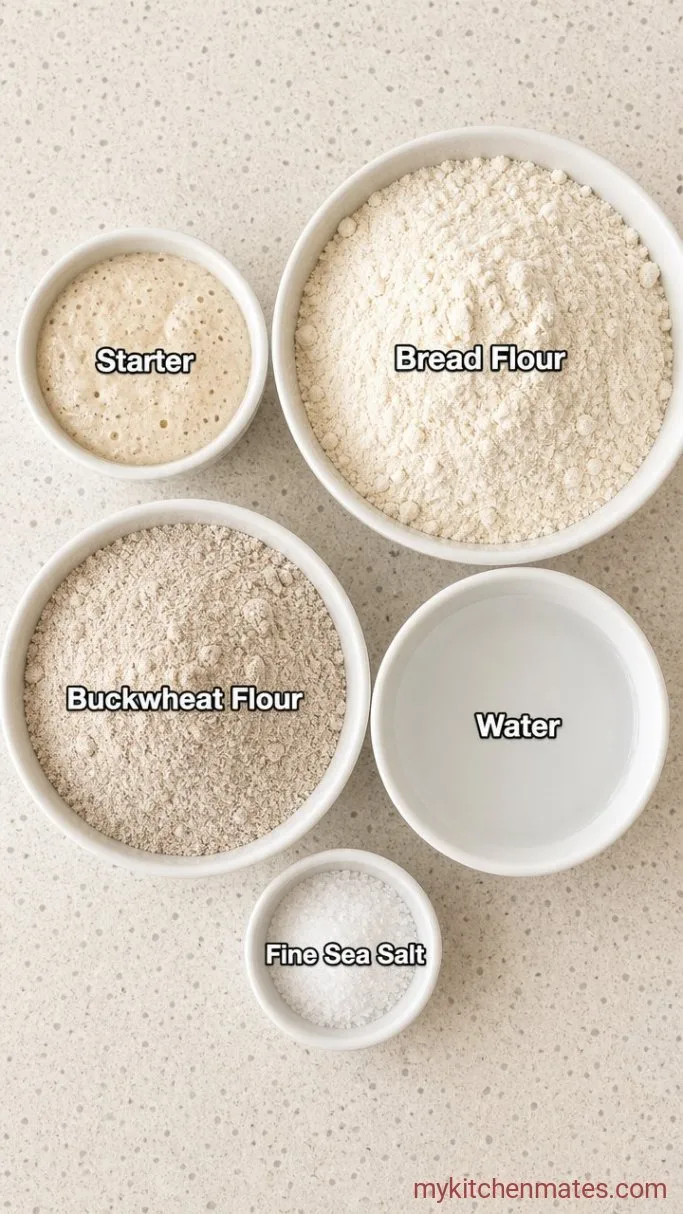
For the levain
- 100 g active sourdough starter: fed, bubbly, and at its peak — 100% hydration (equal parts flour and water by weight)
- 100 g bread flour
- 100 g room-temperature water
For the final dough
- 350 g bread flour: gives the loaf structure and an open crumb
- 100 g buckwheat flour: the star of the show, use a fine-milled one for a less gritty texture
- 300 g warm water: about 85°F (29°C), plus 30 g more for salting
- 10 g fine sea salt
- All of the levain: from above
Variations / Substitutions
- Use whole wheat: swap up to 100 g of the bread flour for whole wheat flour — it deepens the earthiness even more
- Add seeds: fold 50 g of toasted sunflower or pumpkin seeds into the dough during the last stretch-and-fold
- Try a different flour: if buckwheat feels too strong, use 100 g of rye flour for a milder nutty loaf
- Go dairy-free: this recipe is dairy-free as written
Deeply Flavorful Roasted Red Pepper and Tomato Soup is a cozy soup to serve with this bread.
How To Make Buckwheat Sourdough Bread
Step 1: Mix the Dough
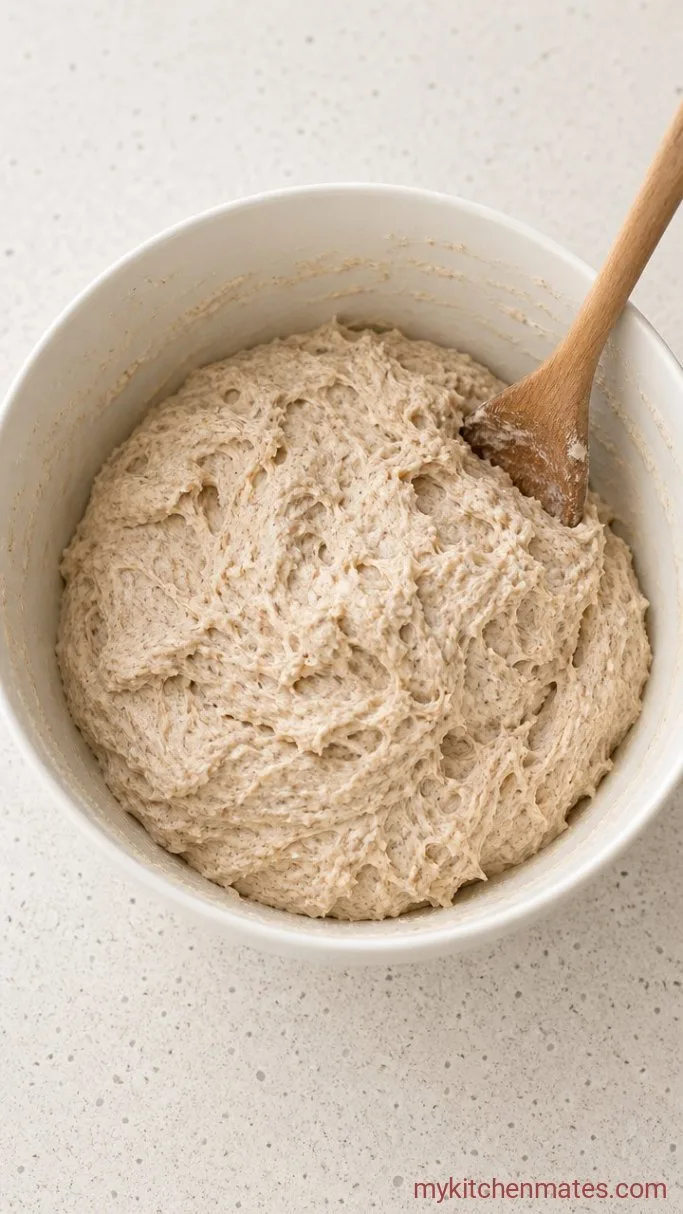
In a large bowl, combine the 350 g of bread flour, the 100 g of buckwheat flour, and the 300 g of warm water. Stir with a spoon until no dry bits remain, then cover and let the mixture rest for 30 minutes so the flours can hydrate.
After the rest, add the prepared levain and pinch it into the dough with wet hands until it feels evenly distributed. Let this sit for another 30 minutes, then sprinkle the 10 g of salt and the 30 g of reserved water on top, pinching and folding until the salt dissolves completely.
Step 2: Fold the Dough
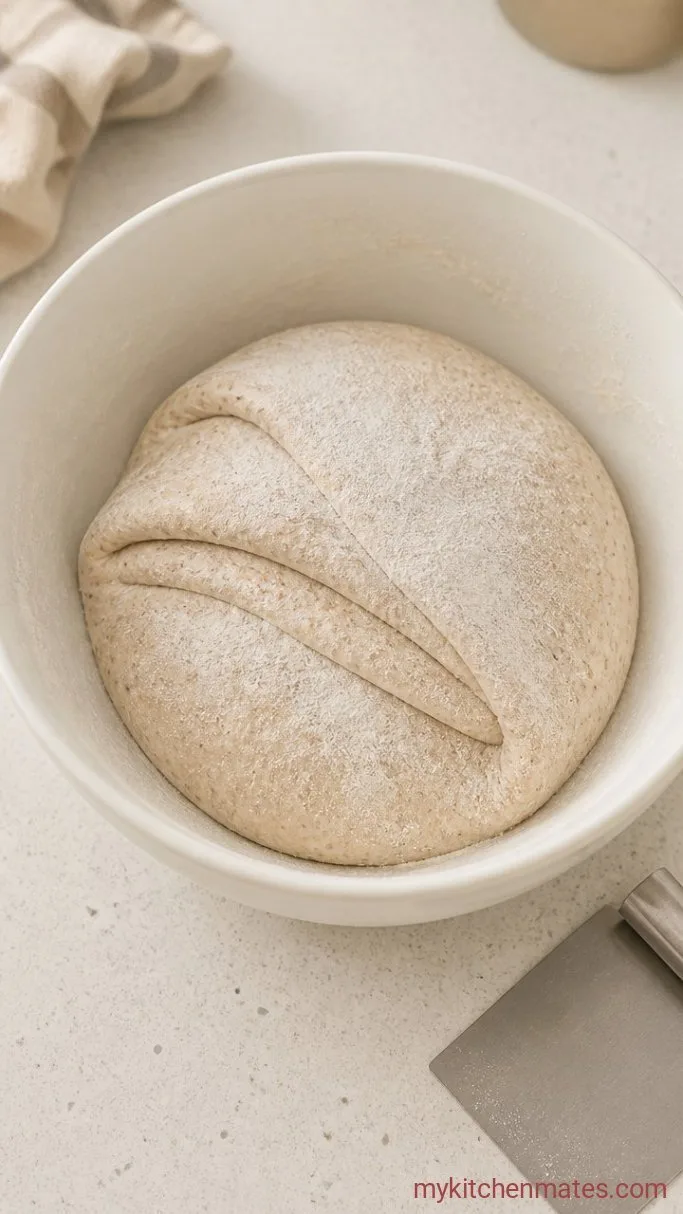
Over the next 2 hours, perform 4 sets of stretch and folds, one every 30 minutes. To do a set, grab the dough from underneath on one side, stretch it upward, and fold it over the center; rotate the bowl 90 degrees and repeat until you’ve gone all the way around.
By the last fold, the dough will feel smoother and hold its shape more easily. At this point, cover the bowl and let the dough ferment at room temperature until it has nearly doubled in volume, about 6 to 8 hours depending on your kitchen’s warmth.
Step 3: Shape the Loaf
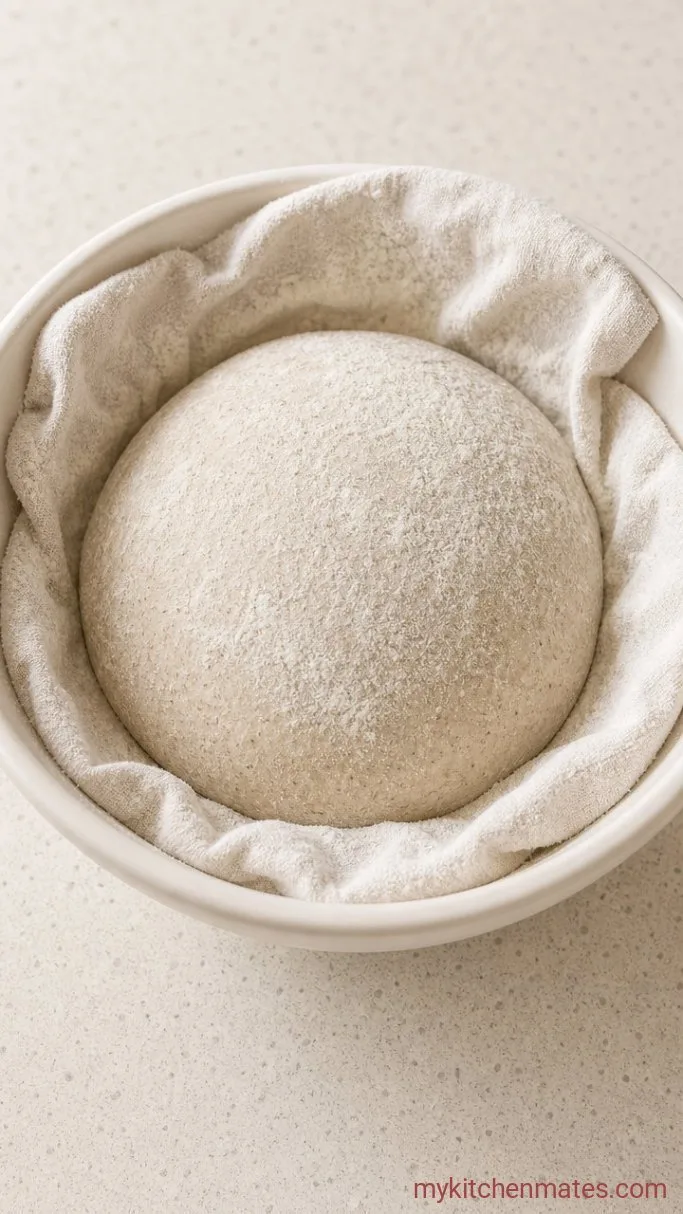
Scrape the dough onto a lightly floured surface and shape it into a loose round. Let it relax uncovered for 20 minutes, then flip it over and shape it into a tight boule or batard using a bench scraper to build tension.
Place the shaped loaf seam-side up in a floured banneton or a bowl lined with a floured tea towel. Cover and let it proof until the dough feels puffy and an indent springs back slowly when you poke it, about 2 to 3 hours at room temperature.
Step 4: Score the Loaf
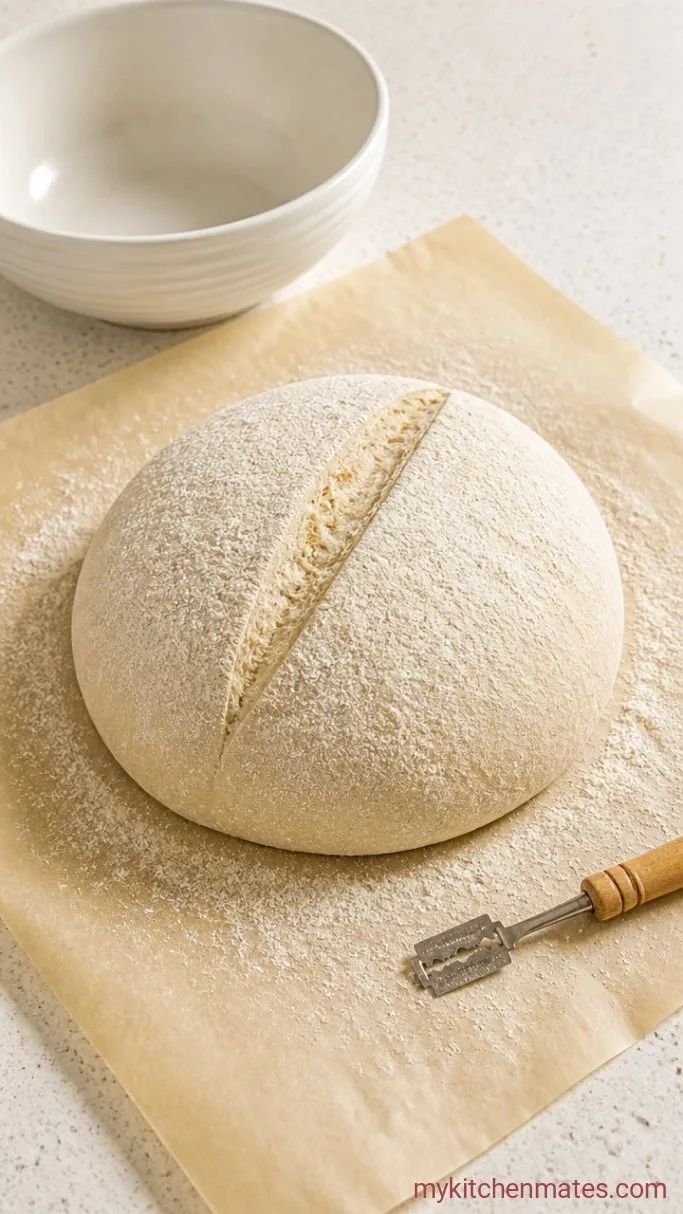
Thirty minutes before baking, set a Dutch oven with its lid inside the oven and preheat it to 475°F (245°C). When the oven is hot, turn the proofed loaf out onto a sheet of parchment paper, then use a sharp lame or razor blade to score the top with one decisive slash at a shallow angle.
Lower the dough into the hot Dutch oven using the parchment as a sling, cover it, and bake for 25 minutes. Remove the lid and continue baking for another 20 to 25 minutes, until the crust is deeply browned and the loaf sounds hollow when tapped on the bottom.
Step 5: Slice and Serve
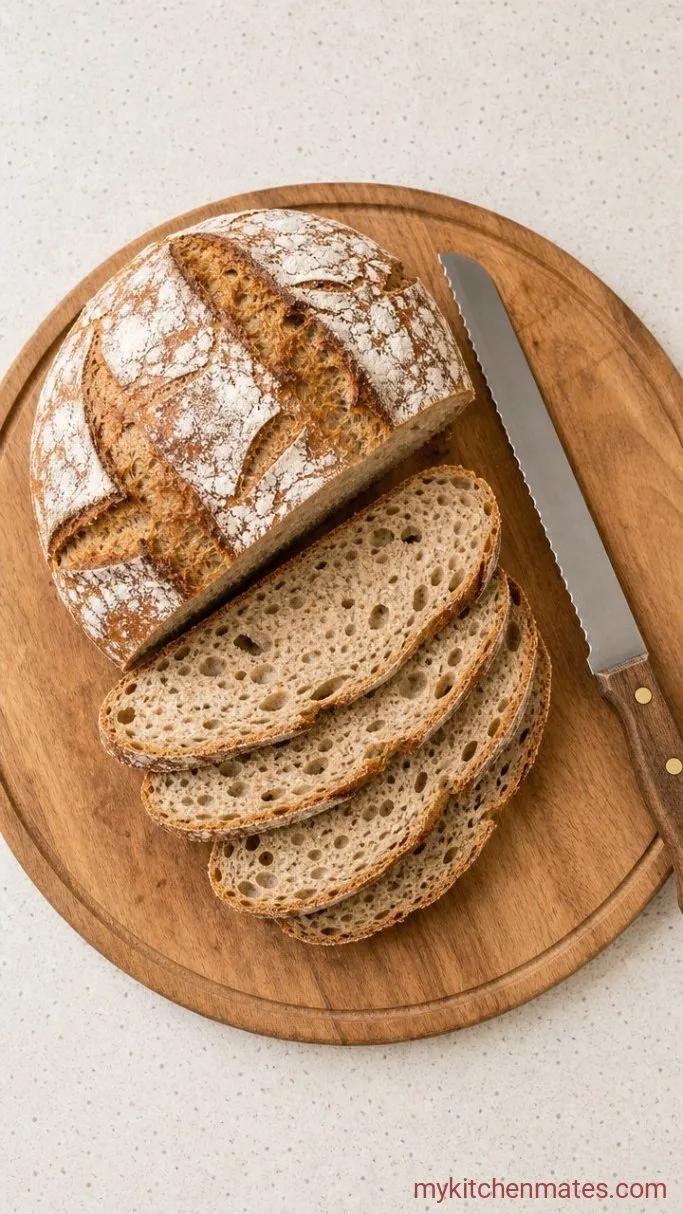
Lift the loaf out of the pot and onto a wire rack. Let it cool completely before slicing, which takes at least an hour. The crust will be bronze and crackled, and the crumb inside will have a soft, tight speckle from the buckwheat.
Once cooled, saw through it with a serrated knife and serve warm with butter, or use thick slices for toast. The earthy flavor really blooms when the bread is still slightly warm.
A Few Notes Before You Start
- Your starter must be active and at its peak: feed it 4 to 6 hours before mixing the levain so it passes the float test. A sluggish starter yields a flat, heavy loaf.
- The dough will feel stickier than white-wheat dough: buckwheat flour has no gluten. Keep your hands wet during folds instead of reaching for more flour, which can throw off the hydration.
- Use a kitchen scale: grams are the only way to get consistent results with sourdough. Volumes drift too much and will frustrate you.
- Don’t rush the cool-down: slicing into a hot loaf squishes the crumb and leaves a gummy interior. Give it that full hour.
Bake times by your setup:
| Setup | Covered bake | Uncovered bake |
|---|---|---|
| 5-quart Dutch oven, preheated | 25 mins | 20-25 mins |
| Combo cooker, preheated | 25 mins | 20-25 mins |
| Baking stone with steam pan | 20 mins with steam | 25 mins |
Storing Your Bread
- Room temperature: store the cut loaf cut-side down on a wooden board or in a bread bag for 3 days. The crust will soften slightly but it toasts back to life.
- Freezer: slice the whole loaf, then freeze the slices in a zip-top bag for up to 3 months. Pop them straight into the toaster when you want a slice.
- Reheating a whole loaf: spritz the crust with water, then warm it in a 350°F (175°C) oven for 10 minutes to wake up the crust.
What To Serve With This Bread
A thick slab of this buckwheat sourdough handles hearty toppings without falling apart. I like it with smashed avocado, a heavy pinch of flaky salt, and a squeeze of lemon. The bread’s nuttiness also cuts through the richness of a creamy tomato soup or a bowl of spiced lentil stew without disappearing.
If you want a quick snack, spread it with salted butter and a drizzle of honey. The slight sweetness pulls out the buckwheat’s natural caramel notes.
Frequently Asked Questions
Can I make a 100% buckwheat sourdough bread?
No, pure buckwheat flour has zero gluten and won’t trap gas during fermentation. You’ll get a dense, crumbly brick instead of a risen loaf.
How do I know when the dough is ready to bake after proofing?
Press your finger lightly into the dough. If the indent fills back slowly and leaves a faint mark, it’s ready. If it springs back instantly, give it more time.
My loaf spread out in the oven and didn’t rise much, what went wrong?
Usually that means the dough was over-proofed or the shaping didn’t build enough tension. Next time, proof for a shorter window or check the dough’s poke test after 1.5 hours.
Can I skip the Dutch oven?
Yes, but you’ll need to create steam another way. Place a shallow metal pan on the oven floor while preheating, then pour boiling water into it right after sliding the bread onto a baking stone. Bake with steam for the first 20 minutes, then remove the pan for the remaining time.
Buckwheat Sourdough Bread Recipe
Ingredients
Method
- Mix 100 g starter, 100 g bread flour, and 100 g water for the levain; let it sit until bubbly.
- Combine 350 g bread flour, 100 g buckwheat flour, and 300 g water; rest 30 min.
- Pinch the levain into the dough; rest 30 min more, then fold in 10 g salt and 30 g water.
- Stretch and fold every 30 min for 2 hours, then let bulk ferment until nearly doubled, 6–8 hours.
- Shape, rest 20 min, final shape, and proof in a banneton until puffy, 2–3 hours.
- Score the loaf and bake in a preheated 475°F (245°C) Dutch oven for 25 min covered, then 20–25 min uncovered.
- Cool on a rack at least 1 hour before slicing.
Notes
