
Braised Bone-In Beef Short Ribs

These short ribs braise low and slow in red grape juice until the meat practically falls apart. It’s the kind of Sunday supper that fills the kitchen with a deep, savory smell for hours, then lands on the table looking like a restaurant dish with very little fuss.
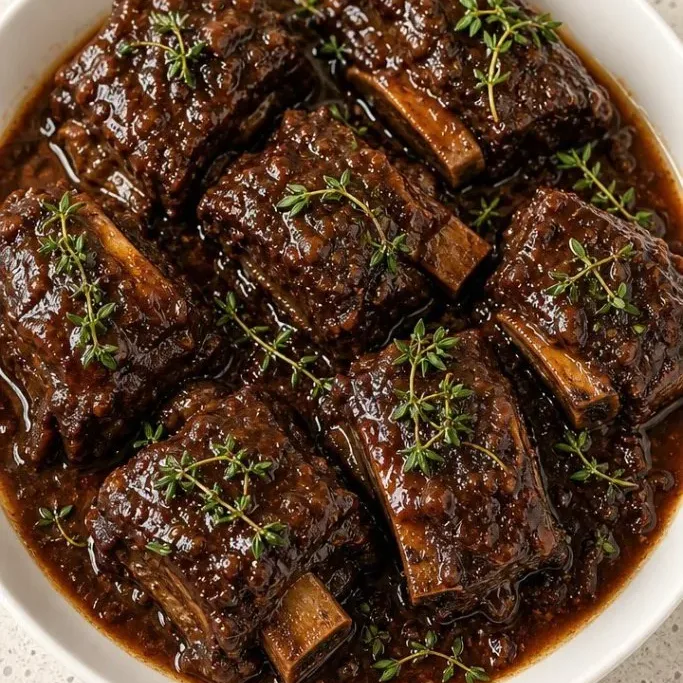
When you lift the lid after three hours, the bones will wiggle loose and a glossy sauce will be waiting at the bottom of the pot. Nothing else in the recipe is hard; patience does all the work.
Why These Short Ribs Are Worth the Wait
I keep coming back to this method because it gives you two things at once: spoon-tender beef and a sauce that tastes like it simmered all day. There is no last-minute butter mount or stock reduction; the braising liquid thickens on its own into something sticky and rich.
The flour you dust on the ribs before searing does double duty. It helps build a deep brown crust and it ever so gently thickens the sauce while the ribs cook, so you never have to mess with a roux later. That little trick turns a few pantry ingredients into a company-worthy plate of food.
Bone-in short ribs bring more richness than the boneless cut. The marrow and connective tissue melt into the sauce, leaving behind a silky texture you just cannot fake. It tastes beefy, and exactly like what you want on a cold night.
Ingredients
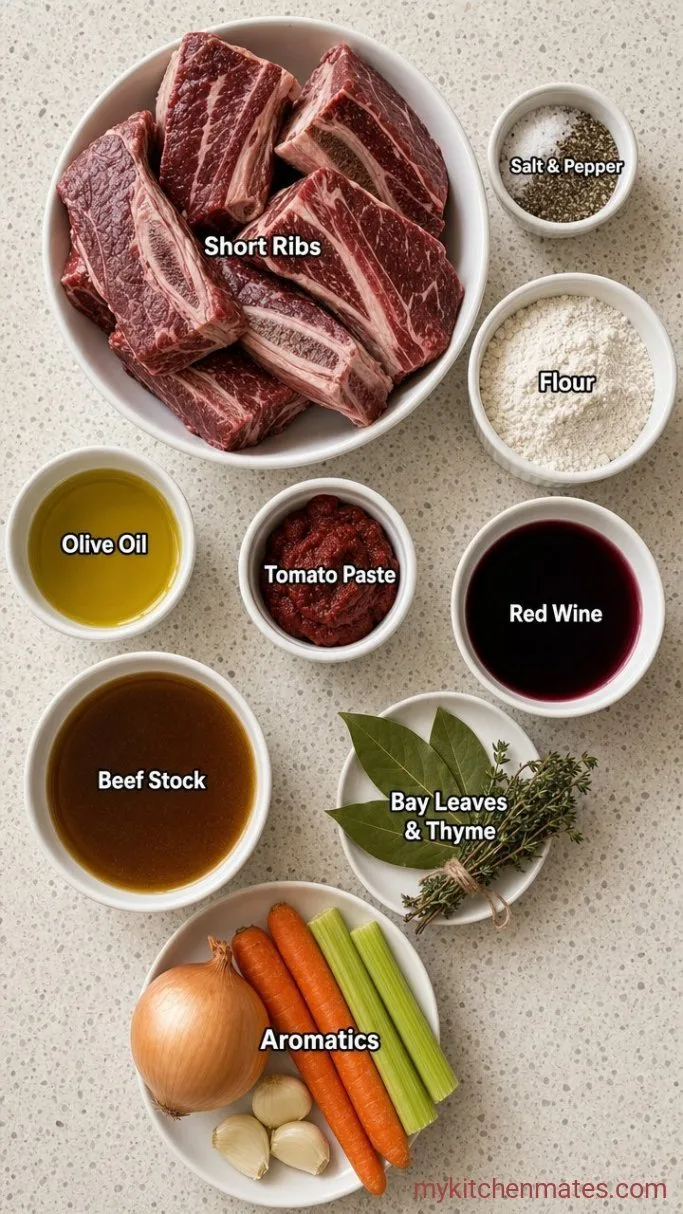
- 4 lbs bone-in beef short ribs (about 8 pieces): look for well-marbled ribs that are 2 to 3 inches thick
- 2 tsp kosher salt: plus more to taste at the end
- 1 tsp fresh black pepper
- ⅓ cup all-purpose flour: for dusting
- 2 tbsp olive oil: or another high-heat oil
- 1 large yellow onion, diced
- 2 medium carrots, diced
- 2 celery stalks, diced
- 4 garlic cloves, smashed
- 2 tbsp tomato paste
- 1 ½ cups dry red grape juice: something you would drink, like Cabernet or Merlot
- 2 cups beef stock: low-sodium gives you the most control
- 2 bay leaves
- 4 sprigs fresh thyme: tied together with kitchen twine, plus extra for serving
Variations / Substitutions
- Boneless short ribs: use the same weight and reduce the braising time by about 30 minutes, checking for tenderness early.
- Herb swap: a sprig of rosemary can stand in for the thyme bundle; remove it before serving so the flavor stays gentle.
- Slow cooker: after step 3, transfer everything to a slow cooker and cook on low for 6 to 8 hours, then finish the sauce on the stovetop as written.
- Dairy-free: the recipe is naturally dairy-free; just stick with a neutral oil for searing.
Beef Mac and Cheese goes great on the side with these ribs.
How to Make Red Grape Juice Braised Bone-In Beef Short Ribs
Step 1: Season and Sear the Short Ribs
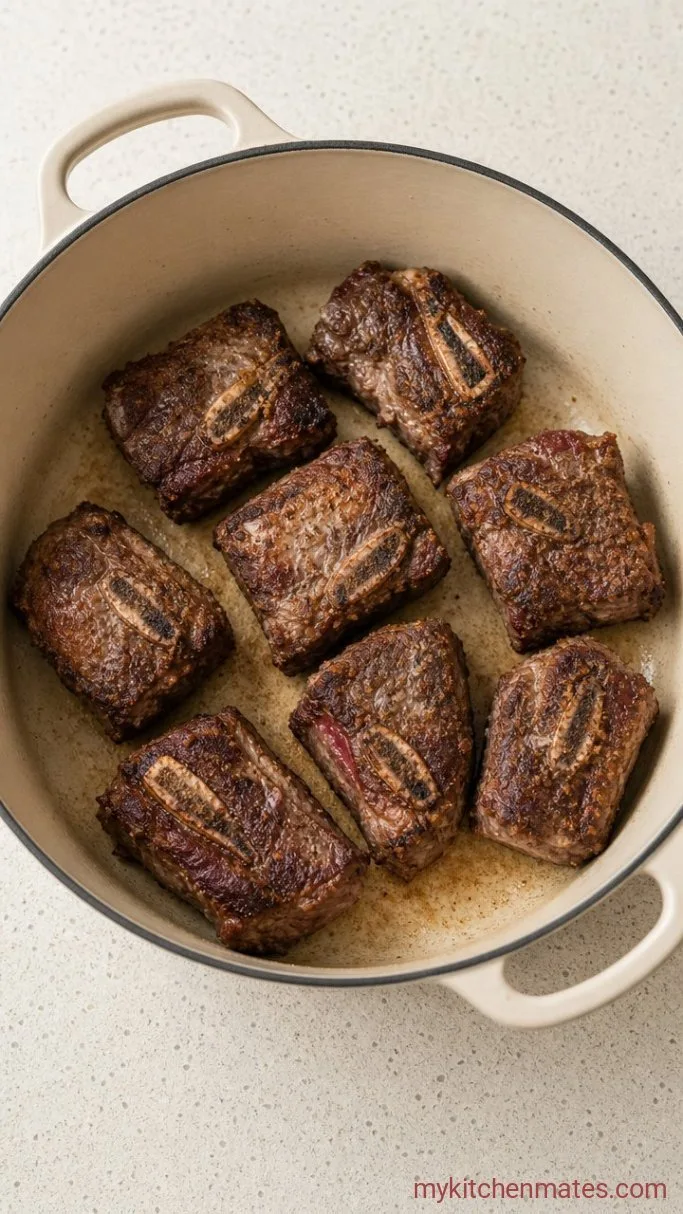
Heat the oven to 325°F (160°C) and set a rack in the lower third. Pat the short ribs completely dry with paper towels, then season all over with the 2 tsp salt and 1 tsp pepper. Spread the ⅓ cup flour on a plate and lightly dredge each rib, shaking off the excess.
Warm the 2 tbsp olive oil in a large Dutch oven over medium-high heat. Working in two batches so the pan stays hot, sear the ribs until a deep brown crust forms, about 4 minutes per side. Transfer the browned ribs to a plate and set them aside.
You are looking for a color that goes past golden into mahogany. That browning is where the sauce gets its backbone, so let the ribs sit without moving them until they release on their own. If the flour in the pot starts to burn between batches, wipe it out, add a fresh drizzle of oil, and keep going.
Step 2: Sauté the Aromatics
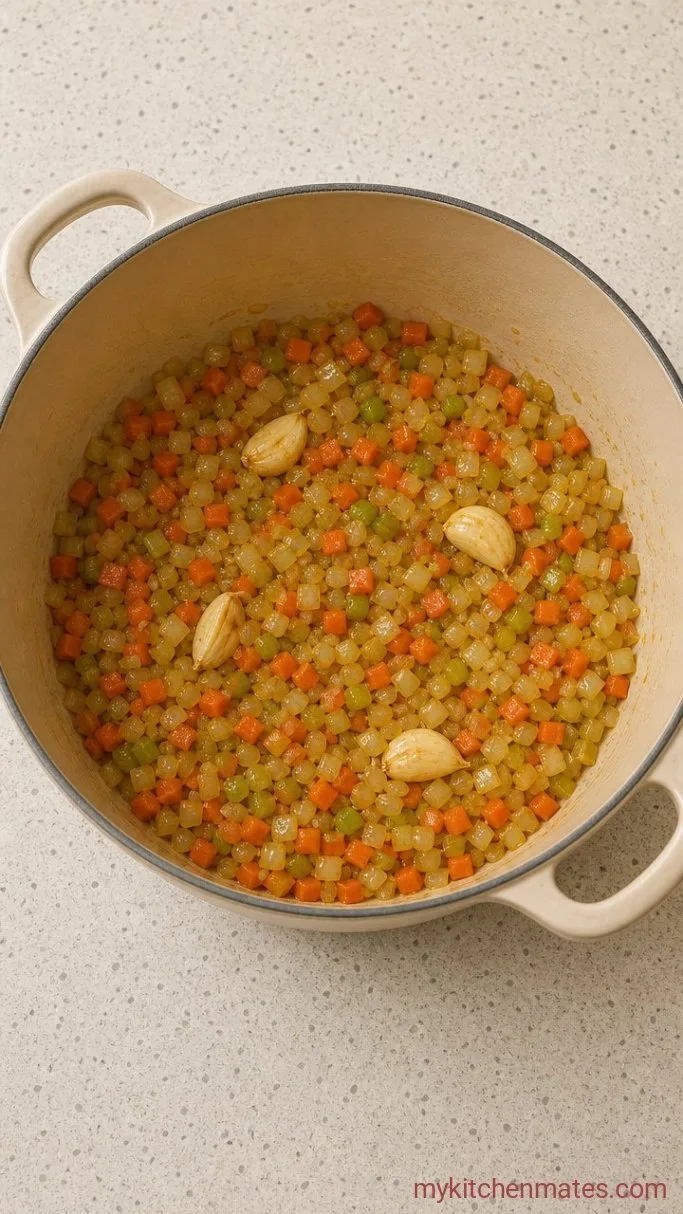
Lower the heat to medium and drop the diced onion, carrots, celery, and smashed garlic into the pot. Stir often and cook until the vegetables soften and the onion turns translucent, about 5 minutes. Add the 2 tbsp tomato paste and stir it into the vegetables, letting it darken slightly and smell sweet, about 1 minute.
The bottom of the pot will look a little dry and sticky at this point. That is exactly what you want; those browned bits will lift off the moment you add the juice.
Step 3: Deglaze with Juice and Build the Braising Liquid
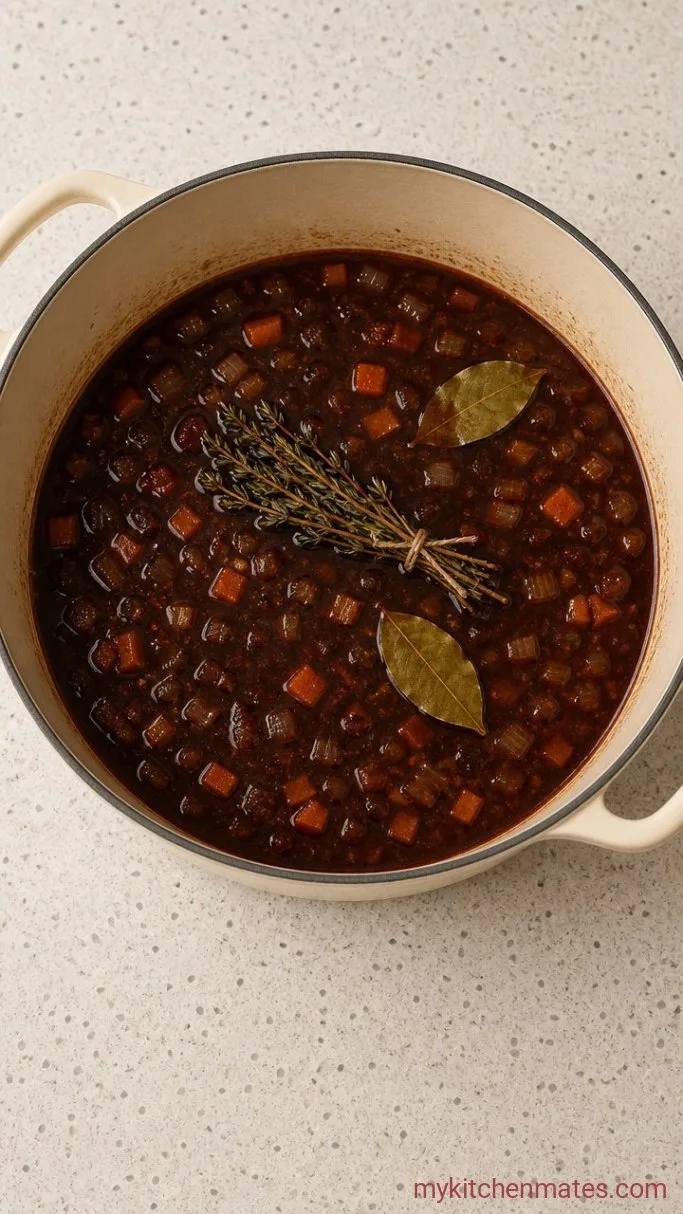
Pour in the 1 ½ cups red grape juice, scraping the bottom of the pot with a wooden spoon to release every stuck bit. Let the juice bubble and reduce until it has thickened slightly and the raw alcohol smell is gone, about 5 minutes.
Add the 2 cups beef stock, the bay leaves, and the tied thyme bundle. Nestle the short ribs back into the pot in a single layer, bone side up. The liquid should reach about halfway up the sides of the meat; add a splash more stock if it looks low.
This is the moment the kitchen starts to smell incredible. The juice and stock mingle into a deep, savory base that will slowly transform the ribs into something spoonable.
Step 4: Braise the Short Ribs Low and Slow
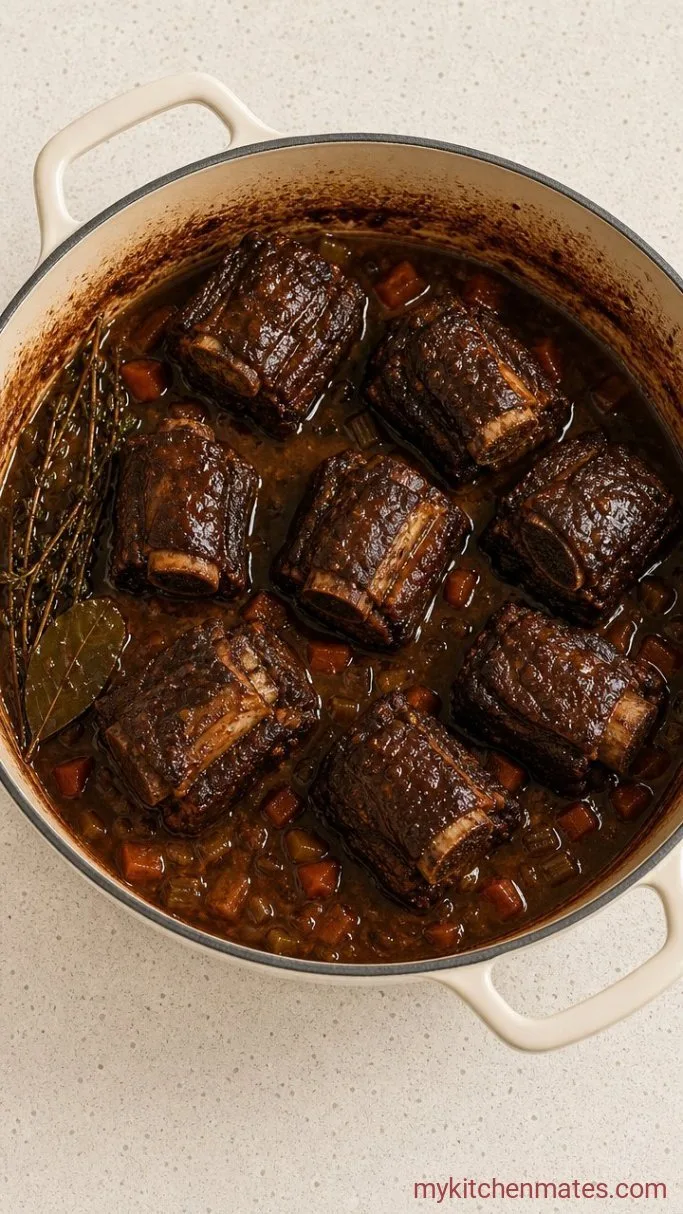
Clamp the lid on the pot and slide it into the oven. Braise until a fork slips through the meat with zero resistance and the bones feel loose, about 2 ½ to 3 hours. Check once halfway through and turn the ribs gently so they cook evenly.
The meat will pull away from the bones a little and the sauce will have darkened. If you test a rib at 2 ½ hours and it still feels tight, give it another 30 minutes. Short ribs are forgiving; they only get better with time.
Step 5: Ladle and Serve the Short Ribs
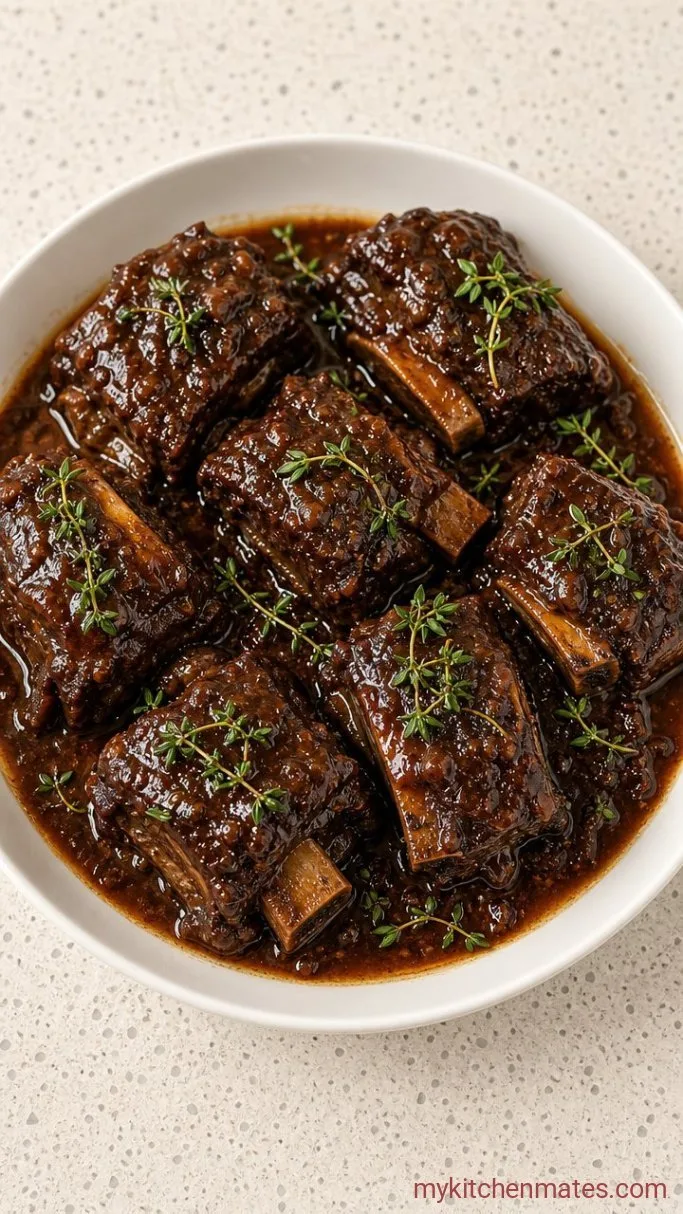
Lift the ribs out of the pot with a slotted spoon and set them on a warm platter, tented loosely with foil. Tip the Dutch oven slightly and spoon off the excess fat that pools on the surface. Place the pot on the stovetop over medium-high heat and simmer the sauce until it coats the back of a spoon, about 10 to 15 minutes. Fish out the bay leaves and thyme bundle, then taste and adjust the salt.
Nestle the short ribs back into the glossy sauce or arrange them on a bed of creamy polenta or mashed potatoes. Spoon the sauce right over the top and finish with a few fresh thyme leaves.
Tips for the Best Braised Short Ribs
- Pick thick, well-marbled ribs: look for pieces that are at least 2 inches thick with white ribbons of fat running through the meat; lean ribs will turn out dry no matter how long they braise.
- Sear in batches with space: crowding the pot drops the temperature and steams the meat instead of browning it. Give each rib a little room and they will reward you with a much darker crust.
- Skim the fat after braising: the easiest way is to tilt the pot and use a wide spoon. Press the back of the spoon against the surface to catch the clear fat while leaving the rich sauce behind.
- Make it a day ahead: the flavor deepens overnight. Refrigerate the whole pot, lift off the solidified fat the next day, then reheat gently on the stove. The ribs reabsorb the sauce and turn even more tender.
For melt-in-your-mouth results, braise low and slow. Here’s a guide for different oven temperatures:
| Oven Temp | Approx. Braise Time |
|---|---|
| 300°F (150°C) | 3 ½ to 4 hours |
| 325°F (160°C) | 2 ½ to 3 hours |
| 350°F (175°C) | 2 to 2 ½ hours |
Storing and Reheating Leftovers
- Refrigerate: store the short ribs and sauce together in an airtight container for up to 4 days. The fat will rise and solidify, making it easy to remove before reheating.
- Reheating: warm the ribs and sauce gently in a covered pot over low heat, turning the meat once, until heated through. The microwave works in a pinch but the stovetop keeps the sauce smooth.
What to Serve with red Grape Juice Braised Short Ribs
A pile of buttery mashed potatoes catches the sauce better than anything else. Creamy polenta with a little parmesan stirred in works the same magic and feels a little more rustic. If you want something lighter, roasted carrots and parsnips roasted alongside toward the end of the braise soak up the same flavors.
Frequently Asked Questions
Can I use boneless short ribs instead?
Yes, boneless short ribs work with the same method. They cook a bit faster, so start checking for tenderness after about 2 hours.
How do I thicken the sauce if it is still too thin after reducing?
Keep simmering it on the stovetop until it reaches the right consistency. If it still will not thicken, stir a cornstarch slurry (1 tsp cornstarch mixed with 1 tbsp cold water) into the bubbling sauce and cook for 1 minute.
What if I do not have red grape juice?
Replace the juice with an equal amount of low-sodium beef stock plus 2 tbsp balsamic vinegar. The sauce will still have a deep, savory flavor.
Can I skip the flour step?
You can, but the sauce will be thinner and the ribs will not develop as deep a crust. If you skip the flour, you may want to thicken the sauce with a little cornstarch at the end.
Red Wine Braised Bone-In Beef Short Ribs Recipe
Ingredients
Method
- Heat oven to 325°F (160°C). Pat ribs dry, season with salt and pepper, then dredge in flour. Sear in hot oil in batches until deep brown, about 4 minutes per side. Remove to a plate.
- Lower heat, sauté onion, carrot, celery, and garlic until softened, about 5 minutes. Stir in tomato paste and cook 1 minute.
- Pour in red wine, scrape the pot, and simmer until reduced by half, about 5 minutes. Add stock, bay leaves, and thyme; nestle ribs back in.
- Cover and braise in the oven until fork-tender, 2 ½ to 3 hours.
- Remove ribs and keep warm. Skim fat from sauce, then simmer on the stove until thickened, 10 to 15 minutes. Ladle sauce over the ribs and serve.
Notes
