
Blueberry Cream Cheese Sourdough Bread

This Blueberry Cream Cheese Sourdough Bread is a soft, pull-apart loaf with ribbons of sweet cream cheese and pockets of juicy blueberries. It’s the kind of bread that turns a regular morning into something you actually look forward to.

With a little planning, you can have fresh-baked bread on a weeknight. The dough is forgiving, the swirl is stunning, and the smell alone is worth the effort.
Why This Bread Earns a Spot on the Counter
The crumb is tender and slightly buttery, like a soft brioche, but that sourdough tang keeps it from being too sweet. The cream cheese filling bakes into creamy pockets that look as good as they taste.
It works for breakfast with a smear of butter, as an afternoon snack, or dressed up with a quick lemon glaze for dessert. Once you bake one, it’s likely to become a weekend habit.
Ingredients

- 1/2 cup (120 g) active sourdough starter: bubbly and recently fed
- 3 cups (375 g) all-purpose flour: plus more for dusting
- 1/4 cup (50 g) granulated sugar
- 1 large egg: at room temperature
- 1/2 cup (120 ml) whole milk: warmed to about 100°F
- 4 tbsp (56 g) unsalted butter: melted and cooled slightly
- 1 tsp fine sea salt
- 1 cup (150 g) fresh or frozen blueberries: if using frozen, do not thaw
- 6 oz (170 g) cream cheese: softened
- 2 tbsp (25 g) sugar (for the filling)
- 1 tsp vanilla extract
- 1 tsp lemon zest: (optional)
Variations / Substitutions
- Swap the blueberries: Raspberries, blackberries, or chopped strawberries work just as well, and you can use the same amount.
- Swap the cream cheese: Mascarpone gives a richer, less tangy swirl.
- Dairy-free option: Use a plant-based cream cheese, butter, and almond milk. The loaf will be slightly less rich.
- Add more lemon: A teaspoon of lemon zest in the filling brightens the whole loaf and pairs beautifully with the berries.
Soft and Chewy Peanut Butter Cookies are a sweet treat to enjoy alongside this bread.
How to Make Blueberry Cream Cheese Sourdough Bread
Step 1: Mix the Dough
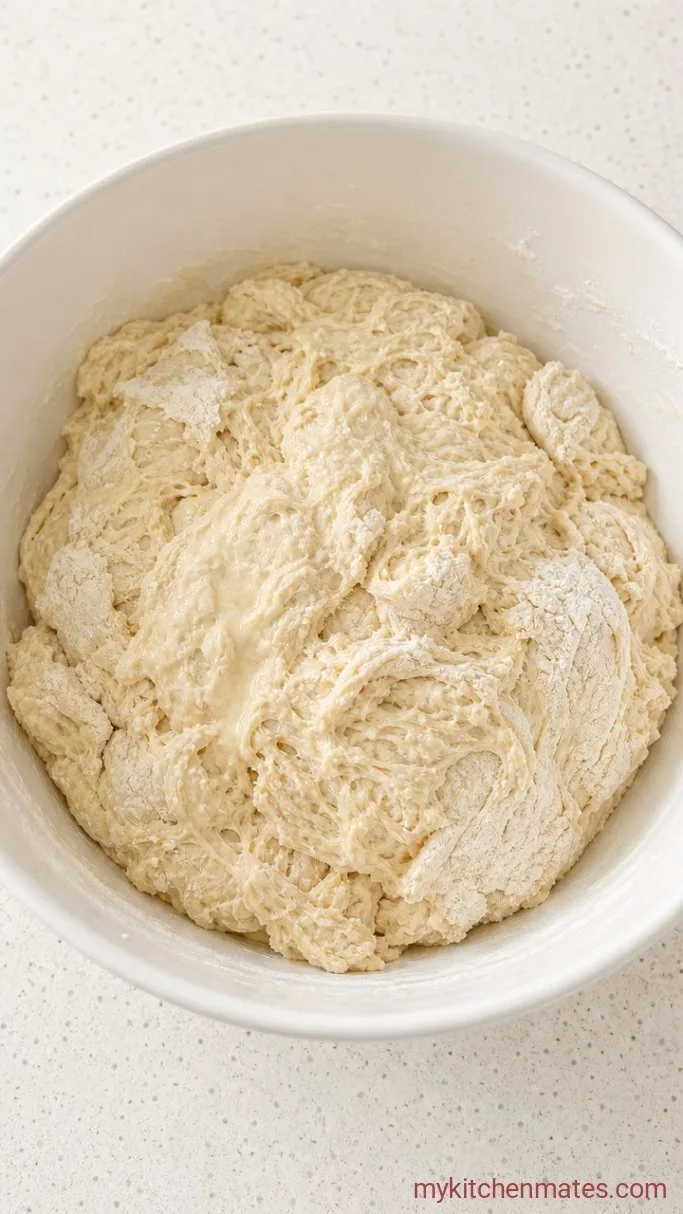
In a large bowl, whisk the 1/2 cup active starter, 1/4 cup sugar, egg, warm milk, and melted butter until smooth. Add the 3 cups flour and salt, and mix with a wooden spoon until a shaggy dough forms. Let it rest, covered, for 30 minutes.
The dough will be sticky and a little rough at first, but that rest helps the flour hydrate so it becomes easier to handle.
Use a stand mixer with a dough hook if you prefer, but mixing by hand works just as well and keeps you in touch with how the dough feels.
Step 2: Stretch and Fold the Dough

After the rest, keep the dough in the bowl and perform your first set of stretches and folds. Grab one edge of the dough, stretch it upward until you feel resistance, then fold it over the center. Rotate the bowl a quarter turn and repeat until you’ve done four folds. Cover and rest 30 minutes, then repeat the stretch-and-fold process two more times at 30 minute intervals. That’s three sets total over 90 minutes.
By the last fold, the dough will look smoother and feel more elastic, and you’ll start to see some bubbles forming on the surface.
Don’t skip this step. It builds gluten without heavy kneading and gives the loaf that soft, shreddy texture.
Step 3: Make the Cream Cheese Swirl

While the dough does its last fold, beat the 6 oz cream cheese, 2 tbsp sugar, vanilla, and lemon zest together until it’s smooth and spreadable. Set it aside near your work surface. If your blueberries are frozen, toss them in a tablespoon of flour to keep them from bleeding too much.
The filling should be soft enough to spread easily. If your cream cheese is still cold, microwave it for 10 seconds to loosen it up.
You can also swirl in a little lemon curd or orange marmalade along with the cream cheese for an extra layer of flavor.
Step 4: Roll and Fill the Loaf

Butter a 9×5-inch loaf pan or line it with parchment paper. Lightly flour your counter and turn the dough out onto it. Gently press or roll the dough into a rectangle roughly 12 by 8 inches. Spread the cream cheese mixture evenly over the surface, leaving a 1-inch border on all sides. Scatter the blueberries over the cream cheese. Starting from one of the shorter ends, roll the dough up tightly like a jelly roll, then pinch the seam and ends to seal. Place the log seam-side down into your prepared pan.
The dough will be soft and might get a bit messy from the blueberries, but that’s expected. Use a bench scraper to help lift it if needed.
Tight rolling helps the swirl stay defined and prevents large air pockets. Don’t press the blueberries too hard; they’ll burst a bit no matter what, and the juices make the bread even better.
Step 5: Proof the Loaf
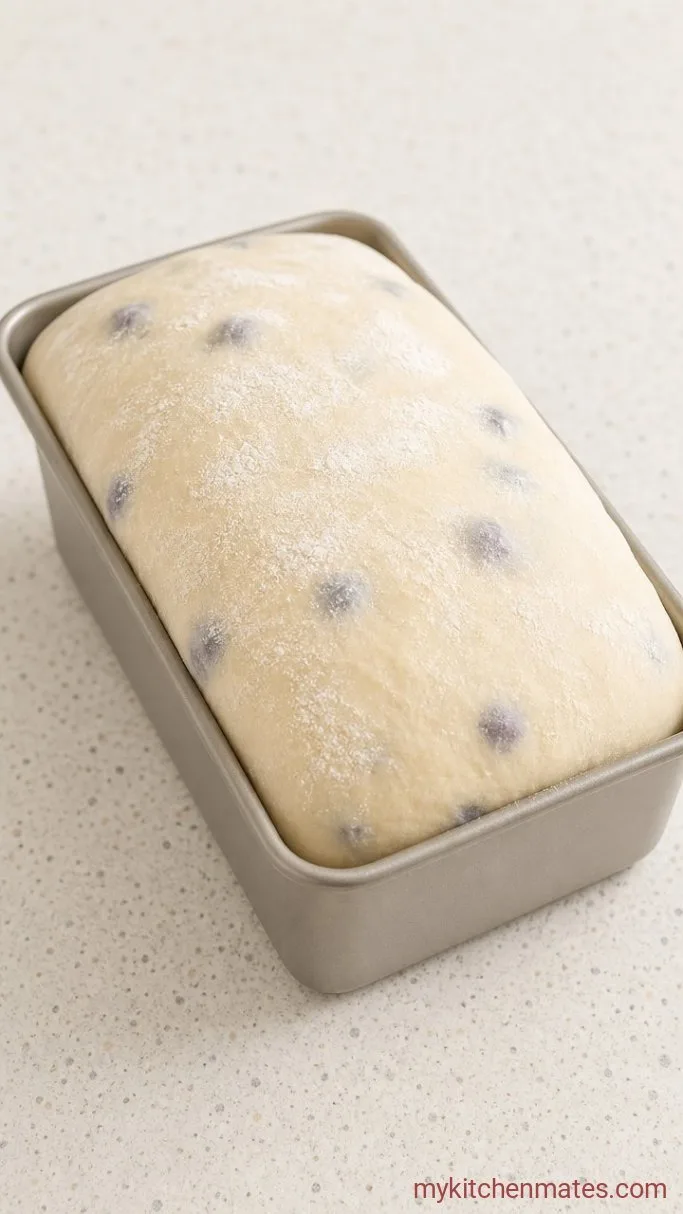
Cover the pan loosely with plastic wrap or a damp towel and let the loaf rise in a warm spot until it’s puffy and crests just above the rim of the pan. This can take anywhere from 2 to 4 hours depending on your kitchen temperature.
Look for a jiggly top and visible air bubbles under the surface. If your kitchen is on the cooler side, turn on the oven light and set the pan inside with the door cracked. That little bit of warmth speeds things up without overheating.
The proof is the most common place where sourdough newbies get tripped up. A quick test: gently press the dough with a floured finger. If the indentation springs back slowly but stays visible, it’s ready to bake. If it springs back fast, give it more time.
Step 6: Bake and Slice the Loaf

Preheat your oven to 375°F (190°C) when the loaf is nearly done proofing. Bake the bread for about 45 minutes, until the top is deep golden brown and the internal temperature reads 200 to 205°F (93 to 96°C). Let the loaf cool in the pan for 10 minutes, then turn it out onto a rack to cool for at least 30 minutes before slicing.
The kitchen will smell like a bakery, and the loaf will have a crackly top with swirls of purple and white peeking through. Slicing while still warm is tempting, and honestly, I never wait all the way. A warm slice with butter is perfect.
If the top is browning too fast, tent it loosely with foil after 30 minutes. Don’t skip the cooling time; the cream cheese filling needs a moment to set up so it doesn’t ooze out entirely.
A Few Tips for a Loaf That Gets Requested on Repeat
- Weigh your flour instead of scooping. Even a little extra flour can make the bread dense and dry, so a scale takes the guesswork out.
- For the neatest swirl, pop the filled loaf pan into the fridge for 20 minutes before it proofs. That firms up the cream cheese and keeps the layers distinct.
- Oven dials lie more than you think. An oven thermometer costs a few dollars and makes sure your bread bakes evenly at the right temp.
Proofing times for different room temperatures:
| Room Temperature | Approximate Proof Time |
|---|---|
| 68°F (20°C) | 3.5 to 4 hours |
| 72°F (22°C) | 2.5 to 3 hours |
| 78°F (26°C) | 2 to 2.5 hours |
| 82°F (28°C) | 1.5 to 2 hours |
Storing Leftover Sourdough Loaf
- Refrigerate: Wrap tightly in plastic or foil, and store at room temp for up to 2 days. After that, move it to the fridge for up to a week. The bread dries out a bit in the fridge, so toast it before serving.
- Reheating: A few minutes in a 350°F oven revives the crust. For individual slices, a toaster or toaster oven works fast.
- Serve cold: The cream cheese swirl tastes surprisingly good straight from the fridge, especially for a fast morning bite.
Frequently Asked Questions
My cream cheese filling leaked out the sides. What went wrong?
Leaving a clean border and pinching the seam tightly before placing it in the pan helps. If your kitchen is very warm, chill the filled loaf for 20 minutes before baking.
Can I use a stand mixer instead of doing stretch and folds?
Yes, you can knead the dough in a stand mixer for about 8 minutes on medium speed until it’s smooth and passes the windowpane test, but the stretch-and-fold method builds gluten gently and gives the loaf a more open crumb.
My starter didn’t double; can I still bake the bread?
A slow starter will still work, but expect a longer proof. If you’re in a hurry, add 1 teaspoon of instant yeast to the dough, though the tang will be less pronounced.
Why is my loaf dense and chewy instead of soft?
It likely didn’t proof long enough or your starter wasn’t active enough. Make sure your starter passes the float test before you use it, and proof until the loaf looks puffy and airy.
Blueberry Cream Cheese Sourdough Bread Recipe
Ingredients
Method
- In a large bowl, whisk the starter, sugar, egg, warm milk, and melted butter until smooth. Add flour and salt, mix into a shaggy dough, cover, and rest 30 minutes.
- Perform a set of stretch-and-folds: pull one edge up and fold over the center, rotate, repeat for four folds. Cover and repeat two more sets 30 minutes apart, for a total of three sets over 90 minutes.
- Beat cream cheese, 2 tbsp sugar, vanilla, and lemon zest until smooth. If using frozen blueberries, toss with a bit of flour.
- Butter a 9×5-inch loaf pan. Roll dough into a 12×8-inch rectangle. Spread cream cheese mixture leaving a border, scatter blueberries, roll up tightly, seal, and place seam-side down in pan.
- Cover and let rise in a warm spot until puffy and just above the rim, 2 to 4 hours depending on temperature. Dough should pass the poke test.
- Preheat oven to 375°F (190°C). Bake for 45 minutes until golden and internal temp reads 200–205°F (93–96°C). Cool in pan 10 minutes, then turn out onto a rack. Slice and serve warm.
Notes
