
Hearty Beef Stew with Fluffy Dumplings

A proper beef stew with dumplings feels like a reward for getting through the week. It fills the kitchen with that deep, savory smell, and the dumplings puff up soft and light right on top of the bubbling stew.
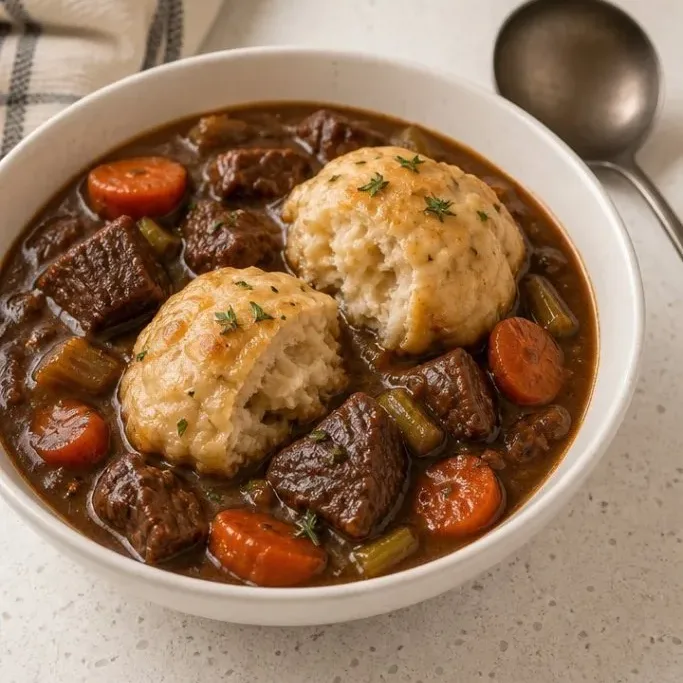
You do not need any special skills for this one, just a heavy pot and a little patience. The meat turns fork-tender, the broth gets rich from all those browned bits, and the dumplings cook through from the steam while you keep the lid on.
What Makes This Stew So Good
The broth gets its body from the fond left in the pan after browning the beef, not from a thickener packet. That dark, sticky layer dissolves into the liquid and builds a richness you can taste in every spoonful.
The dumplings are simple drop dumplings, stirred together in a bowl while the stew simmers. They cook on the surface of the stew, soaking up flavor from the steam and staying tender inside. No rolling, no fuss.
If you have never made dumplings before, this is a forgiving place to start. The dough comes together fast, and the stew itself is sturdy enough that a slightly off dumpling will still taste good.
Ingredients
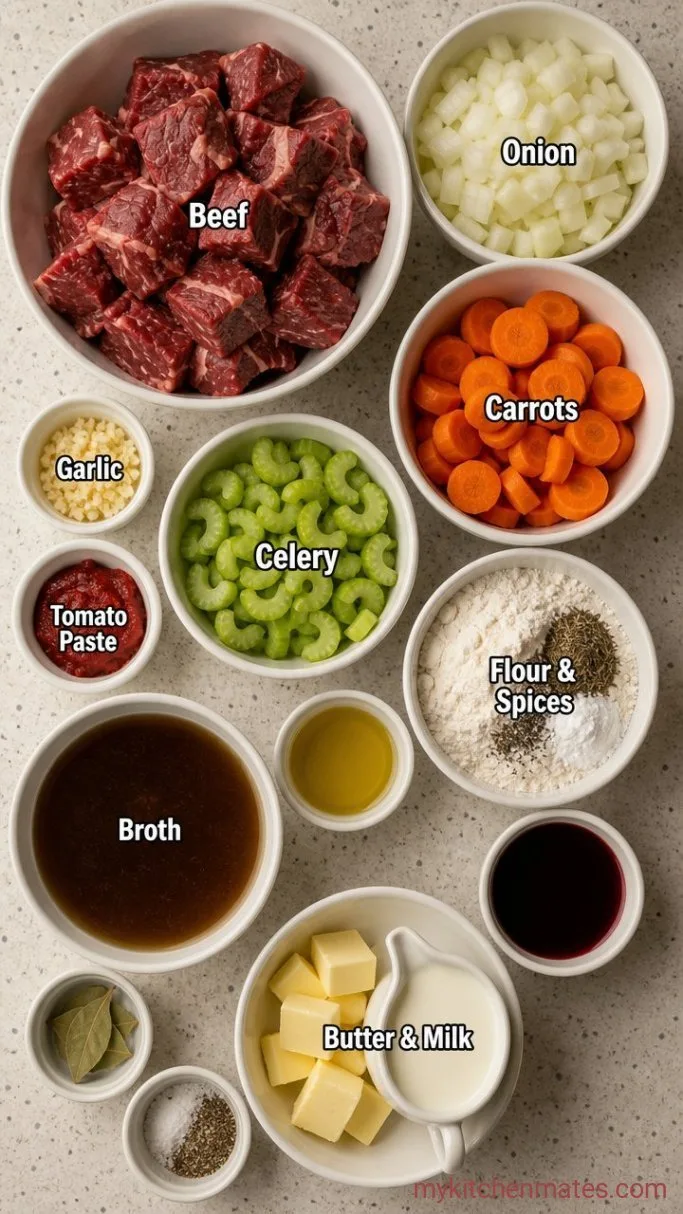
For the stew:
- 2 lbs beef chuck, cut into 1-inch cubes: look for good marbling, which keeps the meat moist during the long simmer.
- 2 tbsp vegetable oil, divided: for browning the beef in batches.
- 1 large onion, chopped: yellow or white both work.
- 3 medium carrots, sliced into ½-inch rounds: cut them thick so they hold their shape.
- 2 celery stalks, sliced: adds a gentle peppery backbone.
- 3 garlic cloves, minced: fresh garlic gives better depth than jarred.
- 2 tbsp tomato paste: browns in the pan to deepen the color and flavor.
- ¼ cup all-purpose flour: tossed with the beef after browning to help thicken the stew.
- 4 cups beef broth: use a good low-sodium one so you control the salt.
- 1 cup red grape juice: optional, but adds a lot of richness. Replace with more broth if skipping.
- 2 bay leaves: remove before adding the dumplings.
- 1 tsp dried thyme: or 1 tbsp fresh thyme leaves.
- Salt and black pepper: season in layers as you go.
For the dumplings:
- 1 cup all-purpose flour: spooned and leveled, not scooped.
- 1½ tsp baking powder: gives the dumplings their lift.
- ½ tsp salt:
- 2 tbsp cold butter, cut into small pieces: worked into the flour for tenderness.
- ½ cup whole milk: the fat helps keep the dumplings tender.
Variations and Substitutions
- Swap the beef: lamb shoulder or venison stew meat works the same way, just keep the cubes uniform. The flavor will be a little gamier and earthier.
- Add root vegetables: parsnips or turnips cut into chunks can go in with the carrots.
- Change the herbs: a sprig of fresh rosemary or a pinch of smoked paprika each shift the character in a nice direction.
- Gluten-free dumplings: use a 1-to-1 gluten-free flour blend and check your baking powder. The texture will be slightly more tender and crumbly, but they still steam well.
Crockpot Mongolian Beef is the main dish we love pairing with this stew.
How to Make Hearty Beef Stew with Dumplings
Step 1: Sear the Beef
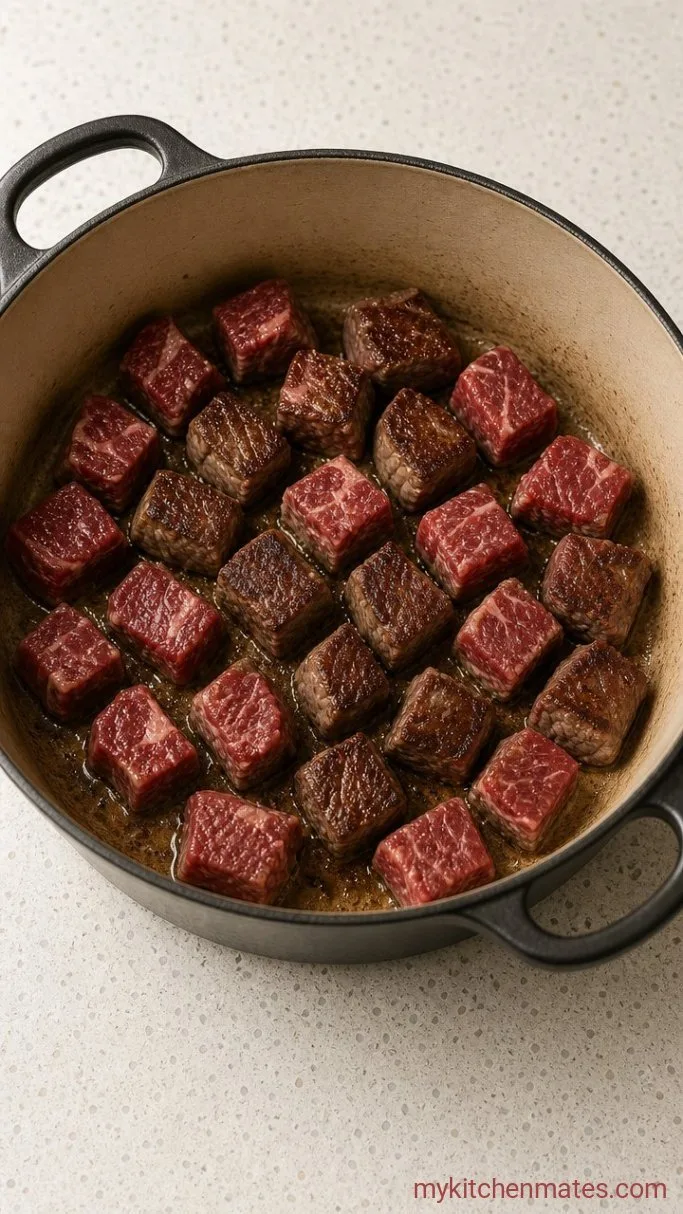
Pat the beef cubes dry with paper towels and season them generously with salt and pepper. Heat 1 tablespoon of the oil in a large Dutch oven over medium-high heat until it shimmers. Add half the beef in a single layer, leaving space between the pieces, and let it brown undisturbed for about 3 to 4 minutes on the first side. Turn the cubes and brown the other sides for another 2 to 3 minutes.
You will know the meat is ready to turn when it releases easily from the pan. If you have to tug, give it one more minute. A deep brown crust means more flavor for the stew.
Remove that batch to a plate and repeat with the remaining oil and beef. Do not wipe out the pan between batches. Those dark bits stuck to the bottom are exactly what you want.
Step 2: Build the Stew Base
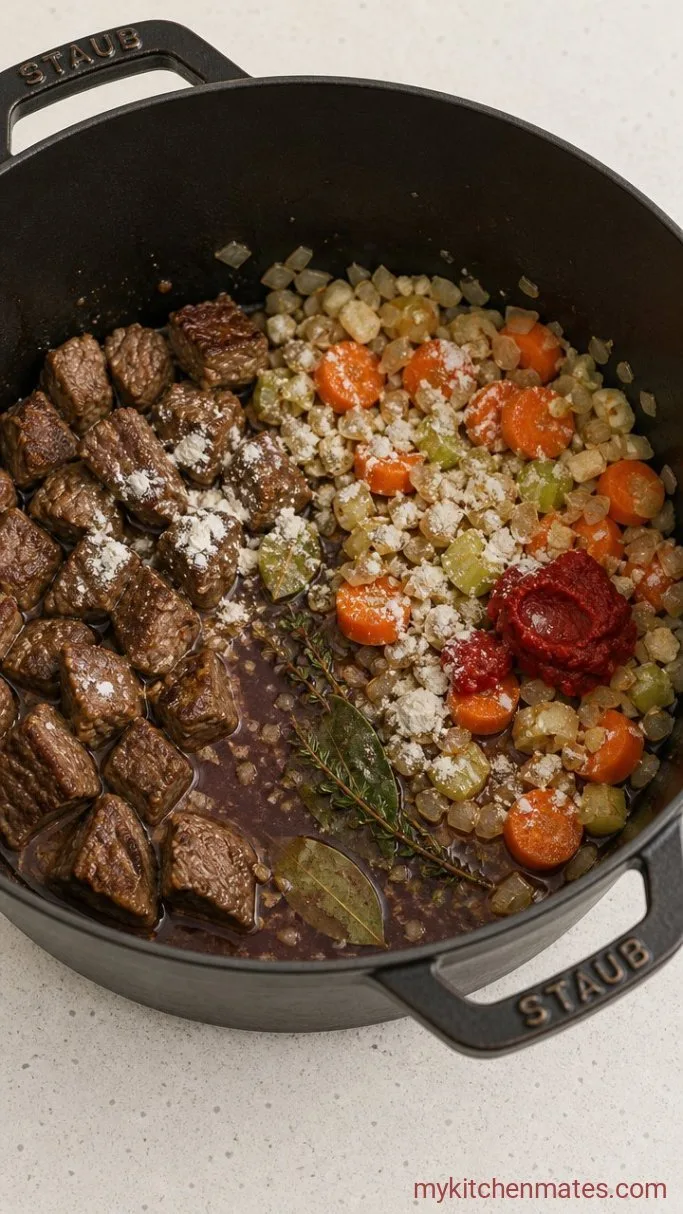
Lower the heat to medium and toss in the 1 chopped onion, 3 sliced carrots, and 2 sliced celery stalks. Cook, stirring now and then, for about 5 minutes until the onion softens and the vegetables start to pick up some color. Add the 3 minced garlic cloves and 2 tablespoons of tomato paste and cook for 1 minute more, stirring constantly so the garlic does not burn.
The tomato paste will darken from bright red to a rusty shade and smell sweet, not raw. That little bit of caramelization makes the broth taste rounder.
Sprinkle the ¼ cup of flour over the vegetables and stir for 1 minute to cook the raw taste out. Pour in the 1 cup of red grape juice, if using, and scrape the bottom of the pot with a wooden spoon to release every last bit of the browned fond. Let the juice bubble for a minute to reduce slightly.
Step 3: Simmer Until Tender
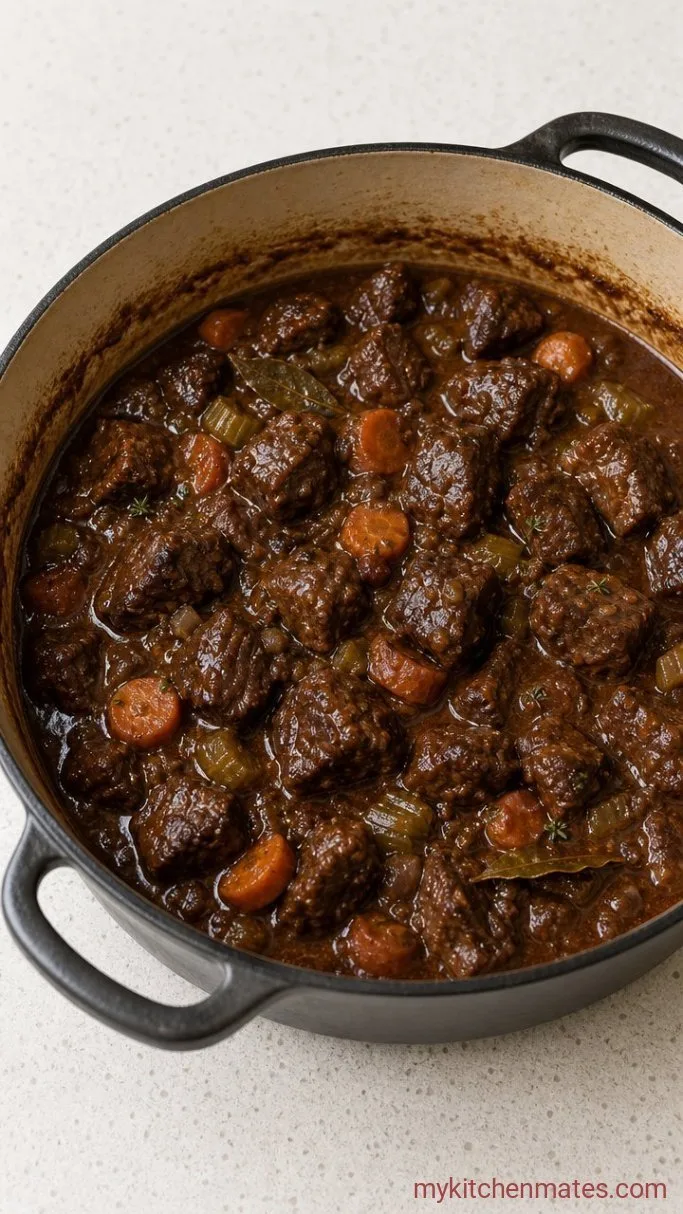
Return the seared beef to the pot along with any juices on the plate. Pour in the 4 cups of beef broth, then add the 2 bay leaves and 1 teaspoon of dried thyme. Stir everything together and bring the liquid to a boil over high heat.
Once it is boiling, drop the heat to low, cover the pot with a tight-fitting lid, and let it simmer gently. You want just a few lazy bubbles breaking the surface, not a hard boil. After about 1 hour, lift the lid and check the beef. It should feel tender when pierced with a fork but not yet falling apart. If it still feels tough, cover and simmer another 30 to 45 minutes.
Total simmer time runs around 1½ to 2 hours, depending on the size of your cubes. Keep the liquid at a low simmer the whole time so the meat relaxes slowly.
Step 4: Mix the Dumpling Dough
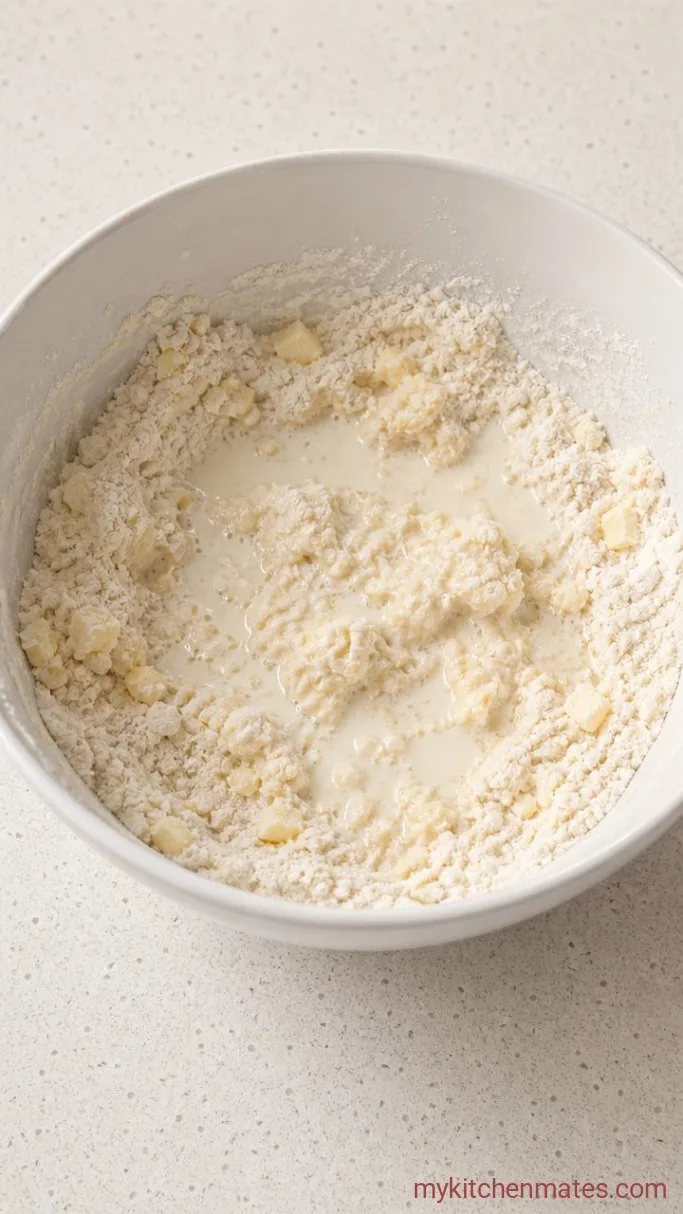
While the stew simmers, whisk the 1 cup of flour, 1½ teaspoons of baking powder, and ½ teaspoon of salt together in a medium bowl. Drop the 2 tablespoons of cold butter pieces into the dry mix and rub them in with your fingertips until the mixture looks like coarse crumbs with a few pea-sized bits of butter left.
Pour in the ½ cup of cold milk and stir with a fork just until a shaggy dough comes together. Stop as soon as no dry flour remains. Overmixing makes the dumplings tough, so a few lumps are fine.
Set the bowl aside near the stove. The dough gets used right before cooking, so no resting is needed.
Step 5: Drop and Steam the Dumplings
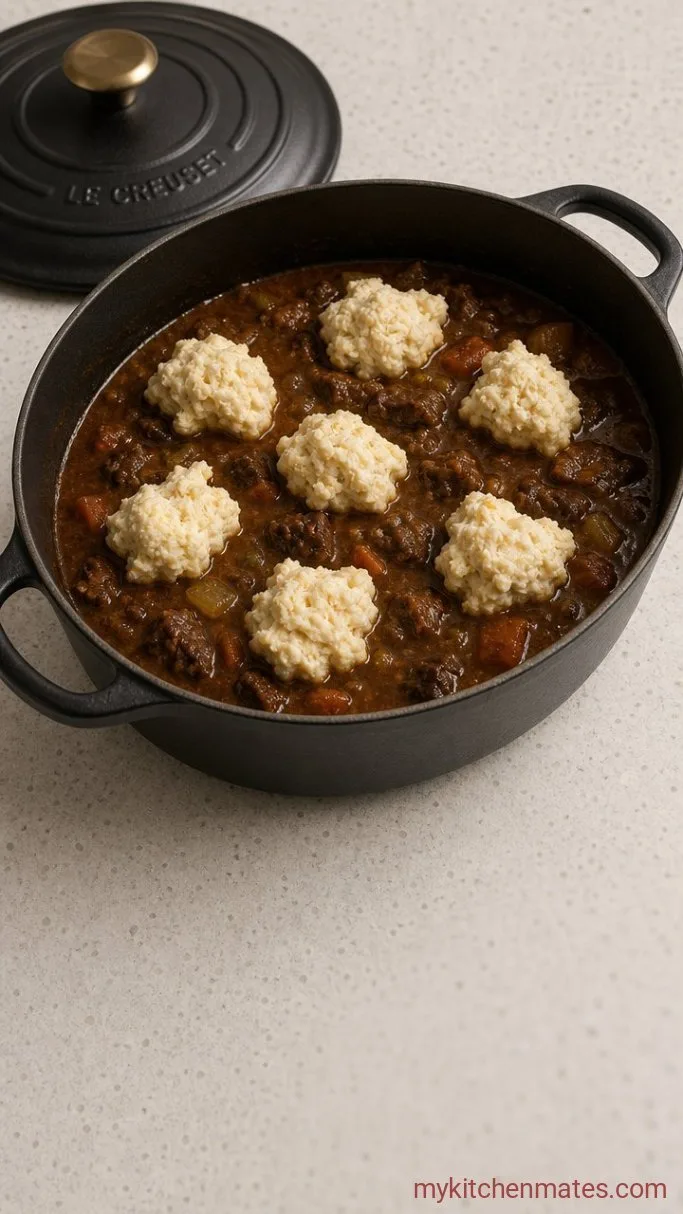
Discard the 2 bay leaves from the stew and taste the broth for salt and pepper. Bring the stew back to a steady simmer over medium heat. Using two spoons, scoop up rough spoonfuls of the dumpling dough and drop them gently onto the surface of the stew. You should get about 8 to 10 dumplings, spaced a little apart so they have room to puff.
Put the lid on the pot and do not lift it for the next 15 minutes. The steam trapped inside is what cooks the dumplings through and makes them rise.
After 15 minutes, peek at one dumpling. It should be firm and dry on top, and a toothpick inserted in the center should come out clean. If the center is still sticky, cover and cook for another 2 to 3 minutes.
Step 6: Ladle and Serve
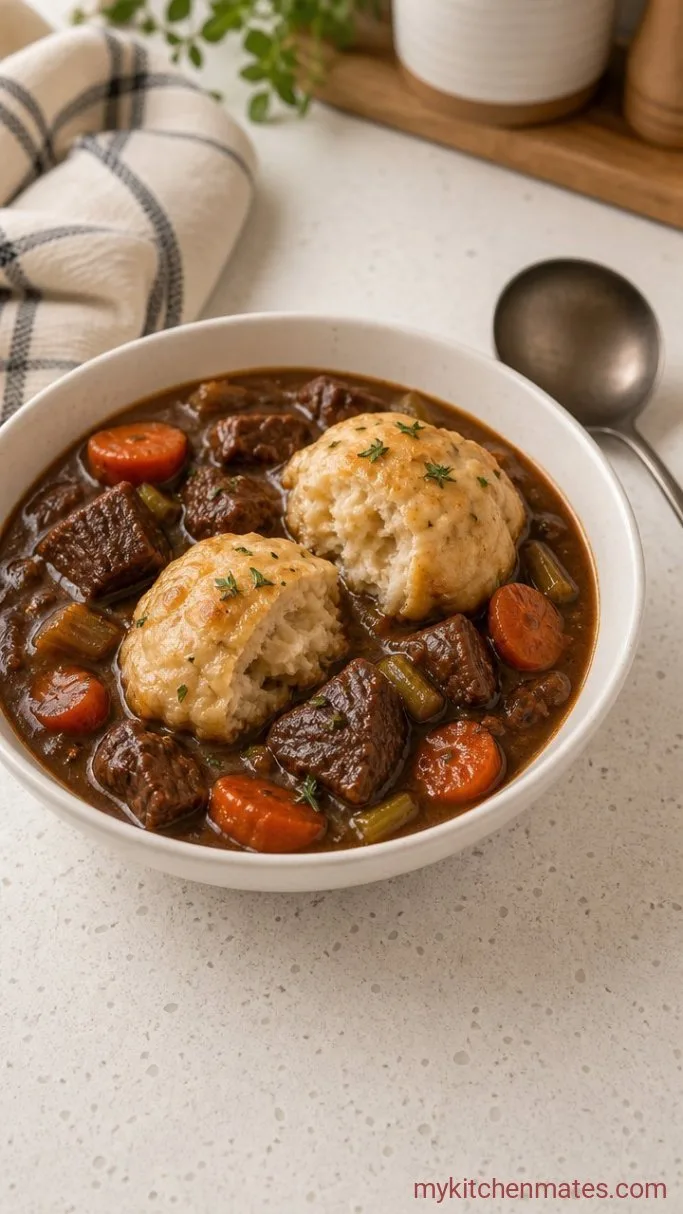
Spoon the stew into deep bowls, making sure each one gets a dumpling or two and plenty of the glossy broth. The dumplings will have puffed up and soaked up some of the flavor from the steam while still staying light inside.
Finish each bowl with a scattering of fresh chopped parsley if you have it, and serve hot. The stew will be thick enough to coat a spoon but still brothy, with the beef falling apart at the touch of a fork.
Tips for the Best Stew and Dumplings
- Pat the beef really dry before searing. Any moisture on the surface turns into steam and prevents a good crust from forming.
- Do not crowd the pan during browning. Cook the beef in two batches so the pieces fry rather than stew in their own juices.
- Keep the simmer low and steady after the liquid boils. A hard boil can make the meat seize up and turn tough, even after a long cook.
- Once the dumplings go in, resist the urge to open the lid. Every time you lift it, you let out the steam that makes them rise.
Cook times for different cuts if you are substituting:
| Cut | Approximate Simmer Time |
|---|---|
| Beef chuck (1-inch cubes) | 1½ to 2 hours |
| Beef round or brisket | 2 to 2½ hours |
| Lamb shoulder | 1½ to 2 hours |
| Venison stew meat | 2 to 2½ hours |
Storing Leftover Stew
- Refrigerate: Cool the stew completely, then store it in an airtight container for up to 4 days. The dumplings will soften as they sit, but they still taste good reheated.
- Reheating: Warm gently on the stovetop over low heat, stirring now and then. Add a splash of broth if the stew has thickened too much in the fridge.
- Freeze the stew base: You can freeze the stew without the dumplings for up to 3 months. Thaw overnight in the fridge, then make a fresh batch of dumplings to drop in when you reheat it.
What to Serve With Beef Stew and Dumplings
A crisp green salad with a sharp vinaigrette cuts right through the richness of the stew and keeps the meal from feeling too heavy. Buttered peas or steamed green beans also work, adding a little brightness without much effort. If you want more on the side, a loaf of crusty bread for soaking up the last of the broth never goes wrong.
Frequently Asked Questions
Can I make this in a slow cooker?
Yes, though the dumplings will still need to finish on the stovetop. Sear the beef and sauté the vegetables on the stove first, then transfer everything except the dumpling ingredients to a slow cooker. Cook on low for 7 to 8 hours, then bring the stew to a simmer in a pot, drop in the dumplings, cover, and cook for 15 minutes.
Why are my dumplings dense instead of fluffy?
The most common reason is overmixing the dough. Stir just until the flour disappears, and stop. Also make sure your baking powder is fresh; it loses its lift after about 6 months. Cooking the dumplings with the lid firmly closed is just as important, since steam is what makes them rise.
Can I use water instead of broth?
You can, but the stew will taste noticeably flatter. If you do, increase the salt and consider adding a little extra tomato paste or a dash of Worcestershire sauce to bring back some depth. Broth, even a decent boxed one, gives you a much better result for hardly any more effort.
How do I know when the beef is truly tender?
The beef is done when a fork slides into a cube with almost no resistance and the meat pulls apart easily. If you feel any springiness or chewiness, let it simmer longer. Tough beef just needs more time at a low temperature to break down the connective tissue.
Can I double the dumpling recipe?
Yes, and you can do it right in the same pot if yours is wide enough to hold them without crowding. Use a larger Dutch oven or a wide braiser so the dumplings have room to expand. The cooking time stays the same as long as the stew returns to a steady simmer before you drop them in.
Hearty Beef Stew with Fluffy Dumplings Recipe
Ingredients
Method
- Pat beef dry, season with salt and pepper, and brown in batches in 1 tbsp oil per batch over medium-high heat, about 3-4 minutes per side.
- Lower heat to medium, cook onion, carrots, and celery 5 minutes, then add garlic and tomato paste and cook 1 minute.
- Stir in flour, cook 1 minute, then add wine (if using) and scrape pan. Add broth, bay leaves, thyme, and browned beef; bring to a boil.
- Reduce heat to low, cover, and simmer 1½ to 2 hours until beef is fork-tender.
- Whisk flour, baking powder, and salt for dumplings. Cut in cold butter, stir in milk just until combined.
- Remove bay leaves, return stew to a simmer. Drop spoonfuls of dough onto stew, cover, and cook 15 minutes without lifting the lid. Serve hot.
Notes
