
Foolproof Beef Rib Roast

A standing beef rib roast is the kind of centerpiece that makes any dinner feel like an occasion. The method here is built for a first-time success: a low-and-slow oven, a simple seasoning, and a hot finish for a crust that crackles when you slice into it. No elaborate steps, no last-minute panic.
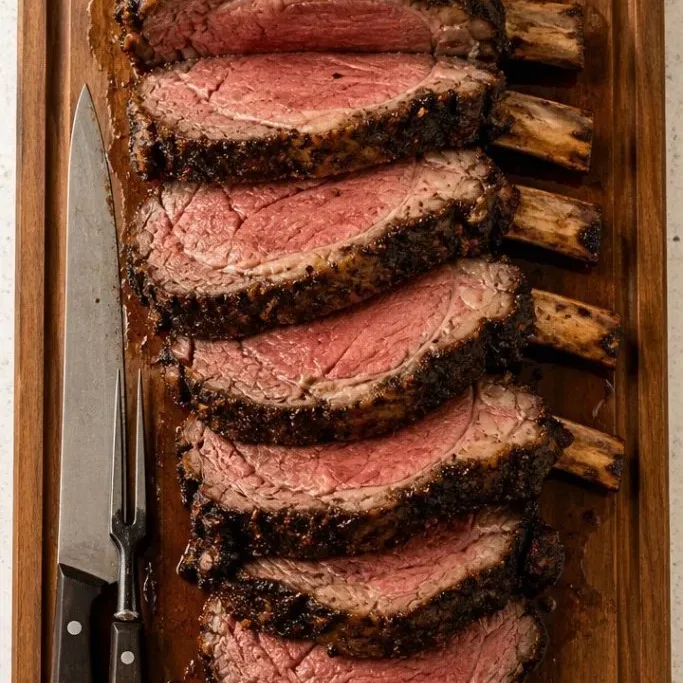
The result is a roast with a deeply browned, salty outside and a tender, rosy interior all the way through. If you can turn on an oven and read a thermometer, you can pull this off.
What Makes This Recipe So Good
This is the rib roast I come back to because it removes the guesswork. The low oven tempera- ture gives you a big window where the meat is cooked evenly from edge to center, so you never get that thick ring of gray overcooked beef around the outside.
The double-heat technique builds a crust that sticks to the meat like bark. Starting cool and finishing hot means the seasoning has time to sink into the fat while the surface dries out, so when the temperature ramps up, the outside turns brittle and savory rather than steamed. A meat thermometer does the rest.
Clean black pepper and salt carry the beef without masking it. There is plenty of rich, beefy flavor in a well-marbled rib roast, and keeping the seasoning simple lets that flavor be the main event.
Ingredients
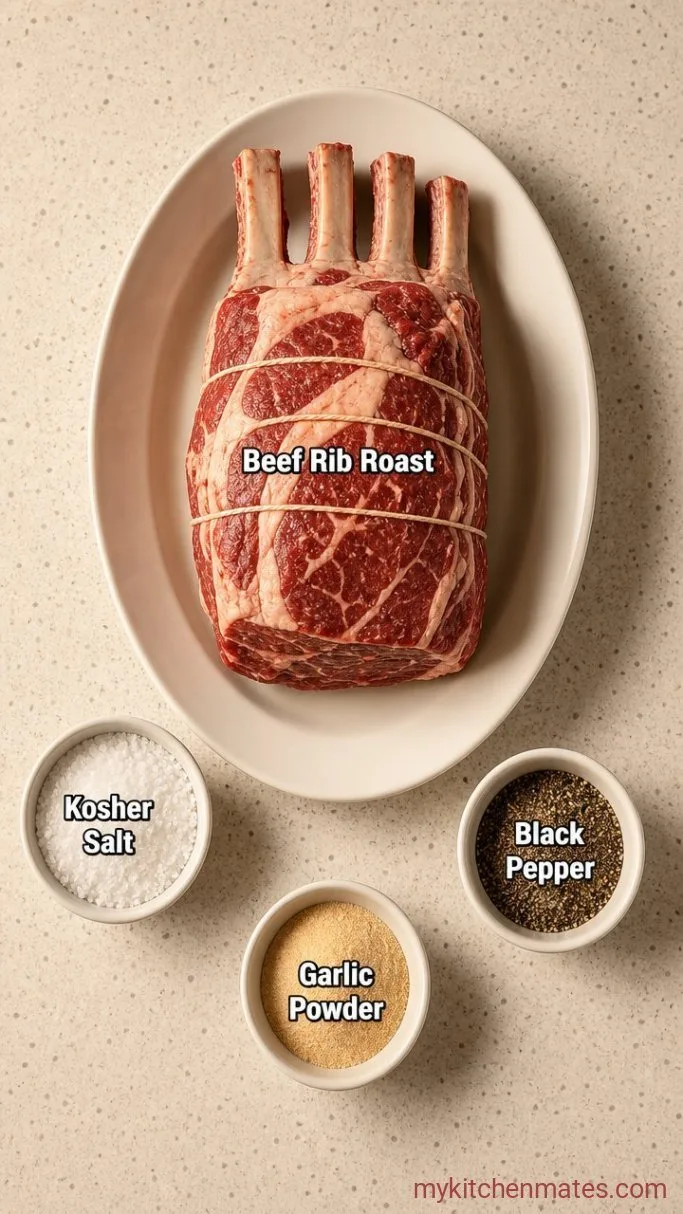
- 1 (4-bone) standing beef rib roast, about 8 to 10 lbs: ask the butcher to cut the chine bone so carving is easier at the table.
- 2 tbsp kosher salt: Diamond Crystal or similar; if using fine table salt, cut the amount in half.
- 1 tbsp coarsely ground black pepper
- 2 tsp garlic powder: adds a mellow savory note without burning.
Variations / Substitutions
- Fresh herbs: rub the roast with a paste of 2 tbsp olive oil, 2 minced garlic cloves, and 1 tbsp chopped rosemary instead of the garlic powder.
- Peppercorn swap: use ground white pepper for a milder heat, or cracked pink peppercorns for a fruity bite.
- Bone-in vs. boneless: a boneless rib roast works here. Just tie it tightly with kitchen twine so it holds its shape, and start checking the temperature 15 to 20 minutes sooner.
- Garlic powder alternative: stir 1 tsp onion powder and 1 tsp dried thyme into the salt and pepper mix for a more aromatic rub.
Korean-Style Short Rib Marinade makes this recipe even better, and it takes just minutes.
How to Make Foolproof Beef Rib Roast
Step 1: Season the Rib Roast
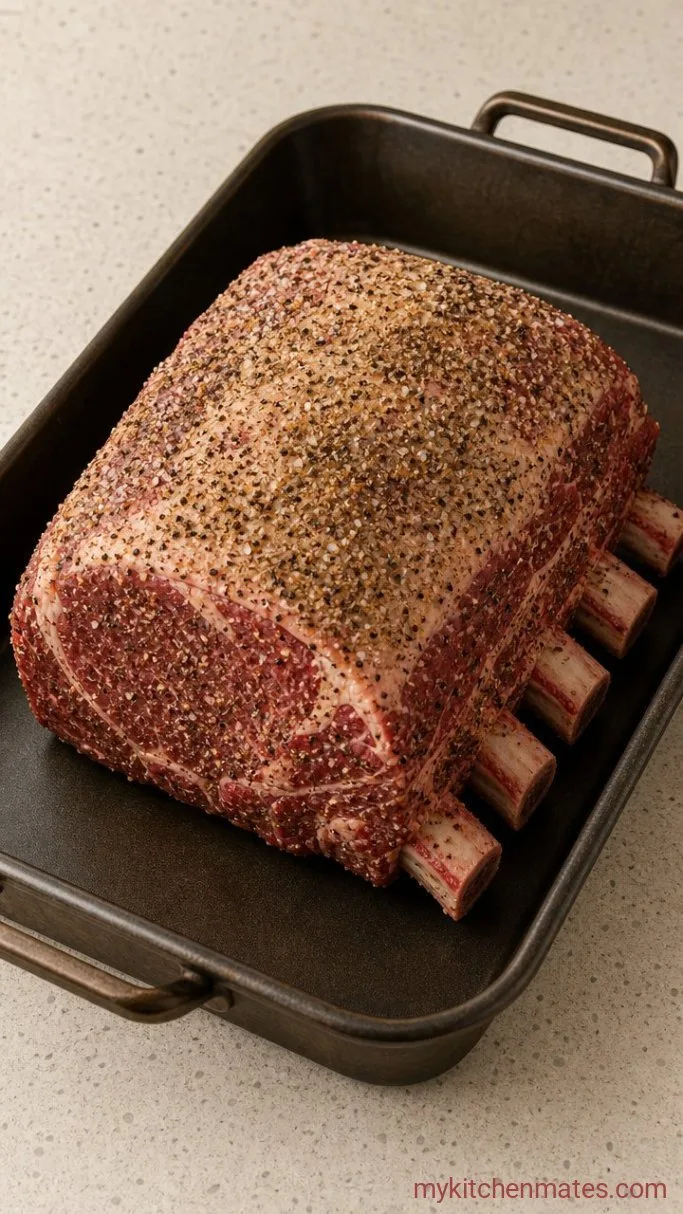
Set the roast on a rack inside a roasting pan and pat it dry all over with paper towels. Sprinkle the 2 tbsp kosher salt, 1 tbsp black pepper, and 2 tsp garlic powder evenly across every surface, rubbing lightly so the seasoning sticks. Let it sit at room temperature for 1 hour, or refrigerate uncovered overnight for even deeper seasoning. If you are refrigerating overnight, take the roast out about 90 minutes before it goes into the oven so it loses the deep chill.
After an hour on the counter, the surface will feel slightly tacky from the salt. That tackiness is what helps the crust form later. If you salted overnight, the surface will look darker and feel dry and leathery, which is exactly what you want. That dry exterior browns faster and more evenly than a wet one.
Step 2: Slow Roast the Beef
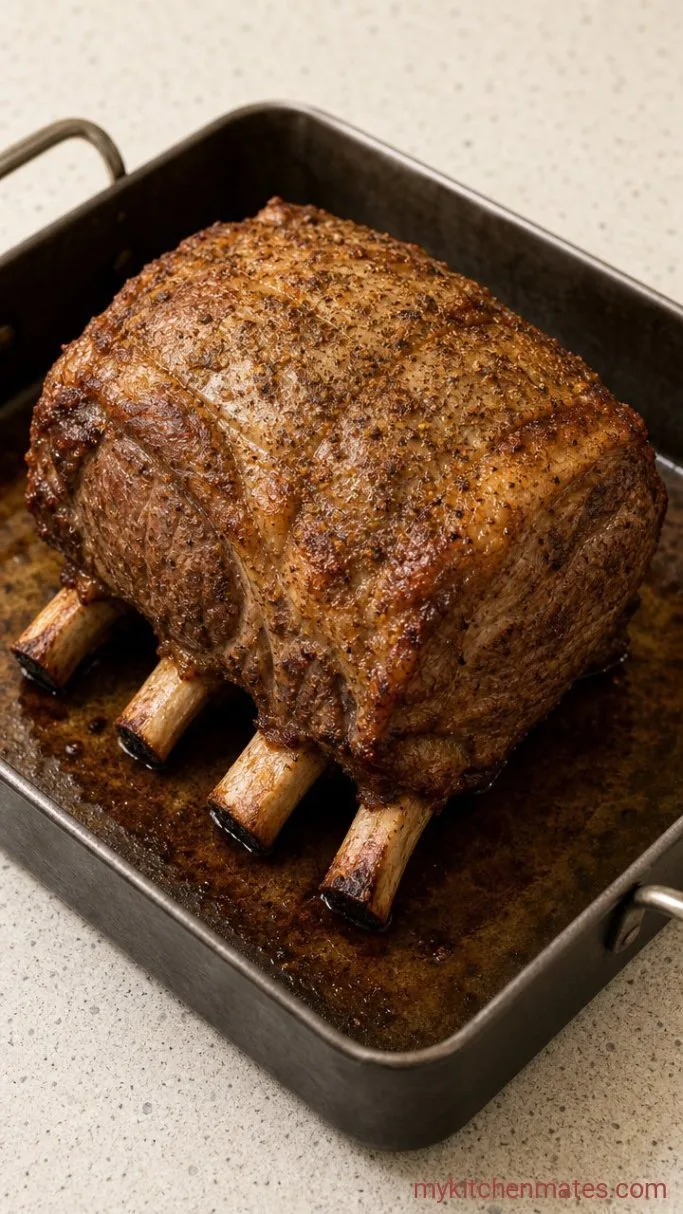
Heat the oven to 250°F (120°C). Slide the roasting pan into the center of the oven and cook until a thermometer pushed into the thickest part of the meat (without touching bone) reads about 120°F (49°C) for medium rare. For an 8 to 10 lb roast, this usually takes 3 to 3.5 hours, but start checking at the 2.5 hour mark so nothing sneaks past you.
The kitchen will start smelling rich and meaty after the first hour or so. Around the 2 hour point, the fat will look glossy and the edges will have taken on a pale tan color. The roast will still feel soft to the touch. That slow climb gives you an evenly cooked interior with almost no overdone band around the outside, which is the main reason this method works so reliably.
Step 3: Crank the Heat for the Crust
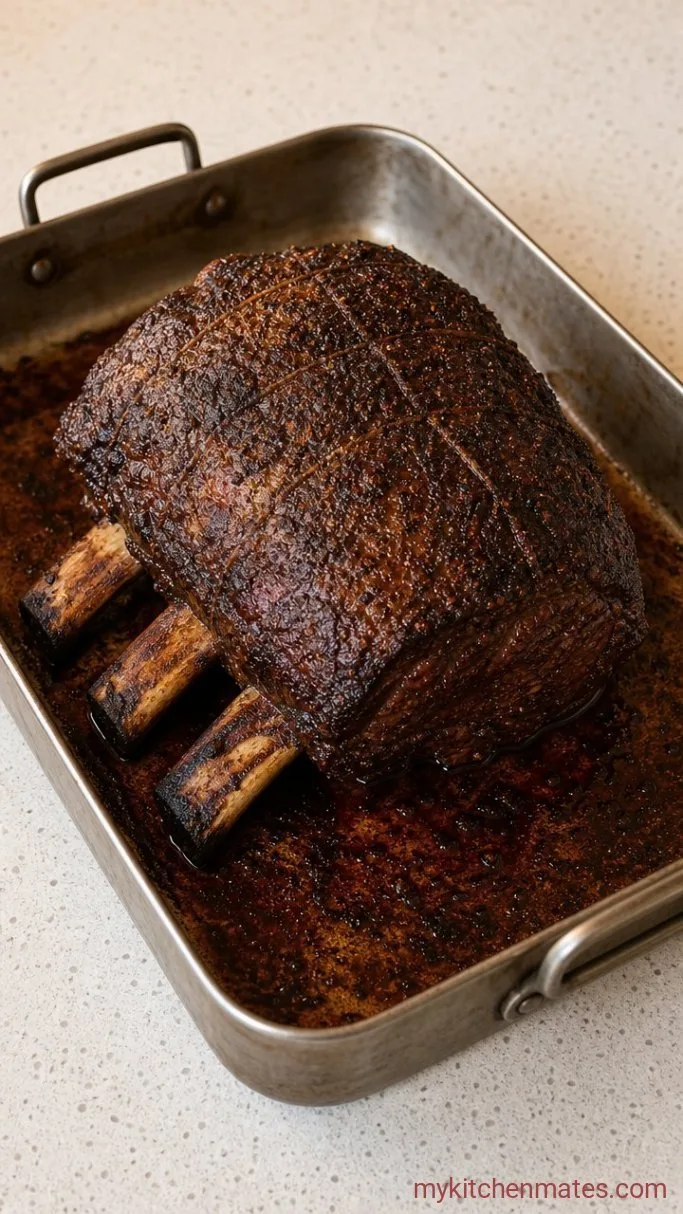
Take the roast out of the oven and tent it loosely with foil while you crank the oven up to 500°F (260°C). Once the oven reaches temperature, remove the foil and put the pan back in. Roast for 8 to 12 minutes, watching until the outside is deeply browned and the fat cap is sizzling and blistered. Remove it when the crust looks dark and craggy all over.
During this high-heat blast, the surface crackles and pops audibly in some spots. The fat renders quickly and the salt and pepper darken. The internal temperature will climb about 3 to 5 degrees during this short burst, but the inside stays rosy because the center never has time to cook through. You are looking for a bark that feels rough when you tap it with a spoon, not a wet brown coating.
Step 4: Rest the Meat
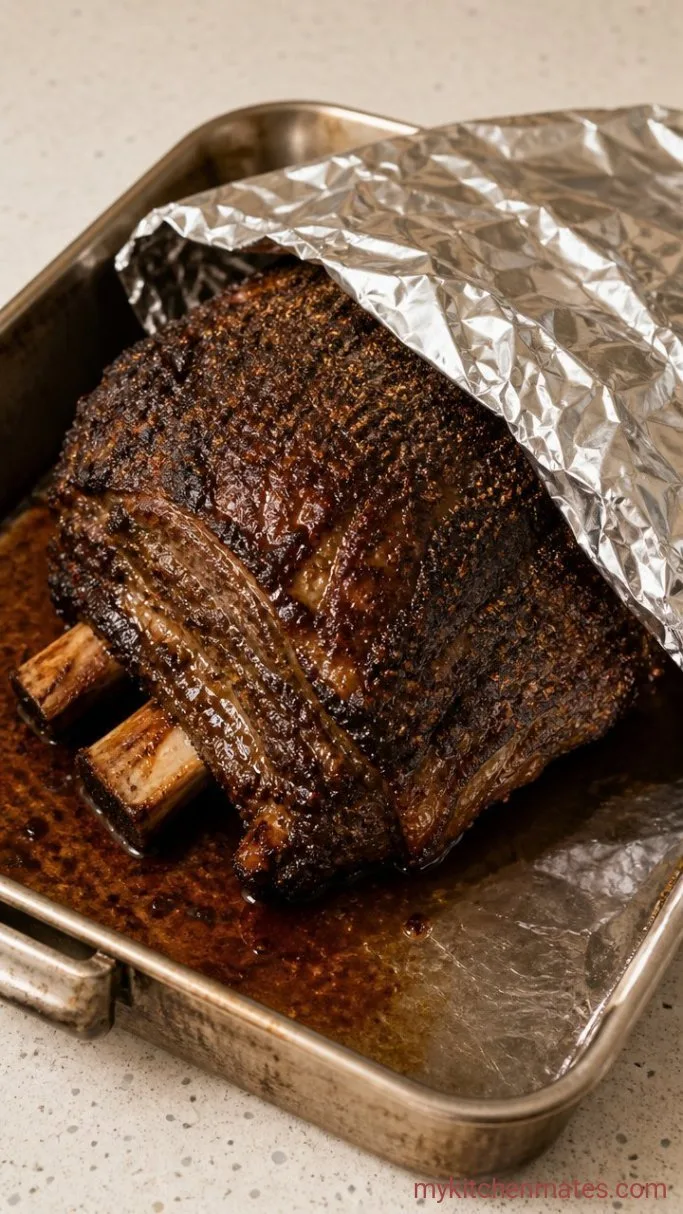
Transfer the roast to a cutting board, tent it loosely with foil, and leave it alone for 20 to 30 minutes. The internal temperature will drift up about 5 to 10 degrees during this rest. For medium rare, the final resting temperature should land right around 130°F (54°C).
You will see a small pool of juice accumulate on the board as the roast sits, and that is normal. Resting lets the muscle fibers relax and hold onto the liquid, so that juice goes back into every slice instead of spilling out onto your cutting board at the first cut.
Step 5: Carve and Serve the Roast
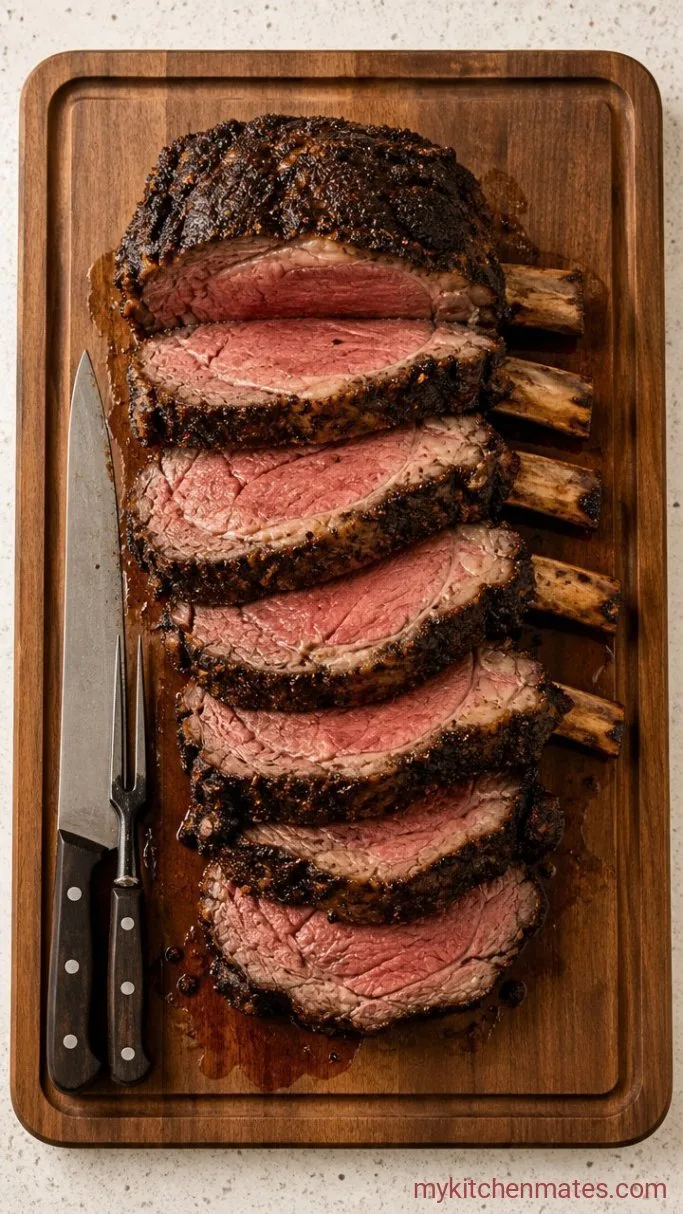
Set the roast bones facing up and run a long sharp knife along the curve of the bones to separate them from the meat. Slice the boneless eye into thick slabs, about ½ inch to ¾ inch wide, and arrange them on a warm platter. Serve right away while the crust is crisp and the centers are still pink.
The first slice reveals the reward: a dark, salty bark giving way to soft, even pink meat that glistens faintly. Cut against the grain through the whole roast, and if someone wants a bone, they make a fine handle for gnawing on later.
Tips for the Best Rib Roast
- Pull the roast a few degrees before your target doneness. The carryover heat during rest will finish the job, so if you want medium rare, take it out at 120°F (49°C) rather than waiting for 130°F (54°C).
- Use a probe thermometer left in the roast during the slow phase if you have one. The constant readout quiets the urge to open the oven door every 20 minutes.
- For the crispiest fat cap, score the fat in a shallow crosshatch before seasoning. The heat penetrates the fat more evenly and the scored edges turn into crunchy little points.
- Let the roast sit uncovered in the fridge overnight after seasoning if you can plan ahead. The dry surface makes a noticeably better crust than a roast seasoned the same day.
Here is a quick guide to internal temperatures:
| Doneness | Pull from Oven | After Resting |
|---|---|---|
| Rare | 115°F (46°C) | 125°F (52°C) |
| Medium Rare | 120°F (49°C) | 130°F (54°C) |
| Medium | 130°F (54°C) | 140°F (60°C) |
Storing Leftover Rib Roast
Leftover slices hold up well for a few days. Keep them whole rather than chopped so they reheat without drying out.
- Refrigerate: tuck slices into a sealed container with a little of the pan juices and use within 3 days.
- Reheating: warm slices gently in a skillet with a splash of beef broth over low heat, turning once, just until heated through. High heat turns the meat gray and tight fast.
- Serve cold: thin slices on crusty bread with horseradish and arugula make a sandwich that rivals the hot roast.
What to Serve with Beef Rib Roast
Creamy horseradish sauce cuts through the richness with sharp, vinegary heat, so put a small bowl of it right next to the platter. Something bright and green like lemony green beans or a simple watercress salad lightens each bite. For a starch, buttery mashed potatoes or crispy roasted fingerlings soak up the juices that pool on the plate. A pan of warm Yorkshire puddings, if you feel ambitious, turns the whole meal into a traditional feast.
Frequently Asked Questions
Can I use a boneless rib roast?
Yes. Tie it with kitchen twine in several spots so it holds a round shape. A boneless roast cooks a little faster, so check the temperature about 20 minutes earlier than the times given.
What if I do not have a meat thermometer?
Borrow one or buy a cheap instant-read. A rib roast is too expensive to guess with touch or time alone. If you absolutely must, the meat will feel like the fleshy base of your thumb when it is rare, and slightly firmer with more springback for medium rare, but the margin for error is wide.
Can I cook a beef rib roast from frozen?
That is not recommended for an even result. The outside will overcook before the center is safe and tender. Thaw the roast completely in the fridge for 2 to 3 days before you season and cook.
How do I carve around the bones without mangling the roast?
Stand the roast with the bones pointing up and hold them steady with a fork while you slice along their curve with a long, sharp knife. The bones come off in one big piece. Then lay the roast on its cut side and slice the boneless eye horizontally.
Beef Rib Roast Recipe
Ingredients
Method
- Pat roast dry, season all over with salt, pepper, and garlic powder, and let sit at room temperature 1 hour.
- Heat oven to 250°F (120°C) and slow roast until internal temp hits 120°F (49°C) for medium rare, 3 to 3.5 hours.
- Remove roast, tent with foil, and heat oven to 500°F (260°C). Return roast and cook 8 to 12 minutes until deeply browned.
- Rest on cutting board, loosely tented, for 20 to 30 minutes until temp climbs to 130°F (54°C).
- Cut bones away and slice meat against the grain into thick slabs; serve warm.
Notes
