
Baked Whole Chicken

Juicy Baked Whole Chicken
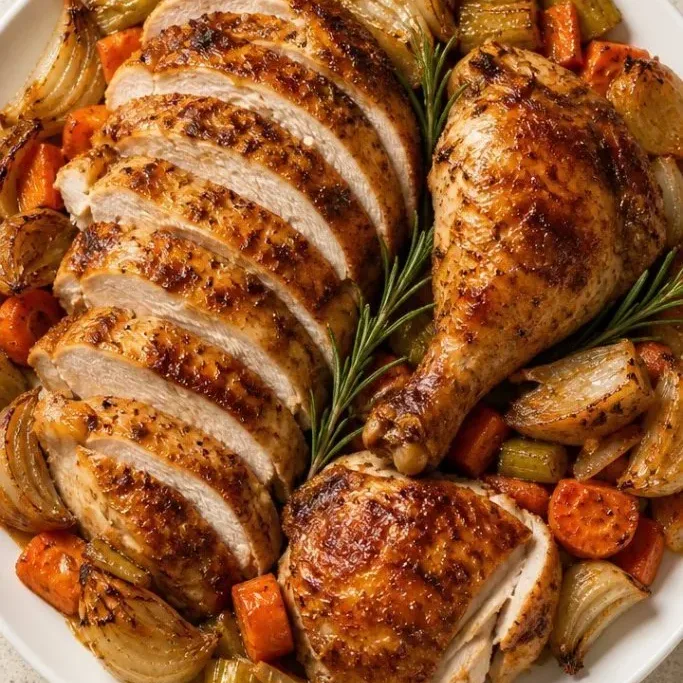
A baked whole chicken turns any dinner into an event without requiring much from you. It takes one pan, a handful of ingredients, and just a few minutes of hands-on time.
The skin shatters under your fork, the meat pulls apart with a spoon, and the pan drippings are so good you’ll want to mop them up with bread.
What Makes This Roast Chicken So Good
I brine the chicken in salty water for an hour before it hits the oven. That short soak seasons the meat all the way to the bone, so the breast stays juicy even if you leave it in a few minutes too long.
The vegetables that roast underneath catch every drop of fat and juice, turning soft and caramelized. No trussing, no flipping, just one pan and a hot oven.
Ingredients
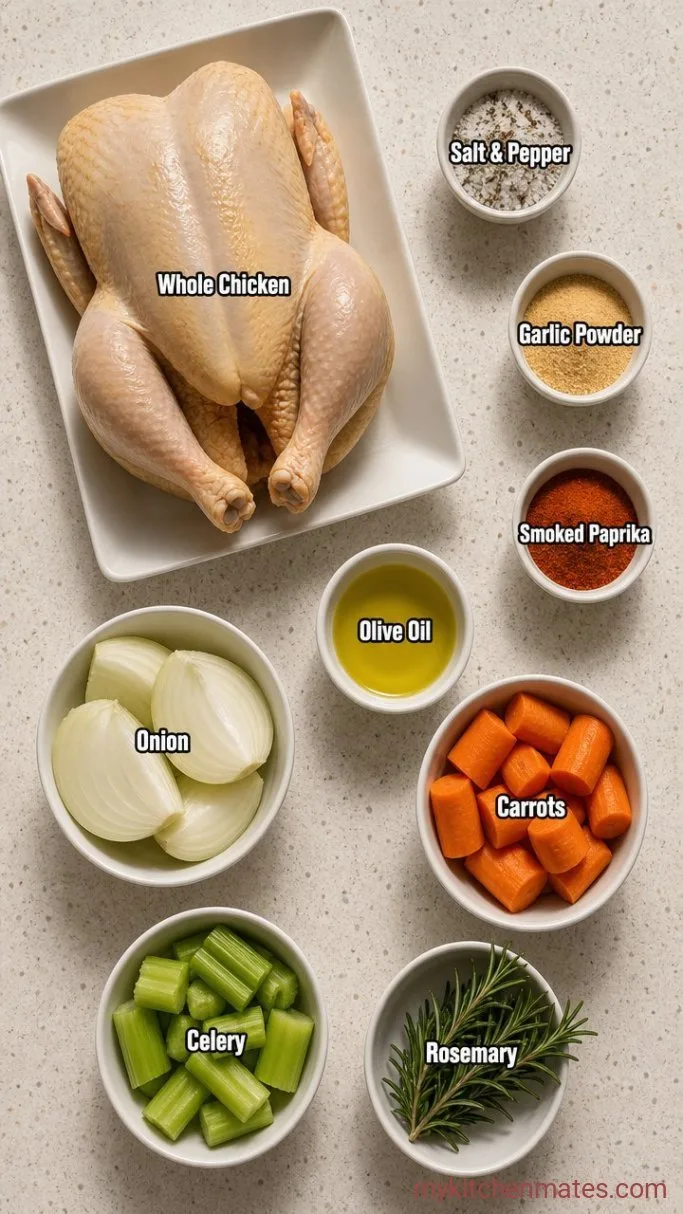
- 1 whole chicken (4 to 5 lb) – giblets removed, patted dry
- Kosher salt – used in the brine and for seasoning
- Freshly ground black pepper
- 1 tsp garlic powder
- 1 tsp smoked paprika – sweet or hot, your call
- 2 tbsp olive oil
- 1 large onion – cut into thick wedges
- 3 carrots – peeled and cut into 2‑inch chunks
- 3 celery stalks – cut into 2‑inch pieces
- 4 sprigs fresh rosemary or thyme (optional)
Variations / Substitutions
- Herb swap – Rosemary, thyme, or oregano all work. Use what you have.
- Add heat – A pinch of cayenne mixed into the spice rub gives a subtle warmth.
- Lemon in the cavity – A halved lemon stuffed inside adds a light citrus note.
- No brine – If you skip the brine, salt the chicken generously on all sides and let it sit at room temperature for 30 minutes before roasting.
- Other root vegetables – Parsnips, turnips, or small potatoes are good substitutes for the carrots and celery.
Creamy Broccoli and Stilton Soup is a cozy soup to serve with this chicken.
How to Make Baked Whole Chicken
Step 1: Brine the Chicken
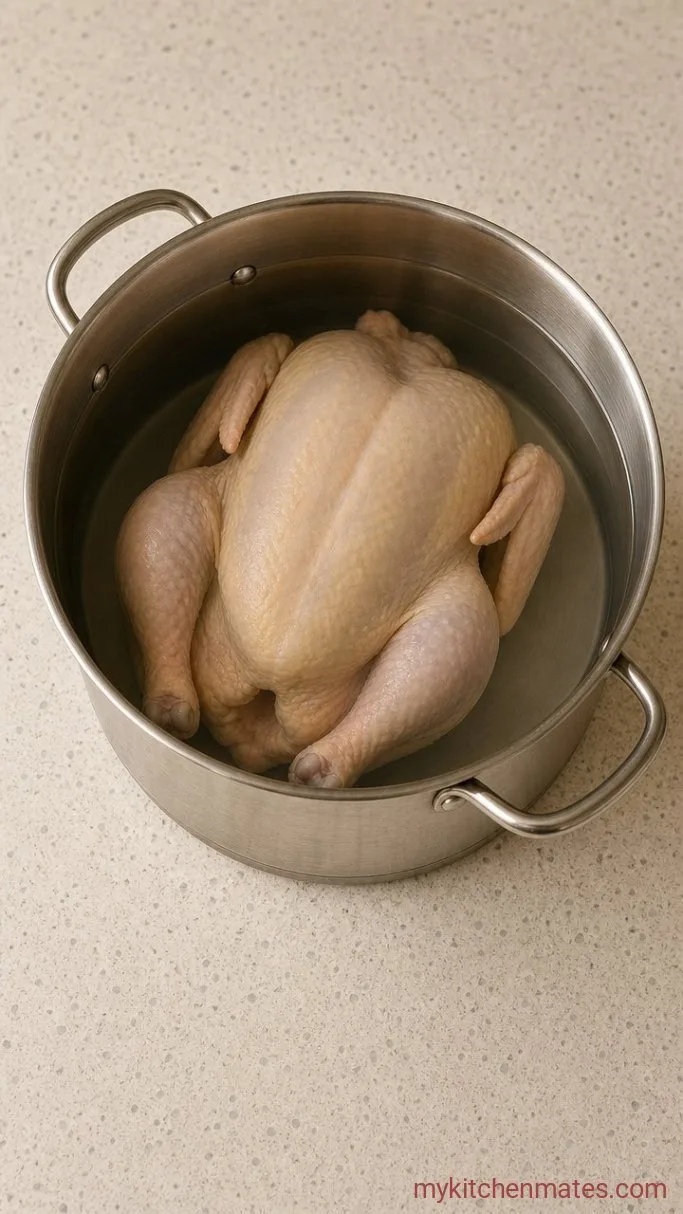
Fill a large pot or bowl with 4 quarts of cold water and stir in ½ cup of kosher salt until dissolved. Submerge the whole chicken, cover, and refrigerate for 1 hour.
After an hour, lift the chicken out, drain it, and pat it completely dry with paper towels. The skin should feel taut and cool, not wet.
Step 2: Season the Chicken and Vegetables
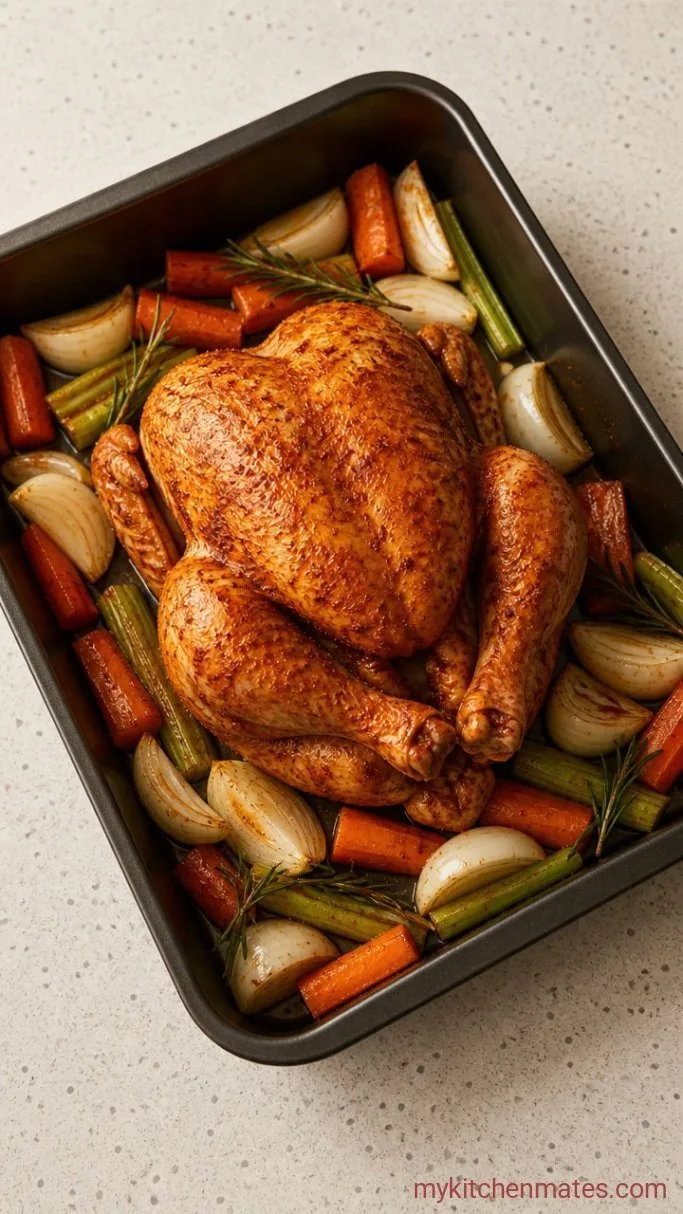
Preheat the oven to 425°F (220°C). In a small bowl, combine 1 tablespoon of olive oil, the garlic powder, smoked paprika, 2 teaspoons of salt, and 1 teaspoon of black pepper. Rub the mixture all over the chicken, working it gently onto the skin.
Toss the onion, carrots, and celery with the remaining 1 tablespoon of olive oil and a pinch of salt, then scatter them in the bottom of a large roasting pan or cast iron skillet. Lay the chicken directly on top of the vegetables, breast side up.
Step 3: Roast the Chicken
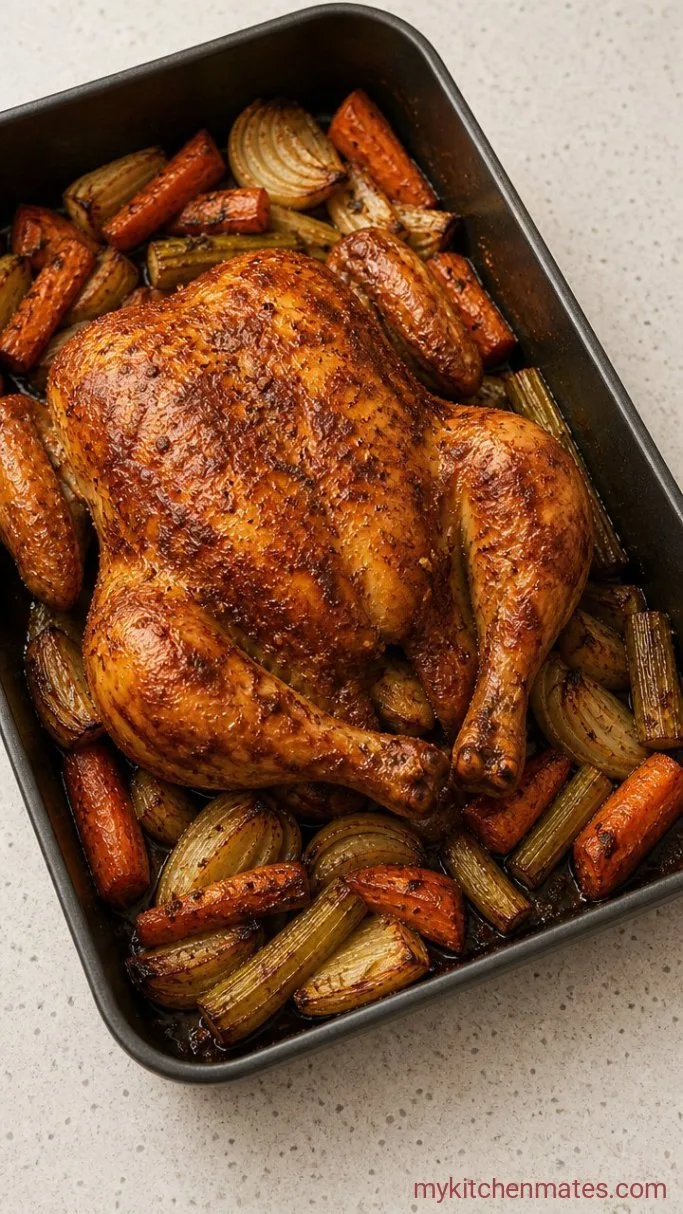
Slide the pan onto the middle oven rack and roast for 20 minutes at 425°F. The skin will start to turn golden and the fat will begin to sizzle.
Lower the heat to 375°F (190°C) and continue roasting until a thermometer inserted into the thickest part of the thigh reads 165°F, about 45 to 55 more minutes. The juices should run clear when you pierce the thigh, and the vegetables will be soft and browned at the edges.
Step 4: Carve and Serve
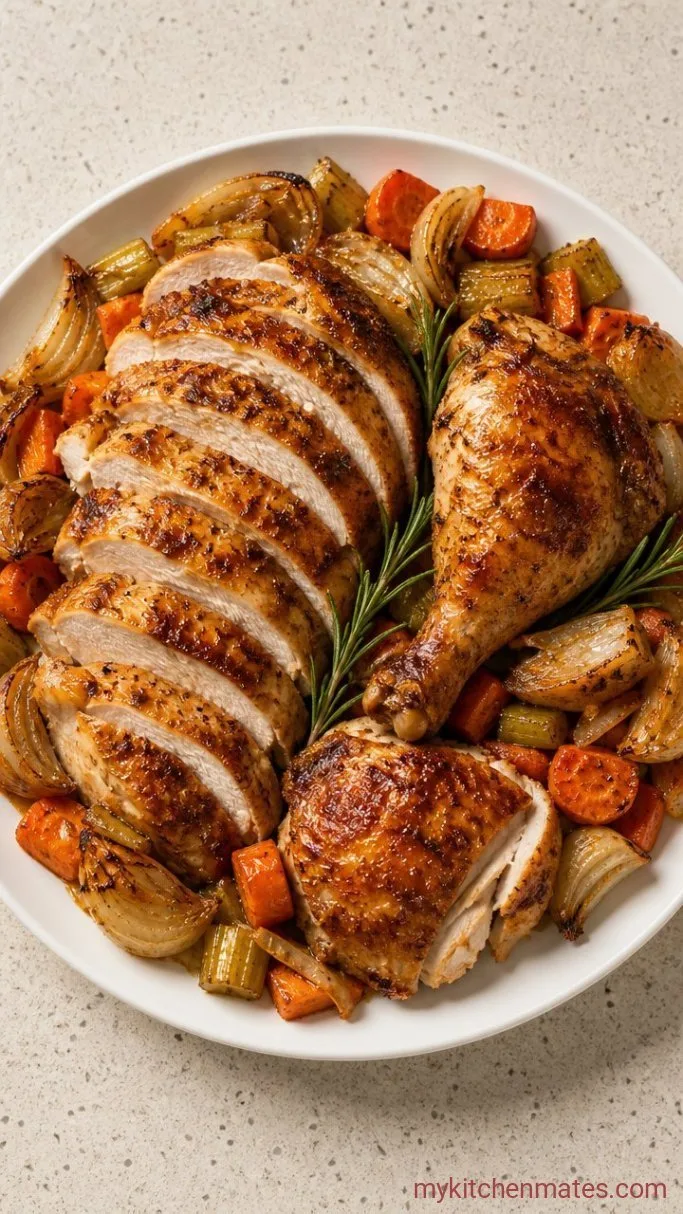
Take the pan out of the oven and let the chicken rest right on the vegetables for 15 minutes so the juices settle. Transfer it to a cutting board, then use a sharp knife to carve the breasts, thighs, and drumsticks.
Spoon the pan vegetables and any accumulated juices onto a platter, lay the carved pieces on top, and serve while it’s hot.
Tips for the Juiciest Chicken
- Let the chicken sit at room temperature for 30 minutes before roasting so it cooks more evenly.
- Use a heavy roasting pan or cast iron skillet; thin pans can cause the vegetables to scorch.
- Tuck the wing tips underneath the bird early in the roast if they brown too fast. You don’t need a rack.
- An instant‑read thermometer is the most reliable way to know when the chicken is done. Check the thigh, not the breast.
Roast times by weight after the initial high‑heat blast:
| Chicken Weight | Total Roast Time |
|---|---|
| 4 lb | 60 to 70 mins |
| 5 lb | 70 to 80 mins |
| 6 lb | 80 to 90 mins |
Keeping Leftovers Fresh
- Refrigerate: Store carved chicken in an airtight container for up to 4 days.
- Reheating: Warm it gently in a 300°F oven or in a skillet with a splash of chicken broth to keep the meat moist.
What to Serve With Baked Chicken
Mashed potatoes are a natural partner; they soak up the pan juices better than anything else. A simple arugula salad dressed with lemon cuts through the richness of the skin, and some crusty bread on the side is essential for wiping the plate clean.
Frequently Asked Questions
Can I roast the chicken from frozen?
No, always thaw the chicken completely first. A frozen bird will burn on the outside long before the inside is safe to eat.
Should I cover the chicken with foil?
You shouldn’t. Covering traps steam and will make the skin soft and pale instead of crisp and golden.
Do I need a roasting rack?
Not at all. The vegetables lift the chicken enough for air to circulate, and they do double duty as a side dish.
Can I stuff the cavity with aromatics?
Yes. Halved lemon, garlic cloves, or fresh herbs add a subtle flavor, though they may extend the roasting time by a few minutes.
Baked Whole Chicken Recipe
Ingredients
Method
- Dissolve ½ cup of salt in 4 quarts of cold water, submerge the chicken, and refrigerate for 1 hour. Pat dry completely.
- Preheat oven to 425°F. Mix 1 tbsp oil with garlic powder, paprika, 2 tsp salt, and pepper; rub over the chicken. Toss vegetables with remaining oil and a pinch of salt, scatter in a roasting pan, and set the chicken on top.
- Roast at 425°F for 20 minutes, then lower heat to 375°F and roast until the thigh reaches 165°F, about 45 to 55 minutes more.
- Rest the chicken on the pan for 15 minutes, then carve. Serve the meat with the roasted vegetables and pan juices.
Notes
