
Sticky Soy-Ginger Asian Chicken Thighs

These sticky soy-ginger Asian chicken thighs get pan-seared until the skin shatters under your fork, then lacquered in a glossy glaze that hits every note: salty, sweet, and a little sharp from fresh ginger. It’s a one-pan dinner that looks far more ambitious than the effort it asks.
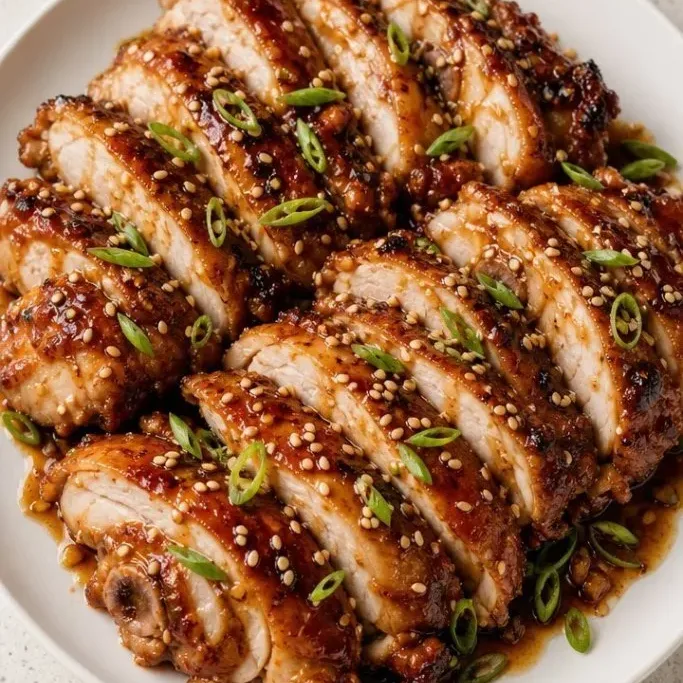
You build the sauce right in the same skillet while the thighs finish cooking, so the honey thickens into a glaze that coats every bite. Spoon it over rice with a handful of scallions and dinner is done.
What Makes These Chicken Thighs So Good
The skin stays crisp because you sear it first and then finish the thighs in the glaze without submerging them. You get that crackly layer plus a sticky, savory shell all at once.
The ginger and garlic add warmth rather than fire, and the rice vinegar lifts the honey just enough that the sauce never reads heavy. Leftovers reheat well and the glaze stays glossy, a rare thing for a weeknight meal.
Ingredients
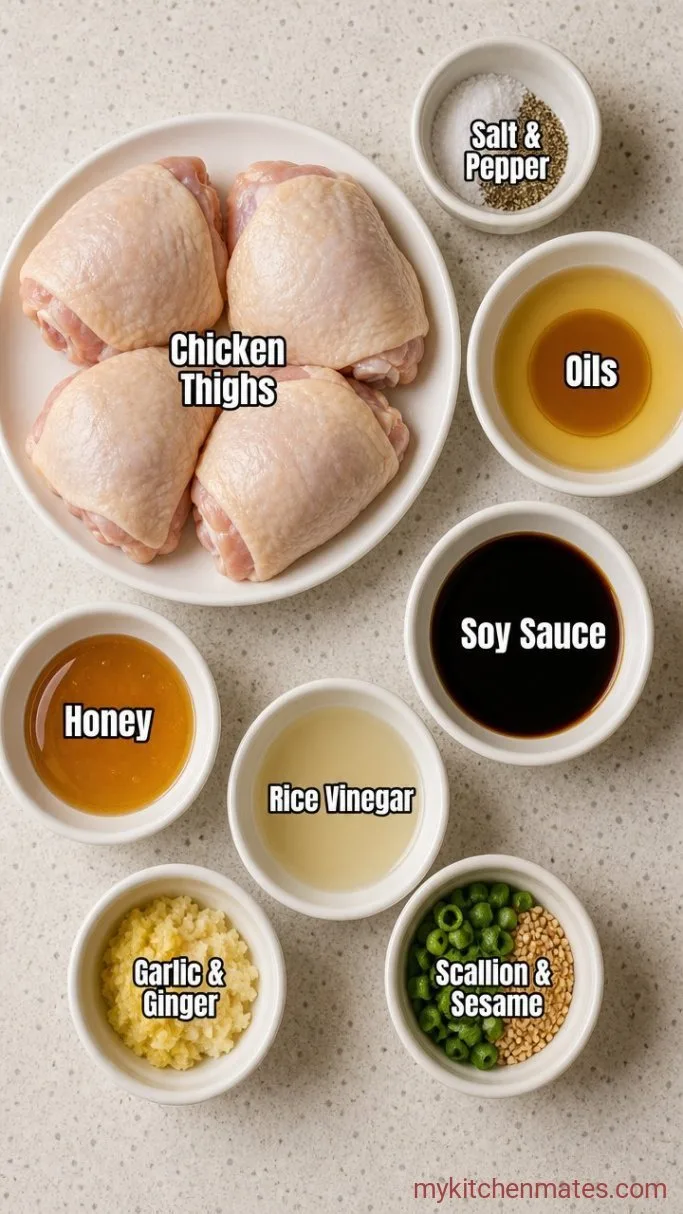
- 4 bone-in, skin-on chicken thighs: look for thighs of similar size so they cook evenly
- ½ teaspoon kosher salt
- ¼ teaspoon black pepper
- 2 tablespoons vegetable oil: or another neutral oil with a high smoke point
- 3 tablespoons soy sauce: low-sodium works fine, reduce added salt slightly
- 2 tablespoons honey: clover or wildflower honey gives a clean sweetness
- 1 tablespoon rice vinegar: unseasoned, or use a mild apple cider vinegar
- 1 tablespoon grated fresh ginger: a microplane makes quick work of the peel
- 2 garlic cloves, minced
- 1 teaspoon toasted sesame oil: the toasted variety adds depth, not a raw oil taste
- Sliced scallions and toasted sesame seeds: for serving
Variations / Substitutions
- Boneless, skinless thighs: sear skin side 5 to 6 minutes, flip, cook through, add glaze as written. The skin will not be as shatteringly crisp but the sauce still clings.
- Honey swap: maple syrup or brown sugar both work, though the glaze will taste slightly different. Maple brings an earthy note, brown sugar makes it a little darker and rounder.
- A little heat: add a pinch of red pepper flakes or a drizzle of chili oil to the glaze while it simmers.
- Lower sodium: use coconut aminos in place of soy sauce and halve the salt on the chicken. The glaze stays sweet and glossy with less salt.
Hearty Cuban Chicken Soup makes a comforting soup to pair with this chicken.
How to Make Sticky Soy-Ginger Asian Chicken Thighs
Step 1: Sear the Chicken Thighs
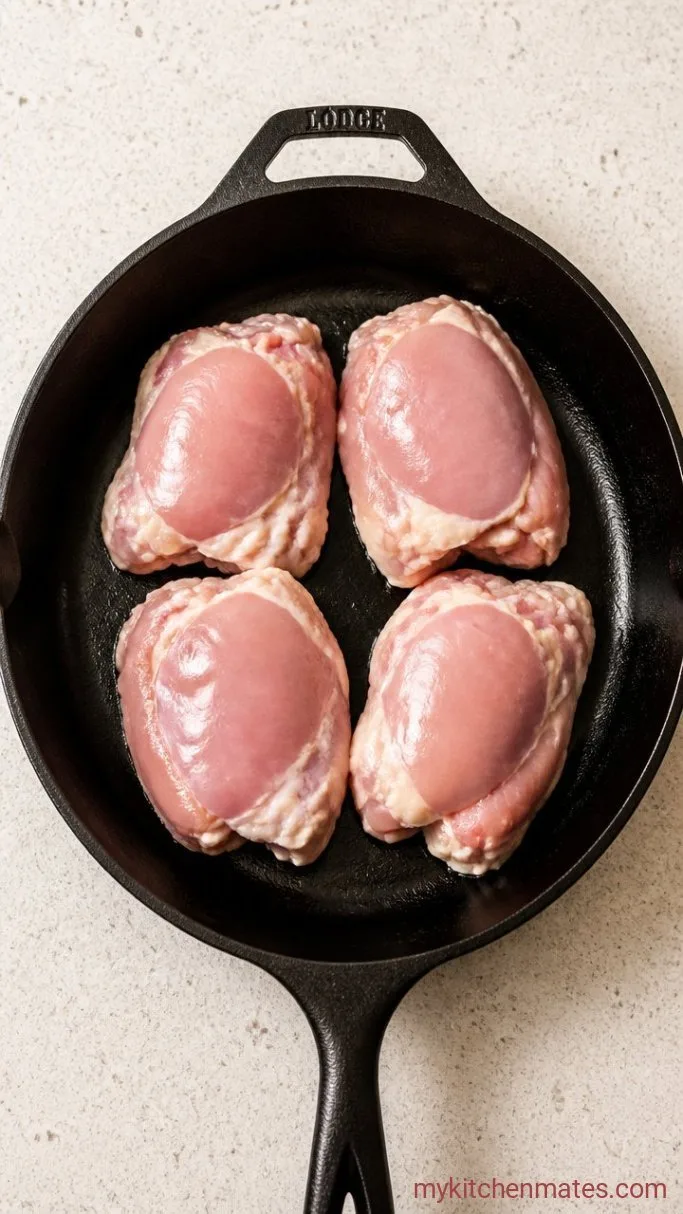
Set a large, heavy skillet over medium-high heat and pour in the 2 tablespoons of vegetable oil. While the oil shimmers, proceed with the chicken preparation steps by patting the 4 chicken thighs dry with paper towels and seasoning both sides with the ½ teaspoon salt and ¼ teaspoon pepper. Lay the thighs skin side down in the pan and leave them undisturbed for 6 to 8 minutes to achieve perfectly crispy skin thighs. The skin needs that time to render its fat and turn deeply golden, lifting it too early tears the surface.
You will see the skin pulling away from the pan and releasing a steady sizzle. When you peek, it should look the color of a well-toasted almond. Once it releases easily, flip each thigh and cook the second side for another 4 to 5 minutes. The meat will still be slightly pink near the bone at this point, which is exactly where you want it before the glaze goes in.
Step 2: Whisk Together the Glaze
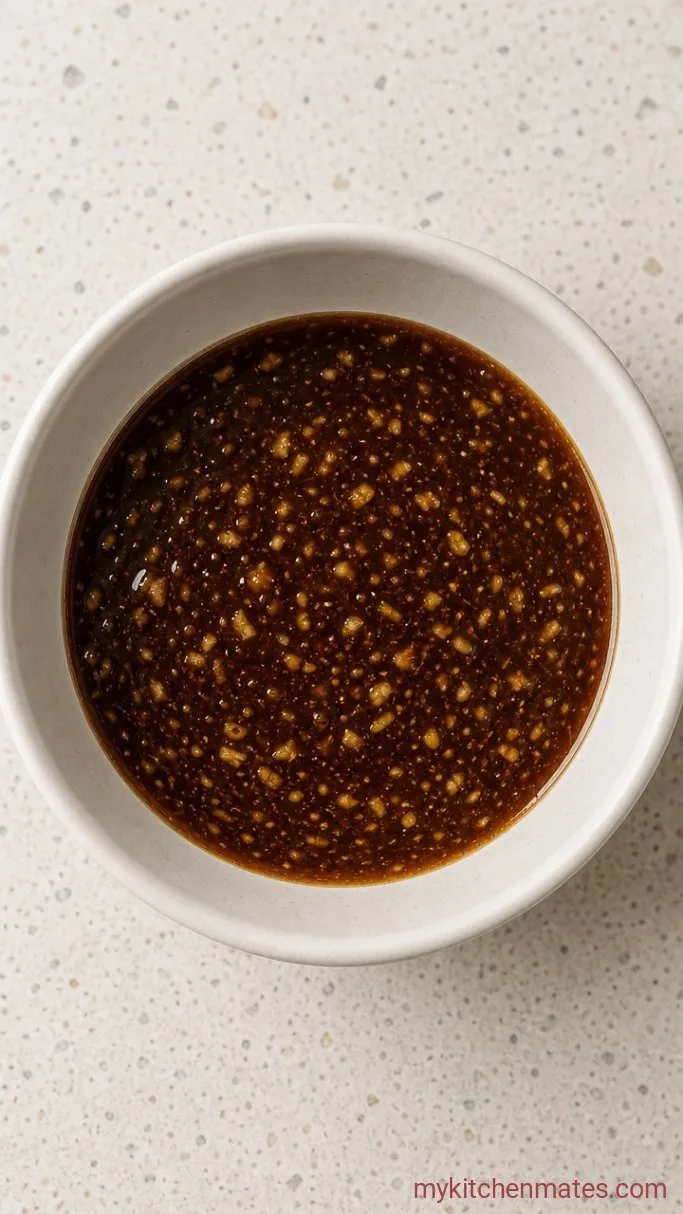
While the chicken cooks, whisk the 3 tablespoons soy sauce, 2 tablespoons honey, 1 tablespoon rice vinegar, grated ginger, minced garlic, and 1 teaspoon sesame oil together in a small bowl. Keep whisking until the honey dissolves fully and the mixture looks smooth and glossy, about 30 seconds of steady stirring. This saves you from scrambling to measure later and gives the garlic and ginger a moment to soften into the liquid.
The glaze should smell pungent and sweet at the same time. If you dip a spoon in, it should coat the back of the spoon without running off instantly.
Step 3: Glaze and Finish the Chicken
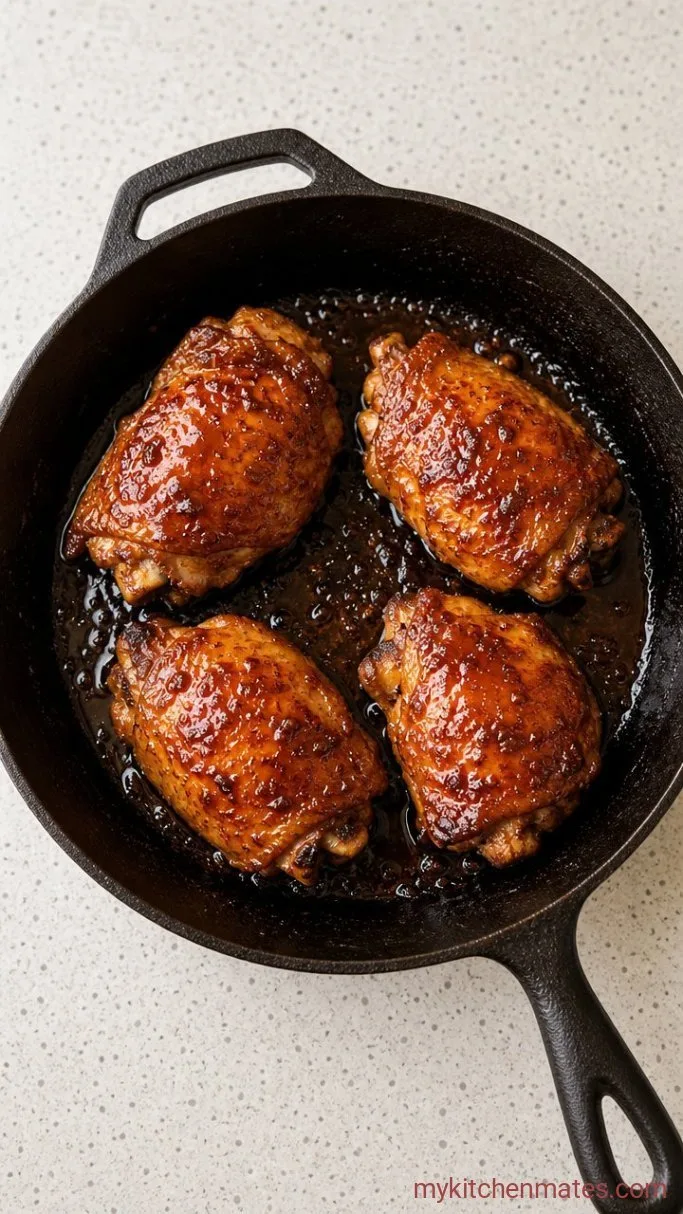
Push the thighs to one side of the skillet and pour the glaze into the pan. It will sizzle and bubble up right away. Settle the thighs back into the sauce skin side up, reduce the heat to medium-low, and let the whole pan simmer gently for 3 to 5 minutes. Spoon the glaze over the thighs every minute or so, lifting the skin to let the liquid underneath.
You will notice the sauce thicken and start clinging to the back of the spoon like warm syrup. The chicken is done when the thickest part of a thigh reads 165°F (74°C) on an instant-read thermometer, about 4 minutes for most bone-in thighs. If the sauce tightens too fast before the chicken hits that temperature, loosen it with a splash of water.
Step 4: Slice and Drizzle the Sticky Chicken
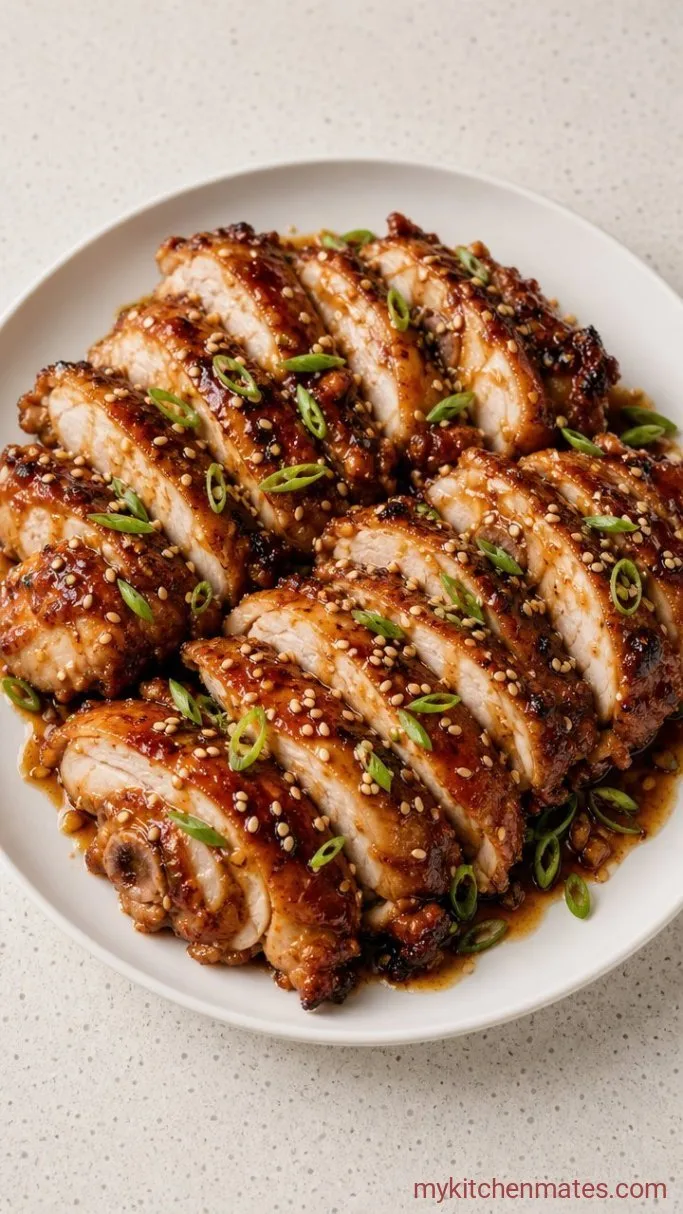
Transfer the thighs to a cutting board and let them rest for a couple of minutes while the glaze settles in the pan. Slice each thigh on a slight angle and arrange them on a warm platter. Spoon any remaining glaze from the skillet over the top and scatter sliced scallions and toasted sesame seeds over everything. Serve the chicken right away while the skin is still crisp and the sauce is glossy.
Getting the Crispiest Skin Every Time
- A heavy skillet, cast iron or a thick stainless steel, holds heat better and gives a more even sear than a thin nonstick pan.
- Choose thighs that are roughly the same thickness. If one is noticeably thicker, cook it on the bone side a minute longer before glazing.
- Crowding two pans is better than cramming four thighs into a skillet that is too small. When they rest against each other, the skin steams instead of crisps.
- Any leftover glaze that pools in the pan can be spooned over rice or simple steamed greens, it is too good to waste.
Cook times by cut:
| Cut | Skin Side Down | Cook on Bone Side | Glaze and Simmer |
|---|---|---|---|
| Bone-in, skin-on | 6 to 8 mins | 4 to 5 mins | 3 to 5 mins |
| Boneless, skin-on | 5 to 6 mins | 3 to 4 mins | 2 to 3 mins |
Keeping Leftover Chicken Thighs
- Refrigerate: Cool the thighs completely and store them in an airtight container for up to 4 days. The glaze looks a bit dull straight from the fridge but shines again when warmed.
- Reheating: A few minutes in a hot skillet on both sides works best. A microwave gets the job done in a pinch although the skin loses its crispness.
What to Serve with Sticky Soy-Ginger Chicken
A pile of jasmine rice cushions the sauce and catches the drips, plus it steams in the time the chicken rests. Stir-fried bok choy or broccoli with a drizzle of the same sesame oil ties the sesame notes together without being fancy. A quick cucumber salad with a little rice vinegar and salt cuts through the richness and keeps the plate feeling fresh.
Frequently Asked Questions
Can I use chicken breasts?
Bone-in, skin-on breasts work, though they need longer on the bone side to cook through. Bring them to 160°F (71°C) before pulling them from the pan and the carryover heat will finish them at 165°F.
Is this recipe spicy?
Not at all. Fresh ginger and garlic give warmth but no heat. If you want spice, toss a pinch of crushed red pepper into the glaze.
Can I double the recipe?
Yes, use two skillets so the chicken still sears rather than steaming. The glaze ingredients can simply be doubled and split between the pans.
Do I have to use fresh ginger?
Fresh ginger gives the brightest, sharpest bite. In a pinch, ½ teaspoon of dried ground ginger stirs into the glaze, though it will taste mellower and more earthy.
Sticky Soy-Ginger Asian Chicken Thighs Recipe
Ingredients
Method
- Heat the oil in a large skillet over medium-high heat. Pat the thighs dry, season with salt and pepper, and place skin side down. Cook 6 to 8 minutes without moving until the skin is golden and crisp, then flip and cook 4 to 5 more minutes.
- While the chicken cooks, whisk the soy sauce, honey, rice vinegar, ginger, garlic, and sesame oil until smooth.
- Push the thighs aside, pour the glaze into the pan, and settle the chicken back in skin side up. Reduce heat to medium-low and simmer 3 to 5 minutes, spooning the glaze over the thighs often, until the sauce thickens and the chicken reaches 165°F (74°C).
- Transfer the thighs to a cutting board to rest briefly, then slice and plate. Drizzle any remaining glaze from the pan over the top and finish with scallions and sesame seeds.
Notes
