
Flaky All-Butter Apple Pie Crust

A great apple pie starts with the crust. This all-butter double crust is flaky, tender, and sturdy enough to hold a juicy filling without turning soggy.
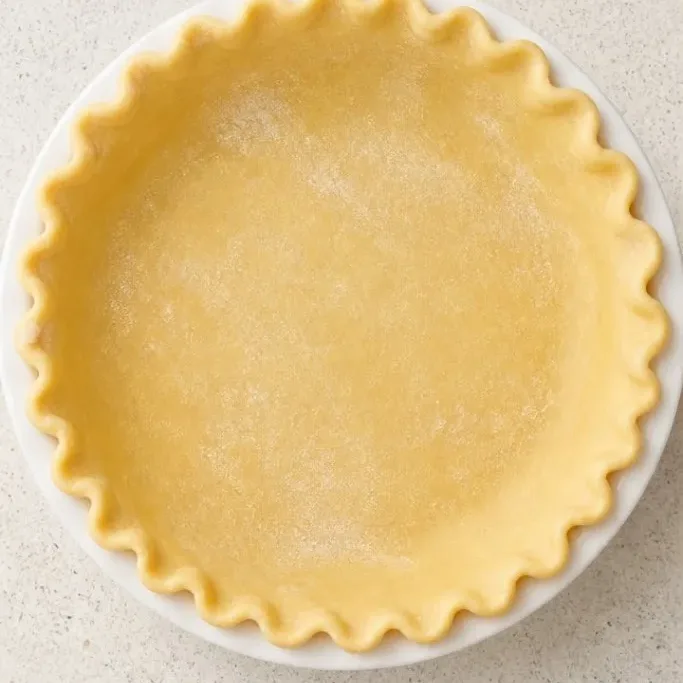
It’s the only pie dough I make for apple pies. It rolls out smoothly, bakes up golden, and tastes like a buttery, crackly pastry, not just a vessel for fruit.
What Makes This Crust Right for Apple Pie
The high butter ratio creates distinct flaky layers, while a little sugar and salt encourage browning and balance the fruit’s sweetness. A splash of vinegar relaxes the gluten, so the dough stays tender even after baking under a mound of apples.
It handles well during rolling and transfers to the pan without tearing. The edges brown evenly, giving you a pastry that looks as good as it tastes.
Ingredients
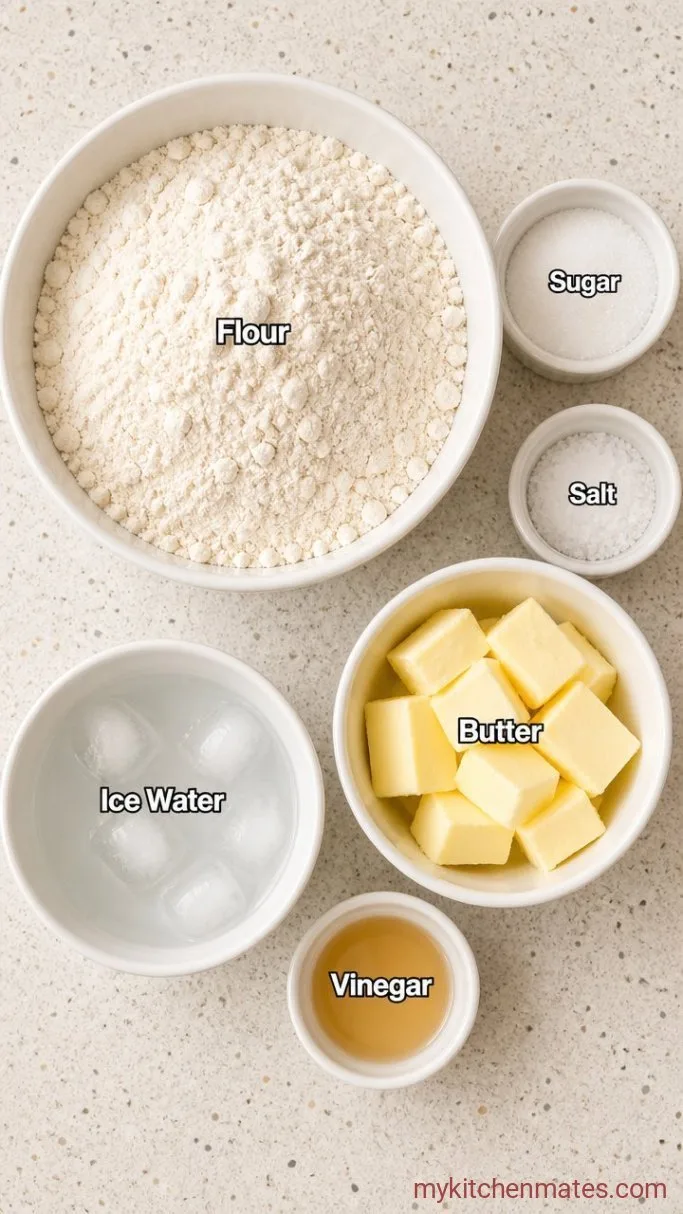
- 2 ½ cups (315g) all-purpose flour: spooned and leveled, plus extra for dusting
- 1 tablespoon granulated sugar: helps with browning
- 1 teaspoon fine sea salt
- 1 cup (226g) unsalted butter, cold and cut into ½-inch cubes: European-style butter gives the flakiest texture
- 1 tablespoon apple cider vinegar: keeps the dough tender
- ⅓ to ½ cup ice water, plus more as needed
Variations / Substitutions
- Swap the vinegar: use lemon juice or white vinegar for the same effect
- Add a bit of vodka: replace 2 tablespoons of the ice water with chilled vodka for an even flakier crust
- Gluten-free: use a 1:1 gluten-free flour blend; the dough will be more delicate, chill well
Blueberry Hand Pies are another dessert you’d probably love if you enjoy this pie.
How to Make Apple Pie Crust
Step 1: Cut the Butter into the Dry Ingredients
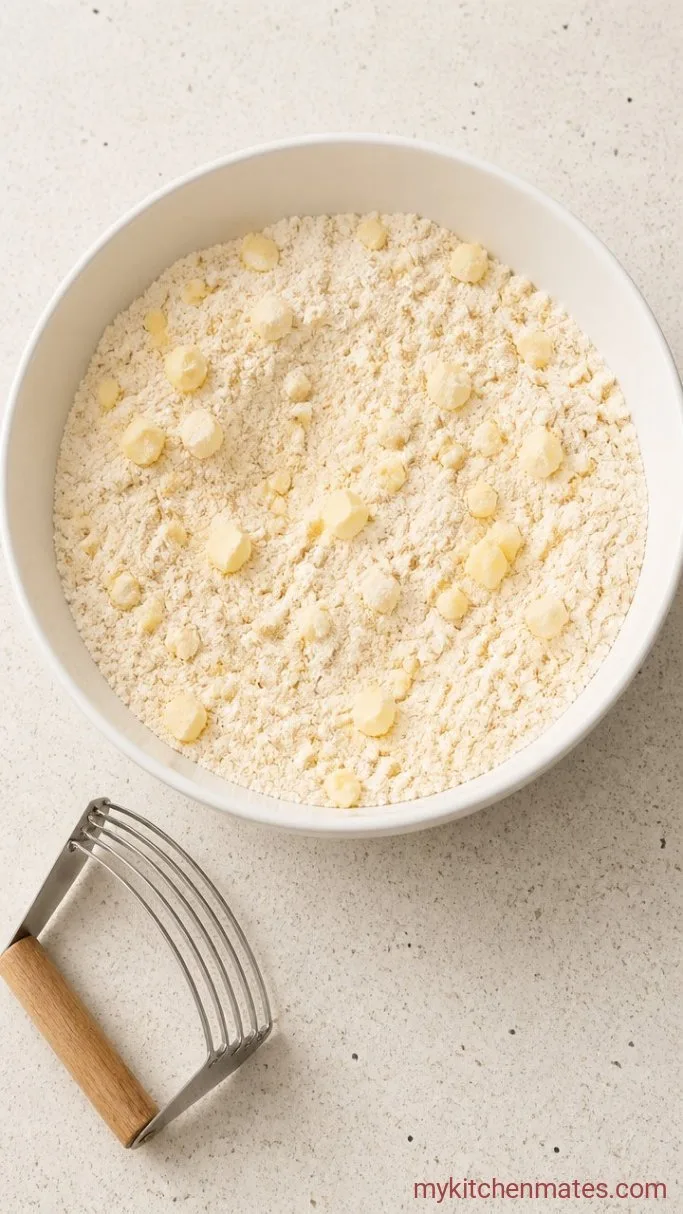
Whisk the 2 ½ cups flour, 1 tablespoon sugar, and 1 teaspoon salt in a large bowl. Scatter the cold butter cubes over the flour. Using a pastry blender or your fingers, cut the butter into the flour until the largest pieces are the size of peas and the mixture looks like coarse meal with some larger flakes.
Work quickly so the butter stays cold. You’ll smell the butter’s richness; the whole thing should feel loose and sandy, with visible chunks of butter that will create steam pockets later.
Step 2: Add the Ice Water
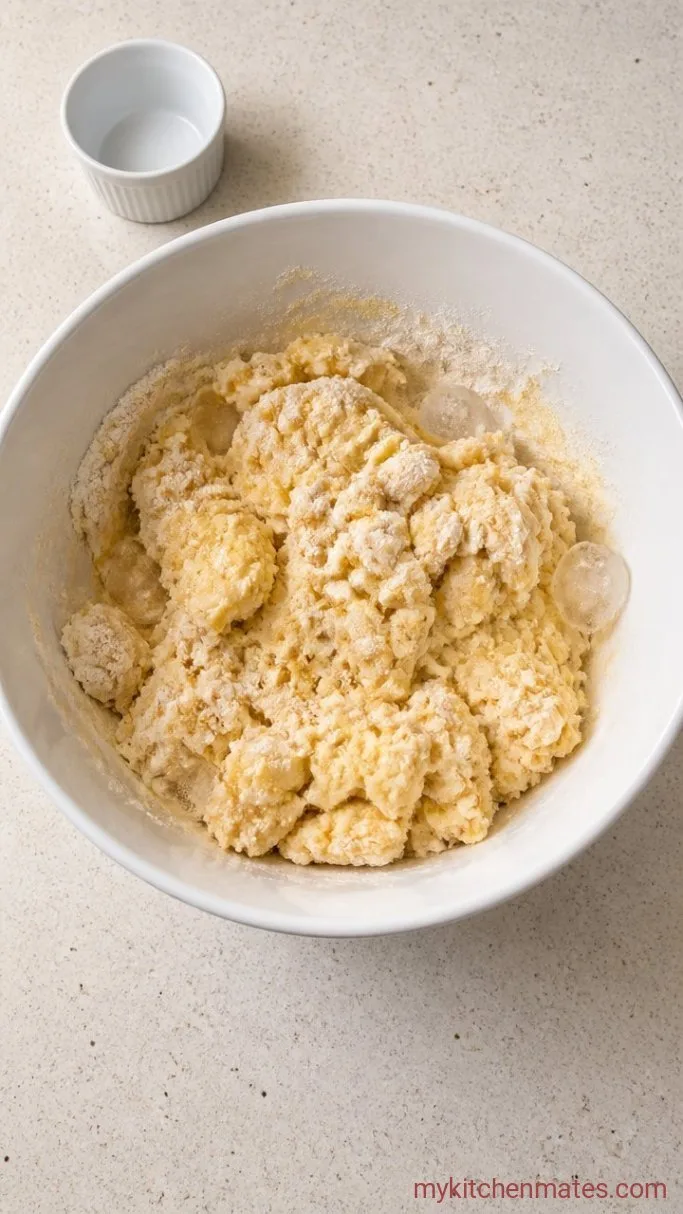
Stir the vinegar into ⅓ cup of ice water. Drizzle it over the flour mixture a little at a time, tossing with a fork. Add the remaining ice water, 1 tablespoon at a time, just until the dough begins to clump when pressed. It should hold together when squeezed but not feel sticky.
The dough will look shaggy and dry in spots. That’s fine, overworking it here leads to a tough crust, so stop once it can be pressed into a cohesive mass.
Step 3: Form and Chill the Dough
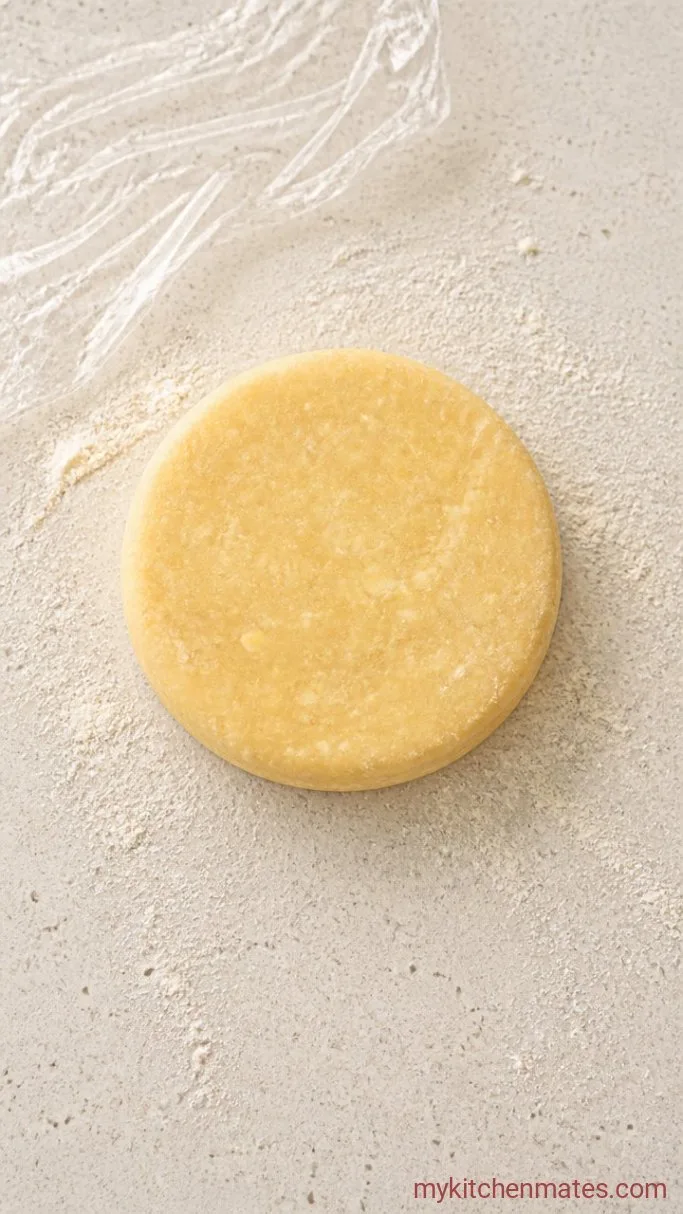
Turn the dough out onto a clean work surface. Using your hands, gather it and press it into a rough rectangle. Divide it in half, with one piece slightly larger for the bottom crust. Flatten each half into a disc about 1 inch thick, wrap tightly in plastic, and refrigerate for at least 1 hour, or up to 2 days.
The dough will feel firm and slightly pliable after chilling. If it’s too hard to roll straight from the refrigerator, let it sit at room temperature for 5 to 10 minutes until the edges give a little when pressed.
Step 4: Roll and Shape the Crust
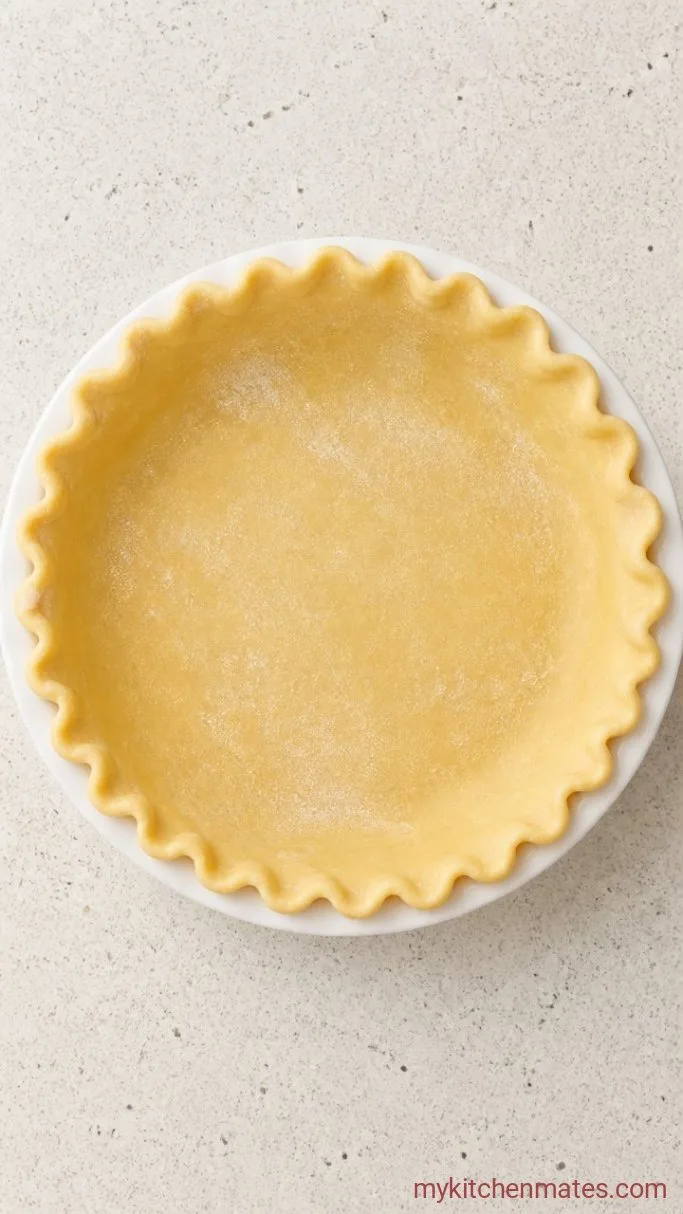
Lightly flour a work surface and a rolling pin. Roll the larger disc from the center outward, turning it often to keep it round, until it’s about 12 inches in diameter and ⅛ inch thick. Transfer it to a 9-inch pie dish, letting the excess drape over the edges. Roll the second disc for the top crust and set it on a sheet of parchment.
Trim the overhang to 1 inch, then fold it over the top crust edge and crimp them together. The surface should be smooth, with flecks of butter visible, promising a golden, flaky finish. Now you can fill the pie and bake, or wrap the crust tightly and refrigerate for up to a day.
A Few Notes Before You Start
- Use a pastry blender instead of your hands if your kitchen is warm; fingers can soften the butter too quickly.
- A splash of vinegar relaxes the gluten; don’t skip it.
- If the dough cracks while rolling, let it warm up a few more minutes. Chilled dough is easier to patch.
- For a crisp bottom crust, bake the pie on a preheated baking sheet or steel.
Scale it for your pan:
| Pie Size | Flour | Butter | Ice Water | Notes |
|---|---|---|---|---|
| 9-inch double crust | 2 ½ cups | 1 cup | ⅓ to ½ cup | This recipe |
| 10-inch double crust | 3 cups | 1 ¼ cups | ½ to ⅔ cup | Increase water as needed |
| 9-inch single crust | 1 ¼ cups | ½ cup | 3 to 4 tbsp | Halve all ingredients |
Storing Pie Crust
Refrigerate wrapped dough discs for up to 3 days, or freeze for up to 3 months. To use frozen dough, thaw overnight in the refrigerator before rolling. Already-rolled crust in the pan can be refrigerated for a day, covered, before filling and baking.
Frequently Asked Questions
Can I use a food processor to cut in the butter?
Yes, pulse the flour mixture and butter until coarse crumbles form, about 8 to 10 pulses, then add water as directed. Just be careful not to over-process.
Can I use a stand mixer to make the dough?
Yes, use the paddle attachment on the lowest speed. Watch the texture closely and stop as soon as the dough starts to clump.
How do I roll the dough without a rolling pin?
A smooth glass works well, just dust it with flour and roll from the center outward.
How do I prevent a soggy bottom crust?
Brush the unbaked bottom crust with a beaten egg white before adding the filling; it seals the dough and keeps it crisp.
Can I use salted butter?
You can, but reduce the added salt to ½ teaspoon.
Apple Pie Crust Recipe
Ingredients
Method
- Whisk flour, sugar, and salt in a large bowl. Add cold butter and cut in with a pastry blender until the mixture resembles coarse meal with pea-sized butter pieces.
- Stir vinegar into ⅓ cup ice water, drizzle over flour, and toss. Add remaining water 1 tablespoon at a time until dough just holds together when pressed.
- Turn dough out, press into a rough rectangle, divide in half, and shape into discs. Wrap and refrigerate at least 1 hour.
- Roll out larger disc to 12 inches, transfer to 9-inch pie dish, roll second disc, then trim, fold, and crimp edges.
Notes
