
Why Your Pan Temperature Matters More Than Your Recipe
MKM Signature Series: Cooking Chemistry | Episode 01
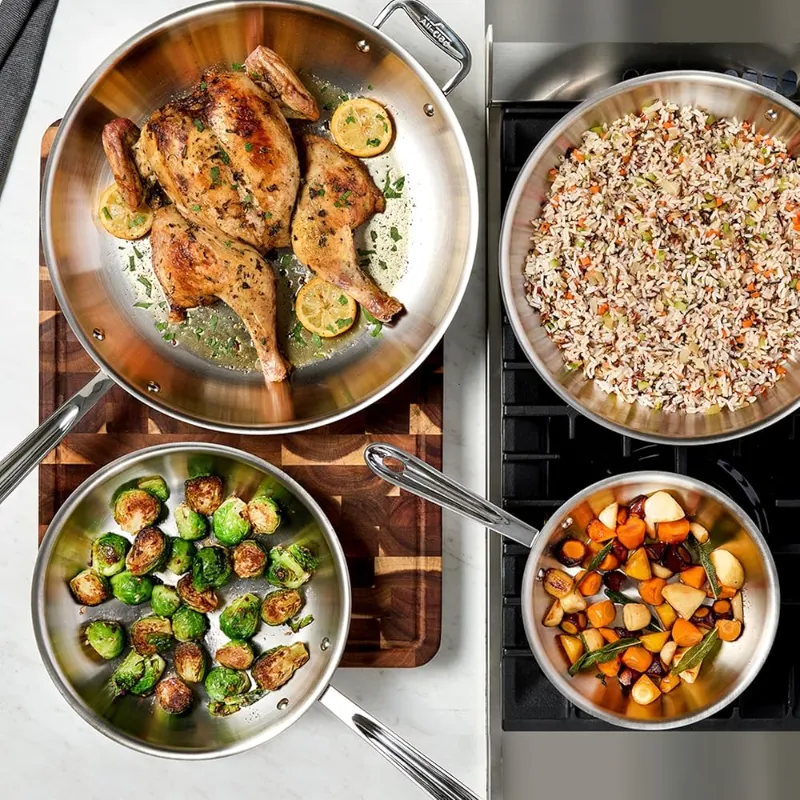
You followed the recipe exactly. You used the right ingredients. You even bought the fancy pan. But your chicken still came out pale and rubbery instead of golden and crisp. Your steak looked more like it was boiled than seared. Your vegetables sat there releasing water instead of caramelizing.
Here is the truth most recipes skip over: the temperature of your pan when food hits it changes everything. Not a little. Everything.
This is the episode where we break down the Maillard reaction, why it only happens at specific temperatures, and how understanding this one piece of chemistry will make you a fundamentally better cook.
What Is the Maillard Reaction, Actually
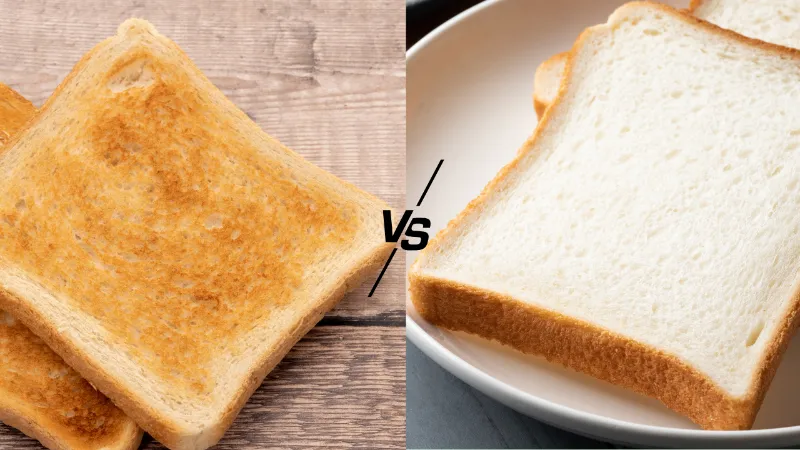
The Maillard reaction is named after French chemist Louis-Camille Maillard, who first described it in 1912. He was not a chef. He was studying how amino acids behave when heated. But what he discovered accidentally explains why seared steak tastes better than boiled steak, why toasted bread tastes better than plain bread, and why roasted coffee smells nothing like raw coffee beans.
Here is what happens at the molecular level, in plain terms.
When food reaches roughly 280 to 330 degrees Fahrenheit (140 to 165 degrees Celsius), the amino acids and reducing sugars in that food start reacting with each other. This is not the same as burning. It is not caramelization either, though those two things often happen around the same time.
The Maillard reaction produces hundreds of new flavor compounds that did not exist in the raw ingredient. It also produces the brown color you see on a good sear. That color is not just visual. It is a signal that a complex chemical transformation happened, and that transformation is what makes food taste deeply savory, nutty, complex, and rich.
No Maillard reaction means no browning. No browning means you are eating a different and significantly less flavorful version of that food.
The Temperature Threshold Nobody Tells You About
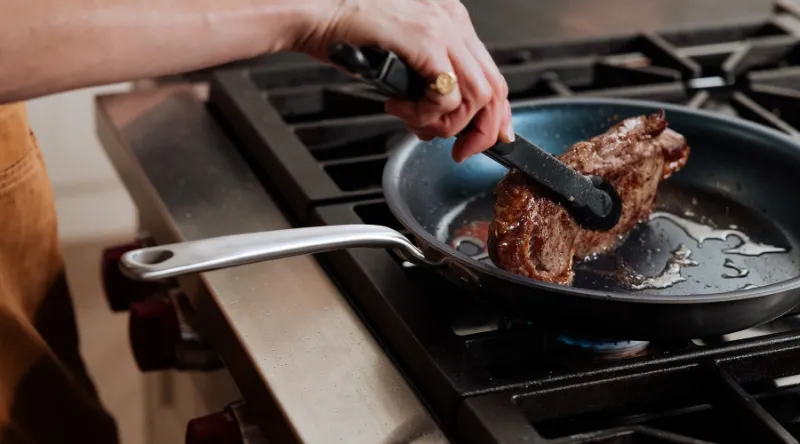
Here is the part that changes how you cook.
The Maillard reaction does not happen below a certain temperature. Below 280 degrees Fahrenheit, the amino acids and sugars in your food are not energized enough to react with each other. They just sit there. The food cooks, sure. But it does not brown. It does not develop that crust. It does not build flavor.
This is why you cannot get a good sear in a pan that is not hot enough. The science is absolute on this.
Most home cooks add their food too early. The pan looks hot. Maybe there is a little shimmer on the oil. They go for it. But the pan surface is still sitting at 200 or 220 degrees Fahrenheit. The food hits the pan, immediately cools the surface down even further, and now you have food sitting in a medium-warm pan releasing moisture instead of searing.
That released moisture is the enemy. Once liquid is in the pan, the surface temperature cannot exceed 212 degrees Fahrenheit until all that liquid evaporates. You have to wait it out. By the time the moisture is gone and the Maillard reaction can finally begin, your protein is already overcooked in the middle.
How to Actually Know When Your Pan Is Hot Enough
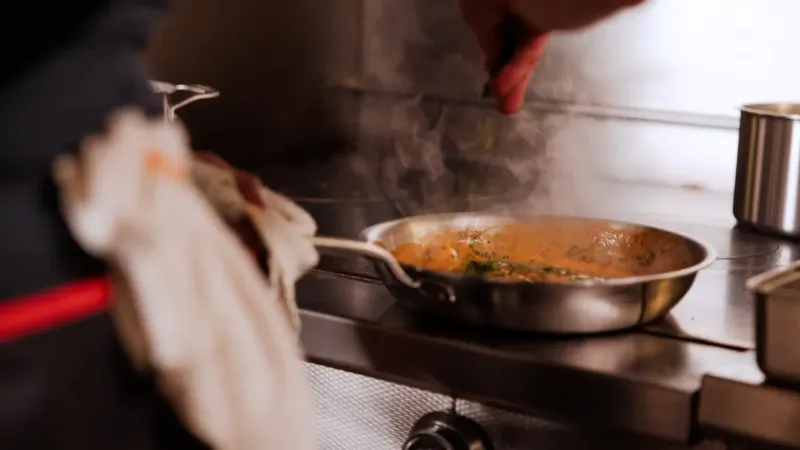
You do not need a laser thermometer, though that would work great. Here are the practical tests that actually tell you what is happening in your pan.
The water drop test. Flick a tiny drop of water into a dry pan. If it just sizzles and evaporates flat, the pan is not hot enough. If it forms a ball and rolls around the surface before evaporating, that is the Leidenfrost effect. Your pan is between 390 and 430 degrees Fahrenheit. That is the sweet spot for most searing.
The smoke point test. Add your oil and watch it. When the first wisps of smoke appear, you are at or past the oil’s smoke point. For avocado oil that is around 520 degrees Fahrenheit, for regular olive oil it is closer to 375 degrees. Different oils, different signals. Smoke from the oil means the pan is absolutely ready.
The visual test for cast iron. With a seasoned cast iron pan, look at the surface. As it heats, you will notice the color shifting slightly and the surface appearing to move in a subtle wave pattern. This is the metal expanding. When you see that, you are getting close.
The hand test (no contact). Hold your palm 3 to 4 inches above the pan. If you can keep it there comfortably for 5 seconds, the pan needs more time. If you have to pull your hand away within 2 seconds, the pan is ready.
Why Different Pans Behave So Differently
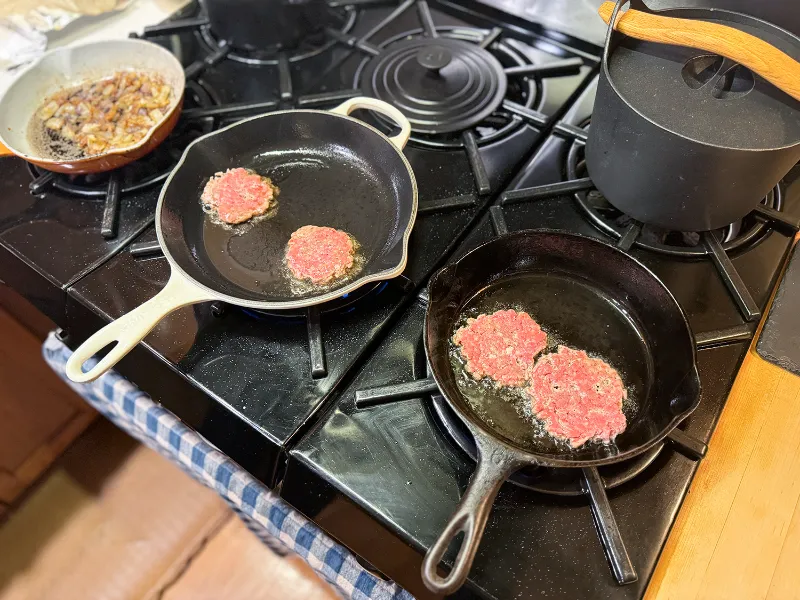
Not all pans get hot the same way, and understanding this changes which pan you reach for.
Cast iron heats slowly but retains heat exceptionally well. Once it is hot, putting cold food in it barely drops the surface temperature. This is ideal for searing steaks, smash burgers, and anything where you need sustained high heat with a large piece of protein.
Stainless steel heats quickly and responds to temperature changes fast. It loses heat more easily when cold food hits it, so you need to make sure it is very hot before you add anything. When properly heated, it gives you excellent browning and great fond (the browned bits that stick to the pan, which are essentially concentrated flavor).
Nonstick pans should never be used for high-heat searing. Most nonstick coatings degrade and release compounds above 500 degrees Fahrenheit. You literally cannot get your nonstick pan hot enough for proper Maillard browning without damaging the coating. Use nonstick for eggs, delicate fish, and crepes. Use stainless or cast iron for everything that needs a crust.
Carbon steel is a middle ground that professional kitchens love. It heats faster than cast iron but retains heat better than stainless. Many restaurant cooks use carbon steel pans exclusively for their versatility.
The Moisture Problem and Why It Kills Your Sear
We touched on this earlier but it deserves its own section because it is probably the most common reason home sears fail.
Moisture is the enemy of the Maillard reaction.
Water boils at 212 degrees Fahrenheit. As long as water is present on the surface of your food or in your pan, the surface temperature cannot exceed that. The Maillard reaction needs at least 280 degrees Fahrenheit. This means you literally cannot brown food while water is present.
This explains several kitchen truths you may have noticed but never understood.
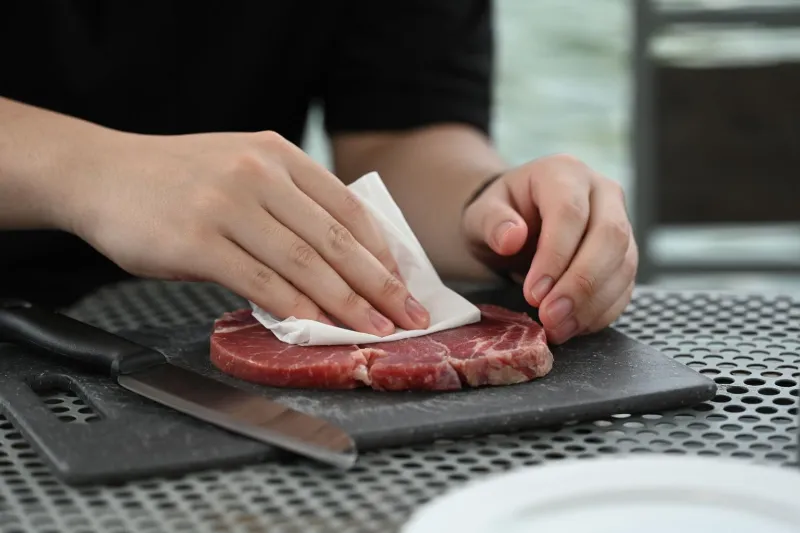
Patting your steak dry before searing is not optional. It is essential. The surface moisture on a wet steak needs to evaporate before browning can begin. That evaporation time is time your steak is sitting at 212 degrees cooking through without browning. By the time the surface is dry enough, the inside is overcooked.
Crowding your pan causes steaming. When you add too many vegetables or pieces of protein to a hot pan, the collective moisture released overwhelms the pan’s heat. The temperature drops, moisture pools, and you get steamed vegetables instead of caramelized ones. Cook in batches.
Frozen or very cold food is harder to sear well. Not impossible, but harder. Cold food drops the pan temperature more dramatically when it hits the surface. If you are searing anything from frozen, make sure your pan is significantly hotter than you would normally use.
Salting and letting food rest, then patting dry again, removes even more surface moisture through osmosis. Salt your steak, let it sit uncovered in the fridge for an hour or overnight, then pat it dry before cooking. The surface will be noticeably drier and your sear will be noticeably better.
The Oil Question: What To Use and Why
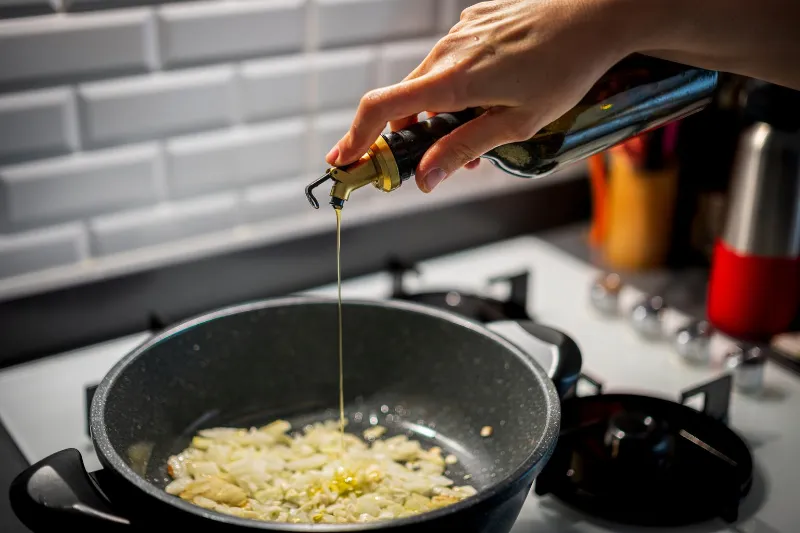
The oil you choose matters because different oils have different smoke points, and that changes what temperature you can safely heat the pan to before adding food.
If you are cooking in a light olive oil (not extra virgin), your smoke point is around 465 degrees Fahrenheit. Avocado oil gives you up to 520. Regular refined coconut oil hits 450. Extra virgin olive oil smokes around 375, which is why using it for high-heat searing often results in bitter, acrid-tasting food.
Here is the technique most professional cooks use: heat the dry pan first, then add oil. When you add oil to a cold pan and heat them together, the oil heats gradually and you lose the window of time where you can visually track how hot the pan is. When you add oil to a hot pan, it heats fast and you get an immediate visual signal of readiness.
Use just enough oil to coat the surface. You are not deep frying. A thin even film does the job. Too much oil turns your sear into a shallow fry, which works differently and produces different results.
Real-World Applications: How to Use This Knowledge
This is not abstract science. Here is exactly how it changes your cooking right now.
For steak: Use cast iron or carbon steel. Get the pan ripping hot over high heat for at least 5 minutes. Pat your steak completely dry. Add a thin film of avocado oil, let it shimmer and just start to smoke, then add the steak. Do not move it for at least 2 minutes. You want the Maillard reaction to build a genuine crust before you flip. Season after cooking or season and let it rest on a rack uncovered in the fridge overnight first.
For vegetables: Use a wide stainless or cast iron pan. Cut your vegetables into pieces that have flat sides. Heat the pan aggressively, add oil, add vegetables with flat sides down. Do not stir them for 3 to 4 minutes. Let the browning happen. Stirring constantly breaks the contact between food and hot surface and prevents any Maillard reaction from building.
For chicken thighs: Start skin side down in a medium-high pan (not the hottest setting) because the fat under the skin needs time to render before it can brown. Too hot and the skin burns before the fat is out. Start at medium-high, let the fat render for 4 to 5 minutes, then increase heat for the final sear.
For fish: Pat completely dry. Use a stainless or cast iron pan that is very hot. Add oil and immediately add the fish skin side down. Press lightly with a spatula for the first 30 seconds to prevent curling, which would cause uneven contact with the pan surface.
The Bigger Lesson Here
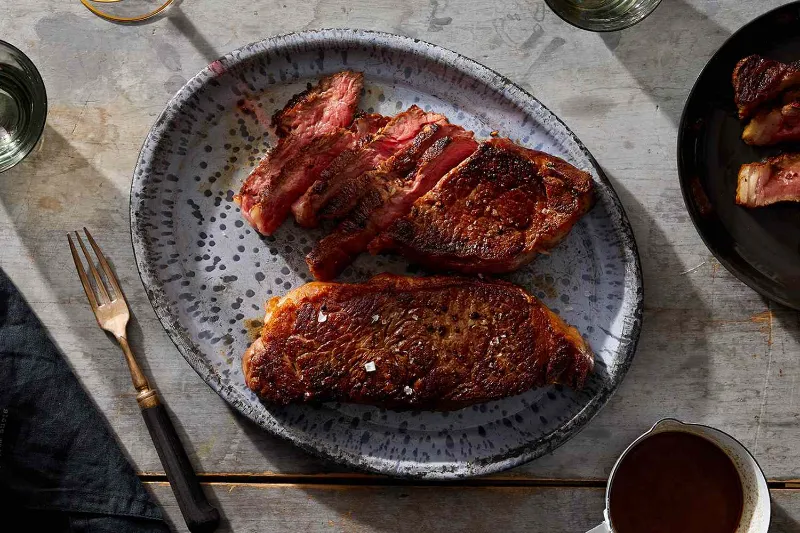
The Maillard reaction is the reason browning equals flavor. Not sort of equals flavor. Directly and scientifically equals flavor, because the browning itself is the creation of flavor compounds.
Every recipe that says “cook until browned” is asking you to trigger the Maillard reaction. When your pan is not hot enough, you cannot comply. The food cooks but it does not transform. You get the calories without the character.
Temperature is not a detail in cooking. It is the variable that determines whether a chemical reaction happens or does not happen. Getting it right is not about being fancy or professional. It is about understanding what you are actually doing when you cook.
Your recipe is a set of instructions. The chemistry is the reason those instructions work. When you understand the chemistry, you can fix the instructions when they fail, substitute ingredients intelligently, and troubleshoot problems instead of just accepting them.
Pan temperature is where that understanding starts.
MKM Signature Series: Cooking Chemistry — Episode 01 of 11 Next: Why Your Pasta Water Is Liquid Gold
